Overblog Tous les blogs Top blogs Entreprises & Marques Tous les blogs Entreprises & Marques
Suivre ce blog Administration + Créer mon blog
MENU
25 novembre 2011 5 25 /11 /novembre /2011 17:55

http://www.defenceweb.co.za/images/stories/SEA/SEA_NEW/MoD_Navy.jpg


25 November 2011 by defenceWeb


The Royal Netherlands Marechaussee (Constabulary) is participating in a new German-Dutch investigation team set up to combat piracy in Somali waters. The team will focus primarily on identifying the organisers, financiers and negotiators involved in hijacking merchant shipping.


The Dutch National Public Prosecutor’s Office made the announcement of the team’s establishment on November 17.


The Dutch ministry of defence said the investigation team will try to discover where the millions of dollars of ransom money goes to in an effort to track down the broader piracy network.


The Joint Investigation Team is an initiative of the Dutch National Public Prosecutor’s Office and the German Public Prosecutor’s Office in Osnabrück, Germany. In addition, the National Criminal Investigation Service, the State Investigation Bureau of Lower Saxony, the Federal Investigation Bureau in Berlin, Eurojust and Europol are also taking part.


Last week, representatives from the Dutch National Public Prosecutor’s Office, the Public Prosecutor’s Office in Osnabrück and Eurojust signed the cooperation agreement. The joint investigation team has been set up provisionally for one year.


Despite international efforts, piracy continues to be a major problem in the Gulf of Aden and Indian Ocean. In recent days pirates have unsuccessfully attack a couple of ships in the Indian Ocean. On Monday morning the container ship MSC Jeanne was attacked by six pirates in two skiffs, whilst 200 nautical miles east of Mombassa, Kenya.


After the ship was fired on, the master raised the alarm, took evasive manoeuvres and fired flares towards the skiffs, causing them to abort the attack.


On Sunday the bulk carrier Pioneer Pacific was attacked by eight pirates in two speedboats whilst underway in the Gulf of Aden, off Yemen. The crew fired flares at the speedboats and an onboard security team fired at the pirates, causing them to break off the attack.


On November 18, armed men boarded an oil supply vessel contracted by U.S. energy company Chevron off the Nigerian coast in the second attack by gunmen on Chevron contracted vessels this month.


"The MV Endeavour was off the coast, serving Chevron's Agbami field, when gunmen boarded it in the very early hours," one security source told Reuters. Two other sources close to the incident confirmed the details.


Experts say recent attacks on ships in the Gulf of Guinea threaten the region's position as an emerging trade hub that is an increasingly important source of oil, metals and agricultural products such as cocoa for world markets.


Britain and the United States last month reversed their opposition to having armed guards on merchant ships amid growing acceptance that weapons could be the best deterrent to Somali gangs who have been seizing ships and holding their crews and cargo to ransom for the last five years.


On Monday Reuters said that security firms led by G4S are now providing armed guards to ships sailing pirate-infested Somali waters, with one start-up kitting out a gunboat to lead World War II style convoys, as shipowners step up their response to constant attacks.


G4S, which provides services ranging from airport and sports event security to prison management and cash transportation, has been in the vessel security market since 2003, but only recently switched to using armed guards.


G4S, currently serving two large Far Eastern shipowners, said it may also offer armed protection to shipping off the west coast of Africa and the Strait of Malacca, off Malaysia, both scenes of increasing pirate activity.


Other private security contractors offering protection against pirates include Typhon, a start-up chaired by Simon Murray, the ex-military chairman of commodities trading giant Glencore.


Typhon, backed by two major Asian shipping companies, plans to protect convoys of up to ten ships with an armed vessel complete with helicopter, chief executive and founder Anthony Sharpe told Reuters.


A report earlier this year estimated that maritime piracy costs the global economy between US$7 billion and US$12 billion through higher shipping costs and ransom payments.


Somali pirates were holding as many as 16 vessels hostage as of November 7, including the Blida, a 20,586-tonne Algerian-flagged carrier with 27 crew members.

Partager cet article
Repost0
25 novembre 2011 5 25 /11 /novembre /2011 17:50

http://www.defenceweb.co.za/images/stories/MUGSHOTS/MUGSHOTS_NEW/lindiwe_parade2-useme.JPG


25 November 2011 by defenceWeb


Managing vulnerabilities in relation to strengths will define the major part of the Defence Review, Minister of Defence and Military Veterans Lindiwe Sisulu said.


“The Defence Review that we have to replace should ideally have had an expiry date, precisely because it was meant as a founding document. It should have been replaced, at the very least, two years after its adoption, in 1998,” Sisulu told a two-day First International Defence Policy Review Seminar held in Cape Town yesterday and today.


“This means we are ten years beyond our expiry date. While our environment evolved, we remained static at a point completely out of sync with our reality. And for the last number of years, we have lived in a different context, with its limitations and errors.


“The document that will ensue from the Defence Review process will have a two phased approach, with a short term and a long term reach. We have arranged this seminar to kick-start a public engagement phase for the Review process. The Defence Review Committee has gone to great lengths to grapple with their responsibility. I have been very impressed with how quickly they settled in and familiarised themselves with the challenges of Defence. I have also in particular been impressed with the passion they have for the work.


“I pity them for the void they will inevitably feel at the completion of such an intense engagement. We have set ourselves a deadline and it will be in our interest that we keep it. It will not be possible for me to place next year’s budget before Parliament if we have not completed our task,” Sisulu said.


She explained the Defence Review will have five parts: First it will address defence policy in its totality, “explaining the history of where we are and where we intend to be.” Secondly, “we’ll deal with the force structure of defence, the command and administration of the defence force, as well as civilian oversight, which will include executive and legislative oversight over the Secretariat and its role.” The third part of the Defence Review process will look at defence capability and defence resources. “How do we hope to achieve our policy objectives, as well as those of government.” The fourth part will deal with the defence industry and specifically its role in support of the defence force and its role in the economy, as well as the necessary arms control instruments. The last portion will deal “with the people and the armed forces and our relations with society.


“The Defence Review process is a re-thinking about the armed forces.  What is their role in our democracy, in our society, in our economy.  The legal and constitutional responsibilities are clear, but how does that translate into the present realities? We expect the end result to be the product of a broad discussion of how Defence should structure itself so as to be of better effect,” the minister said.


Going into more detail, Sisulu said he document would explain:


1.     Changes and challenges in the Global Security Environment


2.     National Security Strategy and Defence Policy


3.     Defence Structure for Comprehensive Security

3.1     Defence Readiness structure

3.2     Integrated Civil-Governmental-Defence structure


4.     Defence International Relations and Regional Cooperation


5.     Improvement of Defence Capabilities

5.1     Development of Defence structure

5.2     Force Structure in preparation for future warfare

5.3     Fostering the Reserve Force as Key Combat Units


6.     Military Support for Peace

6.1     International Peacekeeping Operations


7.     Professionalisation of the Armed Forces

7.1     Defence as distinct from the Public Service

7.2     Defence Human Resource Management

7.3     Strengthening Training and Education


8.     Defence and Development of Skills

8.1     MSDS Programme

8.2     National Youth Service

8.3     Defence Research and Development as an Economic Growth Engine


9.     Improvement of quality of life

9.1     Improving working and living conditions

9.2     Designing an advanced Medical Support System

9.3     Maximising employment opportunities for Veterans


10.     The Defence Force serving the people

10.1     Respect and compensation for Military Veterans

10.2     Defence Policies reaching out to the people

10.3     Enhancing Public benefits and public partnerships


11.     Defence Industry

11.1     White Paper on Defence Industry

11.2     Arms Control Measures


Humanitarian assistance is an important indication of the new direction of the defence force, Sisulu said. “Even though humanitarian aid has always been a defence responsibility, it has not been covered in our policies or in legislation. This Review gives us the opportunity to ensure this responsibility is covered and consequently budgeted for. The sterling work done by the defence force during the floods that hit the eastern parts of the country and Mozambique in 2000 remains pivotal and unless expressly indicated, remains marginal. So too do the requests for assistance from our neighbouring countries, Mozambique in 2010 and Tanzania in 2011.


“Based on our history, the idea of 'our boys on the border' did not sit well with our democratic conscience and we ceded this. But, because of the large scale of crime across our borders, it has been considered essential that the defence force returns to its primary responsibility of ensuring the safety of our borders and by extension, the safety of its citizens. We have thus repositioned our military in line with our assessment of the times.


“The role of the Secretariat has in the past been a very thorny issue. Our assumption of responsibilities for the democratic state was followed by a very strong desire to ensure the subordination of the military to the constitutional political power of the people. The acceptance of a Secretariat in our Constitution was universal. However, those instruments that were introduced for this purpose were ill defined and therefore ill fitted. The role of the Secretariat had to be interrogated and we have to find an answer in the best possible fit. The current situation is not functional and we have suffered a misfit for the past 17 years. The Defence Review should properly contextualise what the intention of the legislature was, take account of its failure and help create an environment that is workable and accountable,” Sisulu says.


“This review would have to enquire into a number of the fundamental assumptions that underpin present policy, including the relationship between the core (defence of national territory) and secondary tasks (such as peacekeeping and support to the police) of the SANDF and the resources that are devoted to each. The SANDF today acts as a force for crisis prevention and intervention rather than preparing to defend South Africa against a conventional or even unconventional onslaught.


In a statement this morning Sisulu's office said delegates attending the seminar agreed that the defence force must respond to the country’s commitment to the continent, Southern African Development Community and the world. “The seminar agreed that in developing a new defence policy for the South African National Defence Force (SANDF) in the 21st century policy makers must ensure that the SANDF clearly identifies its role in the country, in SADC, Africa and the world.” They added that accompanying that understanding of the role must be a new design of the SANDF with resources and infrastructure, both human and machinery to achieve that objective.


The seminar noted that South Africa would continue to play a role in stabilising the region, facilitating economic development and being a logistics partner during elections and major disasters. They also noted that the SANDF through its Navy must take a lead in patrolling the SADC waters, the statement added.


The seminar also received a presentation from Ministers from Namibia, Zimbabwe and Mozambique on how they see their relationship with the SANDF and the South African defence industry in the region and Africa. Sisulu said the SADC region must work together in research and military equipment developments. The South African defence industry was called upon to be lead in the development of military equipment for the SADC to facilitate defence and military trade in the region.

Partager cet article
Repost0
25 novembre 2011 5 25 /11 /novembre /2011 12:50

 http://www.defenceweb.co.za/images/stories/JOINT/JOINT_NEW/Kenya/kenya_troops.jpg


25 November 2011 defenseWeb – Reuters


Kenyan and Somali troops jointly attacked al Shabaab hideouts in Somalia killing a number of militants, and a Kenyan soldier was killed by a roadside bomb while on patrol elsewhere along the border warzone, officials said.


The fighting was the latest action since Kenya ordered soldiers across the border in October to crush al Qaeda-linked al Shabaab rebels who it said had attacked its security forces and tourists inside Kenya.


Although there appears to be little progress on the ground in Somalia as torrential rains have bogged down operations, more airstrikes have been launched on al Shabaab strongholds in recent days and skirmishes and bomb attacks in northern Kenya, Reuters reports.


Kenyan army spokesman Emmanuel Chirchir said Kenyan and Somali soldiers backed by helicopter gunships attacked and destroyed al Shabaab bases in Hawina town on Thursday, a day after Kenyan war planes bombed two Islamist militant bases in Somalia near the town of Badade.


A senior Somalia officer said a number of militants were killed and several captured during the strike.


"We attacked today, together with our Kenyan allies, an al Shabaab base in Dalbes jungle, between Hawina and Tabda. Before our infantry got in, helicopters bombed the whole area," Abdikarim Ali Yusuf told Reuters from Tabda in southern Somalia.


In the Kenyan frontier town of Mandera, a roadside bomb killed one Kenyan soldier and wounded four while they were on patrol in a truck on Thursday morning.


A huge fire engulfed the truck, residents said. Five wounded were airlifted to Garissa for treatment but one subsequently died.


"I heard a heavy explosion...I saw smoke. The truck was burning and was reduced to a shell," said Ibrahim Mohamed. "I saw three officers on the ground, they were all crying out. Their bodies were blood-stained."


Residents said the army had rounded up people in Mandera town following the blast, although Chirchir denied this.


Kenyan Colonel Cyrus Oguna said it was too early to say whether the attack was the work of al Shabaab or bandits.


Garissa, a town in northern Kenyan, is an important military base, from where ground forces have been deployed across the frontier into Somalia.


Kenya is the latest foreign power to try to stabilise Somalia, which has been mired in violence for two decades since the overthrow of dictator Mohamed Siad Barre in 1991 allowed first warlords, then Islamist militants, to step into a power vacuum.


Al Shabaab, fighting to impose a harsh interpretation of sharia law, has said it take revenge against Kenya.

Partager cet article
Repost0
24 novembre 2011 4 24 /11 /novembre /2011 18:50

http://www.defenceweb.co.za/images/stories/SEA/SEA_NEW/sigma_morocco.jpg


24 November 2011 by defenceWeb


The Royal Moroccan Navy’s second SIGMA class frigate has begun sea acceptance trials in the North Sea ahead of delivery in February next year.


The 98 metre long frigate, built by Damen Schelde Naval Shipbuilding in the Netherlands, left Vlissingen on Friday on schedule as agreed in the contract with Morocco.


During the sea acceptance trials (SAT), a very intensive programme will be carried out in which the platform as well as the sensor, weapons and communications suite is extensively tested. The tests are performed by representatives of the shipyard in close cooperation with representatives of the subcontractors, the Royal Moroccan navy and the Royal Netherlands Navy.


The first SIGMA (Ship Integrated Geometrical Modularity Approach) frigate, Tarik ben Ziyad, was transferred to the Royal Moroccan Navy on September 10 this year.


The second frigate is scheduled to be transferred in February 2012 whilst the third frigate, also 98 meters, is still under construction at the Damen yard in Vlissingen and is scheduled for Sea Acceptance Trials in May 2012.


The Royal Moroccan Navy placed an order for three SIGMA frigates in April 2008. The contract includes one SIGMA 10513 ship 105 metres long (pennant number 613), with delivery after 44 months, and two SIGMA 9813 ships 98 metres long (pennant numbers 614, 615), delivery 50 and 56 months after signature, all with commonality in the systematic arrangement including a state of the art Tacticos combat management system with antisubmarine, surface warfare, air defence and electronic warfare capabilities.


Electronic systems include a Smart-S Mk2 surveillance radar, a LIROD Mk 2 tracking radar, a Thales Kingklip sonar system, an IFF system, an integrated communication system comprising external communication system and FOCON internal communication subsystem, two target designation sights, a VIGILE ESM system, a SCORPION ECM system and an integrated navigation system.


Damen notes the vessels will be fitted with a 76 mm Oto Melara main gun, as well as MBDA Exocet surface-to-surface and MICA surface-to-air missile system, the latter using vertical launch.


The frigates will further have flight decks and hangar accommodation for a medium-sized helicopter and will be fitted with Eurotorp torpedo launchers.


In addition, Morocco has on order a French “FREMM” multipurpose frigate, scheduled for delivery next year. The current fleet includes two Floréal-class frigates and a Descubierta-class corvette in addition to some 21 patrol craft and a number of other ships and vessels. Four more patrol craft are also on order.


Morocco is in the process of upgrading its armed forces and is buying large amounts of military equipment, including 24 Hawker Beechcraft T-6C Texan II turboprop trainers to replace its Beechcraft T-34 Mentor and Cessna T-37 Tweets.


In August the Royal Moroccan Air Force took delivery of the first of 24 Block 52 F-16 Fighting Falcons from Lockheed Martin, fitted with Pratt & Whitney F100-PW-229 Enhanced Engine Package engines and Raytheon ACES electronic warfare suites.


In July last year Alenia Aeronautica delivered the first of four C-27J Spartan transport aircraft, which were ordered in October 2008.

Partager cet article
Repost0
24 novembre 2011 4 24 /11 /novembre /2011 12:30

http://www.defenceweb.co.za/images/stories/JOINT/JOINT_NEW/Somalia/Islamists_Al_Shabaab_399x300.jpg


24 November 2011 defenseWeb - Reuters


Unidentified fighter jets bombed three Islamist militant bases in Somalia residents and soldiers said, as neighbouring Kenya continued its assault on the rebels.


Kenyan troops entered Somalia six weeks ago vowing to wipe out the al Shabaab group, who it accuses of being behind a wave of kidnappings and attacks on tourists in Kenya.


Its air force has launched a series of strikes on what it says are rebel targets, Reuters reports.


"Jets bombed three al Shabaab bases around the town of Badade today," local elder, Hilowle Ali, told Reuters. "We were all shocked and ran away. The town is now deserted."


A Somalia government soldier confirmed the raids and said there had also been strikes on Monday. He did not confirm that they were carried out by the Kenyan air force.


"The jets bombed near the places where they bombed on Monday. It targeted al shabaab but we do not know the number of casualties," Yunis Macalim Amiin told Reuters.


Al Shabaab also said the raids had been carried out on Wednesday, and that seven bombs were dropped, but that it had suffered no casualties because its fighters had left the area.


Ethiopia, the Horn of Africa's major military power, also sent dozens of military trucks and armoured vehicles into central Somalia over the weekend, witnesses said.


It publicly denies its forces are inside its neighbour and has said a decision on whether to join the assault against al Shabaab in some form would be taken on Friday at a meeting of east African heads of state.


AMBUSHES AND POISONING


Though Kenya's advance on the militants started rapidly, it stalled quickly with its military blaming mud and heavy rains. Al Shabaab say daily hit-and-run raids and ambushes from its fighters are hampering the campaign.


The Kenyan police said on Wednesday that the rebels had ambushed one of its patrols in Liboi near the border with Somalia and close to the Dadaab refugee camp.


"Our officers were attacked by bandits. I suspect and believe they are al Shabaab militants. Fortunately no officer lost his life," Leo Nyongesa, the police commander of Kenya's North Eastern Province, told Reuters.


Other officers in the area said two police officers were hurt in the attack and that another, who was critically injured, was airlifted to the capital Nairobi.


"Al Shabaab guys were firing from both sides of the road," one officer said. "But my colleagues managed to get out of the car, lay down on the ground and repel them."


A Somali military officer said the militants had also started to poison water pools that Kenyan and Somali soldiers used for drinking water.


"Twenty of our soldiers are now very sick, 9 of them are serious," Abdikarim Ali Yusuf told Reuters.


An African Union peacekeeping force is largely responsible for keeping Somalia's weak transitional government from falling to al Shabaab. The Horn of Africa nation has not had a fully-functioning government since warlords toppled military dictator Mohamed Said Barre in 1991.

Partager cet article
Repost0
23 novembre 2011 3 23 /11 /novembre /2011 20:15

http://www.magharebia.com/cocoon/awi/images/2011/11/22/111122Feature1Photo1.jpg


[Jemal Oumar] Les représentants de dix pays méditerranéens

ont participé à une réunion de l'initiative de défense à Nouakchott,

les 15 et 16 novembre.


2011-11-22 Par Jemal Oumar pour Magharebia


Le retour de la Libye au sein de l'initiative de défense "5+5" fait naître des espoirs de meilleure coordination transméditerranéenne en matière de sécurité.


Après une absence de plusieurs mois, la Libye a participé à la réunion de l'initiative de défense méditerranéenne "5+5" à Nouakchott.


Cette rencontre de deux jours, qui s'est achevée mercredi 16 novembre, réunissait également des responsables de la sécurité venus d'Algérie, du Maroc, de Mauritanie et de Tunisie, aux côtés de leurs partenaires européens espagnols, français, italiens, maltais et portugais. Les participants ont débattu de sujets tels que le terrorisme, l'immigration clandestine et la sécurité aérienne.


Le major général Ahmed Ould Becrine, secrétaire général du ministère mauritanien de la Défense, a fait part de sa "satisfaction concernant le retour de nos frères libyens dans la sphère de la coopération méditerranéenne, leur souhaitant chance et succès, et progrès et prospérité pour le peuple libyen frère".


"Cette initiative a enregistré des avancées significatives sur la voie d'une coopération mutuelle dans différents domaines, comme la formation et la recherche, la surveillance maritime, la protection civile, la sécurité aéronautique et le sauvetage, dans une atmosphère de compréhension mutuelle, de transparence et de respect mutuel", a-t-il ajouté.


Ould Becrine s'est félicité que des "efforts sérieux" aient été entrepris cette année pour atteindre les objectifs essentiels de cette initiative de défense "5+5".


"Le plan d'action de cette initiative pour cette année comportait un certain nombre de rencontres au niveau des hauts responsables militaires des Etats membres, des exercices opérationnels conjoints et des cours de formation, en plus des recherches et des études stratégiques qui renforcent la sécurité, la paix et la stabilité dans le bassin ouest-méditerranéen", a-t-il souligné.


En marge de cette réunion, les délégations militaires des pays participants ont effectué une visite sur le terrain d'une exposition organisée par l'Office national mauritanien du tourisme (ONMT). Ils ont pu y voir un film documentaire de 55 minutes consacré au potentiel touristique de la Mauritanie.


Le but de cette présentation était de "mettre en lumière les capacités touristiques et culturelles de la Mauritanie, notamment la situation de l'artisanat et de la cuisine traditionnelle mauritanienne, qui a été largement présentée dans le cadre de cette exposition", selon le directeur général de l'ONMT, Khadjetou Mint Eddou.


Le tourisme est un "secteur vital en Mauritanie, et l'un des secteurs les plus affectés par les dangers du terrorisme et l'absence de sécurité", a expliqué Sheikh Ould Embarek, employé dans le secteur du tourisme.


Ce qui est nouveau dans cette réunion, c'est le retour de nos frères libyens aux avant-postes après une absence de plusieurs mois due à la révolution, mais nous fondons de grands espoirs sur ce retour pour ce qui concerne le renforcement de la sécurité dans la région, du fait de la présence d'un gouvernement libyen dont les choix en matière de sécurité diffèrent de ceux de Kadhafi", a expliqué Abdel Fattah Ould Ahmed, spécialiste de la sécurité.


La Libye est un "axe vital et une passerelle entre l'Afrique subsaharienne et le bassin méditerranéen" et son retour signifie un renforcement de la sécurité et du contrôle de l'immigration clandestine, a-t-il ajouté.


Le Maghreb a connu d'importantes transformations, a expliqué le journaliste Mohamed Ould Ahmedou, et les terroristes tentent de "profiter de ces changements sociaux et politiques pour s'adapter à une nouvelle réalité". Cela "rend nécessaire une coordination sécuritaire renforcée, avec une forte attention portée aux pays considérés comme les maillons les plus faibles", a-t-il ajouté.


"La coopération militaire doit prendre des dimensions plus sérieuses, comme l'autorisation donnée aux forces européennes de pénétrer au Maghreb, l'intensification des exercices militaires, la formation des armées des pays du Sahel et, si nécessaire, la fourniture d'une couverture aérienne lors des opérations contre les bastions d'al-Qaida", a expliqué Ould Ahmedou.


"Il n'est pas raisonnable que quelques groupes continuent de menacer la sécurité et les économies du monde à une époque où ils peuvent être éliminés par une action militaire ciblée", a-t-il conclu.


Ce contenu a été réalisé sous requête de Magharebia.com.

Partager cet article
Repost0
23 novembre 2011 3 23 /11 /novembre /2011 19:45

http://www.mod.uk/NR/rdonlyres/548A43CB-2E43-4D67-B214-0C929AAD1521/0/2paratrg1.jpg

A paratrooper from 2nd Battalion The Parachute Regiment

training Sierra Leonean troops to fire mortars. Picture: MOD 2011


23 Nov 11 UK MoD - A Training and Adventure news article


Four British paratroopers have been training Sierra Leonean troops in mortar firing in preparation for an African Union mission in Somalia next year.


The team of soldiers, from 2nd Battalion The Parachute Regiment, based in Colchester, flew out to West Africa to complete the live-fire tactical training of the Sierra Leonean troops.


The paratroopers were led by Warrant Officer Class 2 Sergeant Major Dean Stokes, also of The Parachute Regiment and a member of the International Military Assistance Training Team (IMATT). He has been in Sierra Leone twice before on operations, and is struck by the changes:


    "The Army's been regenerated," he said. "I've seen a massive turnaround and it's given me a wealth of satisfaction. That's why I've come again and I've thoroughly enjoyed it."


Sierra Leone is one of West Africa's poorest countries, and its Armed Forces have been completely restructured since the end of a bloody civil war in 2002.


Now it has pledged soldiers to the African Union Mission in Somalia, deploying around April 2012 - its most ambitious deployment yet.


The course delivered by the British was mentally tough, required physical fitness and involved a demanding night-shoot, but the Sierra Leoneans proved that they could handle it. WO2 Stokes explained why this was necessary:


    "When they go to Somalia, war-fighting doesn't stop during the day, so they need to have the capacity to illuminate the area outside their FOBs [forward operating bases]," he said.


http://www.mod.uk/NR/rdonlyres/E6635653-872E-497A-85F2-13DE59CA8E2B/0/2paratrg2.jpg 

Sierra Leonean troops fire a mortar

Picture: MOD 2011


Experts in their field, the paratroopers' own platoon has recently returned from Afghanistan, but the team was impressed with the progress they saw:


    "This is my first time with the Sierra Leonean Army but it's been a pleasure," said team member Corporal David Ingram.

     "Lieutenant Barrie is the only mortar platoon commander in Sierra Leone, so not too much pressure on him! Once we leave he's going to have to teach his own guys. But they're really keen, really enthusiastic, and just want to learn more and more."


At the conclusion of the training, the troops were able to show off their new skills to their top brass, with a parade and demonstration at the Republic of Sierra Leone Armed Forces (RSLAF) Training Centre.


The head of training for the RSLAF, Colonel David Taluva, said:


    "I have seen my dream come true today. I started planning this mortar training last year but we had problems with funding and then IMATT just came in.

     "Sergeant Major Stokes has been very instrumental in training and I've enjoyed working with him. I'm very grateful to IMATT and I want this to continue."

Partager cet article
Repost0
23 novembre 2011 3 23 /11 /novembre /2011 19:20

http://www.defenceweb.co.za/images/stories/JOINT/JOINT_NEW/Somalia/Somali_pirates%281%29.jpg


23 November 2011 by defenceWeb – Reuters


The European Union is short of warships for its counter-piracy mission off Somalia and is unlikely the fill the gap until March given economic constraints, the top EU military officer said.


Swedish General Hakan Syren, chairman of the EU Military Committee, said the shortage would be a "problem", without going into further details.


An EU military official later played down the challenge, saying the shortfall would coincide with a period when pirate attacks normally declined and the bloc would be able to sustain the mission, Reuters reports.


Pirates operating from the Somali coast have raked in millions of dollars in ransoms from hijacking ships and a total of 243 hostages and 10 vessels are currently being held, according to figures from EU Navfor, the EU's anti-piracy task force.


A report earlier this year estimated maritime piracy costs the global economy between $7 billion and $12 billion through higher shipping costs and ransom payments.


Syren said the EU operation, codenamed Atalanta, had a normal minimum force requirement of four to six warships, depending on the time of the year, and this would not be met in the period from December until March.


"The ... commander has a minimum level of both maritime patrol aircraft and ships; and during quite a limited time ... the number of ships is below the red line," he told a news conference after a meeting of defence chiefs of the 27 EU states.


"It's a problem. I am telling you the facts and it is really a problem ... and we have faced this before," he said.


Syren blamed the economic crisis, as well as fatigue from NATO's Libya operation, in which European NATO members maintained a seven-month sea mission to enforce a U.N. arms embargo up until the end of October.


"I can imagine there are many different reasons for this, but one is of course economy - the budget cuts," Syren said.


"The last year of course ... many countries with these kinds of assets ... felt insecure about the situation in the Mediterranean Sea connected to the Arabian Spring and the Libyan crisis. But primarily it's a question of resources."


On the plus side, Syren said, an EU training mission intended to help improve security within Somalia was making progress, and was now training a third batch of almost 700 Somali soldiers.


According to Navfor, 165 attempted attacks have taken place this year, with 24 actually resulting in the hijacking of a vessel.


British Prime Minister David Cameron announced last month that British merchant ships sailing off the coast of Somalia would be able to carry armed guards to ward off pirate attacks, bringing it into line with many other countries.

Partager cet article
Repost0
23 novembre 2011 3 23 /11 /novembre /2011 18:45

http://beegeagle.files.wordpress.com/2011/10/kenyan-troops-near-liboiafp.jpg?w=480&h=326

soource militaryphotos.net


November 23, 2011: STRATEGY PAGE


Kenya has apparently let loose some of their secretive paratroops commandoes in Somalia. Kenyan troops moved into Somalia last month, and the target of this attack, the Somali al Shabaab Islamic terrorist organization, promised swift retaliation. The terrorist attack never came, or at least not yet. While al Shabaab has a fearsome reputation, they have not done well against professional troops. While most of the Kenyan Army has a reputation for lackadaisical performance, there are exceptions. For example, the 20th Parachute Regiment has long been considered an elite, highly selective and well trained unit. The 20th even has its own "best of the best"; D Company. This last outfit is considered on a par with Western commando organizations and has trained with, and been trained by, them.


While 20 Para is technically an airborne infantry battalion (called a "regiment"), they rarely are used like that. Instead, they are regarded as the most reliable and effective unit in the army of 63,000 troops. There are believed to be only a few hundred troops in 20 Para, and when not training, they are often used for intelligence collection (usually in civilian clothes) inside Kenya. The fight against Islamic terrorism inside Kenya has used 20 Para a lot, and the "Kenyan recon patrols in Somalia" that are sometimes mentioned in the news, are probably 20 Para as well.


The 20 Para is sometimes confused with GSU (General Service Unit), the commando unit of the national police. GSU has been around for over half a century, and is regarded as the final defense for any attempt to overthrow the government. Both GSU and 20 Para have been heavily involved in counter-terror operations, as well as suppressing the tribal wars along the borders with Uganda, Somalia and Ethiopia. These tribal feuds have gotten a lot nastier during the last two decades, as the area was flooded with cheap, Cold War surplus weapons (mainly AK-47s and RPGs.) This has given 20 Para and GSU plenty of combat experience, and a reputation for ruthlessness.

Partager cet article
Repost0
23 novembre 2011 3 23 /11 /novembre /2011 17:50

http://upload.wikimedia.org/wikipedia/en/1/14/Kri-diponegoro-1600-1200.jpg

photo Wim Kosten,maritimephoto.com


Nov. 22, 2011 defense-aerospace.com

(Source: Damen Schelde Naval Shipbuilding; issued Nov. 22, 2011)


The 98 meters long SIGMA class frigate, the second frigate built by Damen Schelde Naval Shipbuilding for the Royal Moroccan Navy, left Vlissingen on the 18th of November for her sea acceptance trials (SAT) in the North Sea, right on schedule as agreed in the contract.


During the SAT, a very intensive program will be carried out in which the platform as well as the sensor weapons and communications suite are extensively tested. The tests are performed by representatives of the yard in close cooperation with representatives of the subcontractors, the Royal Moroccan navy and the Royal Netherlands Navy.


The first SIGMA frigate was transferred to the Royal Moroccan Navy on 10 September 2011.


The second frigate is scheduled to be transferred in February 2012 whilst the third frigate, also 98 meters, is still under construction at the Damen yard in Vlissingen and is scheduled for Sea Acceptance Trials in May 2012.


The three SIGMA-class frigates for the Royal Moroccan Navy have been designed according to Schelde Naval Shipbuilding's revolutionary SIGMA-approach and are a further development of the SIGMA-corvettes for the Indonesian Navy. The SIGMA approach applies modularity in many areas.


The Moroccan SIGMA Class frigates equipped to conduct the traditional naval tasks as well as maritime security operations. The vessels are also suited to support humanitarian aid operations.


The Damen Shipyards Group offers a complete range of naval and patrol vessels ranging from 7 to over 200 meters. Part of this portfolio are the Damen Schelde Naval Shipbuilding (DSNS) naval combatants and auxiliaries, embodied by the SIGMA and ENFORCER series.


At present DSNS also has under construction for the Royal Netherlands Navy: four Patrol Ships and a Joint Logistic Support Ship (JSS), the largest military vessel built by DSNS so far.

Partager cet article
Repost0
23 novembre 2011 3 23 /11 /novembre /2011 13:15

http://www.spxdaily.com/images-lg/al-qaeda-africa-lg.jpg


Nov 22, 2011 (AFP) SpaceWar.com


Bamako - A lack of support by Algeria for military operations against Al-Qaeda in the north African Sahel region has been a serious setback for joint efforts, according to officials and experts.


At the opening Monday in Mali's capital of a meeting of general staff chiefs of Mali, Algeria, Mauritania and Niger, General Gabriel Poudiougou, head of Mali's army, insisted on the need for joint actions against Al-Qaeda in the Islamic Maghreb (AQIM).


"We must recognise that up against a transnational enemy, which is well organised and disposes of enormous financial and material means, we need to develop further our capacity to carry out joint multinational operations," Poudiougou said.


In his view, the Committee of the Operational Joint General Staff (CEMOC), which includes the army chiefs of the four countries most affected by AQIM's activities, is "a tool whose full potential we should use, especially since we have recently noted a dangerous link between the terrorists and certain extremist sects," like Boko Haram in Nigeria.


The CEMOC, based at Tamanrasset in southern Algeria and with an intelligence centre in Algiers, was set up in April 2010 to coordinate better the fight against AQIM. It meets every six months, but has not yet launched joint cross-border operations.


However, several delegates to the Bamako meeting, requesting anonymity, told AFP that they considered Algeria was to blame for this lack of action.


A delegate from Niger noted that "the Algerian army, on its own, has more resources than the armies of Niger, Mali and Mauritania" put together, adding that, "I don't understand why they don't venture on to the terrain to help us fight against AQIM."


A diplomat, also from Niger, said that "the budget of the Algerian army is six times bigger than the national budget of a country like Mauritania. The ball is in Algeria's camp."


"While waiting for it to decide really to take the lead in the anti-AQIM coalition, our states will continue to develop their security ties, on one hand with Algeria, and on the other with other indispensable countries like Morocco and France," he added.


A Malian civil servant in the interior ministry said, "That Algeria decides to give us weapons to fight against AQIM is fine, but as long as it won't go on to the terrain to see other African countries at our sides, AQIM will gain ground, and we shall see who profits from this situation."


"For lack of means, the Sahel has today become a no man's land," he added, stating that up against former allies of late Libyan leader Moamer Kadhafi, "who come and go between their country and the Sahel, with guns in circulation, Algeria doesn't need our green light to step in. It should do it straight away, especially since the Islamists come from Algeria."


AQIM grew out of Algeria's Salafist Group for Preaching and Combat, which took part in a low-level civil war at home that has now ended. Since 2007, AQIM has launched a range of operations in the Sahel strip south of the Sahara, a vast zone that includes all four CEMOC countries.


Operating from bases in northern Mali, the radical Islamists have carried out attacks against troops and civilians, kidnappings, particularly of Westerners, of whom several have been executed.


AQIM is also engaged in trafficking of various kinds, including weapons and drugs.


Faced with criticism of Algeria's reticence to get more involved, an Algerian officer in Bamako stated that the constitution of his country was very clear. "It is not up to us to intervene militarily on a different territory, or in any event, it isn't easy."


The return to Mali and Niger of thousands of fighters who had served Kadhafi's regime in Libya, most of them Tuaregs, has raised the security stakes in this troubled region, which is hard to monitor and control. Most of these men have guns, including heavy weaponry.

Partager cet article
Repost0
23 novembre 2011 3 23 /11 /novembre /2011 12:55

http://www.defense.gouv.fr/var/dicod/storage/images/base-de-medias/images/operations/tchad/111122-tchad-tournee-de-province-des-eft-a-mao-et-ziguey/tournee-de-province-des-eft-a-mao-et-ziguey-2/1456567-6-fre-FR/tournee-de-province-des-eft-a-mao-et-ziguey-2.jpg


22/11/2011 Sources : EMA


Du 12 au 17 novembre 2011, les éléments français au Tchad (EFT) ont conduit une tournée de province (TP) combinant des moyens terrestres et aériens dans la région du Kanem, au centre-ouest du pays.


Le détachement d’une cinquantaine de militaires, essentiellement composé de légionnaires du 2ème  régiment étranger d’infanterie, a parcouru près de 1000 km de routes et de pistes entre N’Djamena, Mao et Ziguey. Une quinzaine de véhicules assurant le soutien logistique dans ces conditions rustiques.


Les TP visent à entretenir une connaissance précise des zones d’opérations les plus éloignées des emprises, et des relations avec les populations et les autorités civiles et militaires tchadiennes. Elles permettent également de mettre en œuvre des procédés interarmés comme l’aérolargage de vivres et d’eau, et contribuent à l’aguerrissement des unités.


Le retour d’un détachement de militaires français dans la région du Kanem a été très apprécié par la population et les autorités locales.


Particulièrement motivante cette mission a constitué une période d’entraînement particulièrement dense et a confirmé la capacité des EFT à se déployer dans cette région.


http://www.defense.gouv.fr/var/dicod/storage/images/base-de-medias/images/operations/tchad/111122-tchad-tournee-de-province-des-eft-a-mao-et-ziguey/tournee-de-province-des-eft-a-mao-et-ziguey-1/1456562-6-fre-FR/tournee-de-province-des-eft-a-mao-et-ziguey-1.jpg

Partager cet article
Repost0
23 novembre 2011 3 23 /11 /novembre /2011 08:10

http://www.defenceweb.co.za/images/stories/JOINT/JOINT_NEW/Somalia/somali_pirates3_400x300.jpg


November 2011 by Reuters - defenseWeb


Security firms led by G4S are providing armed guards to ships sailing pirate-infested Somali waters, with one start-up kitting out a gunboat to lead World War II style convoys, as shipowners step up their response to constant attacks.


G4S, which provides services ranging from airport and sports event security to prison management and cash transportation, has been in the vessel security market since 2003, but only recently switched to using armed guards.


"We've been doing it at an increasing level basically as a response to customer demand because of the threat posed off the coast of Somalia and the Indian Ocean generally," a G4S spokesman told Reuters, adding that the FTSE 100 firm sees combating pirates as a big commercial opportunity, Reuters reports.


G4S, currently serving two large Far Eastern shipowners, said it may also offer armed protection to shipping off the west coast of Africa and the Strait of Malacca, off Malaysia, both scenes of increasing pirate activity.


The switch in favour of armed vessel security comes after Britain and the United States last month reversed their opposition to it amid growing acceptance that weapons could be the best deterrent to Somali gangs who have been seizing ships and holding their crews and cargo to ransom for the last five years.


Traditionally, shipping companies and their insurers have fretted that having armed personnel onboard boats could escalate violence in the event of a pirate attack.


Other private security contractors offering protection against pirates include Typhon, a start-up chaired by Simon Murray, the ex-military chairman of commodities trading giant Glencore.


Typhon, backed by two major Asian shipping companies, plans to protect convoys of up to ten ships with an armed vessel complete with helicopter, chief executive and founder Anthony Sharpe told Reuters.


"There are some guys that say they don't like arms because it escalates the situation, but sadly it's a necessary evil. It does deter piracy," Sharpe said.


A report earlier this year estimated that maritime piracy costs the global economy between $7 billion (4.47 billion pounds) and $12 billion through higher shipping costs and ransom payments.


The International Maritime Organisation said it does not condone or condemn the use of armed guards, but has issued guidelines for shipowners who do decide to seek armed protection.


G4S said it was providing armed protection, as well as tactical and strategic advice on board large vessels such as oil tankers and container ships. It said it had averted a number of attempted pirate attacks in the Indian Ocean in recent months.


Somali pirates were holding as many as 16 vessels hostage as of November 7, including the Blida, a 20,586-tonne Algerian-flagged carrier with 27 crew members.


Earlier this year, a seafaring Somali gang seized the oil tanker Irene almost 1,000 miles from the coast of Somalia in their most long-range attack to date.


G4S, which is worth around 3.3 billion pounds, made headlines earlier this month after scrapping a planned 5.2 billion pounds ($8.2 billion) acquisition of Danish cleaning firm ISS following investor opposition to the company moving away from its security heritage.

Partager cet article
Repost0
22 novembre 2011 2 22 /11 /novembre /2011 22:30

Eunavfor.gif


22 novembre 2011 by Nicolas Gros-Verheyde (BRUXELLES2)


Le général suédois Håkan Syren, qui préside le comité militaire de l’UE l’a confirmé aujourd’hui officiellement, à l’issue d’une réunion avec les autres chefs d’Etat-Major européen des « 27″. Les moyens affectés à l’opération anti-piraterie Eunavfor Atalanta sont au « niveau minimal en matière de navires et avions de patrouille maritime. (Mais) nous serons au-dessous de cette limite minimale (fixée à 4-6 navires présents sur zone), début 2012, essentiellement en janvier-février 2012. Nous serons sortis de la ligne rouge en mars », a expliqué le général répondant à une question d’une confrère d’Europapress. « La cause de cette faiblesse : l’économie. Bien sûr, il y a eu d’autres engagements comme en Libye. Mais en fait, en premier lieu, ce sont les conditions budgétaires qui dictent cette position » a-t-il complété.


Le niveau d’alerte est franchi


Ce n’est pas la première fois que le général alerte sur la nécessité d’avoir davantage de moyens affectés à l’opération européenne. Mais c’est la première fois qu’il donne des précisions chiffrées. Jusqu’ici du moins publiquement, il se contentait de dire « ca va à peu près ». Cet aveu confirme les différentes informations qui nous sont parvenues. On sait effectivement que les différentes conférences de génération de force n’ont pas montré l’enthousiasme à prendre les différents slots de présence dans l’Océan indien qu’elle avait rencontrée précédemment.


Peu d’Etat participent, souvent les mêmes


Les pays ne se bousculent pas au portillon. Et on retrouve toujours les mêmes : Français, Allemands et Espagnols essentiellement. Les Grecs et Italiens sont en prise à des difficultés financières. Les Danois ne participent pas aux opérations militaires européennes et mettent leurs moyens dans l’opération de l’OTAN. Les Britanniques qui participent à l’opération – avec leur quartier général à Northwood – montrent plus que de la mauvaise volonté à fournir des moyens navals. Quant aux différents pays d’Europe de l’Est, la Pologne en tête, ils ont choisi tout simplement de ne pas participer, ou si peu… (à l’exception notable de l’Estonie), même si de nombreux marins de leur nationalité servent sur des navires croisant dans l’Océan indien et en mer d’Arabie. 


Coté des pays extérieurs, la Norvège – qui a participé au début de l’opération – préfère mettre ses moyens dans l’opération Ocean Shield de l’OTAN. L’Ukraine – après maintes hésitations n’a pas confirmé son engagement – au-delà de quelques officiers. 


Chou blanc pour les équipes VPD


Faute de navires, le général Syren avait tenté au moins d’obtenir des pays qui ne fournissent pas de navires, de pouvoir engager quelques équipes de soldats, afin de servir d’équipes embarquées (VPD), très utiles surtout pour les navires du PAM (programme alimentaire mondial) ou de l’AMISOM, car ils permettent d’assurer une sécurité quasi-équivalente, avec largement de moyens. Là encore chou blanc. Seuls Malte et l’Estonie ont accepté actuellement des équipes. Les Maltais sont basés actuellement sur le navire néerlandais de ravitaillement HNLMS Zuiderkruis.


Des militaires de l’Amisom


Faute de solution européenne, on envisage coté militaire de pouvoir utiliser des militaires de l’Amisom qui seraient spécialement formés pour cela. « Accompagner des navires n’est pas très difficile pour des militaires. Il faut apprendre quelques notions de navigation. Et apprendre à tirer à bon escient (en gros pas dans le tas). »

Partager cet article
Repost0
22 novembre 2011 2 22 /11 /novembre /2011 22:18

Flag of Libya.svg


22-11-11 NouvelObs


Les autorités libyennes ont affirmé mardi devant le procureur de la Cour pénale internationale (CPI) leur intention de juger en Libye Seif al-Islam Kadhafi, le fils du dirigeant déchu. (c) Afp Les autorités libyennes ont affirmé mardi devant le procureur de la Cour pénale internationale (CPI) leur intention de juger en Libye Seif al-Islam Kadhafi, le fils du dirigeant déchu. (c) Afp


Le chef du Conseil militaire de Zenten Oussama Jouili sera nommé ministre de la Défense et Ibrahim Debbachi, représentant du Conseil national de transition (CNT) à l'ONU, sera affecté aux Affaires étrangères dans le nouveau gouvernement libyen, a indiqué mardi un responsable.


La formation du gouvernement devrait être annoncée en fin de journée à Tripoli, selon ce membre du CNT s'exprimant sous couvert de l'anonymat.


M. Jouili dirigeait la brigade de Zenten, sa ville d'origine située à 170 km au sud-ouest de Tripoli, dont les combattants ont été en tête des unités rebelles ayant "libéré" Tripoli en août.


La nomination de M. Jouili serait liée à l'arrestation de Seif al-Islam, fils de l'ex-dirigeant libyen Mouammar Kadhafi, capturé samedi également par la brigade de Zenten, ville où il est détenu actuellement.


Le ministère de Défense était convoité notamment par les islamistes.


Le Conseil militaire de Zenten qui détient Seif al-Islam a démenti tout chantage au sujet de Seif Al-Islam en contrepartie de portefeuilles ministérielS.


"Le Conseil militaire de Zenten dément les informations publiés par des médias, selon lesquelles Zenten d'adonne à un chantage sur Seif al-Islam en contrepartie de portefeuilles ministériels", a indiqué que le Conseil dans un communiqué.


"Seif al-Islam à Zenten est détenu à Zenten pour des raisons de sécurité, en accord avec le CNT dans la mesure où cette ville est considérée comme la zone la plus sûre de Libye", selon lui.


Plusieurs médias ont indiqué ces derniers jours que les combattants de Zenten ont refusé de livrer le fils de Kadhafi aux nouveaux dirigeants du pays.


Le nouveau ministre des Affaires étrangères a été ambassadeur adjoint de l'ancien régime libyen à l'ONU, avant de faire défection pour se rallier à la rébellion.


Ali Tarhouni, ministre du Pétrole et des Finances, doit garder le portefeuille des Finances, après avoir refusé celui de la Planification, alors que Hassan Zoglam, un responsable de Compagnie nationale de pétrole, sera nommé ministre du Pétrole, a ajouté le même responsable.


Des informations ont par ailleurs circulé sur la nomination de Fawzi Abdelal de la ville de Misrata (à l'est de Tripoli), à la tête du ministère de l'Intérieur.


"Nous sommes toujours en discussions pour décider de l'attribution de certains portefeuilles", a ajouté le responsable du CNT.


Lundi, le Premier ministre libyen Abdel Rahim al-Kib a confirmé à Tripoli que la formation du nouveau gouvernement devait être annoncée mardi.

Partager cet article
Repost0
22 novembre 2011 2 22 /11 /novembre /2011 08:30

http://www.defense.gouv.fr/var/dicod/storage/images/base-de-medias/images/operations/cote-d-ivoire/111121-cote-d-ivoire-le-bataillon-licorne-entretient-ses-capacites-operationnelles/cote-d-ivoire-le-bataillon-licorne-entretient-ses-capacites-operationnelles-1/1455111-4-fre-FR/cote-d-ivoire-le-bataillon-licorne-entretient-ses-capacites-operationnelles-1.jpg

21/11/2011 Sources : EMA

Du 1er  au 16 novembre 2011, les unités du bataillon Licorne (BATLIC) ont effectué une période d’entraînement pour entretenir leurs capacités opérationnelles.

Elles ont ainsi mené une campagne de tir sur le champ de tir de Lomo Nord, des exercices combinés avec le détachement d’hélicoptère Fennec  de l’armée de l’Air et des exercices de contrôle de foule.

Au cours de cette phase d’entraînement, le bataillon Licorne a déployé un poste de commandement tactique pour assurer le commandement des unités sur le terrain et valider les procédures d’intervention pendant que les unités se succédaient sur le champ de tir.

L’escadron blindé équipé d’ERC 90 mm Sagaie  a effectué une manœuvre interarmes avec une section du génie et une section d’infanterie.

La compagnie d’infanterie a été renforcée d’une section du génie et d’un peloton blindé sur Sagaie  pour effectuer des tirs de jour et de nuit. Pour clore cette séquence, elle a également effectué deux exercices de contrôle de foule avec le renfort d’instructeurs de la police de la force des Nations Unies en Côte d’Ivoire (UNPOL ONUCI).

Le bataillon Licorne maintient ainsi ses capacités opérationnelles qui doivent notamment lui permettre de protéger à tout moment les ressortissants français.

Partager cet article
Repost0
22 novembre 2011 2 22 /11 /novembre /2011 08:15

http://www.defenceweb.co.za/images/stories/Libya_flag_400.jpg


21 November 2011 defenseWeb - Reuters


Libya's United Nations envoy Mohammed Abdel Rahman Shalgam accused Qatar of providing weapons and money to Libyan Islamists and told the fellow Arab state to stop meddling in Tripoli's domestic affairs.


"There are facts on the ground, they (Qatar) give money to some parties, the Islamist parties. They give money and weapons and they try to meddle in issues that do not concern them and we reject that," Shalgam told Reuters on the sidelines of a conference in the Moroccan city Tangier.


"The Qatari state is still providing assistance to some (Libyan) parties and they are giving them money and we reject this totally," he added, Reuters reports.


"Qatar was among countries which have provided us with the greatest military, financial and political support (in ousting slain leader Muammar Gaddafi).


"We thank them ... We don't want them to spoil this great feat through meaningless acts of meddling," he said.


Qatar, the world's top exporter of liquefied gas exporter and home to the influential Al Jazeera satellite channel, played a key role in an international alliance that helped rebels topple Libyan strongman Muammar Gaddafi in August.


Qatar, however, denies interference in other states' affairs, saying it uses resources and influence for the benefit of all Arabs.


Shalgam said he has discussed the allegations of interference with Qatari authorities including its ruler Sheikh Hamad bin Khalifa al-Thani and its prime minister.


"We have had frank conversations with them ... I've warned them as a brother ... I tell them, 'You have helped us to a great extent'...The Tunisian people provided us with the greatest help of all and they did not interfere in our domestic affairs."

Partager cet article
Repost0
22 novembre 2011 2 22 /11 /novembre /2011 07:45

http://www.defenceweb.co.za/images/stories/South_Sudan_flag_waver_400.jpg

21 November 2011 by defenceWeb

The Japanese government will send Ground Self Defence Force (GSDF) engineers to help South Sudan rebuild after its long civil war.

Japanese Deputy Chief Secretary Tsuyoshi Saito earlier this month said that the first batch of GSDF Engineers will be sent to South Sudan early next year. Around 200 personnel are expected to operate in South Sudan.

Saito also indicated that another 300 engineers will be dispatched at later dates since the first batch would evaluate the feasibility and challenges of operations there, the Upper Nile Times reports.

On October 14 an assessment team from the GSDF surveyed Juba International Airport before deciding to deploy engineers. The team, which arrived in South Sudan on October 10, was in the country to assess airports and roads, reliefWeb reports. The survey team also visited Upper Nile State to assess airports and roads in the capital Malakal.

The GSDF engineering unit will help build roads and bridges. With independence on July 9, 2011 after two decades of civil war, the country lacks basic infrastructure. It is totally underdeveloped and has less than 100 km of paved roads.

Saito said that GSDF engineers will use weapons only when they feel their safety is being threatened as their main role will be infrastructure development.

Japan is the second largest contributor to the United Nations peacekeeping budget, after the United States. The United Nations Mission in South Sudan (UNMISS) is mandated to have 7 000 military personnel. This is the first time Japan has shown interest in sending peacekeepers to the country.

South Sudan became the world's newest country after voting for independence in a January vote, taking with it three-quarters of the former united country's roughly 500,000 barrels per day of oil production.

The split left a long list of unresolved issues; including the contested oil-producing Abyei region, how to share oil revenues and other assets, and how to end border violence. Sudan is facing a severe economic crisis and has asked fellow Arab countries for aid to compensate for the loss of oil revenues.

Analysts say South Sudan is in danger of becoming a failed state unless its manages to end tribal and rebel violence that has killed more than 3,000 people this year, according to the United Nations.

Apart from how to divide oil revenues, Abyei is one of the biggest disputes between north and south. Sudan's armed forces seized the border region in May and says Abyei will stay with the north unless a much-delayed referendum agreed under the 2005 peace agreement decides otherwise.

Decades of civil war have left the South severely underdeveloped but the flow of oil dollars means it has a higher per capita income than many of its African neighbours. It contracted the sale of oil worth US$2.14 billion from July to October, Reuters reports.

Border violence has raised tension between the old civil war foes, with both nations regularly trading accusations of supporting insurgencies in each other's territory since South Sudan's secession.

South Sudan last week accused Sudan of supplying artillery to support a cross-border attack by "mercenaries" on its oil-producing Upper Nile state, and called on the United Nations to investigate.

Sudan's armed forces dismissed the charge and repeated it did not back rebels and had not launched any attacks on South Sudan's side of the border.

An estimated 2 million people died in Sudan’s decades long civil war.

Partager cet article
Repost0
21 novembre 2011 1 21 /11 /novembre /2011 13:40

http://www.safatavia.com/english/images/phocagallery/thumbs/phoca_thumb_l_saf03a.jpg

photo safatavia.com


November 21, 2011: STRATEGY PAGE


Sudan is offering a two seat trainer aircraft for sale. Based on a Serbian design (UTVA 75), the SAFAT-03 is a one ton aircraft with a cruising speed of 175 kilometers an hour and can stay in the air about four hours per sortie. Sudan obtained components for the aircraft from Ukraine and Serbia. No weapons can be carried, unless there is only one pilot. Basically, Sudan personnel assembled the SAFAT-03 from mostly imported components. Sudan is also offering the Ukrainian AK1-3 light helicopter, as the SAFAT-02. This one is also assembled in Sudan from imported components.


Sudan established an aircraft maintenance company seven years ago, and after several hundred locals acquired skills and experience at maintaining military and commercial aircraft, it was decided to try aircraft manufacturing. If the SAFAT-02 and SAFAT-03 don't sell, they are also being used by the Sudanese military for training. Not a lot was invested in the aircraft production effort, as it's mainly an assembly operation. This is something maintenance personnel are familiar with, as aircraft often have to be partially disassembled to make repairs.


Sudan touts the two aircraft as Sudanese designs, but almost all the design and engineering was imported, along with the components. Some changes were made to the external appearance of the aircraft, but that was it.

Partager cet article
Repost0
21 novembre 2011 1 21 /11 /novembre /2011 08:30

http://www.defense.gouv.fr/var/dicod/storage/images/base-de-medias/images/air/actualites/images-2011/images-novembre-2011/le-lieutenant-colonel-olivier-aribaud-commandant-le-cfaa/1453054-1-fre-FR/le-lieutenant-colonel-olivier-aribaud-commandant-le-cfaa.jpg

18/11/2011 Actus Air par le lieutenant Gabrielle Robin


Conduit par le centre de formation à l’appui aérien (CFAA), l’exercice interarmées CASEX 2011 se déroule à Djibouti, du 10 au 27 novembre 2011. Les participants s’entraînent au CAS (Close Air Support- appui aérien rapproché) pour s’aguerrir avant leur déploiement sur des théâtres d’opérations. Les forces françaises stationnées à Djibouti (FFDj) y participent également pour répondre à leurs propres objectifs d’entraînement. Le lieutenant-colonel Olivier Aribaud, commandant le CFAA, a accepté de revenir sur cette préparation opérationnelle de grande ampleur. 


Mon colonel, pourriez-vous rappeler les missions principales du CFAA ?


Lieutenant-colonel Olivier Aribaud - La mission principale du CFAA est de former les FAC (Forward Air Controlleurs – contrôleurs air avancés) selon les normes définies par l’Otan. Il forme également le personnel impliqué dans la chaîne d’appui aérien : les CTA (contrôleurs tactiques air) conseillers directs du commandement interarmes sur le terrain, et les NFO (National Fires Observers ), insérés au sein des unités combattantes, qui sont les yeux et les oreilles des FAC, au plus près de la ligne de contact. Le CFAA  participe également aux travaux portant sur les évolutions de l’appui aérien.


D’où sont issus vos stagiaires ?


Nos stagiaires sont issus des trois armées, majoritairement des régiments d’artillerie de l’armée de terre, de l’armée de l’air, de la marine nationale et d’unités du COS (commandement des opérations spéciales). Notre équipe d’instructeurs est, elle aussi, interarmées, ce qui permet aux FAC d’intégrer les différentes cultures pour insérer efficacement les moyens aériens dans une manœuvre terrestre en prenant en compte les autres types d’appuis : les avions de chasse, l’artillerie, les drones et les hélicoptères.


Certains postes, dans la chaîne FAC, ne peuvent être occupés que par des aviateurs, pourquoi ?


Effectivement, les postes de CTA sont réservés à des aviateurs car ils représentent le dernier maillon de la chaîne de commandement  « air » sur le terrain. Qualifiés FAC et bénéficiant d’une formation complémentaire, ils ont pour rôle principal de conseiller le chef interarmes quant à l’emploi de l’arme aérienne, tant dans la planification que dans la conduite. Les CTA sont principalement issus du personnel navigant (pilotes et navigateurs de combat) et des commandos de l’air.  Dès 2012, cette « spécialité » s’ouvre aux contrôleurs aériens possédant déjà un socle de compétences aéronautiques utiles pour devenir FAC, puis CTA.


http://www.defense.gouv.fr/var/dicod/storage/images/base-de-medias/images/air/actualites/images-2011/images-novembre-2011/equipe-d-appui-aerien-au-sol/1453066-1-fre-FR/equipe-d-appui-aerien-au-sol.jpg

Quels sont les objectifs de cet exercice ?


Djibouti est un excellent terrain d’entraînement. Il permet de bénéficier des conditions réalistes, proches du terrain afghan. La plus-value de cet exercice est de pouvoir exécuter des guidages qui soient pleinement intégrés à une manœuvre terrestre. L’exercice présente deux temps forts. Le premier est une manœuvre de terrain de quatre jours continus et le second combine du tir air-sol et sol-sol réel, possible uniquement sur un territoire comme Djibouti. Nous tenons également à ce que l’application des règles d’engagement, déjà abordées lors de la formation initiale, soient revues au cours de cet exercice. Nous préparons ainsi les stagiaires aux processus décisionnels d’emploi des appuis spécifiques à l’Afghanistan, qui varient en fonction des situations sur le terrain.


Unité binationale, vous travaillez quotidiennement avec les militaires allemands. Quels sont vos liens avec l’Otan ?


Le CFAA est une unité organique de l’armée de l’air qui a des liens avec l’Otan et notamment avec la FAC Capability Section, basée à Ramstein, en Allemagne. Nous participons, en effet,  à leurs côtés, aux réflexions sur les évolutions des procédures et de la doctrine mises en œuvre par appui aérien. En  2010, l’Otan a mis en place un processus d’accréditation pour lequel le CFAA a été le premier certifié, ce qui est un gage de qualité sur la scène internationale quant à la formation dispensée au centre.

Partager cet article
Repost0
21 novembre 2011 1 21 /11 /novembre /2011 08:10

Canadian Forces emblem


le 20 novembre 2011 NR 11.141 - forces.gc.ca


HALIFAX – L’honorable Peter MacKay, ministre de la Défense nationale, a annoncé aujourd’hui que les navires de la Marine royale canadienne demeureront dans la mer Méditerranée jusqu’à la fin de 2012 pour prendre part à l’opération Active Endeavour dans le cadre de la lutte contre le terrorisme menée par l’OTAN dans la région.


Le Navire canadien de Sa Majesté (NCSM) Vancouver, initialement déployé dans le cadre de l'opération Unified Protector, demeurera dans les eaux méditerranéennes jusqu’au début de 2012, pour être ensuite remplacé par le NCSM Charlottetown. Le NCSM Vancouver et son détachement d’hélicoptères CH-124 Sea King patrouillent la mer Méditerranée depuis le mois d’août, soit depuis que le navire a rejoint la flotte de l’OTAN au large de la Libye pour prendre part à l’opération Unified Protector.


« Je félicite les membres d’équipage et l’équipe de commandement du NCSM Vancouver pour leur travail acharné et leur contribution à l’opération Unified Protector. Le Canada fera désormais figure de chef de file en matière de lutte au terrorisme au sein de l'OTAN », a déclaré le ministre MacKay. « Je suis fier de ce que nos forces ont accompli dans cette région et je suis certain que le maintien de notre présence dans la Méditerranée permettra de détecter et de contrer des activités terroristes. »


Pendant l’opération Active Endeavour, le NCSM Vancouver sera chargé de localiser, de poursuivre, de signaler et d'arraisonner les navires soupçonnés de mener des activités terroristes. Bien que son mandat se limite à détecter et à contrer activités terroristes, la flotte de l’OTAN participant à l’opération Active Endeavour a contribué à accroître la sécurité et la stabilité dans la mer Méditerranée.


« Je suis fier du dévouement et des réalisations de l’équipage du NCSM Vancouver pendant l’opération Unified Protector. Il est tout à fait logique que ce navire soit affecté à une autre mission de l’OTAN et qu’il demeure dans les eaux méditerranéennes », ajoute le Général Walt Natynczyk, Chef d’état-major de la Défense. « La sécurité du Canada commence à l’étranger et notre frégate contribuera à une importante opération internationale déjà en cours et continuera ainsi à protéger les intérêts du Canada outre-mer. Nous poursuivrons notre collaboration avec nos alliés de l’OTAN et, forts de nos succès antérieurs, nous aiderons à rétablir la stabilité dans la région. »


Le NCSM Vancouver a quitté son port d’attache, Esquimalt (C.-B.) le 10 juillet 2011 pour mettre le cap sur la mer Méditerranée afin d’aller prendre la relève du NCSM Charlottetown. Pendant plus de deux mois, le NSCM Vancouver a patrouillé les eaux côtières au large des ports assiégés de Misrata, de Tripoli, de Tobrouk et de Syrte, en Lybie, au sein du Groupe opérationnel multinational 455.01. Cette mission s’est terminée le 31 octobre 2011, à la fin de l’opération Unified Protector, qui fut couronnée de succès.


Le NCSM Charlottetown quittera Halifax, son port d’attache, en janvier 2012.

Partager cet article
Repost0
19 novembre 2011 6 19 /11 /novembre /2011 13:25

http://www.lefigaro.fr/medias/2011/11/18/0dd3d8f4-1225-11e1-9066-2d874695b76a.jpg


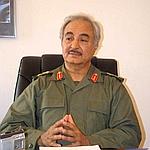
Le général Khalifa Haftar, à Benghazi, en avril dernier.

Crédits photo : Asmaa Elourfi Magharebia/Asmaa Elourfi Magharebia


18/11/2011 Par Pierre Prier - Figaro.fr


La cooptation du général Khalifa Haftar, ancien allié de la CIA, à la tête de l'armée nationale, suscite des réactions de colère et d'inquiétude dans les rangs islamistes.


La cooptation du général Khalifa Haftar, ancien exilé aux États-Unis, au poste de chef d'état-major de l'armée libyenne a ravivé la tension entre l'armée régulière et les divers groupes armés islamistes issus de la guerre contre Kadhafi. «Le chef d'état-major doit être un des révolutionnaires qui ont combattu sur le champ de bataille» a déclaré Abdallah Naker, qui se présente comme le «chef du conseil des révolutionnaires de Tripoli». Ses hommes ont fait une démonstration de force, défilant hier dans les rues de la capitale libyenne.


À leur suite, le chef du «conseil militaire de Tripoli» Abdelhakim Belhaj, réclame «des postes précis» dans le prochain de gouvernement de transition, qui doit être nommé demain en même temps que la direction de l'armée nationale. Le ministère de la Défense pourrait en faire partie. Trois mois après la chute de Tripoli, les nouveaux dirigeants n'ont toujours pas réussi à unifier les dizaines de groupes armés qui refusent de se placer sous le commandement de l'armée régulière. Jeudi, 150 officiers de haut rang réunis à Benghazi, à l'est, ont tenté de reprendre l'initiative en «élisant» le général Haftar.


Son profil a tout pour déplaire aux islamistes. Depuis vingt ans, Khalifa Haftar vivait à… Langley, Virginia, près du siège de la CIA. Pas par hasard. Cet ex-général de l'armée de Kadhafi, fait prisonnier en 1987 par les Tchadiens au cours de la bataille de Ouadi-Doum, puis «retourné» par les États-Unis, fut dans les années 1980 le chef de la «Force Haftar» basée au Tchad. Constitué des quelque 2 000 Libyens capturés avec leur chef, ce groupe équipé par Washington était destiné à envahir la Libye pour renverser Kadhafi.


La «Force Haftar» exfiltrée


Mais la Force Haftar dut être exfiltrée en urgence en 1990, à l'arrivée au pouvoir à N'Djamena d'Idriss Déby. Le nouvel homme fort tchadien était soumis à de fortes pressions de Kadhafi pour livrer le général renégat. Les États-Unis organisèrent un pont aérien, avec escales au Nigeria et au Zaïre. Le retour de Khalifa Haftar en Libye, courant mars, ne manqua pas de susciter les commentaires. Considéré comme «l'homme des Américains», on ne lui prédisait pas un grand avenir. Il a officiellement rejoint le général Younès, assassiné depuis lors, à la tête des forces rebelles.


En le nommant unilatéralement, les généraux défient les islamistes. Haftar réussira-t-il à intégrer les révolutionnaires ? Ces derniers seront-ils versés dans un corps spécial, semblable aux Gardiens de la révolution en Iran ? Toutes les options restent ouvertes, estime Patrick Haimzadeh, ancien diplomate français en poste à Tripoli. Derrière l'offensive des militaires se profilent d'autres rivalités : entre l'est et l'ouest de la Libye, mais aussi entre les États-Unis et le Qatar.


Washington verrait sans déplaisir une ancienne recrue de la CIA diriger l'armée libyenne, qui adopterait probablement des méthodes et du matériel américain, estime Haimzadeh. Sans parler de l'influence politique. Le Qatar, de l'autre côté, soutient des groupes «révolutionnaires» par affinité religieuse et dans le but d'étendre son rayonnement dans la région. Cette lutte pour le parrainage de la nouvelle Libye s'exprime désormais au grand jour.


Le prédécesseur de Khalifa Haftar, le général Souleimane Mahmoud, a dénoncé le rôle trouble du Qatar, qu'il accuse de soutenir les islamistes et de chercher à «acheter» les Libyens . Et le représentant libyen à l'ONU, Mohammed Abdel Rahman Shalgam, a accusé hier Doha «d'armer et de financer certains groupes» se mêlant ainsi de «questions qui ne le concernent pas».

Partager cet article
Repost0
19 novembre 2011 6 19 /11 /novembre /2011 13:00

National Emblem of the People's Republic of China.svg


18/11/11 portalangop.co.ao


Luanda - Le ministre angolais de la Défense nationale, Cândido Pereira Van-Dunem, a déclaré vendredi, à Luanda, que les discussions dans le cadre de la deuxième reunion du Comité de coopération, de la Science, technologie et industrie pour la défense nationale entre l'Angola et la Chine étaient prioritaires.


Cândido Pereira Van-Dunem a tenu ces propos à l'ouverture des pourparlers entre la délégation angolaise et celle de la République de Chine, conduite par le vice-administrateur de la Sastind, Wang Yi Ren.


"Nous remercions la disponibilité de la République de Chine de former dans leurs académies, Instituts ou Ecoles militaires des cadres de Forces Armées Angolaises (FAA), pour augmenter leurs connaissances technico-scientifiques", a souligné le ministre de la Défense.


Il a, par ailleurs, manifesté le souhait et l'entière disponibilité du Gouvernement angolais de consolider et raffermir les relations de coopération mutuellement avantageuses avec la Chine, car, a-t-il précisé, c'est le moment opportun pour concrétiser cette aspiration dans les domaines de la défense des FAA.


De son côté, Wang yi Ren, a manifesté sa joie pour les niveaux de développement économique atteint par le Gouvernement et le peuple angolais durant la période de paix.


"J'espère que l'économie angolaise continuera à progresser énormement et pour cela, le Gouvernement chinois va coopérer davantage avec les autorités angolaises", a dit le responsable chinois.


La délégation chinoise qui séjourne à Luanda depuis mercredi dernier, dans le cadre de la coopération bilatérale avec les autorités angolaises, dans le domaine de la défense, quitte samedi Luanda.

Partager cet article
Repost0
19 novembre 2011 6 19 /11 /novembre /2011 08:45

http://www.flightglobal.com/assets/getasset.aspx?itemid=43123

photo Airbus Military


18 Nov 2011By  Dominic Perry London – Flight Global


Ghana air force has taken delivery of the first of two Airbus Military C-295 tactical transport aircraft.


Airbus Military said the second aircraft will arrive in the first quarter of 2012.


It will be primarily used for domestic transport and humanitarian relief missions.


This C-295 is the first Airbus Military product Ghana air force will operate.

Partager cet article
Repost0
19 novembre 2011 6 19 /11 /novembre /2011 08:40

http://www.rfi.fr/sites/filesrfi/imagecache/rfi_43_large/sites/images.rfi.fr/files/aef_image/sarko-ouattara_0.jpg


Nicolas Sarkozy est accueilli par Alassane Ouattara à l'aéroport de Yamoussoukro, le 21 mai 2011.

AFP PHOTO/LIONEL BONAVENTURE


18 novembre 2011 - Par RFI


Le projet du nouvel accord de défense entre la France et la Côte d’Ivoire est prêt à être signé. Il a été paraphé, le mercredi 16 novembre 2011, à Abidjan par le Premier ministre et ministre de la Défense ivoirien, Guillaume Soro et l’ambassadeur de France, Jean-Marc Simon. Il devrait être signé le mois prochain par les présidents français et ivoirien. Revue de détail sur les changements à venir.


On ne devra plus parler d’accords de défense, mais plutôt de partenariat de défense entre la France et la Côte d’Ivoire. Ce partenariat, c’est en fait la rénovation des accords qui datent de 50 ans. La présence de militaires français sur le sol ivoirien est maintenue, avec une diminution des effectifs, qui seront désormais entre 250 et 300 hommes, contre environ 700 aujourd’hui. Une présence pour assurer la protection des ressortissants français en cas de crise d’abord mais aussi pour former les forces ivoiriennes.


La grande nouveauté du partenariat par rapport aux accords de défense, c’est l’assistance que la France prévoit d’apporter à la Côte d’Ivoire au niveau de la lutte contre le trafic de drogue, contre la piraterie maritime et contre le terrorisme. Et puis, pour éviter les suspicions suscitées par les clauses secrètes des accords de défense, qui garantissaient l'intervention de la France au cas où le pouvoir ivoirien se trouverait menacé, le texte du partenariat de défense devrait être publié après sa signature prévu le mois prochain, lors de la visite du président ivoirien, Alassane Ouattara, en France.

Partager cet article
Repost0

Présentation

  • : RP Defense
  • : Web review defence industry - Revue du web industrie de défense - company information - news in France, Europe and elsewhere ...
  • Contact

Recherche

Articles Récents

Categories