Overblog Tous les blogs Top blogs Entreprises & Marques Tous les blogs Entreprises & Marques
Suivre ce blog Administration + Créer mon blog
MENU
27 septembre 2011 2 27 /09 /septembre /2011 06:00

http://www.spiegel.de/images/image-1364-panoV9free-fyqw.jpg 

Islamic rebels patrolling the streets of Mogadishu. Reuters


09/26/2011 SPIEGEL Staff -- with wires


Islamists fighting a civil war in Somalia have come up with a new way to find young new recruits. To stir up interest,  they have reportedly resorted to using games, offering automatic weapons, hand grenades and cash as prizes to children who call in to take part in the fun.


Islamists in Somalia are resorting to desperate measures to gain new recruits. A radio station operated by the Al-Shabab militant group ran a quiz for children and youths earlier this month in which the main prize was an AK-47 assault rifle plus the equivalent of $700 and religious books.


The second prize was an AK-47 plus $500 and religious literature. The third prize was two hand grenades and $400. The prizes were recently handed over to the winning contestants by Shabab leader Sheikh Moktar Robow Abu Mansur at a location near the capital, Mogadishu.


"Children should have one hand on the Koran but the other on a rifle to defend Islam," he said.


Recruiting Troubles


One of the questions asked was, "In which war was our leader Sheikh Timajilic killed?"


Recruiting fighters for the civil war in Somalia is evidently becoming more difficult. In mid-September, 10 youths were abducted after refusing to join Shabab. Two of them were found murdered shortly afterwards.


Al-Shabab is an al-Qaida-linked group fighting Somalia's central government and African Union troops in Mogadishu. It controls large parts of southern Somalia where it has imposed its strict interpretation of Islam. It is estimated to have some 15,000 fighters.

Partager cet article
Repost0
27 septembre 2011 2 27 /09 /septembre /2011 05:00

http://www.defensenews.com/pgf/stories14/092611dn-british-apache-315.JPG 

Britain had deployed the Apaches in June to support forces in Libya fighting then-leader Moammar Gadhafi. (Royal Navy)


26 Sep 2011 DefenseNews AFP


LONDON - Britain said Sept. 26 it has agreed with NATO to withdraw the five Apache helicopters that it has in service over Libya, in a major sign that the alliance's air mission is winding down.


Britain deployed the army attack helicopters in June to support forces fighting then-leader Moammar Gadhafi. The choppers were based on the Royal Navy carrier HMS Ocean, which has been based in the Mediterranean Sea.


"Given the current situation in Libya, NATO has agreed with the U.K. that HMS Ocean and her helicopter detachment can be released from Operation Unified Protector," said Major Gen. Nick Pope, spokesman for Britain's Chief of Defence Staff.


"The vessel is offloading equipment in Souda Bay and in due course will proceed through the Suez Canal en route to the Red Sea," Pope said in a statement.


British warplanes continued their mission on Sept. 26, attacking a series of targets in Gadhafi's hometown of Sirte on Sept. 25, including a command-and-control installation and a psychological warfare center, added Pope.


On Sept. 21, British Defence Minister Liam Fox had said that the "good progress made to date" would allow the country to bring home four Typhoon fast jets and three Apaches.


NATO allies on the same day decided to extend their air campaign in Libya by another 90 days but said the mission would remain under constant review following the toppling of Gadhafi earlier this month.


The United Nations Security Council unanimously agreed last week to maintain the no-fly zone, which has been used to justify NATO air strikes against Gadhafi targets and came into force in March.

Partager cet article
Repost0
26 septembre 2011 1 26 /09 /septembre /2011 17:00

http://newshour.s3.amazonaws.com/photos/2011/03/07/Libya_Map_8_Cities_blog_main_horizontal.jpg

source pbs.org


September 23, 2011 defense-aerospace.com

(Source: Royal United Services Institute; issued Sept. 23, 2011)


A new RUSI report examines the diplomatic, strategic and military aspects of the campaign between February and September 2011.


Looking at the wider spectrum of operations from both the NATO and rebel side, this RUSI Interim Campaign Report analyses how the operation progressed and finally succeeded.


The report concludes that the allied military operation to assist Libya's National Transitional Council was successful despite the improvised use of weapons and military assets, together with ambiguous command arrangements.


The Interim Campaign Report also raises questions around the UK's Strategic Defence and Security Review as it reveals how the RAF and the Royal Navy had to divert assets from other tasks to undertake this operation and successfully improvised some combat systems.


Revealing how the air and maritime campaign demonstrated the success of precision weapons but also their dependency on high tech ISTAR technologies, the report draws striking parallels between the Libya operation of 2011 and the Kosovo intervention of 1999.


With some NATO and non-NATO countries involved in military action over Libya, the report suggests the operations were 'unlike any of those of the last decade, but more like those of two decades ago'.


Finally, this Report demonstrates how special forces operations on the ground were extensive and multinational. They helped turned the tide between the rebels and Qadhafi's forces and involved a significant contingent from a range of Arab countries.


Research for this report was provided by a range of RUSI analysts.


Click here for the full report (13 pages in PDF format) on the RUSI website.

Partager cet article
Repost0
26 septembre 2011 1 26 /09 /septembre /2011 07:10

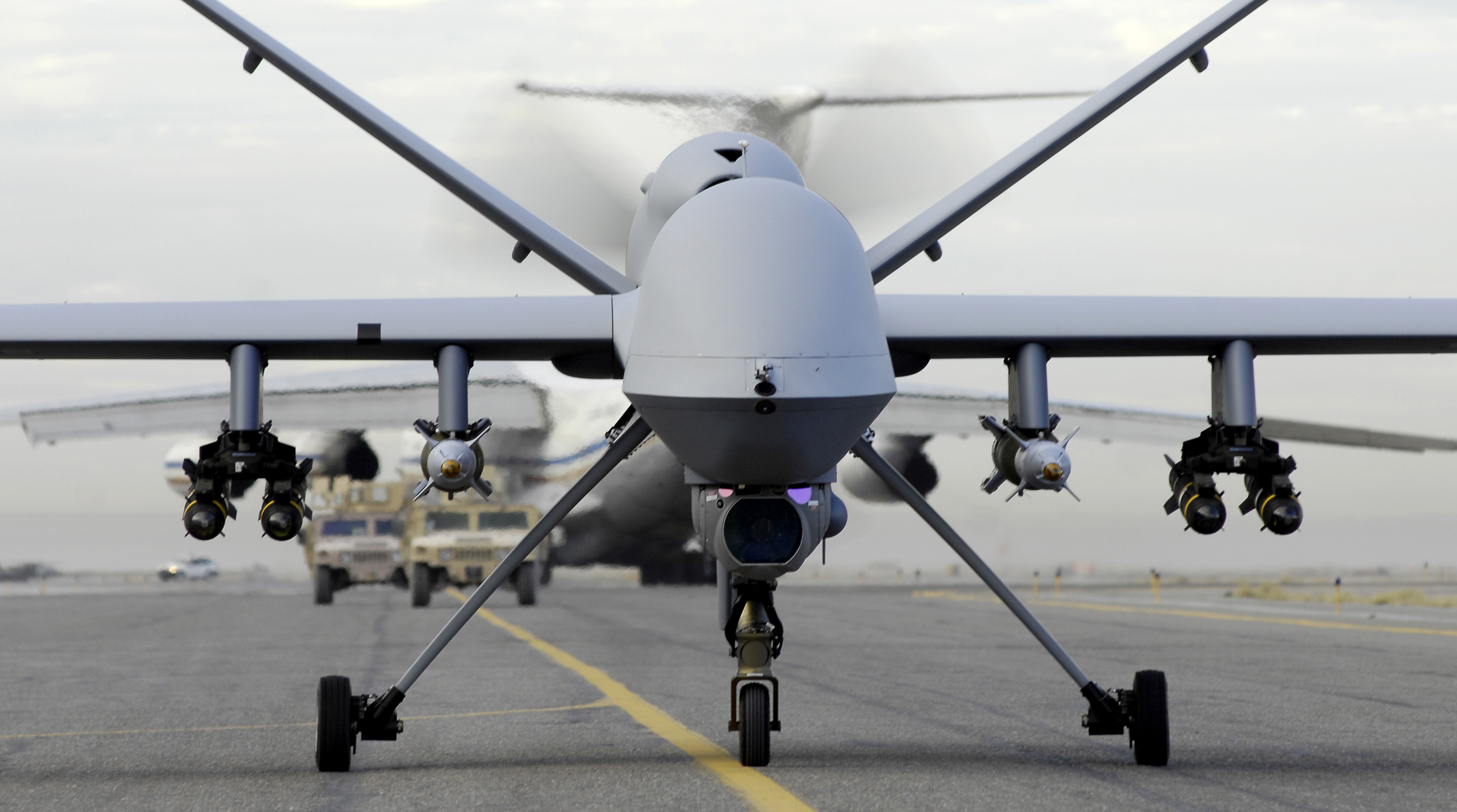
http://upload.wikimedia.org/wikipedia/commons/c/cd/MQ-9_Reaper_taxis.jpg


25 septembre 2011, Géraud Bosman-Delzons, RFI - sélectionné par Spyworld


Les Etats-Unis bâtissent, dans la Corne de l’Afrique et dans la Péninsule arabique, un réseau de nouvelles bases pour des drones, destinés à frapper des membres d’al-Qaïda en Somalie et au Yémen, selon des informations parues mercredi 21 septembre dans le Washington Post. La stratégie du Pentagone n’est pas sans rappeler celle menée dans la zone AfPak (Afghanistan-Pakistan) où les raids des drones-tueurs sont quotidiens. Mais là-bas, cette stratégie avait mis cinq ans à se concrétiser, laissant tout le temps nécessaire à la nébuleuse terroriste de s’organiser. Au Yémen comme en Somalie, la menace al-Qaïda n’est pas une chimère, et l’armée américaine compte bien y augmenter le nombre de ses opérations aériennes.


Dans la Corne de l’Afrique les Américains pourront rapidement utiliser quatre bases aériennes, parmi les vingt-quatre centres de stationnement opérationnels dans la région. Deux d’entre elles ont déjà fonctionné.


Au nord de la Somalie, le Camp Lemonnier, à Djibouti, abrite d’importants moyens d’écoutes, et de reconnaissance.

A l’est, aux Seychelles, dans l’océan Indien, un hangar sur la base aérienne de Mahé accueille trois ou quatre drones MQ-9 Reaper. En principe, compte tenu de l’accord signé en 2009 entre le gouvernement de l’archipel et le Pentagone, les drones (aéronefs sans pilote) sont destinés à lutter contre la piraterie et ne sont pas armés.


Mais des documents diplomatiques, révélés par Wikileaks et dont le Washington Post a pris connaissance, ont prouvé que ces drones ont également conduit des opérations de contre-terrorisme en Somalie. La flottille de ces « chasseurs-tueurs » a repris ses opérations ce mois-ci, après un temps d’interruption. Ils peuvent être équipés de missiles et de bombes guidées par satellite. Peut-être d’ailleurs ont-ils été toujours opérationnels pour des frappes, même si cela a été formellement démenti.


Dans la péninsule arabique, une piste d’atterrissage doit voir le jour sous peu. Les Américains y pressentent l’émergence de nouveaux groupuscules dans les prochaines années.


Enfin, une quatrième base est en construction, à l’ouest, en Ethiopie, allié des Etats-Unis dans la lutte contre les shebabs, les islamistes qui contrôlent la partie méridionale de la Somalie. La présence américaine dans ce pays n’est pas nouvelle, des détachements militaires ont déjà été signalés à Bilate, Hoursso, et Gode. On évoque aussi depuis des années un aérodrome de fortune en brousse qui permettrait aux appareils américains de décoller pour mener des raids en Somalie.


Mais pour les drones, fragiles, nécessitant des dizaines de spécialistes au sol, des hangars de protection et des stations de guidage, un aéroport avec une piste en dur serait nécessaire. Celui d’Idiole, une ancienne base militaire éthiopienne n’est qu’à 200 kilomètres de la frontière somalienne et les Reaper peuvent rester près de 24 heures en l’air à la rechercher de leur cible...


« Deux points chauds en plein développements »


L’objectif visé par les autorités américaines est clair : contrôler l’ensemble de la zone, notamment pour éviter la propagation et le renforcement des groupes affiliés à al-Qaïda. Mais pour le Washington Post, il s’agit aussi de « ne pas reproduire les erreurs du passé », comme l’explique un ancien haut responsable militaire américain dans les colonnes du quotidien : « Nous positionnons en Afrique les forces nécessaires pour être en mesure de faire face à l’ennemi si celui-ci se développe plutôt que d’attendre cinq ans comme nous l’avons fait au Pakistan. »


Le Yémen et la Somalie seront bientôt encerclés par plusieurs flottes de ces drones chasseurs-tueurs. « Cela traduit notre perception qu’il s’agit bien des deux points chauds aujourd’hui en plein développement », affirme le même haut gradé.


Mogadiscio, la capitale somalienne, est en proie à de violents combats depuis 15 ans, tantôt aux mains de l’Union des tribunaux islamiques (shebabs), tantôt sous contrôle de l’armée éthiopienne. Les plans pour la création d’une nouvelle base aérienne en Ethiopie sont dans les tuyaux du Pentagone depuis plusieurs années, mais ont été retardés face aux réticences éthiopiennes.


Si les shebabs représentent le groupe islamiste le plus organisé dans la région, la présence d’al-Qaïda dans la péninsule arabique (Aqpa), au Yémen n’est pas à négliger, bien au contraire. Mercredi 21 septembre, dix membres présumés d’al-Qaïda ont été tués dans des raids de drones contre leurs bastions dans le sud du pays. La cible principale, Saïd al-Chehri, n°2 d’Aqpa, est sorti indemne.


Incarnée notamment par le cheikh Abdel Majid al-Zindani, la tendance islamiste radicale est implantée de longue date au Yémen. De nombreux Yéménites ont pris part au jihad en Afghanistan contre les Soviétiques. Et c’est dans le port d’Aden, en 2000, qu’al-Qaïda avait porté une attaque spectaculaire contre un navire de guerre américain, l’USS Cole.

S’adressant au Congrès, le nouveau directeur de la CIA, déclarait le 13 septembre dernier qu’Aqpa « est devenue l’une des entités régionales les plus dangereuses du djihad dans le monde ».


A l’instar de la zone AfPak, la base éthiopienne pourrait être placée sous le contrôle de la CIA, et non de la Navy comme c’est le cas aux Seychelles. Ce qui signifie une prise de décisions plus souple en ce qui concerne la gestion des drones, de leur rôle de surveillance aérienne et de frappes ciblées. Les forces américaines ainsi rassemblées auront un potentiel de persistance augmenté dans la traque de leurs ennemis.


Partager cet article
Repost0
26 septembre 2011 1 26 /09 /septembre /2011 06:35

http://www.meretmarine.com/objets/500/631.jpg

Frégate marocaine Mohammed V
crédits : Mer & Marine - Vincent Groizeleau


23 septembre 2011 Par Rédacteur en chef. PORTAIL DES SOUS-MARINS


Accostée ce matin au port militaire de Toulon, la frégate marocaine Mohammed V sera en escale jusqu’au 06 octobre dans le cadre de l’exercice annuel de coopération avec la Marine nationale « CHEBEC ».


Le Mohamed V devrait entre autres participer à des manœuvres navales d’envergure avec la frégate furtive Aconit.


Source :  Marine Nationale (CECMED)

Partager cet article
Repost0
26 septembre 2011 1 26 /09 /septembre /2011 06:15

http://upload.wikimedia.org/wikipedia/commons/thumb/f/f1/Bundeswehr_Logo_Marine_with_lettering.svg/772px-Bundeswehr_Logo_Marine_with_lettering.svg.png


September 25, 2011: STRATEGY PAGE


A trade union dispute in Germany has led to reduced German participation in the anti-piracy patrol off Somalia. The problem arose when the union that represented the civilians sailors who manned the navy's four tankers, refused to renew a deal while allowed tanker sailors to work 65 hours a week while off the Somali coast. This amount of hours was needed to run the tankers while on the high seas, and the tanker sailors received extra paid leave, when they returned home, for the hours above the 48 a week their basic contract calls for.


Without the 65 hour week, the tankers cannot operate off Somalia, so German warships there have to pull into a port to refuel, which reduces their time at sea by up to 30 percent (depending on how much time they spend moving at high speed in the pursuit of pirates.) The navy continues to negotiate with the union, but does not have much room to maneuver, as budgets are being cut. Refueling at sea requires specially trained tanker crews, and these tankers are always in short supply. German warships can depend on navy tankers from other countries in an emergency, but not for regular refueling.

Partager cet article
Repost0
25 septembre 2011 7 25 /09 /septembre /2011 17:05

http://upload.wikimedia.org/wikipedia/commons/thumb/f/f5/Flag_of_Libya_%281951%29.svg/800px-Flag_of_Libya_%281951%29.svg.png


24 Sep 2011 Liberation.fr AFP


Les nouvelles autorités libyennes contrôlent des «armes prohibées au niveau international» découvertes dans le sud du pays, a annoncé samedi Moustapha Abdeljalil, président du Conseil national de transition (CNT) lors d’une conférence de presse à Benghazi (est).


Interrogé sur la présence d’armes dans le sud du pays, M. Abdeljalil a répondu: «Il y a bien des armes prohibées au niveau international et elles sont actuellement sous notre contrôle», sans fournir de détails sur la nature de ces armes.


L’Agence internationale de l’énergie atomique (AIEA) avait confirmé vendredi, suite à des informations de presse, la présence d’un stock de concentré d’uranium («yellow cake») près de Sebha, à 750 km au sud de Tripoli.


«Ces armes se trouvent entre Waddan (à 300 kilomètres au sud de Syrte) et Sebha», a précisé M. Abdeljalil.


«Nous ferons appel à des techniciens libyens et à la communauté internationale pour nous débarasser de ces armes en toute sécurité», a-t-il poursuivi.


Vendredi, un chef militaire du CNT, Barka Wardougou, avait déclaré que les nouvelles autorités libyennes savaient «de longue date qu’il y avait des matières radioactives voire biologiques stockées (…) à Sebha» «Nous en avions parlé aux responsables du régime Kadhafi en raison du danger pour les populations civiles. Ils n’ont jamais rien fait», avait-il ajouté.


Le «yellow cake», une poudre insoluble dans l’eau et contenant environ 80% d’uraninite, sert à la préparation de combustible nucléaire. Il peut aussi être enrichi dans la perspective de la fabrication d’armes nucléaires.

Partager cet article
Repost0
24 septembre 2011 6 24 /09 /septembre /2011 08:30

http://upload.wikimedia.org/wikipedia/commons/thumb/f/f5/Flag_of_Libya_%281951%29.svg/800px-Flag_of_Libya_%281951%29.svg.png


23 Sep 2011 DefenseNews AFP


VIENNA - The U.N. atomic agency on Sept. 23 confirmed the existence of raw uranium in Libya after U.S. news channel CNN reported that new regime forces had found potentially radioactive material.


"We can confirm that there is yellow cake (raw uranium) stored in drums at a site near Sabha in central Libya," International Atomic Energy Agency (IAEA) spokeswoman Gill Tudor said.


She said that the uranium, stored by the government of the now-fugitive Moammar Gadhafi, had been declared to the IAEA and that it hoped to be able to examine the material "once the situation in the country stabilizes."


The alleged discovery appeared to contradict a statement from the United States last month, however, that all Libya's yellow cake was at another site at Tajura near Tripoli.


Raw or unprocessed uranium, which has low radioactivity levels, needs to be enriched using a highly complex and expensive procedure before it can be used in nuclear power generation or in atomic weapons.


Libya agreed in 2003 to renounce its activities aimed at developing weapons of mass destruction as part of a rapprochement with Western countries that saw sanctions lifted and sensitive nuclear materials removed.


CNN reported that military forces loyal to the country's National Transitional Council took on Thursday a crew to two large warehouses, one containing thousands of blue barrels.


Several of the barrels were marked with tape saying "radioactive," and several plastic bags of yellow powder sealed with the same tape, CNN said.


Forces loyal to Libya's new regime this week captured Sabha, Libya's largest desert city in the deep south, from forces loyal to Kadhafi.

Partager cet article
Repost0
23 septembre 2011 5 23 /09 /septembre /2011 12:55

http://upload.wikimedia.org/wikipedia/commons/thumb/5/54/Flag_of_IAEA.svg/600px-Flag_of_IAEA.svg.png


23 septembre 2011 Guysen International News


L'Agence internationale de l'énergie atomique a confirmé ce vendredi la présence d'un stock d'uranium concentré près de Sebha, situé au sud de Tripoli.

Partager cet article
Repost0
23 septembre 2011 5 23 /09 /septembre /2011 11:35

nato


Sep 22, 2011 by Amber Wang ASDNews AFP


BRUSSELS - NATO can finish its air campaign in Libya within the next three months, the operations commander said Thursday, as remnants of the ousted regime are now isolated in three pockets of the country.


Asked for an assessment a day after NATO allies extended the mission by another 90 days, Lieutenant General Charles Bouchard told a press briefing: "I'm highly confident we can complete this mission well within this timeframe."


Bouchard said resistance among forces loyal to ousted dictator Moamer Kadhafi was restricted to "only three isolated pockets" -- Kadhafis hometown of Sirte with a strip of coastal access; an area in the town of Bani Walid to the west; and another section around Al Fugaha to the south.


However, after a six-month-old air war, the Canadian general said progress towards NATO's final goal would be largely "based on NTC forces on ground... and also on the will of the regime forces to continue."


His comments came after fighters backing the National Transitional Council, Libya's new rulers, said Thursday they had to halt an assault on one key pro-Kadhafi cluster for a week owing to a lack of ammunition and supplies.


Bouchard said pro-Kadhafi forces were still engaging in "immoral", "unethical" and "illegal" action, with civilians still being held as human shields in the most dangerous sites.


However, Bouchard added that Kahafi forces "are no longer able to conduct coordinated operations throughout Libya," while the number of people at risk from pro-Kadhafi military action had fallen to about 200,000 people.


The big coastal cities of Tripoli, Benghazi and Misrata were all now "back to normal," and the "rule of law and order has been restored," he said.


As a result, despite complaints on Wednesday from Human Rights Watch about conditions in border camps for refugees from the fighting, Bouchard said NATO did not consider the country to be suffering from a humanitarian crisis.


As for Kadhafi's location, in Libya or elsewhere, Bouchard said he had no idea where the fugitive colonel was but stressed that the ousted strongman continues to "give orders" and "entice regime forces" to act.


"What we find right now is the media station in Syria is providing an outlet," he said, referring to Arrai TV, "but I do not know where (the broadcasts) are originating."


While NATO was "well aware of movements to the south," with armed convoys having crossed into Niger, "without troops on the ground, it is impossible for us to verify" who and what in the way of weapons are being transported.


Besides, "as far as my mandate is concerned, troops going away are no longer causing risk," and it is "left to individual governments of nations where troops are going to deal with that" and ensure weapons removed from Libya are taken back and destroyed.


NATO Secretary General Anders Fogh Rasmussen said Wednesday that warplanes would stay in the air as long as Libyan civilians are under threat but "not a day longer" than required, and that it could be called off "at any time."


The current 90-day mandate was due to expire on September 27.

Partager cet article
Repost0
23 septembre 2011 5 23 /09 /septembre /2011 05:30

http://www.flightglobal.com/assets/getAsset.aspx?ItemID=41959

Photo Sgt Pete Mobbs UK MoD


22/09/11 By Craig Hoyle SOURCE:Flight International


The UK is to scale back its equipment contribution to NATO's Operation Unified Protector campaign, but has said its decision will not reduce its current fast jet sortie rate over Libya.


Announced on 21 September, as the North Atlantic Council agreed to extend the campaign's mandate by a further 90 days until late December, the UK's decision will lead to the withdrawal of four Eurofighter Typhoons and three Westland/Boeing Apache AH1 attack helicopters from the Mediterranean region.


"The good progress made to date will allow us to bring home four Typhoon fast jets and three attack helicopters in the near future, without affecting our ability to continue enforcing UN Security Council Resolution 1973," said Defence Secretary Dr Liam Fox.


Describing the UK's support for the NATO mission as "unwavering", Fox said its operation "Ellamy" contribution will retain 16 Royal Air Force Panavia Tornado GR4 strike aircraft, forward-based at Gioia del Colle, Italy, and two Army Air Corps Apaches. These will remain in-theatre "for as long as required".


UK military aircraft and naval vessels have now struck almost 1,000 targets since the start of international action against the regime of Col Muammar Gaddafi.


In its most recent operational update, the UK Ministry of Defence said a package of Tornados and Typhoons struck two command and control facilities in Sirte early on 21 September.

The Tornado force also continues to conduct long-range strike missions, launched from RAF Marham in the UK and using MBDA Storm Shadow cruise missiles (below).


The most recent of these, performed on 14 September, saw a number of the weapons employed against a military vehicle depot and a pro-Gaddafi base near Sebha.


© SAC Simon Armstrong/Crown Copyright


In an operational first, the following day a formation of Gioia del Colle-based GR4s struck what the MoD described "a large concentration of former regime armoured vehicles", during a salvo firing of 24 millimetre-wave radar seeker-equipped MBDA Brimstone air-to-surface missiles.


Previous combat use of the Brimstone had been restricted to using weapons modified with a replacement dual-mode seeker."Seven or eight target vehicles were observed on fire, and the precision nature of the Brimstone's warhead means that additional targets were most likely destroyed or severely damaged," the MoD said.

Partager cet article
Repost0
22 septembre 2011 4 22 /09 /septembre /2011 20:30

http://www.rfi.fr/sites/filesrfi/imagecache/rfi_43_large/sites/images.rfi.fr/files/aef_image/000_Par6112402_0.jpg 

Le Premier ministre tunisien par intérim, Béji Caïd Essebsi. AFP/FETHI BELAID


22 septembre 2011 Par RFI


L'armée tunisienne a attaqué un convoi de véhicules lourdement armés le 21 septembre 2011. Elle a détruit une grande partie du convoi. Sept des neuf véhicules tout terrain qui le composaient ont été détruits par un hélicoptère. Les combats ont eu lieu dans le sud de la Tunisie, à 80 km de la frontière avec l'Algérie. On ignore pour le moment  s'il s'agit de jihadistes ou de trafiquants, qui auraient selon les autorités tunisiennes tiré les premiers sur un hélicoptère.


Selon la version des faits, donnée par le ministère de la Défense, les combats ont commencé le 21 septembre au matin après qu'une patrouille aérienne de l'armée ait essuyé des tirs en provenance d'un convoi de neuf véhicules tout terrain.


L'accrochage s'est produit dans les environs de la ville de Douz, à quelque 80 kilomètres de la frontière algérienne. Mercredi en fin d'après midi, le porte-parole du ministère de la Défense assurait que sept véhicules avaient été détruits et que les deux autres étaient immobilisés dans le désert, à une vingtaine de kilomètres de l'Algérie.


L'armée déclare par ailleurs n'avoir subi aucune perte humaine ou matérielle dans cette confrontation. Si l'identité du groupe qui a fait le coup de feu demeure encore mystérieuse, une source sécuritaire, jointe par RFI dans le sud du pays, était formelle que « ce sont des jihadistes venus d'Algérie, dit-elle, les contrebandiers n'empruntent pas ce chemin et ce n'est pas leur façon d'agir ».


Difficile à surveiller, cette zone désertique que partagent la Tunisie et l'Algérie est propice aux trafics, la prolifération des armes issues du conflit libyen ne devrait rien arranger.

Partager cet article
Repost0
22 septembre 2011 4 22 /09 /septembre /2011 17:10

http://upload.wikimedia.org/wikipedia/commons/1/11/Typhoon_f2_zj910_canard_arp.jpg


Sept. 22, 2011 defense-aerospace.com

(Source: British Forces News; posted Sept. 22, 2011)


Defence Secretary Dr Liam Fox has announced that four Typhoons and three Apache helicopters are to be withdrawn from the Libya operation.


Welcoming the announcement by NATO that the mission was continuing for another 90 days, Dr Fox said "good progress" in the operation means some of the aircraft can be brought home.


He said: “The UK has been at the forefront of the campaign since the outset and as the Prime Minister has made clear throughout, the UK will maintain its commitment for as long as it is required.


"Our support for the people of Libya at this critical time is unwavering and NATO’s mission to protect civilians must continue until it is no longer necessary.


"That’s why we have decided to keep 16 Tornado aircraft on operations to sustain the required fast jet sortie rate and we intend to keep two Attack Helicopters in Theatre for as long as required." (ends)


http://www.army-technology.com/projects/apache/images/apache113.jpg

British Army AH-64 Longbow Apaches are equipped with CRV7 70mm rocket systems. 

source army-technology.com

Partager cet article
Repost0
22 septembre 2011 4 22 /09 /septembre /2011 16:40

http://optronique.net/defense/wp-content/uploads/2011/09/casque_HMD_Cobra_Saab_BAE_Denel.jpg

casque de vision tête haute HMD Cobra du consortium Saab/BAE/Denel


22 septembre 2011 par Optro & Défense


L’Afrique du Sud est le premier utilisateur du chasseur multirôle de quatrième génération JAS 39 Gripen à avoir commandé au suédois Saab ses casques de dernière génération HMD Cobra pour les utiliser sur leurs 26 chasseurs. Outre l’armée de l’air sud-africaine, le système sera également intégré sur les Gripen de l’armée de l’air suédoise.


Développés en coopération entre Saab, BAE Systems et Denel Optronics (devenu Carl Zeiss Optronics GmbH depuis 2007), la livraison des systèmes  à un premier escadron a maintenant commencé, alors même qu’en janvier, BAE systems proposait ses nouveaux casques au catalogue du Typhoon et qu’il y a 2 mois, VSI faisait tester ses viseurs de casque binoculaires sur les F16  des forces aériennes danoises en Libye.


Un viseur tête haute HMD (Helmet Mounted Display) affiche les données directement sur la visière du casque, permettant au pilote de rester « heads up » aux moments cruciaux de la mission, c’est à dire de ne pas avoir à quitter des yeux ses objectifs pour devoir regarder un écran déporté intégré au cockpit. Le Cobra proposé par Saab est un de ces systèmes binoculaire (Thales propose de son côté le visiocasque TopOwl) qui affiche aussi bien la symbologie relative aux munitions air-air et air-sol que les données de vol de base.


Conçu pour répondre au mieux aux exigences du Gripen, le casque Cobra fonctionne par tous les temps, pour toutes les opérations relatives à l’enveloppe de vol de combat complète. En tant que composante clé du système Gripen, la superposition des paramètres de vol, des données issues des différents capteurs et des disponibilités des armements embarqués sur la vision directe du monde réel permet de maximiser l’efficacité à travers tout le spectre des missions tactiques.


Le Cobra offrira également aux pilotes Gripen de la SAAF (South African Air Force) la possibilité d’utiliser le plein potentiel de leurs missiles air-air courte portée à imagerie infrarouge IRIS-T (un produit de Diehl BGT Defence) et du futur missile air-air A-Darter (un produit de Denel Dynamics), lui aussi basé sur une tête chercheuse à imagerie infrarouge et testé pour la première fois par la SAAF en juillet dernier.


missile air-air à imagerie infrarouge IRIS-T de Saab
missile à imagerie infrarouge IRIS-T
Sources :
- communiqué de presse du 20 septembre 2011 de Saab
- communiqué de presse du 20 juillet 2011 de Saab
- communiqué de presse du 17 juin 2003 de Saab
Partager cet article
Repost0
21 septembre 2011 3 21 /09 /septembre /2011 21:10

http://upload.wikimedia.org/wikipedia/commons/thumb/7/77/Flag_of_Algeria.svg/800px-Flag_of_Algeria.svg.png


21 Septembre 2011 - lexpressiondz.com


L'Algérie a participé mercredi au cinquième exercice de sûreté aérienne « Circaete-11 », axé sur la défense en cas d'attaque terroriste, organisé et dirigé par l'Espagne.


Cet exercice, entrant dans le cadre d'un plan d'action pour l'année 2011 des pays membres de l'Initiative « 5+5 défense », suivait ceux conduits par la France en 2007, l'Italie en 2008, le Portugal en 2009 et l'Algérie en 2010, a indiqué la cellule de communication du Commandement des forces de défense aérienne du territoire (Cfdat).


Les participants ont mis en application un « manuel pratique des procédures communes aux pays membres de l'Initiative 5+5 défense » pour l'échange de données et d'information sur une menace aérienne terroriste de type « Renegade ».


« Renegade » désigne une plate-forme aérienne civile évoluant de telle façon qu'elle puisse faire naître le soupçon d'un emploi comme arme terroriste, en référence aux attentats du 11 septembre 2011.

Partager cet article
Repost0
21 septembre 2011 3 21 /09 /septembre /2011 17:25

http://www.asdnews.com/data_news/ID38292_600.jpg


Sep 21, 2011 ASDNews Source : Saab AB


South Africa was the first Gripen customer to order the state-of-the-art "Cobra" HMD ( Helmet Mounted Display) for use on their 26 Gripen fighters. The deliveries of the system to the front line squadron has now commenced and 2 Squadron in Makhado can now boast the first operational Cobra system in the world.


A HMD displays data directly onto the helmet visor, allowing the Gripen pilot to stay 'heads up' at crucial points in the mission. The Cobra is a binocular system that displays both air-to-air and air-to-ground weapons symbology, as well as basic flight data.


Selected to meet the stringent requirements of the Gripen, the 'Cobra' Integrated Display Helmet provides, all weather, all attitude operation over the full combat flight envelope. As a key component to the Gripen weapon delivery system, capabilities include weapon/sensor slaving with real world overlay of flight parameters, sensor data, target cuing and weapon status. These are designed to maximize effectiveness across the whole spectrum of tactical missions.


The Cobra will also allow the SAAF Gripen fighters to use the full potential of their IR-missiles IRIS-T and the future A-Darter, in close-in air combat. The HMD increases the with-in-visual range air-to-air capability considerably. The two first operational flights with the HMD were performed by Officer Commanding, 2 Squadron n, Lt Col Musa Mbhokota. The Instructor in the rear seat was Saab Test Pilot Robin Nordlander.


Apart from the South African Air force, the HMD system will also be integrated into Swedish Air Force Gripen fighters.

Partager cet article
Repost0
21 septembre 2011 3 21 /09 /septembre /2011 07:20

http://upload.wikimedia.org/wikipedia/commons/thumb/9/9d/Flag_of_Angola.svg/450px-Flag_of_Angola.svg.png


20/09/11 Angola press


Luanda - Les délégations des Ministères de la Défense de l'Angola et de la République de la Serbie, ont débuté, mardi, à Luanda, des conversations officielles en vue d'aborder et de projeter des aspects liés à la coopération dans ce domaine.


À ces conversations, la partie angolaise est conduite par le titulaire du portefeuille, Cândido Pereira Van-Dúnem, tandis que celle de la Serbie est menée par le ministre de la Défense, Dragan Sutanovac, qui séjourne au pays depuis mardi, pour une visite officielle de trois jours.


Procédant à l'ouverture de l'acte, le ministre angolais de la Défense a affirmé que l'Angola "était toujours et restera disponible de resserrer et approfondir les relations d'amitié et coopération avec la Serbie, car il s'agit d'une coopération traditionnelle, qui remonte au début de la lutte de libération et préservation de l'Indépendance Nationale".


"Ce sont des liens qui ont résisté à toutes les transformations politiques, sociales et économiques survenues, non seulement dans nos respectifs pays, mais aussi dans le monde entier", a-t-il expliqué.


Cândido Van-Dúnem a précisé que la République de la Serbie, au cours de l'histoire de la lutte du peuple angolais, qui est passé par plusieurs vicissitudes, elle a toujours appuyé l'Angola avec son amitié, forgée sur un climat d'estime.


"Je suis certain que votre visite renforcera davantage les relations d'amitié qui unissent les deux pays et peuples, avec un leag historique de valeur, fruit de la coopération existant", a-t-il poursuivi.


Selon le gouvernant angolais, les Forces Armées Angolaises (FAA) continuent à expérimenter un dur processus de réédification, qui présuppose le perfectionnement des cadres et dressage des troupes, modernisation de la technique, réqualification de leurs infrastructures, ainsi que l'amélioration des conditions de vie des effectifs.


Il a fait savoir que les Forces Armées Angolaises (FAA), en ce moment, participent activement au processus de reconstruction du pays, ainsi que dans la lutte contre les grandes endémies comme le HIV/SIDA, la malaria, le choléra et la tuberculose, dans l'appui aux populations sinistrées et dans le déminage du territoire national.


Intègrent les délégations aux conversations, qui se tiennent jusque mercredi, au Ministère de la Défense Nationale, des officiers généraux et supérieurs de deux pays et les respectifs ambassadeurs.


Dans le cadre de son programme de visite, le ministre serbe prévoit, pour ce même mardi, des rencontres avec le président de l'Assemblée Nationale, António Paulo Kassoma, le ministre d'État et chef du Cabinet Militaire de la Présidence de la République, Hélder Vieira Dias, ainsi qu'une visite à la nouvelle Centralité de Kilamba.


Mercredi, le gouvernant serbe sera reçu en audience par le Président de la République, José Eduardo dos Santos, et visitera les Commandements de l'Armée de terre, de la Marine de Guerre Angolaise et de la Force Aérienne Nationale, avant de se rendre dans la province de Huíla(sud).


La délégation serbe regagnera jeudi son pays.

Partager cet article
Repost0
21 septembre 2011 3 21 /09 /septembre /2011 07:15

http://www.meretmarine.com/objets/500/30696.jpg


Patrouilleur algérien du type FPB98 MKI

crédits : OCEA


21/09/2011 MER et MARINE


Le groupe français Ocea a mené à bien le programme des patrouilleurs destinés à l'Algérie. Le dernier bâtiment, le Sirius, a été livré fin juillet. En tout, 20 unités du type FPB98 MKI ont été réalisées pour les garde-côtes, le premier étant mis à flot en octobre 2008. Longs de 31.8 mètres pour un déplacement de 100 tonnes, ils peuvent atteindre la vitesse de 30 noeuds grâce à une propulsion assurée par deux moteurs diesels Caterpillar et deux hydrojets. Leur armement est constitué d'un canon de 30mm. Ces patrouilleurs ont vu leur coque réalisée par le site Ocea de Fontenay-le-Comte, en Vendée, l'achèvement s'étant ensuite déroulée à Saint-Nazaire. Plus grand et peint en blanc, un 21ème navire, la Croix du Sud, a quant à lui été réalisé par le chantier Ocea des Sables d'Olonne.


Après cette belle série, on notera que le constructeur français a vendu trois patrouilleurs dérivés au Bénin.

Partager cet article
Repost0
20 septembre 2011 2 20 /09 /septembre /2011 16:55

http://www.trdefence.com/wp-content/uploads/2011/09/turkish-defense-firms-target-africa-2011-09-19_l.jpg 

BMC, the maker of Kirpi armored vehilces, is among the Turkish firms that visited Ghana. DHA photo


September 19, 2011 Ümit Enginsoy - TRDEFENCE


ANKARA - Turkey’s rapidly developing defense industry is now, for the first time in its history, seeking to make major exports to several sub-Saharan countries, most notably Ghana, a senior procurement official said over the weekend.


A senior delegation from the Undersecretariat for the Defense Industry, Turkey’s procurement agency, visited Ghana earlier this month. The Turkish defense industry officials also held talks with their counterparts from Nigeria, Cameroon and Kenya.


Promising market


“Talks with those African nations were very positive. We expect they will lead to very positive concrete results shortly,” the procurement official said. “Sub-Saharan Africa will occupy a major place on our priority list for export purposes. Such efforts will potentially be worth billions of dollars over the upcoming decades.”


Key sectors for exports to sub-Saharan Africa include armored vehicles and military electronics, arguably Turkey’s most developed defense areas.


Representatives of Aselsan, Turkey’s top state-owned electronics manufacturer, and top private Turkish vehicle makers Oyolar, FNSS and BMC took part in the visit to Ghana.


Among sub-Saharan countries, South Africa, a developed arms manufacturer, already has some cooperation with Turkish companies. The South African company Denel sought Turkey’s attack helicopter contract worth billions of dollars, but at the last stage lost to Italy’s AgustaWestland three years ago. Denel is cooperating with Turkey’s FNSS, which earlier this year won a $600 million contract to sell Pars 8X8 armored vehicles to Malaysia. Denel will produce turrets for the vehicles.


Turkey is also eying increased defense sales to North African countries, but is waiting for the situation to calm down in places hit by the “Arab Spring” wave of protests and unrest. In Tunisia and Egypt, the regimes of former dictators ended peacefully. In Libya, despite the ousting of former strongman Moammar Gadhafi, a civil war is still continuing.


Potential in North Africa


“There is a great potential of work to be done in the defense industry field with North African nations. We are waiting for some signs of greater stability in those countries,” the procurement official said.


Once a top buyer of defense equipment from its Western partners, Turkey in the past few years has become increasingly active in weapons exports, with its defense exports expected to exceed $1 billion this year.

Partager cet article
Repost0
20 septembre 2011 2 20 /09 /septembre /2011 12:55

http://www.spacedaily.com/images-lg/jacob-zuma-south-african-president-lg.jpg


Sep 19, 2011 Spacewar.com (UPI)


Pretoria, South Africa - South Africa's government reopened a potentially explosive corruption investigation into a $4.8 billion arms deal in 1999 in which President Jacob Zuma, fighting for his political survival in a leadership battle, has been implicated.


Zuma's former financial adviser, Schabir Shaik, was sentenced to 15 years in prison in 2005 for soliciting bribes from Thint, a South African subsidiary of the French arms giant Thales International that was linked to the deal and illegally paying Zuma more than $150,000.


Shaik was released on medical grounds in 2009 after serving less than three years.


Another official, Tony Yengeni, who was chairman of parliament's defense committee at the time of the deal, was convicted of fraud in 2003 and sentenced to four years in prison. He was freed in January 2007.


Zuma was subsequently charged with corruption over the deal, in which a key player was Europe's biggest defense contractor, BAE Systems of Britain.


But in August 2003, charges against Zuma, then deputy president, were dropped. After Shaik was convicted, Zuma was sacked as deputy president and charged with two counts of corruption in the 1991 deal.


These charges were dropped on a legal technicality in September 2006 following allegations of political interference in the case that had tainted evidence against him. He became president in 2009.


The South African media has repeatedly alleged that BAE maintained a $100 million slush fund that was used to bribe South African politicians. Zuma has consistently denied any wrongdoing.


So have BAE and Thales, although BAE agreed in February 2010 to pay almost $400 million in fines to resolve bribery and fraud investigations linked to arms sales in the United States and Britain.


That ended years of investigations by the U.S. Defense Department into alleged kickbacks in global arms deals, most notably in Saudi Arabia.


In 2006, Britain's Serious Fraud Office dropped an investigation into BAE's $43 billion arms deal with Saudi Arabia in 1985 after the Labor government of Prime Minister Tony Blair forced prosecutors to drop the case on grounds of national security.


The 1999 deal, which also involved defense companies from Germany, Italy and Sweden, was post-apartheid South Africa's largest arms transaction and was intended to modernize the country's defenses.


It included Gripen fighter aircraft built by Saab, Hawk training aircraft from BAE as well as submarines, corvettes and helicopters.


The Democratic Alliance, South Africa's main political opposition, has repeatedly called on Zuma to reopen the arms deal investigation, which was shut down last October.


DA leader Helen Zille, prime minister of Western Cape province, accused the ANC government of "a massive coverup" after the probe was abandoned.


She told the Financial Times substantial evidence had been found of "procurement deals that didn't follow due process or the needs of the military, precisely to secure benefits for the ANC as a party, and key individuals."


Zuma's surprise decision to reopen the investigation came after documents came to light indicating that Saab had paid bribes to Fana Hlongwane, adviser to Defense Minister Joe Modise.


Saab disclosed in June that payments totaling $3.5 million had been made through BAE to the Swedish company's South African subsidiary, Sanip Pty Ltd. It said the payments, which occurred without Saab's knowledge, were made to a South African consultant, but were never entered in Sanip's accounts.


Saab said it has handed over all documents to Sweden's anti-corruption authorities and will work with any further inquiry. BAE insists the matter was settled in the 2010 court settlement.


The British defense giant, a major contractor to the U.S. Defense Department, has been implicated in investigations of half a dozen major arms in Africa and the Middle East over the years. It produces a wide range of weapons systems, including Eurofighter Typhoon aircraft and Trident nuclear submarines.


Andrew Feinstein, a former ANC member of Parliament who headed an earlier official probe into the 1999 deal, said, "If an investigation is reopened in Sweden it could prove an embarrassment to a number of countries."


Zuma's move is widely seen as a bid to take control of the new investigation and limit damage to himself and his political allies in the ANC as they strive to fight off challenges from younger figures who seek to take power in party elections in 2012.

Partager cet article
Repost0
20 septembre 2011 2 20 /09 /septembre /2011 12:35

http://upload.wikimedia.org/wikipedia/commons/a/a3/C130e-86th-aw.jpg


Sept 19, 2011Spacewar.com (AFP)


Ankara - A Turkish military cargo plane dropping humanitarian aid over the Libyan town of Bani Walid came under fire from the ground, the Turkish news agency Anatolia reported Monday.


The incident happened on Saturday when one of two Turkish C-130 transport planes parachuting 22 tonnes of aid to residents, was fired on, the agency said, citing a journalist on the plane.


The pilots took evasive action and narrowly missed being hit, returning the plane safely to base in Turkey after a brief stopover in Benghazi to check for possible damage.


Turkish authorities provided Libya's interim leadership with the geographic coordinates of the area where the attack took place for them to try and establish whether the fire came from troops fighting for or against ousted leader Moamer Kadhafi, according to Turkish daily Hurriyet.


Turkish Prime Minister Recep Tayyip Erdogan visited Libya on an "Arab Spring" tour last week, meeting the leaders of the National Transitional Council (NTC).


Kadhafi diehards in his hometown Sirte and in Bani Walid stood their ground over the weekend as NTC combatants tried to break their morale by preparing for a new multi-pronged advance.

Partager cet article
Repost0
20 septembre 2011 2 20 /09 /septembre /2011 07:30

http://www.meretmarine.com/objets/500/36395.jpg


Puma et Caracal s'approchant d'un BPC de la Marine nationale

crédits : EMA


20/09/2011 MER et MARINE


On en sait un peu plus sur les moyens mis en oeuvre pour couvrir la visite de Nicolas Sarkozy et David Cameron en Libye le 15 septembre. En complément du service de protection mis en place par l'Elysée, la sécurité du président français et du premier ministre britannique a été assurée par les unités déployées dans le cadre de l'opération Harmattan, à commencer par les bâtiments de la Marine nationale intégrés à la Task Force 473. L'opération s'est déroulée en deux temps avec deux dispositifs parallèles, explique l'Etat-major des Armées. A l'aéroport de Tripoli tout d'abord, où le nouvel A330 présidentiel a atterri en milieu de matinée. Partis du bâtiment de projection et de commandement Tonnerre, qui croisait à quelques nautiques de la capitale libyenne, cinq hélicoptères de manoeuvre Caracal et Puma, appuyés par deux hélicoptères de combat Tigre, y attendaient les autorités, avec à leur bord des éléments de protection de l'armée de l'Air et du personnel médical. Leur mission a consisté à acheminer la délégation en toute sécurité vers le centre-ville, où Nicolas Sarkozy et David Cameron ont donné une conférence de presse commune. Une fois cette prise de parole terminée, ils ont effectué la manoeuvre inverse jusqu'à l'aéroport.


Puma devant l'avion présidentiel (© : EMA)

Un second BPC devant Benghazi

Le président de la République, le premier ministre britannique et leurs délégations ont ensuite gagné Benghazi par avion en début d'après-midi. La seconde phase de l'opération « Autorités » commençait pour les marins, terriens et aviateurs de la TF 473. Au large de Benghazi, c'est du BPC Mistral, cette fois, qu'un groupement d'hélicoptères a décollé pour être en mesure d'accueillir les autorités et leurs délégations à leur arrivée à l'aéroport, prendre en charge leurs déplacements et assurer leur protection.


Pendant toute la durée de l'opération, les deux frégates de la TF 473 ont accompagné chacune un BPC dans les eaux libyenne : le La Fayette aux côtés du Mistral et le Cassard près du Tonnerre. En parallèle, un important dispositif aérien était engagé par l'armée de l'Air et l'aéronautique navale. Des avions de combat, un drone Harfang et deux avions de patrouille maritime Atlantique 2 ont, ainsi, assuré dans le ciel l'étanchéité de la bulle de sécurité.


Puma au dessus du littoral libyen (© : EMA)


Puma accompagné de deux Tigre (© : EMA)

Partager cet article
Repost0
20 septembre 2011 2 20 /09 /septembre /2011 06:15

http://image.exct.net/lib/ff2e11737161/i/1/d24c1e7c-4.JPG 

A Royal Air Force Typhoon pilot enters the cockpit as the sun

sets over Gioia del Colle,southern Italy.

Image: Crown Copyright/MOD 2011


09/19/2011 Paul Smyth - defenceiq.com


Although it is not yet over, the NATO-led campaign in Libya is drawing to a close and interest will now grow in post-intervention reviews that look for ‘lessons learned’. In theory, by identifying mistakes that were made, factors that shaped operations and successful activities or decisions, NATO might enhance its performance in future conflicts. In practice, things are not so straightforward.


First, in an intervention lasting 6 months there is much activity and information to consider so examination of the campaign must be discriminating. Lessons are not merely observations of events, or diary records that suit official histories, but opportunities for learning. Lessons should educate and therefore teach NATO how to do things better; illustrate relevant constraints and capture the benefit of experience. Without discrimination it is likely that valuable lessons would be missed amongst a sea of distracting details and irrelevant information.   


Second, a criticism of western militaries is that they routinely prepare to re-fight the last war in which they were involved. This problem creates difficulties when assessing what lessons should be taken from a conflict as their future validity may rest on the specific characteristics of a subsequent conflict. The key is, therefore, to capture all perceived lessons but to be wise in their potential application. This wisdom is particularly important when lessons suggest action should be taken immediately (for example in defence procurement), and in later conflicts when success may be determined by choosing valid lessons and rejecting irrelevant ones.


Finally, capturing lessons is made more difficult in a coalition context where criticism of specific participants may create friction within the coalition and the need for unity may prove an obstacle to candid assessment. Similarly, even when the lessons-learned process is carried out with candour, in an alliance there is no guarantee that criticised allies will acknowledge any fault and implement consequent changes or that lessons with common application will be accepted and acted upon by all relevant parties.


The Libyan crisis will provide NATO with opportunities to learn lessons for future benefit. Identifying those lessons will require careful discrimination, candour and tact. How well those lessons may be assimilated and practically applied is dependent on the balance of power between individual alliance members and NATO as a bloc, but whatever influence the Libyan campaign may exert on future operations, NATO must avoid the trap of preparing for the last war.

Partager cet article
Repost0
20 septembre 2011 2 20 /09 /septembre /2011 06:00

http://upload.wikimedia.org/wikipedia/commons/thumb/9/9d/Flag_of_Angola.svg/450px-Flag_of_Angola.svg.png


19/09/11 Angola Press


Luanda – Le ministre de la Défense de la République de la Serbie, Dragan Sutanovac, est attendu mardi, à Luanda, pour une visite officielle de deux jours en Angola, durant laquelle il sera reçu par le Chef de l’État, José Eduardo dos Santos.


Selon un communiqué de l’ambassade de la Serbie en Angola, Dragan Sutanovac arrivera à Luanda à 05h00, ensuite il ira déposer une gerbe de fleurs au pied du monument du premier président de l’Angola, António Agostinho Neto.


Vers 09h30, Dragan Sutanovac va s’entretenir en privé avec le ministre de la Défense Nationale de l’Angola, Cândido Pereira Van-Dúnem, puis il y a aura des conversations officielles.


Dans l’après-midi, le ministre serbe, Dragan Sutanovac, sera reçu en audience par le Chef de l’État, José Eduardo dos Santos, et ensuite par le président de l’Assemblée Nationale, António Paulo Kassoma.


Le ministre de la Défense de la Serbie aura également une rencontre avec le ministre d’État et chef du Cabinet militaire du Président de la République.


Le programme de la visite de Dragan Sutanovac comprend aussi des visites à l’hôpital Militaire principal, à l’Institut supérieur technicien militaire, à l’école supérieure de guerre et aux commandos de l’armée.

Partager cet article
Repost0
19 septembre 2011 1 19 /09 /septembre /2011 18:15

http://www.mod.uk/NR/rdonlyres/BCCA88AB-ACB0-41D5-9A9E-75A52CCD3B83/0/Ellamy9061103290016OutUnc0072.jpg


A Royal Air Force Tornado GR4 aircraft lands at Gioia del Colle, Italy, having expended its entire payload of Brimstone missiles and Paveway IV bombs. Picture: Corporal Babs Robinson, MOD 2011


19 Sep 11 UK MoD  A Military Operations news article


RAF aircraft have, over the weekend, successfully engaged pro-Gaddafi forces and military targets in Libya as part of NATO's efforts to enforce UN Security Council Resolution (UNSCR) 1973.


Yesterday, Sunday 18 September 2011, NATO maintained regular reconnaissance missions over those remaining areas where troops loyal to the former regime continue to dominate the civilian population.


During the early evening, a Royal Air Force patrol of Tornado and Typhoon aircraft identified hostile vehicles near Waddan. A multiple rocket launcher and an armed pick-up truck were destroyed by the jets using Paveway laser and GPS guided bombs.


Another armed reconnaissance patrol during the evening, over Bani Walid, located a former regime main battle tank, which was subsequently disabled by a direct hit from a Brimstone missile.


On Saturday, 17 September, RAF Tornado GR4s were tasked by NATO to conduct a precision strike against a military headquarters near Hun in central Libya.


Major General Nick Pope, the Chief of the Defence Staff's Communications Officer, said:


    "Seven Paveway bombs destroyed the target. Further north, other RAF aircraft played their part in NATO's intensive armed reconnaissance missions over the city of Sirte, and one patrol destroyed an armoured personnel carrier and a pair of armed pick-up trucks, using Brimstone and Paveway munitions.


    "Early in the morning, Tornados mounted a further strike against one of Gaddafi's ammunition facilities, just to the west of Sirte. Again, the Paveway bombs proved extremely accurate and destroyed the target."


Since the start of military operations on 19 March 2011, Royal Navy, Royal Air Force, and Army Air Corps strikes have damaged or destroyed more than 960 former regime targets that presented a threat to the Libyan people.

Partager cet article
Repost0

Présentation

  • : RP Defense
  • : Web review defence industry - Revue du web industrie de défense - company information - news in France, Europe and elsewhere ...
  • Contact

Recherche

Articles Récents

Categories