Overblog Tous les blogs Top blogs Entreprises & Marques Tous les blogs Entreprises & Marques
Suivre ce blog Administration + Créer mon blog
MENU
16 octobre 2011 7 16 /10 /octobre /2011 08:50

http://blog.heritage.org/wp-content/uploads/USS_Arleigh_Burke_Mediterranean2.jpg


October 14th, 2011 MDAA


A week ago, the Spanish government of Socialist Prime Minister José Luis Rodríguez Zapatero agreed to Spain’s participation in NATO’s European missile defense system by allowing four U.S. Navy Aegis guided-missile destroyers of the Arleigh Burke class to be stationed at the naval base of Rota, in southwestern Spain.


These destroyers are armed with the Standard SM-3 surface-to-air missile (SAM) designed to intercept short- and medium-range ballistic missiles. The U.S. Navy destroyers will be based in Rota beginning in 2013, along with 1,100 servicemen and 100 civilian employees. Together with their families, it is expected that 3,400 Americans will live in Rota.


The basing of the destroyers at Naval Station Rota will create job opportunities for the Spanish through new construction projects and new jobs expected to be created in the economically depressed Bay of Cadiz area.


The four Navy destroyers will be based permanently in Naval Station Rota, regarded as “the Gateway of the Mediterranean,” to provide Europe with missile defense in the Mediterranean region and in the eastern Atlantic. Such a role by the U.S. Navy warships could be complemented by the fifth Aegis frigate of the Spanish Álvaro de Bazán class (Project F-100), scheduled to enter service in 2012.


The new F-105 Cristóbal Colón will be equipped with the Aegis Weapon System Baseline 7.1, the advanced Aegis Open Architecture version capable of performing ballistic missile defense that includes Cooperative Engagement Capability (CEC), a program that links the ships of a task force so that they share radar tracks for fire-control purposes to engage enemy aircraft, cruise missiles, or ballistic missiles. It could also link ships to E-2D Advanced Hawkeye airborne early warning and control aircraft and land-based SAM batteries.


The Cristóbal Colón will have the SPY-1D(V) phased array radar, designed to operate also in the littorals. Thus, the new frigate could join the four Arleigh Burke–class destroyers to be stationed in Rota to defend Europe from a future attack by Iranian and North Korean-made medium-range and intermediate-range ballistic missiles.


Spain could also contribute to Europe’s missile defense if it upgrades its first four Aegis frigates—named Álvaro de Bazán (F-101), Almirante Juan de Borbón (F-102), Blas de Lezo (F-103), and Méndez Núñez (F-104)—to have CEC and be capable of firing the SM-3 missile. Through these improvements, NATO could have a naval force of up to nine ships to defend Europe’s southern Mediterranean flank from a ballistic missile attack coming from the Levant.


Spain’s current serious economic problems may prevent the modernization of its first four F-100 frigates to the Aegis Baseline 7.1 standard in the near future. An improvement of Spain’s economic situation later in the decade, coupled with U.S. assistance through the program of Foreign Military Sales and through the Foreign Military Financing Program, could make those upgrades possible.


Additionally, the Spanish army has one battery of Patriot Advanced Capability-3 (PAC-3) and an unknown number of these SAMs in its No. 74 regiment of anti-aircraft artillery. The PAC-3 SAM system can intercept aircraft, cruise missiles, and tactical ballistic missiles. Through CEC, the Spanish PAC-3 battery could be linked to the Navy’s four Aegis destroyers armed with the SM-3 missile and to the fifth Spanish Aegis frigate once it becomes operational, in support of the missile defense mission.


Moreover, Spain’s PAC-3 air and missile defense system could be upgraded with the more capable PAC-3 Missile Segment Enhancement missile, which, incidentally, has been chosen for the Medium Extended Air Defense System program, of which Spain is not a participant.


Source: The Foundry

Partager cet article
Repost0
16 octobre 2011 7 16 /10 /octobre /2011 07:55

http://upload.wikimedia.org/wikipedia/commons/thumb/d/d9/General_St%C3%A9phane_Abrial_080524-f-1014w-154.jpg/480px-General_St%C3%A9phane_Abrial_080524-f-1014w-154.jpg

photo by Master Sgt. Scott Wagers


12/10/2011- Conférence organisée par l’AJD et relatée par Virginie Lecat - sldinfo.com


A quelques jours de la réunion des ministres de la Défense de l’OTAN qui s’est tenue les 5 et 6 octobre à Bruxelles, le Général Abrial, de passage à Paris a fait le point sur les différents aspects d’engagement de l’OTAN dans les opérations menées à travers le monde, et notamment en Libye. Voilà bientôt deux ans que le général Stéphane Abrial, ancien patron de l’armée de l’air a pris ses fonctions à la tête de l’ACT, le Commandement allié Transformation, basé à Norfolk, en Virginie. A presque 57 ans, cet ancien pilote de chasse est le premier non américain à la tête d’un commandement stratégique de l’Alliance Atlantique.


    « Le rôle de l’OTAN est de soutenir les opérations en cours et d’améliorer l’organisation de nos forces sur les théâtres de guerre. Nous sommes là pour faire respecter la feuille de route définie lors du Sommet de l’OTAN à Lisbonne en 2010. Il s’agit de renforcer le nouveau concept stratégique que nous avions alors établi et qui guide notre action pour les années à venir et notamment le bouclier antimissile destiné à protéger les populations et les territoires de l’Alliance Atlantique qui est désormais un des éléments centraux de la défense collective. »


C’est ce qu’a déclaré le Général Abrial en introduction de cette rencontre organisée par l’association des journalistes de défense (AJD) au Press Club à Paris, avant de se prêter au jeu des questions-réponses avec le sourire et la plus grande précision et de rappeler les points suivants :


Libye : un nouveau  “Modus operandi” au sein de l’Alliance atlantique

    « Même si la situation n’est pas encore stabilisée, je suis très satisfait, l’opération a atteint ses objectifs qui sont de renforcer la crédibilité de l’OTAN et le souci d’éviter les dommages collatéraux (pertes humaines civiles). C’est la première fois que des pays européens au sein de l’OTAN prennent les choses en main et que les Etats-Unis agissent en alliance.” Un nouveau Modus operandi qui pourrait augurer d’une réorganisation de l’Alliance. Le Général reste néanmoins humble et évoque volontiers quelques lacunes notamment le manque de drones sur le théâtre libyen et d’appareils ravitailleurs. Lacunes qui devraient être comblées selon lui d’ici 2013. Il ne s’agit pas pour autant de « remplacer les avions de combat par des drones (…). L’intelligence à bord n’est pas encore remplaçable. Le drone ne survivrait pas dans un ciel contesté contrairement à un avion de combat. »


Une sécurité partagée


    « Une meilleure sécurité est une sécurité partagée. C’est pourquoi nous avions défini en 2010 un groupe de travail afin de voir comment nous pourrions collaborer tous ensemble. Il arrive d’ailleurs à échéance ce mois-ci. L’accueil fut très favorable et de nombreuses propositions en sont ressorties ainsi que des projets plus ambitieux. Au total 35 compagnies travaillent à nos côtés ce qui représente une source d’innovation précieuse. » Il s’agit notamment de travailler en étroite collaboration avec l’Industrie des deux côtés de l’Atlantique avec des coûts maîtrisés. Parmi ces propositions il a été question de la lutte contre les engins téléguidés et le projet de soutien médical en action. En tout plus de 169 propositions ont été faites.


Dans la perspective du Sommet de Chicago


    « La fonction première de l’OTAN est la défense collective avant tout. Au total 28 nations la constitue. Ils décident ensemble des actions à mener. Notre rôle est de garantir une union globale où chaque nation est souveraine. » A ce propos le général tient à rappeler que la France n’est pas le bras droit des Etats-Unis.  « L’union européenne est un partenaire unique. La France et les Etats Unis sont complémentaires. Il y a une vraie nécessité de se consulter et cela fait aussi parti de notre rôle. » Le général Abrial a également réaffirmé la doctrine de l’Alliance à quelques mois du sommet de l’OTAN de Chicago qui se déroulera en mai 2012 et où il sera question du retrait progressif des troupes de la coalition d’Afghanistan.  «Pour cela, nous devons faire en sorte que les forces locales soient parfaitement entraînées. L’objectif étant qu’elles bénéficient, après notre départ, de l’Opération menée sur le théâtre Afghan.»

Partager cet article
Repost0
14 octobre 2011 5 14 /10 /octobre /2011 06:55

Farnborough-airshow-2012.jpg


13/10/2011 LesEchos – Reuters


Le groupe américain de défense Northrop Grumman a anoncé jeudi renoncer à participer au salon aéronautique de Farnborough en 2012 par mesure d'économie.


Northrop avait participé à toutes les éditions de ce salon, qui alterne une année sur deux avec celui du Bourget près de Paris, depuis sa fusion avec Grumman en 1994, a précisé un porte-parole.

Partager cet article
Repost0
13 octobre 2011 4 13 /10 /octobre /2011 16:55

http://www.spacedaily.com/images-lg/first-meads-battle-manager-fmtv-chassis-lg.jpg


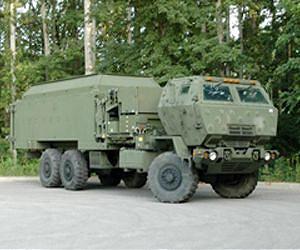
The first MEADS battle manager, mounted on a U.S. FMTV chassis, has begun integration testing at the MEADS Verification Facility in Orlando, Fla. It will be fully tested with other hardware components in a simulation environment to prepare it for upcoming flight tests at White Sands Missile Range.


Oct 13, 2011Orlando FL (SPX)


MEADS International (MI) has begun integration testing on the first completed Medium Extended Air Defense System (MEADS) battle manager at the MEADS Verification Facility in Orlando, Fla.


The MEADS battle manager controls a revolutionary network-centric open architecture that allows any combination of sensors and launchers to be organized into a single air and missile defense battle element. Through a capability called "plug-and-fight," sensors, shooters or other battle managers act as nodes on the network. From the MEADS battle manager, a commander can add or subtract nodes as the situation dictates without shutting down the system.


The battle manager completed acceptance testing in May at MBDA in Fusaro, Italy, and arrived in Orlando in early July.


MI President David Berganini said, "The MEADS system is ready to prove what it can do. MEADS will demonstrate coverage and flexibility that other systems cannot provide, including complete 360-degree defense that protects our warfighters against next-generation threats. While able to defend up to eight times the area of current systems, MEADS is also designed to reduce operation and support costs."


System elements are on schedule for an initial launch test at White Sands Missile Range (WSMR) later this year.


Using the MEADS system stimulator, which consists of multiple special test equipment units for integration and test to emulate the external environment of a MEADS fire unit, MI will simulate scenarios that exercise all functions for the first intercept flight test in 2012.


The MEADS battle manager will configure the other major end items and receive Surveillance Radar tracks for simulated threats, cue the Multifunction Fire Control Radar, send launch commands, and complete interceptor launches and target intercepts. When integration test goals have been met, this entire suite of hardware will be shipped to WSMR to support the flight test program.


MI Systems Engineering, Integration and Test Team Director Norbert Wuehrer said, "Using our end-to-end simulation lets us test more rigorously and significantly reduces risk prior to deploying to White Sands Missile Range."


The MEADS system combines superior battlefield protection with new flexibility to protect forces and critical assets against tactical ballistic missiles, cruise missiles, unmanned aerial vehicles and aircraft.


It improves capability to defend troops and critical assets through improvements in range, interoperability, mobility and full 360-degree defense capability against the evolving threat. MEADS defends up to eight times the coverage area with far fewer system assets and significantly reduces demand for deployed personnel and equipment, which reduces demand for airlift.


MEADS International, a multinational joint venture headquartered in Orlando, Fla., is the prime contractor for the MEADS system. Major subcontractors and joint venture partners are MBDA in Italy, LFK in Germany and Lockheed Martin in the United States.

Partager cet article
Repost0
13 octobre 2011 4 13 /10 /octobre /2011 12:55

http://www.armyrecognition.com/images/stories/north_america/united_states/exhibition/ausa_2011/news/pictures/Caesar_155mm_wheeled_self_propelled_howitzer_gun_Nexter_France_French_defence_industry_AUSA_2011_640_001.jpg

source armyrecognition.com


The Nexter Caesar 155mm wheeled self-propelled howitzer is currently deployed in Afghanistan within the French armed forces


October 12, 2011, armyrecognition.com


At AUSA 2011 (United States Army Annual Meeting & Exposition), the French Defence Company Nexter presents the latest technology of wheeled self-propelled howitzer with its Caesar 155 mm self-propelled gun. This artillery system was designed to meet the fire support requirements of rapid deployment forces. The Caesar was revealed in 1994. Initial five systems were delivered to the French Army for evaluation in 2003.


This gun has been combat-proven in the Afghan theater and with the United Nations in Lebanon. This innovative system used by American forces in Afghanistan is acknowledged for its excellent firing accuracy. It is used by the French Army but also by Asian and Middle Eastern forces. A new 155 towed gun, Trajan®, has been added to the Caesar® range. It was developed in partnership with the Indian company Larsen & Toubro under the 21st century Indian Artillery project.


AUSA will also provide an opportunity for presenting the range of 155 munitions (LU 211, Bonus and Spacido) – unique know-how that associated with Caesar® provides unequalled superiority to French fire support. Nexter will also be showing its range of 40 mm munitions and its new turret T40.


Finally, the CTIS SYEGON® will be demonstrated on the Nexter stand. SYEGON® provides vehicles with improved mobility in all terrains and in case of emergency compensates leakages. SYEGON® currently equips the largest European and South African vehicle and platform manufacturers. Present in many foreign theaters of operations, including Iraq and Afghanistan, SYEGON® is also used by American military forces.

Partager cet article
Repost0
13 octobre 2011 4 13 /10 /octobre /2011 11:50

http://upload.wikimedia.org/wikipedia/en/b/b0/QE_class_carrier.jpg


LONDON -- Oct. 12, 2011 – GLOBE NEWSWIRE


Northrop Grumman Corporation has signed a full production contract for the Navigation Lights Shapes and Sounds (NLSS) signaling system for the Royal Navy's next-generation Queen Elizabeth Class Aircraft Carriers. The contract was awarded to Northrop Grumman's Sperry Marine business unit by the Aircraft Carrier Alliance, an industrial alliance between the UK Ministry of Defence, BAE Systems Surface Ships, BAE Systems Integrated System Technologies, Babcock Marine and Thales Naval.


Northrop Grumman's Sperry Marine business unit will build and deliver the complete NLSS system for the new aircraft carriers. The system has been designed by Northrop Grumman together with its technology partner Oxley Developments and includes an innovative solution for navigation and signal lights plus control of ships' audible signaling equipment.


The system includes 47 lights utilizing state-of-the-art LED technology to ensure that it is night vision-friendly. This reduction in interference with night vision systems, coupled with an increase in service life, operational redundancy and survivability, were the key factors in the choice of LED technology.


"This innovative approach will meet the carrier's navigation light and sound system requirements efficiently and cost-effectively," said Alan Dix, managing director of Northrop Grumman Sperry Marine. "Our proven automation technology will last longer and be more redundant."


The NLSS control system is based upon Northrop Grumman's standard products using network-based Commercial-off-the-Shelf (COTS) industrial automation technology. International regulation and signaling requirements are met in the NLSS by using pre-programmed commands from touch screen workstations with full status and diagnostic indication.


Deliveries will commence in 2012 as Northrop Grumman has already completed the initial design phase of the contract.


Northrop Grumman is already delivering the Integrated Navigation Bridge System, Inertial Navigation System, Navigation Data Distribution System and the Warship Electronic Chart Display and Information System (WECDIS). Based on the company's advanced VisionMaster FT™ ship navigation technology, WECDIS will integrate all the ship's navigation sensors and systems into a modern, efficient, ergonomic network of multifunction workstations to meet operational requirements.

Partager cet article
Repost0
13 octobre 2011 4 13 /10 /octobre /2011 06:15

http://www.nammo.com/ImageVault/Images/id_4/scope_128/webSafe_1/ImageVaultHandler.aspx?~4~

photo nammo.com


October 12, 2011 defpro.com


Nammo has recently been awarded a 5-year ID/IQ system contract covering the fiscal years 2011-15 for supply of 5.56mm AP M995 and 7.62mm AP M993 in various configurations with US MIL-SPEC Tracers. The total contract value is estimated to 65 Million USD.


“With the new system contract Nammo is strengthening its position as the AP supplier to the US armed forces. The contract brings Nammo a step up the value chain including the system responsibility to supply the final configurations as well as the needed tracers and the operational packaging”, says Edgar Fossheim, CEO Nammo Group.


Nammo was awarded the contract in open competition based on Nammo’s long and successful track record being the sole supplier of M995 and M993 AP since the qualification 1996.

Partager cet article
Repost0
13 octobre 2011 4 13 /10 /octobre /2011 05:35

bae img logo


12-10-11 nouvelobs.com


LONDRES (Reuters) - Le premier groupe européen d'armement BAE Systems a averti mercredi que d'importantes inondations dans l'une de ses usines aux Etats-Unis, conjuguées à l'incertitude planant sur les budgets fédéraux, pourraient perturber ses ventes et son trading.


Le groupe britannique explique dans un communiqué que d'importants dégâts des eaux dans son usine américaine de Johnson City (Etat de New York) pourraient entraîner un report d'une partie des ventes à 2012 mais que cela ne devrait pas affecter significativement les bénéfices de cette année.


Le groupe britannique ajoute que son trading depuis le 1er juillet est conforme aux attentes et qu'il anticipe toujours pour 2011 un résultat par action sous-jacent globalement similaire à celui de 2010.


Le groupe note toutefois une "incertitude significative" sur les dépenses futures de l'Etat américain en matière de défense, susceptible de faire subir à son trading "certaines perturbations à court-terme".


Vers 08h50 GMT, l'action BAE Systems progressait de 0,11% alors que l'indice sectoriel européen de l'équipement gagnait 0,44%.


Le secrétaire américain à la Défense Leon Panetta a déclaré mardi que le Pentagone devait réduire ses dépenses de personnel et d'équipement afin d'alléger son budget de 450 milliards de dollars (327 milliards d'euros) sur les dix prochaines années.


BAE Systems avait déjà annoncé fin septembre qu'il supprimerait 3.000 emplois au Royaume-Uni en conséquence de la baisse des commandes reçues pour ses avions de combat, qui découle de la contraction des dépenses de défense dans de nombreux pays.


Paul Hoskins, Natalie Huet pour le service français, édité par Gregory Schwartz

Partager cet article
Repost0
12 octobre 2011 3 12 /10 /octobre /2011 17:30

http://dve.drs.com/img/img_dve.jpg

source dve.drs.com - DVE


October 12, 2011 Beth Stevenson, SHEPARD GROUP


Washington DC –  DRS Technologies has demonstrated an upgrade for its Driver's Vision Enhancer (DVE), the DVE Wide.


This 'new and simple upgrade' has three ports for extra cameras, adding an extended view to the drivers of vehicles such as the Bradley and HMMWV, James Cassella, VP of business development for DRS Technologies told Shephard at the AUSA conference in Washington, DC on 10 October.


The upgrade was developed based on feedback from the user that said the 40 degree fov that the original system provides is not enough.


The Wide variant leads to the 'path to 360 degree view for a good all round solution', and the company has been working on the upgrade for two years, with it soon entering production.


The US Army is 'working on its requirement' with regards to the upgrade, but Cassella said there is 'interest in upgrading', although no decisions have yet been made.


With the first DVE delivered in 2005, the system displays thermal contrast among objects, and still works through dust, smoke, fog, and darkness.


Cassella believed that one of the appealing factors is that the army can reuse legacy systems, including transferring it to the back of a vehicle and using it as a rear view mirror, and it only takes some five hours to change over to the new system.


This 'very effective field upgrade effectively provides side and rear view mirrors' for the vehicle, and the sighting screen sits in front of the driver, and allows multiple views that the user can pan in to while also being able to see the whole FOV in the same picture.


Some 50,000 of the original variant have been delivered, and the new DVE will be tested by the army in the next Army Expeditionary Warrior Experiment (AEWE).

Partager cet article
Repost0
12 octobre 2011 3 12 /10 /octobre /2011 08:00

http://bruxelles.blogs.liberation.fr/.a/6a00d83451b56c69e20153923a5ae0970b-pi


11 octobre 2011 par Jean Quatremer


La nouvelle indigne les médias européens (net et presse écrite) et commence a susciter un tollé politique. Il faut dire qu’elle a de quoi agacer : alors que la Grèce est au bord de la faillite et qu’elle ne s’en sort que grâce à l’aide financière massive de la zone euro, elle se préparerait à acheter aux États-Unis 400 chars M1A1 Abrams ainsi que 20 AAV7A1, des véhicules blindés amphibies. Choquant, non ? Le problème est que la nouvelle est, selon le ministère grec de la Défense que j’ai contacté, totalement fausse.


C’est le site « defencegreece.com » qui a levé ce lièvre. Il a traduit en anglais, le 3 octobre, un article paru en grec sur le site spécialisé « Hellenic defence and technology » du 29 septembre annonçant que « les autorités américaines avaient approuvé la vente de 400 chars de combat M1A1 Abrams à l’armée grecque, incluant une option entre un simple entretien (dix millions de dollars pour l’ensemble des tanks) ou une mise à niveau de leurs capacités opérationnelles pour un prix correspondant. La lettre d’offre et d’acceptation (LOA) est attendue prochainement ». Selon cet article, le gouvernement grec aurait aussi envoyé une lettre à Washington annonçant son intention d’acquérir 20 AAV71, des véhicules blindés amphibies, les besoins grecs étant estimés entre 75 et 100 AAV71 (lire aussi ici).


La nouvelle m’a paru tellement énorme que je n’ai rien publié le jour même. J’ai envoyé, hier, un mail au porte-parole du ministère de la défense grec afin d’en savoir un peu plus. J’ai notamment demandé si le matériel acheté était neuf (le char Abrams est facturé plus de 5 millions de dollars l’unité) ou d’occasion comme le laisse entendre la formulation de l’article, quel était le montant total du contrat et surtout si le ministre jugeait cet achat judicieux en ce moment de disette budgétaire. Il faut, en effet, savoir que l’armée grecque dispose déjà de 509 Leopard 1 et de 353 Leopard 2 de fabrication allemande et de 339 M-60 américains (plus quelques centaines de chars hors d’âge), soit plus que l’armée française… Et le budget de la défense représente encore 2,18 % du PIB et 4,08 % du budget total.


La réponse m’est parvenue aujourd’hui : toutes les allégations sur l’achat de chars américains sont « fausses ». « Il n’y a aucun contrat portant sur l’achat de 400 chars de combat, il n’y a même pas la plus légère considération de procéder à un tel achat ou d’alourdir les dépenses », a déclaré le porte-parole du ministère de la défense lors d’un point de presse organisé hier à Athènes. « Nous démentons expressément : ces allégations sont totalement fausses ».


Reste plusieurs questions : pourquoi personne n’a vérifié l’exactitude d’une telle information ? D’où vient-elle, sauf à imaginer que le site grec Hellenic defence and technology l’a totalement inventé ? Le site a-t-il été manipulé, cette nouvelle ne pouvant que nuire à la crédibilité de la Grèce (non seulement acheter des armes grâce à l’aide européenne, mais des armes américaines) ?

Partager cet article
Repost0
12 octobre 2011 3 12 /10 /octobre /2011 06:10

http://defensenews.com/blogs/mdm09/files/2009/09/mdm009-1024x681.jpg

source defensenews.com


WASHINGTON, Oct. 11 (UPI)


BAE Systems, at a trade show in Washington, introduced a new, collapsible gun shield to facilitate easier transport of military vehicles.


The Marine Corps Transparent Armored Gun Shield-Reducible was on display at the Association of the U.S. Army 2011 Annual Meeting and Exposition in Washington.


The patent-pending MCTAGS-R is the first height-reducible gunner protection kit designed to meet vehicle shipping height requirements and is part of the BAE Systems Modular Gunner Protection System family of protective armaments, providing protection from small arms and improvised explosive device fragments.


"The unique system allows the gun shield to collapse for storage during transport by ship, air and rail by reducing the height of the system to just six inches above the top of a vehicle," said Justin Stone, MCTAGS-R program manager at BAE Systems.


"We listened to the needs and concerns of our customers to design this new collapsible gun shield that provides a high-level of protection for the gunner and makes transporting the shield much easier."


The MCTAGS-R has been configured for installation on the M1114 and M1151 HMMWVs, Medium Vehicle Replacement, Logistic Vehicle System Replacement, Mine Resistant Ambush Protected vehicles and Joint Light Tactical Vehicle.

Partager cet article
Repost0
12 octobre 2011 3 12 /10 /octobre /2011 05:45

http://upload.wikimedia.org/wikipedia/commons/b/bb/T-45A_Goshawk_03.jpg


Oct 11, 2011 ASDNews Source : Rolls-Royce Plc


Rolls-Royce, the global power systems company, has been awarded a $99.9 million MissionCare(tm) contract by the US Department of Defense Naval Air Systems Command at Patuxent River to provide support for the F405 (Adour) engines that power the US Navy's T-45 training aircraft.


This exercises the third year of the contract to provide guaranteed engine availability, which includes support ranging from on-wing through intermediate and depot level maintenance, under the base contract signed in 2008. MissionCare is used within the Rolls-Royce Defence sector to apply commercial Power By The Hour(r) principles to the unique requirements of the defence industry. Total value of the contract is $476.91 million over the five-year term.


Patricia O'Connell, Rolls-Royce, President, Customer Business Defence, stated: "We are proud of our continued partnership with the US Navy and its mission to prepare student aviators for jet carrier aviation and tactical strike missions. We look forward to another successful year of providing the best engine readiness and availability."


Under the terms of the agreement, which is administered by the Naval Air Systems Command (NAVAIR), Rolls-Royce will provide all maintenance, support, troubleshooting, parts supply and logistics for both the F405 engine and the aircraft gas turbine starting system.


This contract provides comprehensive propulsion services to more than 200 aircraft, operating at four main Naval Air Stations - Kingsville, Texas; Meridian, Mississippi; Pensacola, Florida and Patuxent River, Maryland. Work is expected to be completed in September 2012.

Partager cet article
Repost0
11 octobre 2011 2 11 /10 /octobre /2011 20:00

http://www.asdnews.com/data_news/ID38772_600.jpg


Oct 11, 2011 ASDNews Source : European Aeronautic Defence and Space Company EADS N.V.


Washington - In anticipation of a competitive flight demonstration, EADS North America's Armed Aerial Scout 72X (AAS-72X) is on display at the Association of the U.S. Army (AUSA) convention this week in Washington, DC.


The AAS-72X, an armed derivative of the Army's UH-72A Lakota Light Utility Helicopter manufactured by the company's American Eurocopter business unit, has completed the majority of its militarization requirements in a company-funded development effort that began in 2009.


EADS North America also announced at AUSA that Rockwell Collins (NYSE: COL) has joined the AAS-72X team and will be responsible for the design, engineering and production of simulation and training devices in support of U.S. Army operator and maintainer requirements.


"We're pleased to welcome Rockwell Collins to the EADS North America Armed Scout team, the team that is offering the most capable of any armed scout helicopter solution," said Sean O'Keefe, CEO of EADS North America. "We're ready to prove that fact through a competitive flight demonstration to validate that we can meet the Army's demanding armed scout mission."


A highly capable helicopter for the Armed Aerial Scout mission, the AAS-72X combines the safety of a twin-engine aircraft and the high/hot operating performance necessary to meet the Army's demanding Armed Scout mission. Derived from the same family of aircraft as the UH-72A Lakota Light Utility Helicopter, the AAS-72X is a low-risk evolution of the U.S. Army's newest rotary-wing aircraft, which is widely considered one of the most successful acquisition programs in the service's history.


The EADS North America-led industry team of American Eurocopter and Lockheed Martin (NYSE: LMT) has made a significant investment in the development of three AAS-72X Technical Demonstrator Aircraft (TDA), which have been used to conduct parallel development and risk reduction activities, and to demonstrate the armed scout's level of capability and technical maturity. The first TDA Aircraft made its maiden flight in December 2010.


Prior to the start of the TDA program, the company conducted high/hot hover-out-ofground-effect, endurance and payload testing in 2009 at Alamosa, Colo. utilizing a helicopter derived from the UH-72A Lakota/EC145 platform family. In that test the helicopter successfully operated at 6,000 feet and 95-degree density altitude. The team also conducted a key transportability test when five aircraft were successfully loaded in a C-17 transport aircraft. Additionally, EADS North America and Lockheed Martin established a System Integration Laboratory (SIL) and hangar in April 2010 at Lockheed Martin's Orlando, Fla. facility.


The AAS-72X demonstration aircraft is equipped with a Mission Equipment Package (MEP) that includes a chin-mounted turret with integrated targeting sensor, mannedunmanned teaming capability, communications suite and weapons. All MEP items already are in the Army inventory.


Production of the AAS-72X will take place at American Eurocopter's Columbus, Miss. helicopter center of excellence where the UH-72A Lakota is currently manufactured for the U.S. Army. EADS North America has delivered more than 190 UH-72A Lakotas to the Army, all on time and within budget, along with five H-72A versions to the U.S. Navy for test pilot training.

Partager cet article
Repost0
11 octobre 2011 2 11 /10 /octobre /2011 17:25

http://defense-update.com/wp-content/uploads/2011/10/Q-Sight_helmet_display.jpg


BAE Systems provides a range of display products including Q-SIGHT™ monocular helmets, binocular visor-projected helmets and digital HUDs. The application shown in this picture supports Royal Navy Lynx pilots in day and night operations. Photo: BAE Systems


11.10.2011 DEFENSE UPDATE


BAE Systems has been selected by Lockheed Martin to supply a Helmet Mounted Display (HMD) system for the F-35 during the next phase of its development. The new HMD incorporate the Q-Sight waveguide display and feature detachable Night Vision Goggles for night operations. BAE Systems will begin delivery of test assets in 2012 to support the F-35 development and integration laboratories, flight simulators, and flight-test platforms.


The new HMD will also incorporate an optical Head Tracking System for precise weapons delivery and carrier and land-based operations. The accurate of the optical head trackers allow the system to achieve Head-Up Display (HUD) accuracies and Primary Flight Reference criteria with free moving the helmet display.


The cockpit of the F-35 is centered around the HMD and large screen cockpit display. The aircraft has no HUD, and the two displays are interacting with multiple on-board and networked sources and sensors to provide the pilot with up-to date live situation display. The precise optics and head tracker combination enables F-35 weapons delivery, navigation, landing and aircraft management under all flight regimes. According to BAE Systems, the HMD’s modular design will allow for a path to binocular visor-projected displays, alternate image sources and Night Vision Cameras, depending on customer requirements and program needs.


http://defense-update.com/wp-content/uploads/2011/10/hmdf35.png

The original supplier for the F-35A helmet display

system was Vision Systems International (VSI)

a Joint Venture between Elbit Systems and Rockwell Collins.


The original supplier for the F-35A helmet display system was Vision Systems International (VSI) a Joint Venture between Elbit Systems and Rockwell Collins. VSI is supplying the first generation HMD to all production F-35s from 2009 up to 2012. The VSI helmet encountered some developmental problems, particularly with the integration of Distributed Aperture System (DAS), multiple infrared cameras positioned around the aircraft providing hemispherical view of the aircraft surrounding. The integration of the DAS infrared signals onto the HMD visor was supposed to provide the pilot with night vision derived from the DAS, but this solution caused problems with visual acuity and night-vision sensitivity. Lockheed Martin, the prime contractor opted to reduce the risk by opting for a near term solution based on a conventional off the shelf technology and the use of NVG when required. According to Lockheed martin, the development of the original VSI HMDS will continue under a new contract recently issued. To further mitigate risk, the alternative HMDS is not required to have binocular symbology or to display image data from the F-35’s DAS. These will be added if the BAE helmet becomes the baseline system, Lockheed Martin said.

Partager cet article
Repost0
11 octobre 2011 2 11 /10 /octobre /2011 11:50

http://fr.rian.ru/images/18984/97/189849716.jpg


WASHINGTON, 11 octobre - RIA Novosti


La sous-secrétaire d'Etat américaine pour le contrôle des armes et la sécurité internationale, Ellen Tauscher, se rend mardi à Moscou pour un nouveau round de pourparlers sur la défense antimissile, a annoncé à RIA Novosti une source au sein du ministère russe des Affaires étrangères.


"La sous-secrétaire Ellen Tauscher séjournera à Moscou du 11 au 14 octobre pour s'entretenir avec le vice-ministre russe des Affaires étrangères, Sergueï Riabkov, sur la défense antimissile", a fait savoir l'interlocuteur de l'agence.


Les Etats-Unis envisagent de déployer de 2015 à 2020 une troisième zone de positionnement de leur système de défense antimissile en Europe. Moscou s'oppose à ce projet, considérant que la mise en place d'un bouclier antimissile à proximité de ses frontières menace le potentiel stratégique russe.


Des hauts responsables américains ont à plusieurs reprises déclaré que Washington souhaitait que la Russie participe à la mise en place du bouclier antimissile européen. Pour sa part, Moscou réclame de l'Otan des garanties contraignantes attestant que les systèmes antimissiles en cours de déploiement en Europe ne seront pas dirigés contre les forces stratégiques nucléaires russes.

Partager cet article
Repost0
10 octobre 2011 1 10 /10 /octobre /2011 19:55

RAF Reaper Unmanned Air Vehicle (UAV)

photo UK MoD


Oct. 10, 2011 defense-unmanned.com

(Source: British Forces News; posted Oct. 10, 2011)


A virus has been detected in control consoles at the US base where RAF pilots control Britain's fleet of Predator drones on missions over Afghanistan


According to hi-tech website Wires the infection has been detected at Creech Air Force base in Nevada where RAF 39 Squadron operate Predator and Reaper unmanned aircraft.


The virus is so far only thought to have infected Americian systems, logging every keystroke of pilots and effecting operator consoles that control armed and reconnaissance drones in Afghanistan, Pakistan and Yemen. Attempts to wipe our the virus have so far failed.


The RAF has been using the base at Creech for its operations in Afghanistan since 2007.


Wired reports that the virus was first detected two weeks ago. The chances of a virus infecting systems has been increased by the use of portable drives by US pilots to upload terrain maps and mission videos.


In May this year the Chief of the Air Staff announced that a new Reaper Squadron will form at RAF Waddington in Lincolnshire in 2012.


It means aircraft over Afghanistan will be controlled from the UK for the first time.

Partager cet article
Repost0
10 octobre 2011 1 10 /10 /octobre /2011 17:25

http://www.army-guide.com/eng/images/ampv1318249287.jpg


10.10.2011 KMW - army-guide.com


Outstanding levels of tactical, operational and strategic mobility, compelling combat effectiveness and maximum survivability are key requirements imposed on modern military vehicles today – whether they are designed primarily for combat, command and control, mission-specific roles or transport.


In contemporary conflicts, where the threat is often asymmetric yet deadly, protecting troops deployed in harm’s way from hostile fire, IED attacks, CBRN agents and even extreme climates conditions has become a top priority for commanders worldwide: around the clock and in every branch of every service.


This is reflected in the current procurement plans of the armed forces of many nations, including the Bundeswehr’s GFF/GTF project to develop protected C4I and mission-specific vehicles as well as protected transport capacity.


Under this programme, Rheinmetall and Krauss-Maffei Wegmann (KMW) of Germany have joined forces to develop a highly protected family of armoured multipurpose vehicles (AMPV) in the weight class up to 9 ton. Their design and layout take full account of operational experience accumulated by the German armed forces in Afghanistan and elsewhere. Engineered exclusively to meet the needs of the modern military, the AMPV family consists of two separate branches.


The AMPV,a prototype version of which is currently undergoing qualification by the German armed forces, is slightly over five metres long, two metres wide and two metres high. Empty, it weighs 7.3 tons and can carry a two-ton payload. The highly protected vehicle cell consists of a self-supporting steel hull with composite armour. Spall liners, reinforced flooring and cellular design offer excellent protection against mines and IEDs; while add-on armour modules supply extra ballistic protection.


High mobility likewise contributes to a vehicle’s overall battlefield survivability, and the AMPV design reflects this. The vehicle’s robust chassis, featuring independent wheel suspension, is engineered to withstand maximum punishment. An automatic transmission, permanent all-wheel drive, automatic differential locking management and combat wheels with a central tyre inflation system combine to assure superb mobility even in the toughest terrain.


A patrol version of AMPV (with an unprotected load space) will be available, as well as mission module carriers with a safety cell extending all the way back to the rear of the vehicle. For enhanced lethality, a remote control weapon station up to calibre .50 can be mounted on any AMPV vehicle.


Extremely compact, all members of the AMPV family largely consist of identical components, especially the logistically relevant parts of the vehicle. Moreover, their essentially uniform, highly ergonomic design makes all AMPV vehicles easy to operate as well as facilitating logistics and training.

Partager cet article
Repost0
10 octobre 2011 1 10 /10 /octobre /2011 07:50

http://www.meretmarine.com/objets/500/35162.jpg


Un Arleigh Burke et, au second plan, un Ticonderoga

crédits : US NAVY


10/10/2011 MER et MARINE


Le secrétaire américain à la Défense, Leon Panetta, a annoncé que les Etats-Unis avaient décidé de baser à La Rota, en Espagne, quatre bâtiments dotés du système de défense aérienne Aegis. L'annonce a été faite le 5 octobre dans le cadre d'une réunion de l'OTAN. « Avec quatre bâtiments Aegis à La Rota, l'Alliance va renforcer significativement ses capacités navales en Méditerranée, et améliorer les moyens pour assurer la sécurité de cette région vitale. Cette décision s'inscrit dans les efforts entrepris par les Etats-Unis pour mieux positionner ses forces et capacités de défense avec nos alliés et partenaires européens », a déclaré Leon Panetta.


Pour le secrétaire à la Défense, l'arrivée d'une flottille de l'US Navy à La Rota démontre que Washington mise toujours sur l'OTAN : « Cette annonce devrait envoyer un message fort selon lequel les Etats-Unis continuent d'investir dans l'Alliance et nos relations de défense avec l'Europe, même si nous faisons face à des contraintes budgétaires grandissantes. D'ailleurs, dans cet environnement fiscal en forme de challenge, des organisations comme l'OTAN sont plus que jamais nécessaires pour protéger nos intérêts communs ». En positionnant des bâtiments dotés du système Aegis en Espagne, l'US Navy, déjà présente en Italie, renforce donc ses moyens en Méditerranée. Les navires américains rempliront différents types de missions, incluant leur participation aux groupes maritimes de l'OTAN (SNMG), des exercices interalliés et des activités de coopération autour des actions de sécurité maritime.


Tir de SM-3 sur un Arleigh Burke (© : US NAVY)

« Construire une défense antimissile effective »

Mais, il ne faut pas s'y tromper, ce nouveau déploiement américain est, surtout, un pas supplémentaire dans la mise en place d'un bouclier antimissile en Europe. Ce projet, très délicat diplomatiquement, avait provoqué une passe d'armes entre Washington et Moscou lorsqu'il fut question d'implanter des installations terrestres en Europe de l'Est. Face à la colère russe, les Américains avaient alors fait évoluer leur position vers un dispositif plus souple et moins contestable, celui pouvant être offert par la marine. Même si les implantations terrestres demeurent à l'étude, la solution navale est immédiatement disponible. En effet, les nouveaux destroyers du type Arleigh Burke, ainsi que certains croiseurs de la classe Ticonderoga, disposent désormais du missile antimissile balistique SM-3, mis en oeuvre avec le système Aegis. Pour Leon Panetta : « Ces navires supporteront les efforts de l'OTAN pour construire une défense antimissile effective. Alors que d'importants accords ont été conclus avec la Roumanie, la Pologne et la Turquie, la décision espagnole représente une étape majeure dans l'exécution d'une approche européenne adaptative. Pour leur part, les Etats-Unis sont résolument engagés à mettre en place une capacité de défense antimissile pour assurer une couverture complète de toutes les populations européennes de l'OTAN, de leurs territoires et de leurs forces, contre la menace croissante que représentent les missiles balistiques ».


Une frégate F100 suivant des navires américains (© : US NAVY)

On notera qu'en dehors des bâtiments américains, d'autres navires européens pourraient, à terme, participer à la défense antimissile. C'est le cas des frégates espagnoles du type F100, dotées du système Aegis et techniquement capables de mettre en oeuvre le SM-3. Les marines allemande et néerlandaise, qui utilisent aussi des lanceurs américains (mais pas d'Aegis), s'intéressent aussi à cette problématique. Quant à la France, la Grande-Bretagne et l'Italie, dont les dernières frégates antiaériennes (Horizon et T45) sont dotées de missiles Aster, tout dépendra de la volonté politique des Européens à développer leur propre système, ce que souhaitent évidemment les industriels, prêts à travailler sur une solution. Si tel n'est pas le cas, l'UE sera alors totalement dépendante des Etats-Unis.

Partager cet article
Repost0
10 octobre 2011 1 10 /10 /octobre /2011 07:30

http://cdnpullz.defencetalk.com/wp-content/themes/dtstyle/scripts/timthumb.php?src=http://www.defencetalk.com/wp-content/uploads/2011/10/chinook-helicopter-exercise-europe.jpg&w=375&h=245&zc=1


October 10th, 2011 By USArmy, DEFENCE TALK


When special operations forces need to move a large component to a target by air, they often look to the heavy assault Chinook helicopter to do the job.


The 160th Special Operations Aviation Regiment brought this capability to Exercise Jackal Stone 2011 with two MH-47G Chinook helicopters and crews. SOAR's expertise is getting special operations forces to a target, under any environmental and combat conditions, plus or minus 30 seconds from when the ground force commander needs to be there.


"It was a great tactical and cultural learning opportunity for all involved," said the senior 160th leader on-site. "For most of us, it was our first time training with these partner nations and even the specific U.S. forces involved, and it was mostly their first time working from one of our highly modified helicopters."


Crews supported Bulgarian, Croatian, Norwegian, Romanian and Ukrainian special operations forces and their U.S. training group counterparts from Naval Special Warfare Unit 2 and the Army's 10th Special Forces Group.


They conducted fast rope, ladder, hoist and ground infiltration and exfiltration drills from the Chinooks in remote, mountainous and overwater training sites. The mission locations and duration frequently required aerial refueling operations with the U.S. Air Force's 352nd Special Operations Group.


The first week of training provided all involved the opportunity to begin joint mission planning and conduct familiarization training. Then the special operations forces moved to intense exercise scenarios in week two, actively involving ground, air and combat enabler assets to plan and execute a mission.


"This exercise afforded us the opportunity to work together and work through how to incorporate our processes and tactics, techniques and procedures in a realistic training environment," the SOAR leader explained. "These shared experiences enhance our overall readiness and help us foster relationships with our European partner nation special operations forces before being in a tactical environment."


Exercise Jackal Stone is an annual training event hosted by U.S. Special Operations Command, Europe, designed to enhance interoperability amongst the participating partner nation special operations forces. This year's exercise was conducted in Bulgaria, Romania and Ukraine from Sept. 6 through Sept. 30 with participation from nine nations.

Partager cet article
Repost0
10 octobre 2011 1 10 /10 /octobre /2011 05:45

http://www.defensenews.com/pgf/stories65/100511afp_missile_shield_presser_315.JPG

source DefenseNews


9 octobre 2011 Par Rédacteur en chef. PORTAIL DES SOUS-MARINS


L’Espagne et les Etats-Unis ont annoncé que des bâtiments de l’US Navy seraient basés en Espagne pour participer au système de défense anti-missiles de l’OTAN.


Cet accord a été annoncé le 5 octobre à Bruxelles dans le cadre d’une réunion des ministres de la défense de l’OTAN.


L’US Navy va baser 4 destroyers équipés du système Aegis à la base navale de Rota, près de Cadiz. Ils participeront à la défense contre les missiles balistiques en Méditerranée orientale.


Le secrétaire américain à la défense, Leon Panetta, a précisé que ces bâtiments assureraient d’autres missions dans le cadre de groupes maritimes permanents et participeraient à des exercices dans la région.


Selon le premier ministre espagnol, José Luis Rodriguez Zapatero, le déplacement de ces 4 bâtiments aura un impact socio-économique important, en particulier pour la région de Cadiz. Le site internet du gouvernement espagnol évoque la création de 1.000 emplois.


Référence : Defense News (Etats-Unis)

Partager cet article
Repost0
10 octobre 2011 1 10 /10 /octobre /2011 05:30

http://www.aviationweek.com/media/images/defense_images/Ships/AEGIS-CG73-DOD.jpg 

Photo: DoD


Oct 7, 2011 By Michael Fabey - aerospace daily and defense report


The U.S. Navy has anchored more securely its so-called Phased Adaptive Approach to European ballistic missile defense (BMD) thanks to this week’s international agreement to base Aegis-equipped ships at Rota, Spain, about 60 mi. northwest of Gibraltar.


The agreement between the U.S. and Spain comes about five months after the U.S. deployed the Ticonderoga-class guided-missile cruiser USS Monterery as the first U.S. Navy ship with the enhanced Aegis system in the Mediterranean as part of Phased Adaptive Approach.


Shortly after the ship deployed, Monterery Capt. Jim Kilby told Aviation Week in an exclusive interview that the updated Aegis system was working as it should and the system would prompt naval officers to think tactics and procedures for BMD and other missions.


And the Rota basing should play to U.S. strengths as the Navy figures out how to best deploy and employ the Aegis ships. “Basing at Rota will enable the Navy to better support U.S. objectives in North Africa and the Middle East,” says Loren Thompson, defense analyst for the Lexington Institute. “Aegis warships are now the centerpiece of U.S. theater missile defense plans, and may become an important part of the architecture with intercontinental ballistic missiles, too.”


In a statement about the basing agreement, U.S. Defense Secretary Leon Panetta said, “With four Aegis ships at Rota, the alliance is significantly boosting combined naval capabilities in the Mediterranean, and enhancing our ability to ensure the security of this vital region.”


Panetta also emphasized the importance of the BMD mission in the region.


“These ships will also support NATO’s critical efforts to build effective missile defense,” he said. “Alongside important agreements that were recently concluded with Romania, Poland, and Turkey, Spain’s decision represents a critical step in implementing the European Phased Adaptive Approach. The United States is fully committed to building a missile defense capability for the full coverage and protection of all our NATO European populations, their territory and their forces against the growing threat posed by ballistic missiles.”


Another major facet of the Phased Adaptive Approach is the Aegis Ashore system. The Missile Defense Agency last week awarded a $115.5 million sole source, cost-plus-award-fee/cost-plus-fixed-fee modification to Lockheed Martin for system adaptation efforts, site planning, transportation planning and technology initiatives. The total contract is now worth about $176.7 million.


The U.S. Navy has put such a high priority on the Aegis system and related BMD roles that the service recently restarted the DDG-51 Arleigh Burke-class destroyer production line to build more ships to support enhanced Aegis shields components. The service is planning an even more efficient system for BMD and ship defense — the Air and Missile Radar (AMDR) that is slated for redesigned Flight III Arleigh Burkes.


To make room for the additional Arleigh Burkes, the Navy cut the planned fleet size for new DDG-1000 Zumwalt-class destroyers from seven down to three.


The U.S. Government Accountability Office is now investigating that DDG-51 restart decision, with a report due in January.

Partager cet article
Repost0
8 octobre 2011 6 08 /10 /octobre /2011 11:30

http://fr.rian.ru/images/19115/56/191155695.jpg


BRUXELLES, 7 octobre - RIA Novosti


Derrière le concept de "défense intelligente" de l'Otan, on trouve les intérêts du complexe militaro-industriel américain, estime l'ambassadeur de Russie auprès de l'Alliance, Dmitri Rogozine.

"Derrière l'idée de mettre en place une « défense intelligente », examinée la veille lors d'une réunion des ministres de la Défense de l'Otan, on trouve sans doute les ambitions du complexe militaro-industriel des Etats-Unis", a-t-il déclaré vendredi à RIA Novosti.

Réunis les 5 et 6 octobre à Bruxelles, les ministres de la Défense des 28 pays de l'Otan ont approuvé l'initiative de "défense intelligente" proposée par le secrétaire général de l'Alliance, Anders Fogh Rasmussen. Selon ce dernier, il s'agit d'améliorer le niveau militaire et technique de l'Alliance, tout en réduisant les ressources nécessaires à cet effet.

D'après l'ambassadeur russe, l'initiative de M. Rasmussen vise à "répartir les responsabilités" parmi les alliés européens de façon à "créer une grande armée atlantique placée sous le commandement de l'état-major militaire l'Otan".

Dans ce cas, certains pays de l'Alliance seraient contraints de renoncer à leur armée nationale composée de différents types d'unités "pour accepter la spécialisation qui leur sera imposée par le commandement central", estime M. Rogozine. Cela signifie que les uns ne développeront que la flotte de surface, d'autres la flotte sous-marine, d'autres encore les troupes de débarquement, d'autres enfin les troupes aérospatiales.

"Si un pays forme seul ses forces armées, il est libre d'acheter des armes là où il veut, mais s'il intègre le système de «défense intelligente», dont les paramètres seront définis par l'état-major de l'Otan, les achats d'armes seront décidés par Washington", a indiqué le diplomate.

Partager cet article
Repost0
7 octobre 2011 5 07 /10 /octobre /2011 12:59

Ligne de defense P Chapleau


07.10.2011 par P. CHAPLEAU Lignes de Défense


Les 4e Rencontres Parlementaires de la Défense des 18 et 19 octobre prochain seront consacrées à l'actualisation du Livre Blanc. Elles seront ouvertes, le 18 octobre par Gérard Longuet, ministre de la Défense et des Anciens Combattants, et le 19 par Jean-François Tallec, Secrétaire Général de la Mer, et Francis Delon, Secrétaire Général de la Défense et de la Sécurité Nationale.


On trouvera en cliquant sur ce lien le programme de ces deux journées tel qu'il m'a été transmis par Défense & Stratégie.


Sans préjuger de la qualité des débats à venir, je profite de cette annonce pour signaler la parution d'un intéressant document américain produit par le Center for Strategic & International Studies. Il s'intitule: "Strategic Defense Reviews. Procedures, Frameworks and Tools to Enhance Future Defense Institutions Building Projects". On pourra consulter ce texte en cliquant ici.


Certes, ce document analyse le "guidage" que peut offrir Washington à ses "partner nations" (la France en est une, non?) qui souhaitent rédiger  une strategic defense review. Mais sa lecture révèle quelques orientations à ne pas négliger lorsqu'on a l'ambition de faire plus que rédiger un document au contenu dépassé avant même d'être imprimé.


"Plans are nothing, planning is everything".


Notons d'abord la définition retenue par le CSIS (c'est moi qui souligne): "a strategic defense review is primarily a process that ultimately results in a document. SDRs have the potential to be a state's most comprehensive examination of its defense-related interests, objectives and challenges and thereby have a long-term impact (...) Common to all of these variants is that the document produced, while important, is not the end in itself. The document represents a process that provides the framework of future decisions".


Notons, ensuite, certaines "useful questions":
- Quelles sont les ressources disponibles?
- Le budget est-il établi selon les besoins? Les ressources? Ou selon d'autres paramètres plus politiques ou opportunistes (ce qui n'aurait rien d'un équilibrage raisonné)?,
ou encore:
- Quelle est, aux yeux de l'Etat, l'importance de la sécurité nationale comparée aux questions sociales, économiques?
- Y-a-t-il un consensus entre les partis politiques sur les orientations stratégiques?
- L'institution militaire est-elle populaire dans la société?
- Quelles sont les vues et les attentes de l'institution au regard de la SDR/Livre blanc?
- Y-a-t-il suffisamment de gens compétents pour conduire les analyses pendant la SDR?
- Qui dirige la réflexion et pourquoi ce choix? ...etc.

Partager cet article
Repost0
7 octobre 2011 5 07 /10 /octobre /2011 11:45

http://cdnpullz.defencetalk.com/wp-content/themes/dtstyle/scripts/timthumb.php?src=http://www.defencetalk.com/wp-content/uploads/2011/10/full-spectrum-army-training.jpg&w=375&h=245&zc=1


October 7th, 2011 By USArmy,DEFENCE TALK


Sky Soldiers, paratroopers of the 173rd Airborne Brigade Combat Team descended on the drop zone at Hohenfels Training Area, Oct. 5, in Europe's first full-spectrum training environmen, or FSTE rotation.


The concerns are always the same, the Soldiers avoid falling in on objects that might be in their way, but unlike Afghanistan where rocks, trees and mountains are everywhere, this training is different. It's not focused on counter-insurgency, or COIN. Instead Europe's rapid reaction force is exercising doctrine on wide-area security and combined-arms maneuver.


The complex exercise pits the conventional opposing force with tanks, helicopters and unmanned aerial systems against conventional and unconventional enemies and the criminal element.


"We've taken what we know, based upon our experiences fighting insurgencies, and applied that information to the Army's most recent full-spectrum operations doctrine," said Col. Jeffrey R. Martindale, the commander of the operations group at the Joint Multinational Readiness Center, or JMRC, at Hohenfels. "The result is a hybrid threat environment in which our forces must contend with a complex mix of both conventional and unconventional enemies."


At JMRC, nearly all of the cadre, observer-controllers and trainers, including the professional opposing forces, the 1st Battalion, 4th Infantry Regiment, have deployed to Iraq, Afghanistan or both. In January of 2011, the 1-4 redeployed its last company of Soldiers from Afghanistan, ending a six-year mission in theater in partnership with the Romanian Land Forces.


This FSTE rotation has more than 7,500 participants from 17 countries. Planners say the U.S. and multinational forces training together is unusual. There is a Slovakian battalion supporting the 1-4 and role-playing the opposing force, while Slovenian and Polish units are supporting the 173rd replicating the host-nation forces, said Martindale.


During Operation Enduring Freedom, 86 percent of non-U.S. coalition troops came from the European theater. The 7th Army Joint Multinational Training Command, or JMTC, the U.S. Army's only forward-deployed training command trains those forces regularly. Some of those same forces are participating in this training event. Likewise, there are participants from the U.S. Air Force and the Army's National Guard and Reserve components.


"We are able to train as we fight in Europe. Because of our forward-deployed location we are able to have multinational Soldiers to work with us and right-seat-ride with us in training and in theater," said Col. Bryan L. Rudacille, commander of the JMTC. "As our multinational partners continue to train with U.S. service members, we prevent future conflicts, have the ability to prevail over any threat, while preserving stability in the region. Preparation is the key, and that's what we are doing, during this FSTE rotation and every day."


The FSTE, being held Oct. 3-24, at the Grafenwoehr and Hohenfels Training areas in Germany, is the proof-of-principle exercise in Europe, and for many 173rd Soldiers, it's likely to be the first time they've had to maneuver against 50-plus "tanks," and other equipment not used during the current conflict because of unique COIN requirements.


Army Field Manual FM 3-0 says full-spectrum operations, or FSO, empowers a commander to employ synchronized action, lethal and nonlethal, which is proportional to the mission based on an understanding of his units capabilities. As Europe, implements the FSO, the Army released another Army Doctrine Publication 3-0, which covers Unified Land Operations.


Seasoned-Soldiers refer to the new doctrine as getting back-to-basics, the old way the Army used to train, however, some say it's not possible to ignore lessons learned during Operation Iraqi Freedom and OEF. The U.S. Army in Europe is applying those lessons-learned, which includes coalition building and the value of training together, especially when deploying together.


Planning for the FSTE took more than six-months as staff regained proficiency in skills, such as, airborne operations, serving as the opposing force and working with the multinational forces in expanded roles.


"In the early stages of an entry operation like this, they have to jump-in and it's chaotic initially, and they are going to rapidly develop the situation and expand their operations and start growing their forces," said Col. John R. Jones, a senior intelligence officer. "In the FSTE, they are establishing for the first time communications, a command post, fighting positions, logistical support, and developing situational understanding of the operational environment."


According to Jones, the jump and early-entry operation is just the beginning. The rest remains to be seen.


Read more: http://www.defencetalk.com/us-army-in-europe-shifts-from-coin-to-full-spectrum-training-37506/#ixzz1a4qv26Yx

Partager cet article
Repost0
7 octobre 2011 5 07 /10 /octobre /2011 11:40

http://upload.wikimedia.org/wikipedia/commons/5/5f/United_States_Army_Europe_Shoulder_Patch.JPG


6 Oct 2011 By ZACHARY FRYER-BIGGS DefenseNews


One brigade in Europe could be moved to the U.S. sooner than initially expected, Lt. Gen. Mark Hertling, the commanding general for the U.S. Army in Europe, said Oct. 6 at a breakfast meeting with reporters.


"I have made an offer on which brigade that should be to the Department of the Army," Hertling said. "I have also made an offer in terms of the timing of it, which could be sooner than they were asked for, 2015."


The move will drop the number of ground combat brigades in Europe to three.


Hertling also said that as the number of soldiers declines, a greater effort should be made to focus on discipline and values, as there have been discipline issues recently.


"We perhaps haven't focused on the kind of training that we should be focusing on," he said.

Partager cet article
Repost0

Présentation

  • : RP Defense
  • : Web review defence industry - Revue du web industrie de défense - company information - news in France, Europe and elsewhere ...
  • Contact

Recherche

Articles Récents

Categories