Overblog Tous les blogs Top blogs Entreprises & Marques Tous les blogs Entreprises & Marques
Suivre ce blog Administration + Créer mon blog
MENU
24 septembre 2011 6 24 /09 /septembre /2011 16:40

http://1.bp.blogspot.com/-YGGzihlvKyQ/Tnnzzt2XniI/AAAAAAAAFns/WBQYCxaaunA/s1600/idf-scream.jpg

source muqata.blogspot.com


22 September 2011 army-technology.com


The Israeli Army has unveiled a new acoustic weapon, known as the Scream, at Qalandia checkpoint, north of Jerusalem.


The Scream produces a sound that causes dizziness and nausea in individuals within seconds and prolonged exposure to the sound can lead to hearing impairment.


The sound emitted by the weapon causes people to fall to their knees and leads to a condition were an individual cannot maintain his/her balance.


The Israeli soldiers also used a new kind of tear gas bombs, which caused people to faint instantly.


The weapons were used for the first time to disperse Palestinians who were demonstrating in support of the Palestinian bid to the United Nations, according to Palestinian News and Info Agency.

Partager cet article
Repost0
24 septembre 2011 6 24 /09 /septembre /2011 08:00

http://www.shephard.co.uk/files/news/190x190/mh60rlcsimagesmall.jpg


September 23, 2011 Tony Osborne, SHEPARD GROUP


London  - Qatar may be the next export customer for the MH-60R Seahawk according to the US Defense Security Cooperation Agency.


The United States Congress has been notified of a request by the Middle East country to purchase six MH-60Rs through the Foreign Military Sales (FMS) system for $750 million.


The deal would also include associated equipment, parts, training and logistical support.

The DSCA says the buy 'will improve Qatar's capability to meet current and future anti-surface warfare threats.'


The release also states that implementation of this proposed sale will: 'require the assignment of ten contractor representatives to Qatar on an intermittent basis over the life of the case to support delivery of the MH-60R helicopters and provide support and equipment familiarisation.'


It is likely that the Seahawks will be land-based and will replace Qatar's aging fleet of Sea King Commando helicopters which are equipped to fire the Exocet anti-ship missile.


Qatar has been undertaking a recapitalisation of its armed forces in recent years and is in the process of taking delivery of 21 AgustaWestland AW139s as well C-130J and C-17 fixed-wing transport aircraft.

Partager cet article
Repost0
23 septembre 2011 5 23 /09 /septembre /2011 17:45

http://www.defpro.com/data/gfx/news/133586bc2a1da160d81eaccfbb563e8d0c17834c_big.jpg


September 23, 2011 defpro.com


The Egyptian Air Force (EAF) today has taken delivery of its first Airbus Military C295. The aircraft in military transport configuration, was delivered ahead of contract schedule. This aircraft is part of a three aircraft order placed by the EAF in October 2010. The other two aircraft are to be delivered during the last quarter of 2011.


The C295 was selected for its versatility and adaptability, especially in desert areas, its ease of maintenance and low life cycle cost, as well as its operational capabilities.


“This milestone represents the birth of a strong Programme between Airbus Military and the Egyptian Air Force”, said General Yousry Abd El Hamid, Chief of Armament Department of the Egyptian Ministry of Defence.


Airbus Military Head Programmes Light & Medium & Derivatives Rafael Tentor, said: “We are very proud to welcome the Egyptian Air Force to the Airbus Military community of operators and we look forward to support the entry into service of the C295. We are confident that the aircraft will have a long future with the Egyptian Air Force, operating efficiently in the challenging missions required from it”.


The C295 is configured with standard equipment as well as the Cargo Handling and, Aerial Delivery system (CHADS). It can also be equipped for paratrooping and medical evacuation, and humanitarian relief missions. It can carry payloads of up to 9 tonnes, in standard cargo pallets, or 71 soldiers in transport missions, or be equipped with 50 paratroopers.


To date, Airbus Military has sold 83 C295 aircraft to 12 different operators.


THE C295


The new generation C295 is the ideal aircraft for defence and civic mission to the benefit of society, such as humanitarian actions, maritime patrol, and environmental surveillance missions, amongst others. Thanks to its robustness and reliability, and with simple systems, this medium sized tactical airlifter provides wide versatility and flexibility, necessary for personnel, troop and bulky/palletized cargo transportation, casually evacuation, communication and logistic duties or certified air-dropping capabilities.


Its mix of dual technology civil/military equipment ensure success on demanding tactical mission, growth potential for future equipment as well as compatibility with the latest civil airspace environment. The C295 is part of Airbus Military’s family of light and medium airlifters which also include the smaller C212 and CN235 platforms.

Partager cet article
Repost0
23 septembre 2011 5 23 /09 /septembre /2011 17:10

http://www.flightglobal.com/assets/getAsset.aspx?ItemID=38543 

Photo Will Horton/Flightglobal


23/09/11 By Stephen Trimble SOURCE:Flight International


Qatar has entered the market for a new maritime helicopter to replace a small fleet of ageing Westland Sea King Commando Mk 3 variants.


The government's interest was announced on 22 September by the US Defense Security Cooperation Agency (DSCA), which notified Congress of a possible foreign military sale of six Lockheed Martin/Sikorsky MH-60R Seahawks.


The notification means Qatar is interested in the MH-60R but rules out a competitive bidding process. The type often competes for orders with the NH Industries NH90, but it is not clear if Doha is seeking other bids.


Qatar's armed forces are largely equipped with British and French aircraft, but it has recently shown interest in US-sourced equipment. Since 2008, Qatar has ordered four Lockheed Martin C-130J Hercules and two Boeing C-17A Globemaster III airlifters.


If the MH-60R bid is selected, Qatar is interested in buying six aircraft and 13 General Electric T700-401C engines, according to the DSCA.


The agency estimated the total cost of the deal at $750 million, including communications equipment, spares, tools, technical data, training and logistics support.


The Qatar Emiri Air Force has an active fleet of 12 Sea Kings which were delivered between 1975 and 1984, as listed in Flightglobal's HeliCAS database.

Partager cet article
Repost0
23 septembre 2011 5 23 /09 /septembre /2011 16:40

http://www.asdnews.com/data_news/ID38363_600.jpg


Sep 23, 2011 ASDNews Source : Defense Security Cooperation Agency (DSCA)


Washington - The Defense Security Cooperation Agency notified Congress Wednesday of a possible Foreign Military Sale to the United Arab Emirates of 500 AGM-114R3 HELLFIRE missiles and associated equipment, parts, training and logistical support for an estimated cost of $65 million.


The Government of the United Arab Emirates (UAE) has requested a possible sale 500 AGM-114R3 HELLFIRE II missiles, containers, spare and repair parts, support and test equipment, repair and return support, training equipment and personnel training, U.S. Government and contractor logistics, Quality Assurance Team support services, engineering and technical support, and other related elements of program support. The estimated cost is $65 million.


This proposed sale will contribute to the foreign policy and national security of the United States by helping to improve the security of a friendly country that has been, and continues to be an important force for political stability and economic progress in the Middle East.


UAE intends to use these defense articles and services to modernize its armed forces and expand its existing Army architecture to counter threats posed by potential attack. This proposed sale will also contribute to the UAE military's goal of updating its capability while further enhancing its interoperability with the U.S. and other allies. This capability will serve to deter potential attacks against strategic targets across the UAE, to include infrastructure and resources vital to the security of the U.S.


The proposed sale of this weapon system will not alter the basic military balance in the region.

Partager cet article
Repost0
23 septembre 2011 5 23 /09 /septembre /2011 12:15

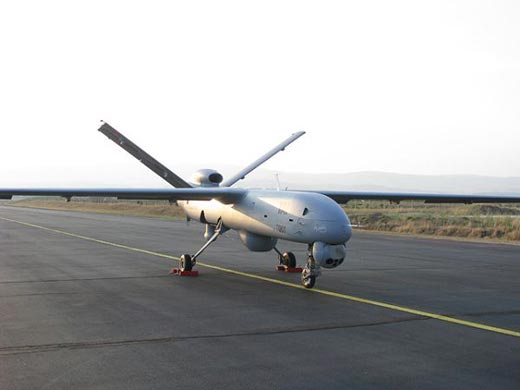
http://defense-update.com/wp-content/uploads/2011/01/ANKA1.jpg


Turkish Aerospace Industries ANKA UAV Unmanned Aerial Vehicle


23.09.2011 DEFENSE UPDATE


Turkey is ready to sell the new ANKA Medium Altitude Long Endurance (MALE) unmanned aerial vehicles to Egypt. Ankara has already approved a contract signed between with Egypt, for the transfer of six fast intervention vessels.


Egypt was one of the pioneers in unmanned aerial systems, fielding the Teledyne Ryan Model 324 Scarab high speed drone and SkyEye tactical UAVs in since the early 1980s. The addition of a MALE platform will fulfill the gap offering better persistence, improved imagery and multi-payload capacity. According to Ertem, other Middle East countries have also expressed interest in the Anka, as they prefer the Turkish product over U.S. or Israeli competitors.


Turkish and Egyptian officials have discussed military cooperation during the recent visit of Turkish Prime Minister Recep Tayyip Erdoğan to Cairo last week. According to Özcan Ertem , Vice President of Turkish Aerospace Industries (TAI) the prospects of selling the new Anka MALE UAV were discussed. He said the Turkish UAV is raising interest in the region, in Saudi Arabia and other North African countries, markets free from Israeli competition. Ertem said the Anka is currently being tested and certified with the flight testing campaign expected to be concluded in the spring.


According to Turkish sources, Turkey will also deliver to Egypt six multi-role tactical platform, MRTP-20 ‘fast-intervention crafts’, produced by Yonca-Onuk. Three boats will be constructed in Istanbul and the others in Egypt’s Alexandria shipyard using Turkish supplied kits.

Partager cet article
Repost0
23 septembre 2011 5 23 /09 /septembre /2011 11:35

http://upload.wikimedia.org/wikipedia/commons/thumb/5/54/Flag_of_IAEA.svg/600px-Flag_of_IAEA.svg.png


23 septembre 2011 Guysen International News


Les Etats membres de l'Agence internationale de l'Energie atomique ont adopté ce vendredi une résolution appelant tous les pays du Moyen-Orient à accepter un traité anti-nucléaire. Israël et les Etats-Unis se sont abstenus de voter ce texte proposé par l'Egypte.

Partager cet article
Repost0
23 septembre 2011 5 23 /09 /septembre /2011 06:55

http://media.farsnews.net/Media/8806/Images/jpg/A0733/A0733619.jpg


September 22nd, 2011 MDAA


TEHRAN (FNA)- The Islamic Republic of Iran’s Armed Forces displayed the latest generation of Shahab missiles, pilotless drones and electronic war systems in the military parades on Thursday.


The parades mark the start of the Week of Sacred Defense, commemorating Iranian sacrifices during the 8 years of the Iraqi imposed war on Iran in the 1980s.


Each year, the Iranian Armed Forces display the country’s latest military achievements and products in nationwide parades on September 22.


During the parades, different classes of Shahab missiles, Unmanned Aerial Vehicles (UAVs) and various types of electronic warfare systems were displayed.


Iran has recently made good progress in the air industry and has succeeded in gaining the technical know-how for producing stealth aircraft and drones.


Iran successfully tested a home-made radar-evading UAV with bombing capabilities in June 2009. Also in 2008, the country’s Defense Industries launched production lines of two well-known home-made fighter jets, namely Saeqeh (Thunderbolt) and Azarakhsh (Lightening).


Sejjil missiles, considered as the third generation of Iran-made long-range missiles, were displayed during the parades at the mausoleum of the Founder of the Islamic Republic, the Late Imam Khomeini, in Southern Tehran.


The solid-fuel, two-stage Sejjil missile with two engines, is capable of reaching a very high altitude and therefore has a longer range than that of the Shahab 3 model.


The missile has boosted the Islamic republic of Iran’s defense capabilities.


During the parades Shahab 1, 2 and 3, Qadr, Sahab and Zelzal missiles were also displayed.


The liquid-fuel Shahab 3 missile has a range of up to 1,250 miles (2000 kilometers) and is capable of carrying a 1,000-760 kilogram warhead.


The Iranian Army also displayed an upgraded version of the Zolfaqar battle tanks during the parades.


Zolfaqar is a second generation of Iran’s main battle tank (MBT). The test prototypes of the tank were evaluated in 1993. Six semi-industrial prototypes of the tank were produced and tested in 1997.


The Zolfaqar-1 uses a fire control system which enjoys a ‘fire-on-the-move’ technology. The Zolfaqar mounts a laser-warning pod on the turret. Its design enables the tank to use an Iranian-made package of reactive armor.


Zolfaqar-2 is a prototype tank used as a test bed. The Zolfaqar-3 also features considerable upgrades to the fire control system, chassis, engine and main gun, with a 125mm autoloader.


During the parades, the Iranian armed forces displayed different weapons and military tools and equipment, including different kinds of fighters, helicopters, drones, ground-to-ground missiles, air-to-ground missiles, surface-to-surface missiles, tactical and armed vehicles, surface and underwater vessels, electronic and telecommunication equipment, light and mid-light weapons, different kinds of artillery and mortar-launchers, air defense systems and engineering and logistic equipment.


On Sunday, Iran’s Defense Minister Brigadier General Ahmad Vahidi also informed that the country would display its latest military achievements and products in nationwide parades on September 22.


“The latest achievements of the Defense Ministry which have been supplied to the Armed Forces recently will be displayed by the Islamic Revolution Guards Corps (IRGC) and the Islamic Republic Army during the September 22 parades,” Vahidi said during a visit to a defense industry plant on Sunday.


“These achievements” he said “are the latest missile, air, electronic and telecommunications, armored, naval and anti-air tools, weapons and equipments produced in the country.”


Tehran launched an arms development program during the 1980-88 Iraqi imposed war on Iran to compensate for a US weapons embargo. Since 1992, Iran has produced its own tanks, armored personnel carriers, missiles and fighter planes.

Yet, Iranian officials have always stressed that the country’s military and arms programs serve defensive purposes and should not be perceived as a threat to any other country.


The country stages several air, land and sea wargames each year to test its newly produced weapons and equipments.


SOURCE: Fars News Agency

Partager cet article
Repost0
23 septembre 2011 5 23 /09 /septembre /2011 06:05

http://www.trdefence.com/wp-content/uploads/2011/09/erdogan-obama-turkish-pm-us-president-meet.jpg


Prime Minister Recep Tayyip Erdoğan announced after a meeting with US President Barack Obama that Turkey will impose sanctions on Syria. (Photo: Reuters)


22 September 2011, TODAY’S ZAMAN,


İSTANBUL - Turkey has closed its airspace to planes carrying military equipment to neighboring Syria, a news report said on Thursday.


The report, published in the mass-circulation daily Hürriyet, said the ban was imposed after Prime Minister Recep Tayyip Erdoğan announced on Tuesday that Turkey was considering imposing sanctions on Syria in coordination with the US. Erdoğan was speaking in New York after a meeting with US President Barack Obama on the sidelines of the UN General Assembly.


Turkey, once a close ally of Syrian President Bashar al-Assad, has gradually toughened its criticism against the Syrian regime over its brutal crackdown on anti-regime protests. Erdoğan said in New York that Turkey has already prepared for sanctions against Syria and added that the Turkish foreign minister and the US secretary of state will jointly work on what those Turkish sanctions may entail.


Erdoğan also said he has ended all contact with the Syrian government, lamenting that the actions of the Syrian regime have forced Turkey to take such a decision. Speaking on Wednesday, a senior White House official said Erdoğan and Obama agreed during their meeting to build up pressure on Assad to produce a result that would meet the demands of the Syrian people.


Elizabeth Sherwood-Randall, senior director for European affairs at the National Security Council (NSC) at the White House, told reporters that Turkish and US assessments over the need to intensify pressure on the Assad regime overlap, which she said is very important. She added that the two leaders shared the view that Assad’s regime is doing the Syrian people harm as well as agreeing on the need to build up pressure on Assad.


Sherwood-Randall added that Erdoğan and Obama have had close consultations about Syria over the past few months.


Ben Rhodes, Obama’s deputy national security adviser, meanwhile, told reporters on Wednesday that the important thing is that the two leaders shared a view that the Assad regime is doing the Syrian people harm and their similar view to build up pressure on Assad.


Rhodes said Turkey remains an important partner for the US to relay to the Syrian leadership the message that it should halt violence against its own people.


“Turkey sent clear messages over the past few days. Erdoğan delivered very strong messages during his North African tour,” Rhodes said, expressing the belief that he is ready to devise ways to build up pressure on the Assad regime.


Sherwood-Randall noted that Turkey’s relations with Israel came up during the meeting between Obama and Erdoğan and that Obama voiced his wish for a settlement of the tensions between the two countries.


Rhodes said both countries are important allies for the US and their relations are crucial to the stability of the region, and expressed the belief that it is important that steps be taken to ease tensions in the region.

Partager cet article
Repost0
22 septembre 2011 4 22 /09 /septembre /2011 20:35

http://upload.wikimedia.org/wikipedia/commons/f/f5/S-300PMU2_complex.jpg


22 septembre 2011 medialibre.eu


Le ministre iranien de la Défense a déclaré que la plainte de l’Iran contre la Russie, pour n’avoir pas respecté le contrat concernant la livraison du système de défense balistique S-300, est en cours d’examen, dans les milieux d’arbitrage. «La Russie est tenu d’appliquer le contenu de l’accord de vente du système de défense balistique S-300», a déclaré Général Ahmad Vahidi, en marge de la cérémonie marquée par le défilé des forces armées. Le ministère iranien de la Défense envisage la création de systèmes de défense aérien, de longue portée. L’Iran est auto-suffisant, en matière des système de défense aérien, de courte portée. Quant à l’installation du système du bouclier défensif balistique de l’ONU, en Turquie, il a fait savoir que Téhéran ne permettra à aucune force étrangère de menacer les intérêts nationaux de l’Iran et réagira, avec vigueur, à toute menace.

Partager cet article
Repost0
22 septembre 2011 4 22 /09 /septembre /2011 18:20

http://arabnews.com/middleeast/article505102.ece/REPRESENTATIONS/large_620x350/mid_iran.jpg


September 22nd, 2011 MDAA


TEHRAN, Iran (AP) — Iran is marking the 31st anniversary of the start of the Iraq-Iran war with a military parade and a display of the country’s steadily growing arsenal of short and medium range ballistic missiles.


Like last year, Thursday’s show included the solid-fuel Sajjil.


The missile, with more than 1,250 miles (2,000 kilometers) in range, could pose a threat to Israel and U.S.-allied Arab nations, including some that are home to American military bases.


The show comes weeks after neighboring Turkey agreed to host an early warning radar as part of NATO’s missile defense system aimed at countering Iranian missile threats. Washington hopes to have the radar deployed in Turkey by the end of the year.


Iran has warned such a move would escalate regional tensions.


SOURCE: The Associated Press

Partager cet article
Repost0
22 septembre 2011 4 22 /09 /septembre /2011 18:15

http://www.asdnews.com/data_news/ID38305_600.jpg


Sep 21, 2011 ASDNews Source : Penman Engineering Ltd


United Kingdom: Wednesday, 21st September 2011 --[ASDWire]-- Saudi Arabia has been confirmed as the first overseas country to order and buy into Creation's Zephyr protected vehicle programme. The deal, which establishes a partnership between Penman Group and ERAF Industries, part of Fahad International Company Limited, was finalised during the DSEi Show in London earlier this month. The partnership involves a significant element of technology transfer and will include the establishment of a new in-country operation which will develop and jointly manufacture the Creation Zephyr MRV family of vehicles for tri-service applications in the Kingdom of Saudi Arabia. ERAF Industries is Saudi Arabia's leading armoured vehicle upgrade and remanufacturing specialist - and the development marks the inauguration of its expansion into full vehicle construction.


Initial stages will focus on the 4x4 MRV in a number of configurations, with the 6x6 variants to follow in 2012. Work has already commenced on the project and a pilot vehicle, which will incorporate a number of specific features and regional requirements, is scheduled to be delivered before the end of this year. Precise details of the contract and its value are not being disclosed.


Penman Group Managing Director, Bryan Findlay says, "When we acquired the business, design and intellectual property rights of Creation early in 2011, we recognised the Zephyr vehicle's potential as a world market product, not least because of its modular design and thus suitability for manufacture and assembly in local markets. Many countries now wish to invest, develop and support their local economies and indigenous industries. The knowledge transfer element of this contract is indicative of Saudi Arabia's world leadership and ambition to strengthen its skills and manufacturing capability for the future - and we are very proud to be a partner in that process".


Abdullah Al Ameel, Chairman of Fahad International Company says, "The Zephyr is a fine example of the type of world class design engineering and technology which the United Kingdom has been able to provide for our country over many years. It fits well alongside our company's established portfolio of defence products and of course, there is important added value to be gained for all of us through the associated knowledge transfer programme".


Creation's Zephyr MRV protected platform programme is an integral part of Penman's future group-wide capability - and the latest upgrade variant made its debut at DSEi. The upgrade has also opened up the programme to develop to its full scope and potential. The original Zephyr design concept envisaged a fully functional rolling mine resistant underframe, onto which a wide variety of protected, softskin or even demountable top cabs, citadels or structures could be integrated. To date, development and production ready units have been configured around typical protected patrol vehicle requirements, whilst concurrent full design and pre-production studies have included a wide range of other applications.


Throughout its design evolution, the Zephyr has featured a composite 'occupant survival cell' with surrounding protection including a V-form belly plate and an integral blast mitigation system. Variants of the Zephyr can be configured for operational roles, body types and specialist applications such as pick-up utility vehicle, light logistics cargo carrier, troop carrier, command and control, demountable shelter, weapons mounted installation kit (WMIK), reconnaissance and battlefield ambulance. Crew and seating layouts can be varied and space is also allocated for weapons fit, communications suites, situational awareness (SA) systems and other electronic devices.


Specifically with world markets in mind, the mine resistant under-frame is also designed to accommodate a range of powertrain options, dependent on end user preference and specification. In addition, the unit has been developed to incorporate a rapid access and removal 'cassette' mounting for the cooling pack, engine, automatic transmission and transfer box. This permits main powertrain components to be removed for major repair and maintenance in about an hour.

The latest Zephyr MRVs feature Creation's new, extreme-duty nitrogen-based suspension all round, which improves roll-stiffness and provides further potential for payload growth. The new system, which carries no additional weight penalty, completely replaces the previous airbag based system, which was considered to be potentially vulnerable to small arms fire and damage in hostile operating conditions.


Hampshire-based Creation's Zephyr programme began almost five years ago as its privately funded initiative to develop an upgrade and protection package for in-service and legacy fleet vehicles. Its design team quickly recognised the sector's need for a fundamentally new, radical and fully integrated approach to wheeled protected vehicle engineering. Concepts, projects and design assignments such as the in-house Zephyr, the Lockheed Martin AVA and the Ranger for Universal Engineering then followed, all of which incorporate creative engineering features which subsequently have been widely adopted. More recently, the company has completed designs for other international clients and its subsystems projects, such as the LifeSeat One blast seat, have won critical acclaim.

Partager cet article
Repost0
22 septembre 2011 4 22 /09 /septembre /2011 18:00

http://www.defpro.com/data/gfx/news/5211f81bb5df9a58f1de0502295b60feaa2989fa_big.jpg 

Azerbaijan to receive Aerostar (pictured) and Orbiter 2M UAVs.

(Photo: Aeronautics Defense Systems)


September 22, 2011 By Nicolas von Kospoth, Managing Editor defpro.com


Azerbaijani Armed Forces to receive 60 new UAVs by the end of 2011


The Armed Forces of the Republic of Azerbaijan will take delivery of 60 license-built tactical unmanned aerial vehicles (UAVs) by the end of 2011. As Rashad Suleymanov of the Azeri Press Agency (APA) recently reported (see http://goo.gl/sfUa7), the Israeli-designed small unmanned aircraft are currently being manufactured and assembled by the Baku-based Azad Systems Company, a joint venture between the Azerbaijani Ministry of Defence Industry (MDI) and Israeli UAV manufacturer Aeronautics Defense Systems.


Aeronautics, which is Israel’s third-largest UAV manufacturer after IAI and Elbit Systems, provided Azerbaijan with its Aerostar and Orbiter 2M UAV systems. The Orbiter 2M mini UAV operates at a height of 4 to 6 kilometres with a maximum of 5 hours in flight. The somewhat larger Aerostar UAV provides the Azerbaijani Army with situational awareness from a height of approximately 10 kilometres and offers an endurance of up to 12 hours.


Azad Systems currently manufactures these UAVs at its Baku facility and plans to deliver 60 of the small aircraft to the Armed Forces by the end of this year. The latter will use the aircraft primarily for intelligence, surveillance and reconnaissance (ISR) purposes. However, Azerbaijani Minister of Defence Industry Yavar Jamalov told APA that the country is also considering the production of armed UAVs that could actively engage ground targets. According to the Minister, this project is scheduled to be implemented within the next two years.


Suleymanov told defpro.com that the technical characteristics of licence-built UAVs are very similar to the original Israeli design. While 30 per cent of the equipment is being manufactured in Azerbaijan, the majority of the systems’ elements are being produced abroad and delivered to Azerbaijan for final assembly.


Azerbaijan launched studies on the domestic production of UAVs in late 2009. According to APA, several Turkish companies, including TAI, Baykar Makina and Global Teknik, as well as Israeli companies, submitted proposals for a joint production. The Azerbaijani MDI’s decision in favour of Israeli designs, supported by the fact that armed forces’ already operate Israeli-built UAVs, resulted in the establishment of Azad Systems in March 2011.


While Israeli-Turkish relations are currently experiencing tough times, Israel’s defence industry has closely worked with the small but oil-rich Muslim country located by the Caspian Sea during recent years. The bilateral ties have flourished, in particular, since Azerbaijan became one of the largest crude-oil suppliers to Israel in 2006. Defence programmes with a major involvement of Israeli industries include communications and satellite systems, as well as artillery systems and UAVs.


The Azerbaijani Armed Forces already operate Elbit Systems’ Hermes 450 and IAI’s Searcher reconnaissance UAVs, as well as a number of Aeronautics’ Aerostar and Orbiter UAVs. Some of the Armed Forces’ unmanned assets were displayed during a military parade in Baku in June 2011.


Due to country’s long-standing dispute with Armenia over the Nagorno-Karabakh territory, which was occupied by Armenia in the Nagorno-Karabakh War that ended in 1994, Azerbaijan is undertaking great efforts to modernise its armed forces. To accomplish this aim, the relatively small country is seeking close industrial co-operation with regional and international partners in all major sectors of defence manufacturing. Among the most important partners are Turkey and Israel. However, countries such as the Czech Republic (modernisation of Azerbaijan’s L-29 and L-30 aircraft) and South Africa are also involved in important modernisation programmes.


Azerbaijan’s antagonist, Armenia, has also engaged in the national production of UAVs. Among the results of this effort is the Armenian-made Krunk drone, which was presented to the public during a military parade in Yerevan on September 21 dedicated to the 20th anniversary of the country’s independence from the Soviet Union.

Partager cet article
Repost0
22 septembre 2011 4 22 /09 /septembre /2011 12:00

http://cdnpullz.defencetalk.com/wp-content/themes/dtstyle/scripts/timthumb.php?src=http://www.defencetalk.com/wp-content/uploads/2009/04/uav-mq-9-reaper-runway1.jpg&w=375&h=245&zc=1


September 22nd, 2011 By Voice of America, DEFENCE TALK


The United States is reported to be expanding a secret drone program in east Africa and the Arabian peninsula in order to gather intelligence and strike al-Qaida-linked militants in Somalia and Yemen.


Citing U.S. defense officials, The Washington Post reported that the U.S. is building a new military installation to host the unmanned aircraft in Ethiopia, where drones can more easily attack members of the militant group al-Shabab that is fighting for control of neighboring Somalia.


The report also said the U.S. has re-opened a drone base in the Seychelles, an island nation in the Indian Ocean, where a small fleet of "hunter-killer" drones resumed operations this month after a test mission determined that aircraft based there could patrol Somalia.


In addition, the report said the Central Intelligence Agency is building a secret airstrip somewhere in the Arabian subcontinent in order to carry out drone missions against al-Qaida in the Arabian Peninsula. U.S. officials say the group, based in Yemen, is al-Qaida's most active branch, and is responsible for several attempted attacks on U.S. targets.


The U.S. is reported to have already flown drones over Somalia and Yemen from installations in Djibouti.


The U.S. military is also believed to have used the unmanned drone aircraft to carry out missions in Afghanistan, Pakistan, Iraq, and Libya.


U.S. officials previously acknowledged the existence of the drone base in Seychelles, but said the aircraft were surveillance drones that were primarily being used to track pirates in the region. But the Wall Street Journal reports that the base will now house MQ-9 Reaper drones that can be outfitted for both reconnaissance and strike missions.


Officials at the White House did not comment on the report.


Earlier this month, the commander of U.S. military operations in Africa said three African-based terrorist groups were working together to threaten U.S. interests in the region. General Carter Ham said al-Shabab, Algeria-based Al-Qaida in the Islamic Maghreb, and Boko Haram in Nigeria have said they intend to share training and operations in order to target Westerners, specifically Americans.

Partager cet article
Repost0
22 septembre 2011 4 22 /09 /septembre /2011 07:55

http://www.defpro.com/data/gfx/news/9f25a85d48922e844f7cd12c845222b0be813f56_big.jpg 

Soltam Systems ATMOS truck mounted self-propelled artillery system.

(Photo: Elbit Systems)


September 21, 2011 Daniella Bokor IDF- defpro.com


New cannon will replace the Doher, as part of multi-year plan


The Israel Defense Forces (IDF) Artillery Corps is continuing its consideration of new cannon systems, as part of a multi-year plan.


At this point, the two primary cannon systems being looked at are one that is manufactured by the Israeli Elbit company and another that is manufactured by a German company and will be built in the United States.


The Artillery Corps is seeking a cannon system with increased range, quicker rate of fire and enhanced ability to be loaded automatically.


The new cannon system that will be chosen is expected to replace the Doher 155mm cannon system that has been used for many years by IDF artillery units.


This Elbit cannon system under consideration is called ATMOS and is transported by truck. It fires a 155mm shell and has a range of more than 40 kilometers.


The other cannon system being looked at is made by the German KMW company and is called the AGM. It also fires a 155mm shell and has a range of more than 40 kilometers. It can fire up to six shells per minute.

Partager cet article
Repost0
22 septembre 2011 4 22 /09 /septembre /2011 07:45

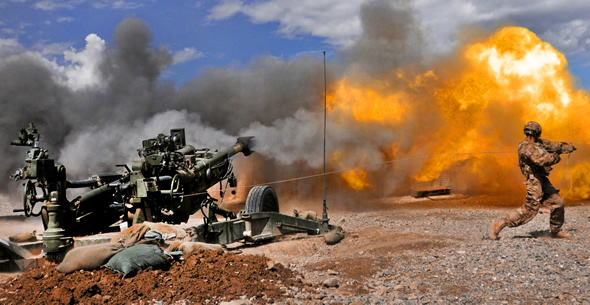
http://defense-update.com/wp-content/uploads/2011/09/m777_afghanistan.jpg


An M-777 155mm howitzer fires at a low ballistic trajectory in Afghanistan, as 3rd Platoon, Alpha Battery, 1st Battalion, 77th Field Artillery Regiment, 172nd Infantry Brigade, supported ISAF operations in Afghanistan, September 3, Photo by U.S. Army photo by Spc. Ken Scar, 7th MPAD


21.09.2011 DEFENSE UPDATE


Saudi Arabia is seeking to equip three field artillery regiments, two will be equipped with advanced lightweight M777A2 towed howitzers and one with air-transportable M119As, both produced by BAE Systems. The three artillery battalions (53 guns) and associated target acquisition and fire locating radars, in an arms package worth about $886 million.


The package includes two regiments (36 guns) of M777A2 and one regiment equipped with17 M119As howitzers, each unit to be supported by with two TPQ-36 ‘Fire Finder’ radar systems. The units will also deploy with standard U.S. Army artillery C4I systems (Advanced Field Artillery Tactical Data Systems – AFATDS). The package will also include 19,440 rounds of ammunition, including 17,136 rounds of the M107 High Explosive (HE) rounds and 2,304 extended range, Rocket Assisted Projectiles (M549 RAPs). The package will also include 60 M1165A1 High Mobility Multipurpose Vehicles (HMMWVs), 120 M1151A1 HMMWVs, 252 M1152A1 HMMWVs, and export versions of the Single Channel Ground And Airborne Radio Systems (SINCGARS) supporting the C4I system.


Among the companies providing the hardware for this package are BAE Systems in the United Kingdom, the prime contractor for the howitzers, AM General, providing the vehicles and ITT Defense and Information Solutions providing the radios.  Thales Raytheon Systems will deliver the radars. Other suppliers include Smith Detection, SRCTec, Northrop Grumman Corporation and General Dynamics C4 Systems.


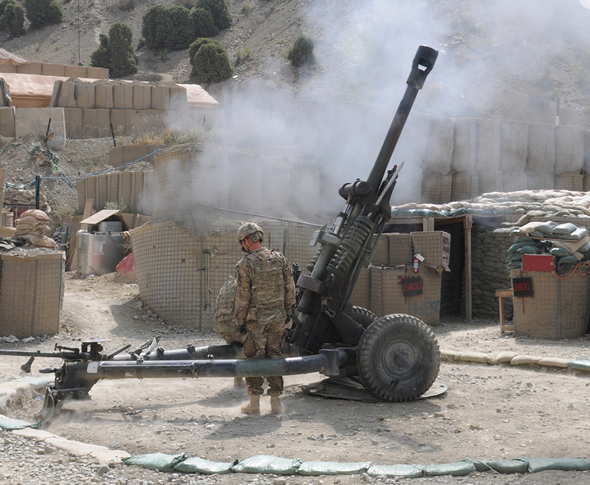
M119A howitzer supports ISAF forces in Afghanistan. High trajectory fire is often employed in mountainous terrain, enabling the firing unit to be based in the valley where access is easier, but reach targets beyond the ridges surrounding it. Photo: U.S. Army

Partager cet article
Repost0
22 septembre 2011 4 22 /09 /septembre /2011 07:10

http://rt.com/files/news/iran-air-defense-system-015/district-kapustin-destroy-air.n.jpg 

Troops prepare the anti-aircraft missile system S-300V to detect and destroy air targets at the tactical training exercises of Air Defense Forces in the Western military district (ZVO) at Kapustin Yar. (RIA Novosti/Kirill Braga)


21 September, 2011, RT.com


Troops prepare the anti-aircraft missile system S-300V to detect and destroy air targets at the tactical training exercises of Air Defense Forces in the Western military district (ZVO) at Kapustin Yar. (RIA Novosti/Kirill Braga)


TAGS: Arms, Russia, Politics, Vehicles, Iran


An Iranian general says the Islamic Republic has built an ingenious air defense system which surpasses the Russian S-300. Moscow intended to provide S-300s to Teheran, but canceled the sale due to UN sanctions against Iran.


"The flaws and defects of the S-300 system have been corrected in the indigenous version of the system and its conceptual designing has been finished,” Fars news agency quoted Brigadier General Farzad Esmaili as saying on Tuesday.


The commander of the Khatam al-Anbiya Air Defense Base said the surface-to-air missile system is dubbed Bavar-373 and uses two or three different types of missiles to attack aerial targets, depending on their altitude.


Iran has been developing a long-range air defense system for several years and first tested it last year. Some military experts speculated that the technology may have been borrowed from China. China was one of the several legitimate buyers of the Russian system.


The S-300 was developed in the Soviet Union in the late 1970s and has a range of up to 150 kilometers. It can hit aircraft, cruise missiles and even ballistic missiles, and track up to 24 targets simultaneously.


The system was supplied to a number of other nations. A deal with Iran was reportedly signed in 2007, but was never finalized. The contract, which would have allowed Iran protect its crucial nuclear facilities from a possible air strike, was vocally objected to by Israel and its allies.


The sale was canceled in June 2010 due to a set of sanctions imposed against Teheran by the UN Security Council. The international security body mounted pressure to force Iran to make its nuclear and ballistic missile programs more transparent.


The Russian army is currently replacing the old air defense system with the newest S-400, which has improved specifications. The next-generation hardware has not been sold to any other countries yet, although a possible deal with Saudi Arabia has been reported.

Partager cet article
Repost0
22 septembre 2011 4 22 /09 /septembre /2011 07:05

http://upload.wikimedia.org/wikipedia/commons/4/4d/AgustaA129_01.jpg


Sep 21, 2011 By Benjamin Harvey – bloomberg.com


Saudi Arabia’s military asked Turkey to enter a tender to produce attack helicopters for the Saudi air force, Sabah newspaper reported.


Turkish officials are in negotiations with Saudi counterparts regarding the Turkish-made Atak T-129 helicopters, which made their first test flights last month and are expected to go into mass production in the middle of next year, the Istanbul-based newspaper said. Sabah didn’t say how it got the information.


The helicopters are produced with parts and input from Turkish companies including Aselsan Elektronik Sanayi & Ticaret AS and are generating interest from Malaysia, Jordan and Pakistan, Sabah said.


South Korea officially invited Turkey to join a tender in April next year for 36 military helicopters, the newspaper said.

Partager cet article
Repost0
22 septembre 2011 4 22 /09 /septembre /2011 05:45

http://newsimg.bbc.co.uk/media/images/40090000/gif/_40090945_somalia_yemen2_map203.gif

source newsimg.bbc.co.uk


21 septembre 2011, sélectionné par Spyworld - source Le Monde, avec AFP


Les Etats-Unis bâtissent un réseau de nouvelles bases pour des drones, aéronefs sans pilote, destinés à frapper des membres d’Al-Qaida en Somalie et au Yémen, a assuré mercredi le Washington Post.


L’une de ces nouvelles installations est en cours de construction en Ethiopie, un allié des Etats-Unis dans la lutte contre les shebab, les islamistes qui contrôlent la majeure partie de la Somalie. Une autre l’est aux Seychelles. Une flottille de ce qu’il est convenu d’appeler des drones "chasseurs-tueurs", aptes à tirer des missiles Hellfire et à larguer des bombes guidées par satellite, et qui y était déjà basée, a repris ses opérations ce mois-ci.


DEUX POINTS CHAUDS


Une mission pilote avait préalablement démontré que des drones pouvaient effectivement patrouiller dans le ciel somalien à partir de cet archipel de l’océan Indien, selon le journal. Le Washington Post ajoute que les drones américains menaient aussi des missions en Somalie et au Yémen à partir de Djibouti, avec pour objectif de porter des coups à Al-Qaida dans les deux premiers pays cités. "Cela traduit notre perception qu’il s’agit bien des deux points chauds aujourd’hui en plein développement", selon un ancien haut responsable militaire américain cité par le quotidien.


Les responsables américains sont de plus en plus inquiets face à la montée d’Al-Qaida dans des régions incontrôlées de la Somalie et du Yémen, redoutant que ses militants dans la région ne préparent des attentats contre les Etats-Unis. Fin juin, le Washington Post avait rapporté que deux commandants des shebab somaliens soupçonnés d’avoir des liens avec Al-Qaida au Yémen avaient été blessés lors de ce qui semble avoir été la première attaque de drone américain en Somalie.


URL de la source : http://www.lemonde.fr/ameriques/article/2011/09/21/washington-met- (...)

Partager cet article
Repost0
22 septembre 2011 4 22 /09 /septembre /2011 05:30

cyber warfare


21/09/2011 zonebourse.com


L’Université Khalifa, Cassidian et Emiraje Systems L.L.C. ont inauguré un centre d’excellence en cyber-opérations sur le campus de l’Université Khalifa à Abou Dhabi. Ce nouveau centre concentrera ses travaux de recherche sur les systèmes de sécurité et de contrôle industriel essentiels à la protection des infrastructures énergétiques, à l’encodage et aux investigations numériques.


La création du Centre d’excellence en cyber-opérations est le fruit d’un accord signé en 2010. Dans le cadre de cette coopération, Cassidian et Emiraje Systems se sont engagés à fournir des ressources et équipements à l’Université Khalifa afin de soutenir la mise en place et l’exploitation du centre. Celui-ci encouragera et soutiendra, pour sa part, le développement du capital intellectuel dans le domaine des opérations cybernétiques au sein de l’université. Le centre renforcera en outre les capacités de recherche de l’université dans des domaines de cyber-technologie spéciaux, notamment en matière de sécurité des réseaux, d’applications de sécurité mobile, de cryptologie, d’investigations informatiques et de dispositifs embarqués, tels que les systèmes de contrôle industriel SCADA (Supervisory Control and Data Acquisition).


Tod Laursen, professeur et président de l’Université Khalifa, a déclaré : « L’inauguration du Centre d’excellence en cyber-opérations est totalement en ligne avec l’objectif stratégique de l’Université Khalifa. Celui-ci consiste à développer les capacités nécessaires pour réaliser la vision 2030 d’Abou Dhabi, qui vise à établir une économie fondée sur la connaissance. De plus, nous avons lancé un grand nombre de programmes académiques et de projets de recherche, qui contribuent ensemble à la réalisation de cet objectif stratégique. »


« Les nombreux cursus académiques que nous proposons, tels que les masters d’ingénierie nucléaire, de sécurité civile et internationale, et de sécurité de l’information, bénéficieront du travail réalisé par ce centre et, en contrepartie, lui fourniront des informations », précise-t-il. « L’interaction constitue la base de la recherche pluridisciplinaire et de l’environnement d’apprentissage que nous mettons en place à l’université Khalifa. Ces cursus, ainsi que le Centre de Recherche & Développement consacré aux semi-conducteurs, le Etisalat-BT Innovation Center et le Centre de Recherche & Innovation aéronautique et spatiale, ne sont que quelques exemples d’activités industrielles ciblées que nous avons récemment créées avec divers partenaires. »


Et Guy Meguer, Vice-président de Cassidian Cyber Security, d’ajouter : « Ce second centre vient confirmer l’engagement de Cassidian à contribuer, par l’apport de capacités durables en matière de cybersécurité, au développement de ces activités dans les EAU. Fournisseur majeur de solutions cybernétiques auprès des gouvernements européens, Cassidian se réjouit de poursuivre sa coopération avec l’Université Khalifa dans le cadre de ce projet, et de faire profiter les étudiants des meilleures approches en matière de sécurité. Tout pays utilisant des systèmes de communication numériques avancés se doit d’adopter une posture de sécurité saine, soutenue par une recherche académique solide et compétente. Ce centre apportera ce soutien essentiel à toute économie avancée. Il est conçu pour développer le capital intellectuel des EAU grâce à un transfert de connaissances efficace, et partager ensuite ce capital avec la communauté internationale ».


Abdul Aziz Al Khaili, Directeur général d’Emiraje Systems, indique quant à lui : « Le périmètre et les capacités étendus du nouveau Centre d’excellence en cyber-opérations d’Abou Dhabi vient compléter les capacités du premier centre créé en mai 2011. Ce partenariat fructueux témoigne de l’engagement actif de Cassidian, actionnaire et partenaire d’Emiraje, dans le transfert de connaissances et de technologies au profit des Emirats. Développer une expertise nationale dans ces domaines sensibles est indispensable pour la sécurité des infrastructures d’information en pleine expansion des EAU, qu’il s’agisse de la protection d’entreprises privées ou de la défense et de la sécurité de la nation. Les étudiants qui obtiendront ces diplômes constitueront une précieuse ressource tant pour le développement du pays que pour Emiraje, dont la mission consiste à développer les systèmes d’information critiques pour la défense et la sécurité des EAU, avec le soutien technologique de Cassidian. Je tiens à saluer une nouvelle fois le rôle prépondérant de l’Université Khalifa dans le développement continu de notre système d’éducation. »


A propos de l’Université Khalifa


L’Université Khalifa a été créée en février 2007 sur décret du Président des Emirats Arabes Unis, Son Altesse le Cheikh Khalifa bin Zayed Al Nahyan, pour réaliser la vision 2030 d’Abou Dhabi, qui consiste à établir une économie fondée sur la connaissance susceptible de contribuer efficacement au développement des EAU.


Le campus principal de l’Université Khalifa, situé à Abou Dhabi, est associé au campus de Sharjah. Il propose actuellement des bachelors en informatique, communication, électronique, développement logiciel, génie mécanique, génie aérospatial, et ingénierie biomédicale, des masters et doctorats en informatique, télécommunications et ingénierie électronique, ainsi que des masters en ingénierie nucléaire, sécurité de l’information, et sécurité civile et internationale.


L’Université Khalifa étendra à l’avenir son offre de formation à d’autres disciplines d’ingénierie, de logistique, de management et de sciences de la vie, dont des bachelors en ingénierie systèmes et industrielle, et en ingénierie civile et environnementale.


Elle ouvrira en outre des centres de recherche consacrés notamment aux technologies de l’information et de la communication (TIC), à l’énergie, aux nanotechnologies, à la technologie aérospatiale et aux sciences de la santé.


L’Université Khalifa accueille étudiants et étudiantes de toutes les nationalités, tout en accordant une attention particulière à la formation des jeunes émiratis. Pour plus d’informations, veuillez consulter www.kustar.ac.ae.

Partager cet article
Repost0
21 septembre 2011 3 21 /09 /septembre /2011 06:15

Rafale by mrg78

photo by mrg78


DUBAI, United Arab Emirates, Sept. 20 (UPI)


Dassault Aviation hopes to capitalize on France's participation with the United Arab Emirates in the air campaign against Moammar Gadhafi's crumbling regime in Libya to promote the sale of 60 Rafale multi-role jets to the Persian Gulf state.


The leading French aircraft builder sent a team of executives to Abu Dhabi, the emirates' capital, Sept. 3 to kick start negotiations that have dragged on for three years. The deal is potentially worth $9 billion-$10 billion and Dassault is desperate to sign its first foreign buyer for the twin-engine fighter.


It's been in service with France's air force and navy since 2006 but it needs a big overseas sale to keep the production line going to provide the 286 jets ordered by the French forces.


In 2007, the French bungled negotiations for the Rafale with Morocco, which bought Lockheed Martin's F-16s.


Ironically, Gadhafi at one point considered buying 14 Rafales -- the same aircraft that helped topple his 42-year dictatorship.


That deal was still in the works when a pro-democracy uprising broke out in March, hard on the heels of insurrections that ousted the presidents of Tunisia and Egypt.


After scores of missions against Gadhafi's forces by French Rafales, as part of the NATO air campaign to aid the Libyan rebels, Dassault feels it's on a roll.


"We really feel like we've turned a corner and we're at a level of extreme performance," Laurent Collet-Billon, head of the French defense procurement agency DGA, said at the Paris Air Show in June.


India has shortlisted the Rafale, along with the Eurofighter Typhoon, for an $11 billion purchase of 126 combat jets.


The Rafale's up against Sweden's Saab Gripen NG and Boeing's F-18 Super Hornet in a competition for a $5 billion 36-fighter deal by Brazil.


There had been hopes Dassault could sell 14-28 Rafales to Kuwait but those were dashed after Islamist lawmakers in the emirate's Parliament rejected the potential deal as "suspicious."


One claimed unidentified officials with "vested business interests" were trying to influence the Defense Ministry to buy the jet.


Negotiations with the emirates hit a roadblock in February 2010 when Abu Dhabi demanded the Rafales had to be armed with Boeing's SLAM ER/2 missile instead of the European-made MBDA AM-39 they're fitted to carry.


The SLAM -- for stand-off land-attack missile -- is a spinoff from the radar-guided air-launched Harpoon anti-ship missile. It's a high-precision guided munition for surgical strikes against fixed land targets and ships in port or at sea.


The AM-39 is a version of France's Exocet anti-ship missile first used with considerable effect by Argentina's air force against Britain's navy in the 1982 Falklands War.


The emirates' military says it wants missiles capable of reaching targets deep inside Iran. While the AM-39 has a range of 65 miles, the SLAM ER/2 can travel up to 160 miles.


The United Arab Emirates has built up what is widely viewed as the most formidable air force in the Persian Gulf. It has 184 combat aircraft, including 155 ground-attack fighters, mainly 55 Lockheed F-16E Block 60 Desert Eagles, 25 F-16F Block 60 Eagles and 18 French Dassault Mirage 2000-9DADs and 44 Mirage 2000-9RADs.


These Mirages could play a critical role in Dassault's negotiations.


The Intelligence Online Web site reported this month that Dassault was now more open to an emirates' proposal to take back the 2000-9s in part exchange for the Rafales.


"The Mirages could in turn be sold to the new regime in Tripoli, Libya's air fleet having largely been destroyed during the conflict," Intelligence Online noted.


"By happy coincidence, the civil servant who is in charge of ensuring that the new regime (in Tripoli) gets access to Libya's frozen funds is Frenchman Jacques-Emmanuel Lajugie, former director of international development at France's military procurement agency, the DGA," Intelligence Online reported.


"Before the Libyan uprising began, Lajugie had looked into selling the Rafale to Tripoli."


Still it's not likely to be plain sailing for Dassault. There are sizeable differences over the Rafale price tag because of foreign exchange fluctuations.


But Abu Dhabi has opened negotiations with Lockheed, which has offered to provide F-16s until it can deliver the fifth-general F-35 Joint Strike Fighter currently under development.

Partager cet article
Repost0
20 septembre 2011 2 20 /09 /septembre /2011 16:50

http://www.trdefence.com/wp-content/uploads/2011/09/egypt-eyes-to-buy-turkish-unmanned-aerial-vehicles-2011-09-19_l.jpg


Turkish Aerospace Industries executives believe demand for Anka aircraft will be high once the vehicle’s airworthiness and qualification testing period is over. Hürriyet photo


September 19, 2011 İPEK YEZDANİ Hürriyet Daily News - TRDEFENCE


ISTANBUL –  According to an executive at Turkish Aerospace Industries, the new Egyptian government is interested in buying Turkey-made unmanned planes. Some Middle East countries prefer Turkey rather than Israel or the US, defense experts say. Turkey will also sell six multi-role tactical platform naval vessels to the North African country


Turkish Aerospace Industries executives believe demand for Anka aircraft will be high once the vehicle’s airworthiness and qualification testing period is over. Hürriyet photo


Egypt is interested in buying made-in-Turkey unmanned aerial vehicles called Anka from a Turkish defense company, the Hürriyet Daily News has learned.


Egyptian and Turkish authorities talked about a possible future agreement to sell made-in-Turkey unmanned aerial vehicles, or UAVs, to Egypt during the visit of Turkish Prime Minister Recep Tayyip Erdoğan to Egypt last week.


Regional demand


“Many countries in the Middle East, ranging from North African countries to Saudi Arabia, are interested in the Anka Male [medium altitude, long endurance] unmanned aerial vehicle system that we produce,” the Vice President of Turkish Aerospace Industries, or TAI’s, Integrated Aircraft Systems Özcan Ertem told the Hürriyet Daily News in an interview on Monday.


Ertem said a large number of countries – especially in the Middle East – have been closely following the developments in the production of UAVs in Turkey. “I believe once the airworthiness and qualification testing period is over, there will be a high potential market for us to export our Ankas,” he said. “But we can only sell to countries that our government considers appropriate.”


The production process of the first series of UAVs is over now, and Anka has already started its flight test campaign, according to Ertem. The testing period with electro-optic sensors is expected to be concluded in the spring.


High capacity


Compared to the U.S.-made Predator and the Israel-made Heron, the Anka is a larger UAV and has the capacity to carry heavier loads, Ertem said. “The Anka has the capacity to carry up to 500 kilograms of sensors and fuel. Besides, different than our competitors, we have chosen a special engine system that runs on jet fuel, because it is available at every air base.”


There are three countries in the world that produce similar UAVs: Israel, the U.S. and Turkey. There are almost 15 countries interested in buying Turkey’s version of the UAV, and because of political reasons, some countries in the Middle East prefer Turkey rather than Israel or the U.S., defense experts say.


Turkey will also sell six multi-role tactical platform, or MRTP-20, naval vessels to Egypt, the Daily News has learned.


A contract on the procurement and manufacturing of six Onuk MRTP-20 fast-intervention crafts has been signed between Egypt’s Ministry of Defense and Yonca-Onuk JV – a Turkish company that specializes in commercial and naval craft manufacturing, according to the latter’s director for strategic planning, Armağan Ortaç.


Three boats will be constructed in Istanbul and the others in Egypt’s Alexandria shipyard with technology transfer. Moreover, Yonca-Onuk JV will provide all the material kits to be used during the construction in Alexandria.


The project will be completed 31.5 after the contract comes into effect. Harbor acceptance and sea acceptance tests have been completed for the first boat, which will be shipped to Egypt by the end of the month.

Partager cet article
Repost0
20 septembre 2011 2 20 /09 /septembre /2011 07:55

http://nanojv.files.wordpress.com/2011/09/peace-eagle.jpg?w=594&h=250&crop=1 

Major Milestone Completed on Turkey's First Peace Eagle Aircraft


20 septembre 2011 par NANOJV JOINT VENTURES CONSTRUCTOR


La Turquie achète ses Awacs (avions de surveillance et d’écoutes) de dernière génération à Boeing dans le cadre d’un programme somptuaire de 1,5 milliards de dollars. Nom de code Peace Eagle. Il s’agit d’une série de Boeing 737 modifiés et bourrés d’électronique. Sur ce dernier volet – l’électronique- c’est le champion toute catégorie qui a remporté l’appel d’offre : Israël.  Cependant l’État Hébreu n’aurait  livré que 2 des 4 systèmes commandés et gardés les autres selon le média turc Todays Zaman.


More details

Partager cet article
Repost0
20 septembre 2011 2 20 /09 /septembre /2011 05:50

http://upload.wikimedia.org/wikipedia/en/1/11/Stryker_fie_120.jpg

photo US Army


19 sept. 2011 par  


La société israélienne Elbit Systems a signé un contrat avec le ministère de la Défense israélien de 40 millions de dollars.

Objet de l'accord: la mise en place d'un mécanisme de défense appelé Cardom. Conçu avec un mortier de 120 mm, il exploite un système de navigation et de propulsion automatique. Sa portée s'étend jusqu'à 8000 mètres et 16 coups par minute peuvent être tirés.

Cette technologie est déjà en service au sein de Tsahal, mais aussi dans plusieurs autres armées comme celle des Etats-Unis.

Aérospatial, marine ou infanterie: Elbit Systems s'est spécialisé dans les communications, l'informatique, la surveillance ou encore les systèmes de reconnaissance.


Partager cet article
Repost0
19 septembre 2011 1 19 /09 /septembre /2011 18:45

http://upload.wikimedia.org/wikipedia/commons/thumb/2/26/Israel_Air_Force_Flag.svg/729px-Israel_Air_Force_Flag.svg.png


19/09/11 By Arie Egozi SOURCE:Flight International


The request for proposals (RFP) for the selection of an advanced trainer for the Israeli air force will be issued later than expected, with the slip having raising speculation about a possible delay to the programme.


The two final contenders for the requirement are the Alenia Aermacchi M-346 and Korea Aerospace Industries/Lockheed Martin T-50.


The RFP was supposed to have been issued last month. Sources said on 19 September that the delay is "of a few weeks", but added that a bigger delay may follow.


This could be a result of pressure to shrink Israel's defence budget and allocate money to solve social issues, the sources said.


They added that when "a line in the budget book is found", the RFP will be issued by TOR - the joint venture company formed by Israeli firms Elbit Systems and Israel Aerospace Industries.


TOR plans to purchase the selected trainer and sell flight hours to the air force.

Partager cet article
Repost0

Présentation

  • : RP Defense
  • : Web review defence industry - Revue du web industrie de défense - company information - news in France, Europe and elsewhere ...
  • Contact

Recherche

Articles Récents

Categories