Overblog Tous les blogs Top blogs Entreprises & Marques Tous les blogs Entreprises & Marques
Suivre ce blog Administration + Créer mon blog
MENU
14 février 2013 4 14 /02 /février /2013 15:55

http://www.defense.gouv.fr/var/dicod/storage/images/base-de-medias/images/dga/1-evenements/couverture-du-bilan-d-activites-2012-de-la-dga/2180756-2-fre-FR/couverture-du-bilan-d-activites-2012-de-la-dga.jpg


14/02/2013 Par Olivier Berger, grand reporter à La Voix du Nord. - Défense globale


La Délégation générale pour l'armement (DGA), dirigé depuis 2008 par Laurent Collet-Billon a présenté le 13 février son bilan d'activités 2012. La DGA représente des enjeux considérables, spécialement en temps de crise, peut-on ajouter : " maintenir au meilleur standard mondial l'équipement des armées " (près de 11 milliards d'euros d'équipements en 2012), " préserver la compétitivité de l'industrie française et européenne " (signature du pacte-défense PME, 725 millions d'euros investis en recherche et développement, 750 M€ en 2013). Rappelons que le secteur de l'armement représente en France plus de 160 000 salariés...


En revanche (c'est quand même la crise), le secteur de l'exportation, soutenu par la DGA au nom de l'Etat, est en recul à environ 5 milliards d'euros en 2012 (6,5 milliards en 2011, 8,5 milliards en 2008 par exemple). Sur la période 2006-2011, les Etats-Unis représentent le premier exportateur mondial d'armements (40 %) devant la Russie (14 %), le Royaume-Uni (11 %), la France (8,5 %) et Israël (5 %).


Le ratio achats d'équipements du ministère de la Défense (10,984 milliards d'euros) et exportations (environ 5 milliards) montre tout de même que le secteur reste trop dépendant de l'Etat.


logo-du-dispositif-rapid


D'une manière générale, la DGA compte environ 10 500 équivalent temps plein employé fin 2012 et s'oriente vers un renforcement de sa capacité d'ingénierie. Il a également réduit ses implantations géographiques (cinq centres du service qualité au lieu de neuf). Mais son efficacité, autant dans la recherche que dans le soutien à l'industrie française, semble déterminante pour le secteur. Une preuve avec le pacte Défense-PME, l'augmentation des 25 % sur trois ans des crédits RAPID (appui pour l'innovation, 62 projets sélectionnés en 2012).


Il faudra ensuite que tous ces programmes et ces innovations rentrent dans le cadre du futur Livre blanc et de la prochaine loi de programmation militaire. Rien n'est moins sûrs. La classe politique rappelle depuis quelques mois que certains domaines pourraient être mis en sommeil (pas abandonnés, nuance). Une meilleure coopération européenne est souvent vue comme une solution face aux budgets de Défense en recul...


En attendant, voici les principaux constats du bilan d'activité de la DGA en 2012...


Principales livraisons en 2012 : premier Rafale à radar à antenne active ; première FREMM Aquitaine (frégate multimissions) ; 196 AASM (missiles air-sol) ; 40e et dernier hélicoptère Tigre ; transfert du SNLE Le Vigilant à L'ïle longue pour son adaptation au missile nucléaire M51 (première sortie à la mer ce printemps) ; hélicoptère NH90-NFH (lutte anti-surface et anti sous-marine pour la Marine nationale) expérimenté à Hyères ; qualification du système PAAMS pour les frégates (Principal anti air missile systems) ; plus de 10 000 systèmes FELIN livrés (dix régiments d'infanterie équipés) ; 30 000 masques individuels de protection ; surprotection des AMX10RC ; robots terrestres contre les IED...


survol-du-caiman-marine-de-la-fremm-aquitaine


Principales commandes 2012 : adaptation au M51 des SNLE Le Triomphant et Le Téméraire ; capacité de soutien SIAé (service industriel de l'aéronautique) pour le programme A400M ; travaux d'évaluation du drone tactique Watchkeeper ; lancement de l'étape 1 des travaux de CONTACT (communications taciques et de théâtres) ; phase d'orientaton de la rénovation à mi-vie de l'ASMPA (missile nucléaire de la composante aérienne) ; notification du marché de brouilleurs BARAGE ; travaux de levée de risques du standard Rafale F3R (livrable en 2018) ; arrêt technique majeur du porte-avions Charles-de-Gaulle.


First production Airbus Military A400M in French Air Force


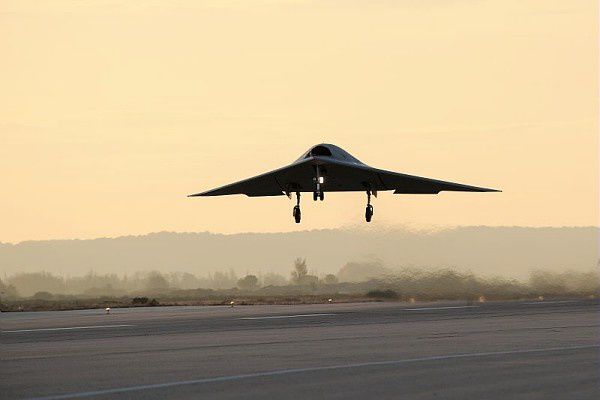
Recherche et développement : premier vol du démonstrateur de drone de combat furtif NEURON (essais jusqu'en 2014) ; tirs de qualification du missile AASM en version " guidage terminal laser ".


Dassault neuron uav source lefigaro.fr


Parmi les programmes futurs : CERES (composante spatiale interarmées de collecte de données de renseignement d'origine électromagnétique) ; SLAMF (renouvellement de la capacité de lutte contre les mines navales) ; HIL (hélicoptère interarmées léger)...


Coopération européenne.


UK MOD

Avec le Royaume-Uni, signature de deux contrats pour préparer le programme conjoint de drone de combat FCAS DP (Dassault et BAE pour le démonstrateur, Rolls-Royce et SNECMA pour la motorisation) ; expérimentation du drone Watchkeeper par l'armée de terre française (Thales UK) ; interopérabilité de la Combat Joint Expeditionary Force.


http://upload.wikimedia.org/wikipedia/commons/thumb/5/5b/Flag_of_the_Italian_Defence_minister.svg/800px-Flag_of_the_Italian_Defence_minister.svg.png

Avec l'Italie : missile Aster, radio logicielle et domaine spatial. Avec l'Allemagne : déclaration d'intention dans huit domaines, observation spatiale, drones MALE, défense antimissile, hélicoptères (lettre d'intention pour le Tigre), systèmes terestres, soutien et autoprotection de l'A400M, torpilles, certification des aéronefs militaires.


LogoEDA COLOR

Avec l'Agence européenne de Défense : drones, partage des capacités de ravitaillement en vol...

Partager cet article
Repost0
14 février 2013 4 14 /02 /février /2013 13:35

http://4.bp.blogspot.com/-ITsAvvupbZI/URoMB6DxjfI/AAAAAAAATag/JUPCgeAzoyY/s1600/ZW-4301-2_zpsaff7c4c9.jpg


February 14, 2013 by Shiv Aroor - Livefist


This is an unedited statement by the MoD on the acquisition of VVIP helicopters for the IAF, currently suspended after the arrest of Finmeccanica CEO Giuseppe Orsi.


The Facts: In August 1999, the IAF which is responsible for carrying out VVIP communication task, proposed the replacement of Mi-8 VIP helicopters due to severe operational constraints, such as, inability of Mi-8 to operate at night and in adverse weather, inability to operate safely at places in elevation beyond 2000 meters etc. IAF felt the need for the replacement of Mi-8 helicopters as they were completing their total technical life.


2.           A global RFP was issued in March 2002 to which 4 vendors responded. The Technical Evaluation Committee shortlisted 3 helicopters and accordingly flight evaluations were conducted.  Since, EH-101 of M/s. AgustaWestland was not certified for an altitude of 6000 meters, it did not participate in the flight evaluation. The Russian helicopter Mi-172 could not comply with 7 mandatory Operational Requirements (ORs).  After flight evaluation, EC-225 of M/s. Eurocopter, France was found suitable for acquisition.


3.           On November 19, 2003 a meeting was taken by Principal Secretary to PM on this subject.  In the meeting, Principal Secretary observed that his main concern was that the framing of the mandatory requirements has led us effectively into a single vendor situation.  It was also noted that PM and President have rarely made visits to places involving flying at an altitude beyond 4500 meters.  In the meeting it was decided to make the mandatory requirement for operational altitude 4500 meters.  The higher flying ceiling of 6000 meters, and a cabinet height of 1.8 meters could be made desirable operational requirements.  It was observed that with these revisions, several helicopters which otherwise met all requirements but had been rejected due to the altitude restriction, would now come into the reckoning.


4.           The meeting was followed by a letter dated 22nd December, 2003 from the Principal Secretary to PM to the Air Chief, stating that it was unfortunate that neither PMO nor SPG was consulted while framing these mandatory requirements.  He suggested that CAS and Defence Secretary may jointly review the matter to draw up realistic mandatory requirements satisfying operational, security and convenience requirements of VVIPs and also set in motion a fast track process for selection and acquisition of the replacement helicopters.


5.           In pursuance of the above directive, the ORs were deliberated at length between IAF, NSA, SPG/PMO and MoD between March, 2005 to September, 2006 and the above indicated changes were incorporated.


6.           The required numbers of helicopters for the entourage of VVIP was further deliberated between Air HQ, MoD and SPG/PMO. The quantity of helicopters proposed for procurement was revised from 8 to 12 helicopters by adding 4 helicopters in non-VIP configuration for security reasons.


7.           The AON for the procurement of 12 helicopters was accorded by the Defence Acquisition Council under ‘Buy’ category with 30 percent offsets on 3rd January, 2006.  RFP was issued to 6 vendors on 27th September, 2006.


8.           Three vendors, namely M/s Sikorsky, USA (S-92 helicopter), M/s AgustaWestland, UK (EH-101 helicopter) and M/s. Rosoboronexport, Russia (Mi-172 helicopter) responded to the RFP.


9.           M/s. Rosoboronexport did not submit earnest money deposit and the Integrity Pact, along with their Technical and Commercial proposals. It had been made clear to M/s Rosoboronexport in February 2007 that this was a global tender and hence every contractual clause would be the same for all vendors.  As no Integrity Pact and Earnest Money Deposit were received from M/s Rosoboronexport, their Techno-Commercial offer was not accepted.


10.       The Technical Evaluation Committee evaluated the technical proposals of M/s Sikorsky and M/s AgustaWestland and recommended field evaluation trials of their helicopters.


11.       The Field Evaluation Trial of M/s AgustaWestland was carried out in UK and trials of M/s Sikorsky were carried out in USA from 16 January 2008 to February 2008.  The Field Evaluation Trial team submitted its report in April 2008 and recommended AW-101 helicopter of M/s AgustaWestland for induction into Service.  SPG was also part of the Field Evaluation Trial team.


12.       The Staff Evaluation Report of Air HQ concluded that the S-92 helicopter was non-compliant with respect to four SQRs for the VVIP helicopter (Missile Approach Warning System, Service Ceiling of 4.5 km, Drift Down Altitude and Hover Out of Ground Effect).  The Staff Evaluation Report assessed the VVIP helicopter AW-101 to be fully compliant with all SQRs.


13.       Technical Oversight Committee constituted on 6 August 2008 found that the field evaluation trials, compliance to SQRs and selection of vendors were done according to the prescribed procedures.


14.       Contract Negotiation Committee (CNC) was constituted and it carried out its discussions with the vendor between 19 September 2008 and 21 January, 2009.  While the CNC was progressing its discussions, Air HQ, recommended inclusion of Traffic Collusion Avoidance System (TCAS-II) and Enhanced Ground Proximity Warning System (EGPWS) for all 12 helicopters and SPG/PMO recommended inclusion of Medevac System for 8 VVIP helicopters.  These additional equipment were considered to be essential for safe and effective operation of the helicopter in VVIP transportation role.  SPG also agreed to these requirements.  The CNC, thereafter, recommended conclusion of the contract at a negotiated price of EURO 556.262 million. 


15.       On completion of CNC the proposal was submitted for approval of the Cabinet Committee on Security (CCS).  The CCS considered the proposal in its meeting held on 18 January 2010 and approved the proposal.


16.       In pursuance of the decision of the CCS the Ministry of Defence concluded a contract for the supply of 12 AW-101 VVIP helicopter with M/s AgustaWestland, UK on 08 February, 2010.


17.       The procurement case was, thus, progressed in accordance with the established procurement procedure in a transparent manner with all stages of procurement being followed meticulously.   Security aspects as required by SPG/PMO and IAF were fully taken into consideration.  The role of PMO which began in 2003 was to ensure that security, communication and other requirements of VVIP security were taken care of and the helicopter for VVIP use is selected on the basis of broad based QRs.


18.       Contract signed with M/s. AgustaWestland includes specific contractual provisions against bribery and the use of undue influence.  Article 22 of the contract deals with penalty for use of undue influence.  This clause entitles the ‘Buyer’ to cancel the contract with the ‘Seller’ and recover from him the amount of any loss arising from such cancellation.  Article 23 of the contract dealing with agents and agency commission requires the ‘Seller’ to confirm and declare that he has not engaged any individual or firm, whether Indian or foreign, whosoever, to intercede, facilitate or in any way to recommend to the Government of India or any of its functionaries, whether officially or unofficially, to award of the contract to the ‘Seller’ nor has any amount been paid, promised or intended to be paid to any such individual or firm in respect of any such intercession, facilitation or recommendation.  This clause further entitles the ‘Buyer’ to consider cancellation of the contract without any entitlement or compensation to the ‘Seller’ who shall be liable to refund all payments made by the ‘Buyer’ in terms of the contract along with interest.


19.       In addition to the above contractual provisions, M/s. Agusta Westland has signed an Integrity Pact with the Government.  The validity of this Integrity Pact is from the date of its signing and extends up to five years or the complete execution of the contract whichever is later.  Under the Integrity Pact, the bidder commits himself to take all measures necessary to prevent corrupt practices, unfair means and illegal activities during any stage of the bid or during any pre-contract or post-contract stage.  Any breach of the provisions of the Integrity Pact entitles the ‘Buyer’ to take actions against the ‘Seller’ which includes forfeiture of the earnest money, performance bond, cancellation of the contract without giving any compensation, to recover all the sums already paid with interest, to cancel any other contracts with the bidder and to debar the bidder from entering into any bid from the Government for a minimum period of five years which may be extended, etc.


20.       As regards, the allegations of unethical dealings in helicopter procurement case including involvement of middleman and payment of bribes etc., the first report in the media appeared in February 2012.


21.       Immediately (the next day after the news item appeared in the papers) DG(Acq) in MoD sought a factual report in the matter from our Embassy in Rome.


22.       MoD also noted the report in the ‘Hindu’ of 28.2.2012 that, quoting Finmeccanica, states that its subsidiary AgustaWestland is not involved in “any irregularity in the deal”.


23.       Subsequently, MoD received more than one communication from M/s AgustaWestland confirming that the statements in the press are “completely    unfounded and have been issued with malicious intent” and that “no commissions whatsoever were paid” in the case.


24.       In April 2012, MoD wrote again to our Embassy in Rome seeking an update.


25.       A detailed report on the status of the case was received from our Embassy in Rome in May 2012.  The report made it clear that there are inherent difficulties in obtaining formal details of the case given the independence of the judiciary from the executive in Italy.


26.       MoD in July 2012 wrote to our embassy in Rome stating that it could approach the concerned judicial authorities directly.  A formal request was indeed made by the embassy to the Naples prosecutors office on July 16, 2012.


27.       Since factual information was difficult to arrive at, Defence Secretary wrote to Secretary (West), MEA, in October 2012 reiterating the importance of the need to get information from the Italian authorities so that MoD could take further necessary action in this regard.


28.       MEA’s response again was that the matter had been taken up with the Italian side and the position conveyed for the need for ‘reliable information’, for “news reports alone could not be the basis for the Ministry of Defence to make any preliminary determination”.


29.       In October 2012 Defence Secretary also wrote to Secretary (West) to take up the matter with the Government of U.K.  in view of the alleged involvement of a British citizen and the fact that the contract was signed with M/s AgustaWestland, U.K.


30.       In November 2012, Secretary (West), MEA, replied to Defence Secretary stating that ‘the U.K. authorities were waiting for the results of the Italian investigation in order to ascertain whether there are further actions to take’.


31.       Earlier, in connection with the letter received from one

Mr. Edmund Allen of Ganton Limited, USA, MoD had written on 19.4.12 to CBI and Enforcement Directorate for necessary action, as Abhishek Verma and others were also being named in various media reports in connection with several defence deals.  Later, Enforcement Directorate informed MoD in July 2012 that they were enquiring into the allegations.


32.       In November 2012, a letter was received in MoD from the Director, Income Tax (Investigations) regarding allegations against Indians possibly involved in the deal as middlemen and seeking information about them.  The current status of the case was conveyed to the income tax authorities in January 2013; in return, MoD asked Income Tax to share with it any ‘credible information’.


33.       Throughout the process of this case, MoD has been prompt to take action on newspaper reports, and to seek factual information from the concerned authorities.  Since foreign governments are involved, MoD has consistently pursued the matter though MEA.


34.       As soon as information was available of one concrete step having been taken by the concerned foreign investigative authorities, namely, the arrest of Mr. Giuseppe Orsi, CEO, Finmeccanica on Feb 12, 2013. MoD handed over the case to CBI for investigation and put on hold all further payments to Agusta Westland.  Besides this, the Indian Embassy has been requested to provide the factual position and any other relevant information.  The CEO of M/s AgustaWestland has also been asked to categorically state the clear position in view of the current developments indicating specifically if any financial transaction has taken place with any Indian individual / entity which would be violative of the Integrity Pact or any other terms and conditions of the contract.


35.       As already mentioned above, both the contract and integrity pact signed with M/s AgustaWestland, U.K., contain specific provisions by which strict action including cancellation of contract, recovery of payment, blacklisting and penal action can be taken against the vendors.  Government is determined to take all possible legal and administrative action against the guilty parties and accordingly has ordered a thorough probe by CBI.

Partager cet article
Repost0
14 février 2013 4 14 /02 /février /2013 07:20

HMCS Halifax (FFH 330) en route to Haiti 2010-01-18


13/02/2013 par Nicolas Laffont - 45enord.ca


Un reportage de Radio-Canada annonce qu’Ottawa a (encore) sous-estimé le coût d’achat de l’un de ces programmes phares, cette fois-ci: les futurs navires de la Marine royale canadienne.


Déjà en avril 2012, 45eNord.ca vous apprenait que le coût était sous-estimé, non à cause de l’inflation comme l’annonce Radio-Canada aujourd’hui, mais en raison de la méthode de calcul du gouvernement, qui est la même que pour le F-35.


Dans l’article daté du 20 avril dernier, nous vous indiquions qu’une porte-parole du ministère de la Défense nationale, avait déclaré lors d’une interview téléphonique qu’il était impossible de connaître pour l’instant tous les coûts d’exploitation des navires puisqu’ils ne sont pas encore construits et que certains sont encore à l’état de simple dessins sur une planche. «L’évaluation de l’ensemble des coûts ne pourra se faire que lorsque le design des navires sera défini, ce qui devrait être fait dans le courant de l’année [2012].»


On parle ainsi d’achat brut. Dans le cas du F-35, les chiffres sont passés de 9 milliards $ à près de 45 milliards tout inclus.


Représentation d’un modèle conceptuel du navire de patrouille extracôtier de l’Arctique. (Photo: MDN)

Représentation d’un modèle conceptuel du navire de patrouille extracôtier de l’Arctique. (Photo: MDN)


En juin 2010, le gouvernement du Canada a annoncé la mise en place d’une Stratégie nationale d’approvisionnement en matière de construction navale (SNACN). Cette Stratégie a pour but la construction de navires destinés au ministère de la Défense nationale et au ministère de la Pêche et Océans Canada.


En janvier dernier 2012, le gouvernement fédéral a annoncé l’octroi de deux contrats pour la construction de ces navires. Le premier, d’un peu moins de huit milliards $ a été donné à Seaspan Marine, dans l’Ouest, pour sept bateaux civils. Quant au deuxième contrat, il a été donné au chantier Irving Shipbuilding Inc. dans l’Est du Canada, à Halifax, pour la construction de 21 navires au coût de 25 milliards $.


NOTRE DOSSIER SUR L’ACHAT DE NOUVEAUX NAVIRES >>


Aujourd’hui, des sources ont confirmé à Radio-Canada que le principal risque dans l’industrie navale militaire, l’inflation, a été plus que sous-estimé par le gouvernement dans son projet d’achat.


Selon David Perry, analyste à l’Institut de la conférence des Associations de la défense, le taux d’inflation annuel dans la construction de navires militaires varie entre 7 % et 11 %.


Or, selon des informations obtenues par Radio-Canada, la Marine royale canadienne n’aurait prévu une inflation d’à peine 2,7 %.


Pour sa part, le porte-parole libéral John McCallum a déclaré dans un communiqué publié ce mercredi 13 février au sujet des erreurs de calcul du gouvernement conservateur quant aux coûts des navires de soutien interarmées : « Le fait que les conservateurs aient utilisé un taux d’inflation erroné, 2,9 % au lieu de 7 à 11 %, pour calculer le coût du projet des navires de soutien interarmées, démontre clairement leur incompétence ainsi que leur échec persistant à consulter le secteur industriel avant d’établir un budget d’acquisitions de grande envergure.»


Le parte-parole libéral a ajouté que «Le manque de diligence de ce gouvernement peut laisser notre force navale avec un financement insuffisant pour acquérir les navires nécessaires pour protéger nos côtes, compromettant ainsi leurs capacités opérationnelles.»


Et, cerise sur le gâteau, la construction de ces navires de combat ne pourrait débuter avant 2020, soit cinq ans plus tard que prévu, un délai qui pourrait avoir un impact sur les coûts.


Bref, tout va bien!

Partager cet article
Repost0
13 février 2013 3 13 /02 /février /2013 17:45

Shaldag_fast_patrol_boat.jpg


13 February 2013 defenceWeb


The Nigerian Navy has commissioned into service three OCEA and two Shaldag patrol boats during a ceremony at Western Naval Command Headquarters in Lagos.


P 175 patrouilleur Ocea pour le Nigéria photo Bernard Prez


The three OCEA FPB 72 Mk 2 vessels are 24 metre long coastal patrol craft with a top speed of more than 30 knots. The first commenced sea trials in March last year and all three were delivered in late September.


On September 4, 2012, Israel Shipyards announced that two new Shaldag Mk II Fast Patrol Craft were on their way to “an African customer for delivery to the local Navy.” This almost certainly was Nigeria.


During the commissioning ceremony on Monday, Minister of Finance Ngozi Okonjo-Iweala said the vessels would be used to combat oil theft and other crime on Nigeria’s waterways. She is quoted by This Day as saying the government procured the boats because Nigeria relies heavily on resources from its maritime domain.


“I am personally delighted at what has been achieved [by the Nigerian Navy] and I urge them to continue to work hard so that we can see results,” Okonjo-Iweala said. “With the acquisition, it is to show that the president is totally behind the Armed Forces.”


The Minister of State for Defence, Dr Olusola Obada, was quoted by the Voice of Nigeria as saying the commissioning was another milestone in the Nigerian Navy’s history. “I am aware of the constraints militating against the Nigerian Navy's efforts to optimally discharge its statutory duties, especially in the security of the maritime domain. It is however gladdening to note that in spite of existing challenges, the Nigerian Navy has continued to do its best in safe-guarding the nation's maritime assets,” Obada stated.


The Chief of Naval Staff Vice Admiral Dele Ezeoba said the Navy required at least 40 such patrol boats to effectively deal with maritime crime like sea robbery, piracy and oil theft. “Though the boats are small, they are fast. They are designed for security tasks such as interdiction, anti-smuggling, anti-illegal bunkering, sea robbery and piracy.”


Ezeoba noted that eleven officers and 48 ratings have been trained to man and maintain the boats.


The Shaldag design is in service with the Israeli Navy and other customers in Europe, Asia and Africa. It was developed and built by Israel Shipyards Ltd in the late 1980s but upgraded over the years based on combat experience. The type is powered by two diesel engines driving two water jets, which give an acceleration time to 40 knots of 40 seconds. The Shaldag Mk II has a length of 24.8 metres, a displacement of 58 tons and a range of 650 nautical miles.


Standard equipment on most Shaldag versions includes an X-band surveillance/navigation radar and electro-optical sensor system for day and night surveillance. A number of armament options are available, including fore and aft deck guns, and heavy machineguns on the fly bridge. The guns can be remotely controlled (such as the 23/25 mm Typhoon and 12.7/7.62 mm Mini-Typhoon) or manually operated weapons. In addition, a 20-23 mm naval gun can be mounted on the rear gun mount or four to eight short range missiles can be carried.


The Nigerian Navy received at least two Shaldag Mk IIs in June 2009. It is undergoing major expansion, with new boats being built locally and overseas. In October last year, China’s Wuchan Shipyard began construction of the first of two P18N offshore patrol vessels for the Nigerian Navy. These vessels are 95 metres long and are being built by China Shipbuilding and Offshore International Limited, the trade arm of China Shipbuilding Industry Corporation (CSIC). They will be delivered in around three years’ time and will be partly built in Nigeria.

Partager cet article
Repost0
12 février 2013 2 12 /02 /février /2013 12:50
LogoEDA COLOR


More than 100 people from technology clusters, wider industry, research centres and regional and national authorities, together with the European institutions attended the European Defence Agency - European Commission workshop on Regional Smart Specialisation for Europe’s defence sector on 28 January 2013.


European Commission Logo A joint initiative of EDA and European Commission, supported by the Conference of Peripheral Maritime Regions, the workshop was launched with the objective of increasing awareness of the potential for policies on smart specialisation and regional policy funding to support European companies and research centres working in the field of defence. In parallel it provided regional decision makers with practical knowledge on the potential of the defence sector to support regional economic development. 


Europe’s defence industry, formed by many world class companies large and small, has long been a driving force for technical innovation, wealth generation and business growth across Europe but with constrained defence spending there is a need for new approaches. In this context the workshop addressed three key themes;


  • increasing the cross-fertilisation between the military and civil sectors;
  • promoting best practice for defence related industry centres of excellence/clusters contributing to regional development;
  • investigating the support that regional policy can offer to defence-related SME supply chain.


The workshop is a practical example of how European Commission instruments and EDA expertise can be fused to help support Europe retaining an innovative and competitive industrial base, one better able to meet the defence capability requirements of Member States.


Over the coming weeks EDA and European Commission will be analysing the workshop proceedings to see what lessons can be learnt and what concrete measures can be undertaken – to support the defence industry. This input is also very timely as the European Commission is preparing a Communication in support of the competitiveness of the defence industry and the internal market, which is expected to be finalised by June 2013.  


Publications
Partager cet article
Repost0
5 février 2013 2 05 /02 /février /2013 16:45

Casspir


05 February 2013 by Guy Martin - defenceWeb


Landmine clearance company Denel Mechem has recently sold ten CASSPIR 2000 mine protected vehicles to Benin and has 15 on order with the United Nations as it promotes the latest version of the CASSPIR mine protected armoured vehicle.


Mechem is expecting new orders for the CASSPIR 2000 in the next financial year (starting April 1), according to Stephan Burger, CEO of Denel Land Systems (which merged with Mechem last year). “At this moment we are negotiating a number of substantial contracts,” he told DefenceWeb.


The Casspir 2000 is the latest variant of the world renowned armoured vehicle. Burger said the CASSPIR 2000 emerged from the shortage of old CASSPIR Mk 1 and 2’s available for refurbishment. Denel saw a niche as there were no more second hand CASSPIRS to rebuild, yet there is demand for the vehicles. “We decided to build with new technology, more armour, modern instrumentation etc.”


Burger said that now Mechem has merged with Denel, Mechem can spend the majority of its time focusing on getting orders. “We recognised the importance of the Mechem identity, brand and nimbleness. For that reason we’ve kept Mechem as a separate business unit that must get its own orders.”


The Denel Land Systems-Mechem merger was approved by the Board of Denel in June 2012. “We said the best time to make such a change is when things are going well. We decided from a financial perspective that this make sense. The financial gain was impressive,” Burger said of the merger. “Not only did we cut costs but we provide a better service at a lesser price…and we have a better marketing footprint.”


Burger pointed out that in 2006 when Vektor was merged with Lyttleton Engineering Works (LIW) to form Denel Land Systems, the entities were making a R600 million loss. ‘Traumatic’ restructuring saw the staff cut by a third but overheads were halved and the company soon became profitable. “We’re doing tremendously well on the traditional Mechem side with the clearance of explosive remnants of war and selling CASSPIRS as well.”


Mechem specialises in mine clearing, removing the explosive remnants of war (ERW), manufacturing mine protected vehicles (notably the CASSPIR Mk II, Mk IV and New Generation CASSPIR 2000) and mine clearing equipment, and providing canine training and services (for explosives and drug detection). Through its Afrifoot programme, it manufactures and supplies low-cost leg prosthesis to landmine survivors.


The company has recently completed various demining or mine clearing projects in Afghanistan, Republic of Sudan, Republic of South Sudan, the Democratic Republic of Congo, Angola and Mozambique. Mechem is active in eleven African countries, including the DRC, where it has supported UN peacekeeping activities since 2003, Western Sahara and Somalia, where it works with the African Union.


Mechem is the only African-based company accredited by the UN for landmine clearance, as the rest are based abroad. Since it started African operations in 1992, the company has not lost a single employee to a landmine incident.


According to United Nations estimates, there are at least 110 million active landmine mines scattered across the world, of which about 44 million have been planted on the African continent. In 2010 there were 4 200 victims of landmine’s effects - 11 people a day. However besides landmines unexploded ordnance today poses the greatest risk to the populations in post conflict environments.


Apart from demining work, Mechem is also involved in drug detection through its Mechem Explosives and Drug Detection System (MEDDS). Mechem detection dogs have also been used to combat rhino poaching.

Partager cet article
Repost0
3 février 2013 7 03 /02 /février /2013 08:20

http://www.45enord.ca/wp-content/uploads/2012/11/US_Navy_091208-N-5812W-005_Sonar_Technicians_aboard_the_guided-missile_destroyer_USS_The_Sullivans_DDG_68_monitor_sonar_equipment-642x458.jpg

Des techniciens sonar à bord de l’USS The Sullivans

(Photo: U.S. Navy photo)


02/02/2013 par Jacques N. Godbout - 45enord.ca


Le ministre de la Défense nationale, Peter McCay, a annoncé le vendredi 1er février l’attribution d’un de 6,6 millions$ Ultra Electronics Marine Systems pour l’entretien des systèmes sonar de la flotte de sous-marins canadiens.


Ultra Electronics Marine Systems, de Dartmouth, en Nouvelle-Écosse, qui emploie 147 personnes, est une division de de la société Ultra Electronics Group, basée à Middlesex au Royaume-Unie, qui oeuvre dans les secteurs de la du transport, de l’énergie, de la défense et de la sécurité, notamment ofrant une gamme complète de systèmes de sonar maritimes et aériens.


« Notre gouvernement continue d’ajouter à son solide bilan de réalisations visant à s’assurer que les hommes et femmes qui servent notre pays disposent de l’équipement dont ils ont besoin pour s’acquitter de leurs tâches, a déclaré à cete occasion le ministre MacKay. Nous continuons d’investir dans les technologies qui sont utiles aux Forces armées canadiennes, et nous continuons de veiller à ce que les industries canadiennes tirent profit de ces investissements majeurs. »


Ce contrat porte sur les travaux d’entretien des systèmes sonar à antenne remorquée intégrés à la flotte canadienne des quatre sous-marins de classe Victoria. Les travaux exécutés dans le cadre de ce contrat de trois ans, dit le communiqué qui accompagne cette annonce, permettront de s’assurer que ces sous-marins continuent de faire partie intégrante de la capacité canadienne en matière de défense et de sécurité.


Les sous-marins canadiens ont pour mission d’assurer la surveillance, le soutien de l’application de la loi maritime, le maintien des habiletés de la flotte, ainsi que les opérations nationales et internationales.


On se rappelle, bien sûr, la participation à l’exercice naval RIMOPAC 2012 où le sosu-marin canadien Victoria avait lancé une torpille qui a atteint son but et couler un navire (désaffecté) américain.


La flotte canadienne sera d’ailleurs pleinement opérationnelle en 2013, souligne le ministère de la Défense, lorsque la période de grande remise en état du NCSM Chicoutimi sera complétée. Ainsi, trois des quatre sous-marins canadiens seront disponibles pour des opérations. En tout temps et selon le principe de la rotation, il y aura un sous-marin en période de grand carénage.


Partager cet article
Repost0
2 février 2013 6 02 /02 /février /2013 08:20

HMCS Victoria SSK-876 photo4 DND


February 1, 2013. David Pugliese - Defence Watch


The government announced a contract award to Ultra Electronics Marine Systems Inc., of Dartmouth, Nova Scotia for work on the RCN’s submarines.


The $6.9 million contract covers maintenance work on the towed-array sonars on Canada’s fleet of four Victoria-class submarines, according to the news release from DND. The work carried out under this three-year contract.


Canada’s submarine fleet will reach steady state in 2013, with the completion of the ongoing Extended Docking Work Period for HMCS Chicoutimi, according to the release. Steady state means Canada will have three of the four submarines available for operations. One submarine will be taking its turn in the rotation for extended maintenance at all times.

Partager cet article
Repost0
28 janvier 2013 1 28 /01 /janvier /2013 17:40

Russia Weapon Maker


January 28, 2013: Strategy page


Russian arms exports for 2012 were a record $15.2 billion. This is a major increase over 2010 (a then record $10 billion). That was an 18 percent jump from 2009 sales of $8.5 billion. That was less than two percent more than 2008's $8.35 billion. It was feared that the 2010 sales might be as high as it would get for a while. This was because the subsequent political upheavals in the Arab world might lead to large cancellations of orders, in part because of Russian willingness to use bribes to obtain sales, and past help in security matters to keep the ousted dictators in power. Russia did lose some orders, and there might be other cancellations (especially from Syria.) But India remained the largest buyer of Russian arms, despite complaints of poor quality and bribes.


Increasing these sales is very important for the Russian government. The defense industry employs over three million people and accounts for about 20 percent of industrial jobs in Russia. At the end of the Cold War in 1991, defense work was more than three times as large as it is now. It was the enormous size of the defense industry that played a major role in bankrupting the Soviet Union. The Russians were never quite sure (cost accounting not being a communist favorite) what proportion of their GDP was devoted to military spending, but it is estimated that it was over 20 percent. That was more than four times the figure for Western nations (and their generally larger per-capita economies).


Russian defense firms quickly realized, in the 1990s, that export sales were all that could save them. It worked. By 2007, Russia was exporting $8 billion worth of weapons a year. Two years before that there were hopes that sales might reach $10 billion for 2008. Russian arms exports had been growing rapidly for a while. In 2005 Russian arms exporters had already booked orders for six billion dollars-worth of sales per year through 2008. In 2004, Russian arms sales were $5.6 billion, and that went to $6 billion in 2005 and $7 billion in 2006. Russian arms sales were only $4.3 billion in 2003, and ballooned as the economies of their two biggest customers (India and China) grew larger. That, and the escalating price of oil (driven largely by increased demand from China and India), has sent international arms sales from $29 billion in 2003, to over $80 billion now. Oil rich countries, particularly those in the Persian Gulf, are eager to buy more weapons, with which to defend their assets.


Then problems developed, even before the current Arab situation. There were problems with the two largest customers; China and India.  Over the last decade, about a third of Russian arms exports went to China. But that is now way down, as Russian manufacturers feud with the Chinese over stolen technology. The Chinese have been quite brazen of late, as they copy Russian military equipment, and then produce their own versions without paying for the technology. Worse, the Chinese are now offering to export these copies. The Russians are trying to work out licensing deals with the Chinese, with limited success. The Chinese say their generals are angry over how Russia sells technology to potential Chinese enemies, like India. The Russians don't understand that, as they have been selling weapons to India for decades. Russia fears that the Chinese have just decided that they don't need to buy Russian technology, or equipment, any more, and can just steal what they need.


India is also unhappy with Russian sloppiness in handling large projects, like refurbishing a decommissioned Cold War era carrier. This project has been a financial disaster for India. Worse yet, India is buying more Western (Israeli, European and American) weapons, and notes the differences in performance and service. The Arabs were always more understanding, at least more so than China and India. But if Russia cannot change a lot of old habits real quick, their flourishing arms export business is going to slide back into the cellar.


Three years ago Israel became one of the top four arms exporters on the planet, shipping $7.2 billion worth of military equipment. The year before, Israel had exported $6.9 billion. The U.S. is the largest exporter, followed by Russia and Germany. Israel is now number four.


Half the weapons exported worldwide last year came from the United States (mostly) and Russia. European nations have long occupied the next three slots (Germany, France and Britain.) But lately, German and Israeli exports have been growing. The other big exporters are Spain, China, Netherlands and Italy. These top ten exporters accounted for over 90 percent of the exports. The major importers are Middle Eastern Arab nations, India, South Korea, China and (until recently) Greece.


Israel and Germany have been gaining more sales because of reliability and quality. Israel has a major advantage in that many of its weapons and military equipment have proved their worth in combat.

Partager cet article
Repost0
17 janvier 2013 4 17 /01 /janvier /2013 17:55

La-fregate-Normandie-en-achevement-a-flot-sur-le-site-DC.JPG

La frégate Normandie en achèvement à flot sur le site

DCNS de Lorient crédits : DCNS


17/01/2013 Mer et Marine


A quelques mois de sa première navigation, la Normandie, troisième frégate multi-missions (FREMM) et seconde unité de ce type réalisée pour la Marine nationale, prend sa forme définitive. Après sa mise à flot le 18 octobre sur le site DCNS de Lorient, le bâtiment a reçu il y a quelques semaines sa mâture. En achèvement à quai, la Normandie doit débuter ses essais en mer au second semestre 2013, en vue d’une admission au service actif l’année suivante au sein de la flotte française. Elle y rejoindra l’Aquitaine, que DCNS a livrée en décembre à la marine et qui va débuter son premier déploiement de longue durée de la cadre de la phase de vérification des capacités militaires, préalable à son admission au service actif, prévue fin 2013.


Longues de 142 mètres pour un déplacement de 6000 tonnes en charge, ces frégates sont conçues pour mettre en œuvre 8 missiles antinavire Exocet MM40 Block3, 16 missiles de croisière Scalp Naval (MdCN), 16 missiles surface-air Aster 15, une tourelle de 76mm, deux canons télé-opérés de 20mm, des mitrailleuses, des torpilles MU90 et un hélicoptère NH90 (Caïman Marine).


En tout 9 FREMM ont été commandées pour les besoins de la Marine nationale. Deux autres bâtiments supplémentaires s’y ajouteront, cette version dérivée, appelée FREDA, étant optimisée pour la défense aérienne. Une FREMM a, par ailleurs, été commandée par le Maroc. Il s'agit du futur Mohammed VI, seconde frégate de la série dans le planning de DCNS, entre l'Aquitaine et la Normandie.

Partager cet article
Repost0
16 janvier 2013 3 16 /01 /janvier /2013 16:50

http://assets.digital.cabinet-office.gov.uk/government/uploads/system/uploads/image_data/file/6087/s300_DMB_on_Tornado_Copyright_MBDA.jpg

Computer-generated image of Dual Mode Seeker

Brimstone missiles fitted to an aircraft


16 January 2013 Ministry of Defence / Defence Equipment and Support


A new £14 million contract will deliver hundreds of precision attack weapons to the RAF.


Brimstone missiles are carried by RAF Tornado aircraft in Afghanistan and were also used on operations over Libya. Defence Equipment Minister Philip Dunne agreed the contract and has just returned from a visit to Helmand where he met RAF personnel who use the weapon.


This contract with MBDA will increase UK stocks by replenishing weapons used so effectively in Afghanistan and Libya.

Manufactured and assembled at MBDA facilities in Henlow, Bedfordshire, and Lostock, Bolton, the Dual Mode Seeker Brimstone missile is used by RAF crews to engage moving or static targets during the day or at night with pinpoint accuracy. The weapon’s precision guidance capability means that the pilot is able to engage fleeting targets with extreme accuracy.


During his visit to Afghanistan, Mr Dunne met with British personnel working for Joint Force Support, based in Camp Bastion, who are responsible for co-ordinating air operations in Helmand.

Dual Mode Seeker Brimstone missiles fitted to a Royal Air Force Tornado GR4 aircraft Dual Mode Seeker Brimstone missiles fitted to a Royal Air Force Tornado GR4 aircraft [Picture: Copyright MBDA Systems]

After meeting with the RAF and discussing their operations, Mr Dunne said:

Brimstone is an extremely effective and reliable weapons system for RAF crews and ISAF commanders. This investment to replenish supplies used in Afghanistan and in Libya will ensure this capability continues to be available whilst also giving a boost to the UK defence industry.

Wing Commander Andy Turk led the initial Tornado operations over Libya and is now Officer Commanding IX (Bomber) Squadron, currently deployed in Afghanistan. He said:

Brimstone is being used to great effect by the RAF’s Tornado Force in Afghanistan and was also invaluable during the successful air campaign in Libya. It is very popular with our air crews because of its flexibility, accuracy and reliability - they have real confidence that the weapon will deliver the effects required.


Brimstone has become a vital part of our modern and sophisticated arsenal of precision strike weapons.

Computer-generated image of a Dual Mode Seeker Brimstone missile
Computer-generated image of a Dual Mode Seeker Brimstone missile [Picture: Copyright MBDA Systems]

The contract for more Brimstone missiles comes just weeks after plans were announced to buy more Paveway IV bombs as part of a £60 million contract, securing 450 jobs at Raytheon UK.

Partager cet article
Repost0
11 janvier 2013 5 11 /01 /janvier /2013 12:20

MLP-AFSB.jpg


Jan. 9, 2012 by Galrahn - informationdissemination.net


Normally when a defense budget is passed, I can't wait to dig through it and highlight all the important details. This time, with no associated appropriations bill (or plan) coming anytime soon, it would be a waste of time to suggest anything in the Fiscal Year 2013 National Defense Act is worth discussing, because it is worthless until the elected folks in Washington, DC get their budget priorities sorted out.

There is one section in the bill that I do want to highlight though. This reads like something inserted by a lobbyist, and it doesn't belong in my opinion.

SEC. 131. SENSE OF CONGRESS ON MARINE CORPS AMPHIBIOUS LIFT AND PRESENCE REQUIREMENTS.

a) FINDINGS.—Congress finds the following:
  1. The Marine Corps is a combat force that leverages maneuver from the sea as a force multiplier allowing for a variety of operational tasks ranging from major combat operations to humanitarian assistance.
  2. The Marine Corps is unique in that, while embarked upon naval vessels, they bring all the logistic support necessary for the full range of military operations and, operating ‘‘from the sea’’, they require no third-party host nation permission to conduct military operations.
  3. The Navy has a requirement for 38 amphibious assault ships to meet this full range of military operations.
  4. Due only to fiscal constraints, that requirement of 38 vessels was reduced to 33 vessels, which adds military risk to future operations.
  5. The Navy has been unable to meet even the minimal requirement of 30 operationally available vessels and has submitted a shipbuilding and ship retirement plan to Congress that will reduce the force to 28 vessels.
  6. Experience has shown that early engineering and design of naval vessels has significantly reduced the acquisition costs and life-cycle costs of those vessels.
(b) SENSE OF CONGRESS.—It is the sense of Congress that—
  1. the Department of Defense should carefully evaluate the maritime force structure necessary to execute demand for forces by the commanders of the combatant commands;
  2. the Navy should carefully evaluate amphibious lift capabilities to meet current and projected requirements;
  3. the Navy should consider prioritization of investment in and procurement of the next generation of amphibious assault ships as a component of the balanced battle force;
  4. the next generation amphibious assault ships should maintain survivability protection;
  5. operation and maintenance requirements analysis, as well as the potential to leverage a common hull form design, should be considered to reduce total ownership cost and acquisition cost; and
  6. maintaining a robust amphibious ship building industrial base is vital for the future of the national security of the United States.


To me this looks a lot like some Marine Corps General and his industry buddies throwing their weight around via Congress to try an influence the Analysis of Alternatives taking place regarding the LSD(X). Congress should not be trying to influence the decision unless they are ready to pony up the big bucks for what they are basically calling for - which to me sounds like more LPD-17s.

From what I understand, LSD(X) will be a design to cost ship. The recurring cost (ship 3 and beyond) is pegged to be about $1.2 billion in the shipbuilding budget. That makes the LPD-17 hull a nonstarter without a significant increase in cash from Congress.

The Marines face several challenges in dealing with amphibious requirements, but two stand out as important challenges that must be addressed. The first challenge is that the lift footprint of the amphibious MEB is growing, and the second challenge is that the MPS squadron only carries about 70% of the MEB's equipment. With limited funding and only one platform in the shipbuilding plan able to address these issues - the LSD(X) - folks are either going to have to get creative to solve these challenges, or accept that the challenges will not be solved.

The LSD(X) is a choice between 4 alternatives.

The first choice is a new build, best possible lift vessel for $1.2 billion recurring. I have no idea what design that would be, but if we are being honest it almost certainly wouldn't be anything similar to a current LSD if it is going to meet the stated requirements.

The second choice is for a LPD-17 mod, best possible for $1.2 billion recurring. I do not believe that is possible, but I'm sure there is a shipbuilding guru who other Marines call "General" willing and ready to convince a gullible politician it is possible. Experts I have spoken to in NAVSEA say it's not possible, and I'll trust their expertise and opinion over any Marine General when it comes to shipbuilding.

The third choice is to use a foreign design brought up to NVR standard at a cost of no more than $1.2 billion recurring with the third ship. The design that is specifically highlighted with this option is the French Mistral class. The ships would be built at a US shipyard. There is not a consensus whether these ships can be built in a US shipyard for $1.2 billion recurring.

The fourth option is to build two ships - a MLP and an AFSB - and use the combination of both ships to replace the single LSD. The idea is for the AFSB vessel to cover both the lift for amphibious groups and carry residual lift for the MPS MEB while MLP serves as a well deck surrogate. What is important to understand here is that the AFSB design would actually be a non-mil spec LPH with a limited hanger capacity, but it gives the option for that vessel to carry forward the helicopters in an ARG while the LHA/LHD operates 20 JSFs. Neither the MLP or AFSB would be a gray hull though, which is a major reason why old school Marine Generals who have been doing amphibious assaults for 30 years (cough!) hate the idea.

When I read Section 131 of the 2013 National Defense Act, what I read as "Sense of Congress" actually represents the traditionalists mindset on amphibious capability and their Gulf coast lobby buddies.

But the bottom line is this. The fourth option is the only option that will actually meet the capacity requirements for amphibious lift and the MPS, but I fully expect the United States Marine Corps to outright reject the very suggestion of any option away from the traditional 3 ship ARG. The third option for a foreign design will be rejected solely because it is a foreign design, even though the logic of that escapes me completely when the ships are being built in US shipyards. A new design is possible but unlikely, and until we see more in-house design expertise in NAVSEA I can't say that is necessarily a bad thing.

So ultimately I fully expect the final choice for the LSD(X) to be a LPD-17 mod that the Navy budget cannot afford, and in the end I suspect the Marine Corps will end up with about 8 LSD(X) because that is all they can afford.

But if it was me, I would go for the MLP + AFSB concept. I believe it carries with it the highest risk, but I also believe it would give the Marine Corps the most flexibility when it comes to operations at sea. In my opinion it is much easier for the USMC to remain a relevant national defense asset when they are operating from more ships than when they are operating from fewer ships, and the MLP + AFSB option puts Marines on well over 40 vessels that deploy frequently, vs less than 30 possible vessels that deploy less frequently when one picks the quality LPD-17 mod option.

Partager cet article
Repost0
9 janvier 2013 3 09 /01 /janvier /2013 17:55

exocet-rafale


09/01/2013 Par Valérie Lion (L'Express)


Vente du Rafale en Inde, projet du futur avion de combat européen, rapprochements industriels... Bien décidé à garder son rang dans le secteur militaire, l'avionneur joue son destin en 2013, alors qu'un nouveau PDG, Eric Trappier, prend les commandes.


Ce 19 décembre, le gratin militaro-industriel s'était donné rendez-vous sur la base aérienne d'Istres, au bord de l'étang de Berre. Serge Dassault était suivi de près par son fils aîné, Olivier. Eric Trappier, futur PDG de Dassault Aviation, disputait la vedette bien malgré lui à Charles Edelstenne, sur le départ - la passation de pouvoir entre les deux hommes devait se faire sans tambour ni trompette, mercredi 9 janvier, à Saint-Cloud, au siège de l'avionneur. Laurent Collet-Billon, délégué général à l'armement, avait même fait le déplacement, séchant pour l'occasion une séance plénière de la commission du Livre blanc sur la défense. Devant quelque 400 invités, à 10 h 55, dans un ciel d'hiver nuageux, le Neuron, dernière réalisation de la maison, a décollé pour un vol inaugural de dix minutes avant de revenir parader le long de la piste. Aucun pilote n'a salué la foule de la main, et pour cause : le Neuron est un prototype de drone de combat, commandé à distance. Le premier du genre sur le Vieux Continent.


 http://static.lexpansion.com/medias/189/97067.jpg

Chiffre d'affaires 2011, en milliards d'euros.


Difficile de savoir ce qui, ce jour-là, a le plus étonné les nombreux participants à l'événement. Cet appareil futuriste aux lignes presque inquiétantes ? Ou le discours d'Edelstenne, d'une tribune où étaient plantés le drapeau européen et ceux des six pays partenaires du programme (France, Suède, Suisse, Espagne, Italie, Grèce) ? Du jamais-vu dans la maison Dassault : réputée pour sa conduite solitaire des affaires, elle a toujours cultivé un splendide isolement. "Non à la fédération des incompétences", n'a cessé de répéter Edelstenne, pendant les douze ans de son mandat, sans perdre une occasion d'ironiser sur les difficultés des programmes multilatéraux tels que l'A400M ou l'Eurofighter, rival du Rafale. Et pourtant, ce 19 décembre, les dirigeants de l'avionneur ont lancé un vibrant plaidoyer en faveur d'une coopération européenne pour le futur avion de combat. Avant de laisser les invités méditer ce virage sur l'aile autour des six buffets, honorant la gastronomie de chacun des pays représentés. Une belle variété, propre à ouvrir l'appétit.


Celui de Dassault est grand. Pas question de perdre sa place dans le cercle mondial très restreint des fabricants de chasseurs. Le choix d'Eric Trappier pour remplacer Edelstenne traduit clairement la volonté du groupe, qui réalise pourtant les trois quarts de son chiffre d'affaires avec les jets d'affaires, de rester un acteur majeur de la défense. Trappier ? L'homme du militaire et de l'international, rompu aux arcanes politiques et seul représentant de l'industrie de défense dans la commission du Livre blanc. Cet ingénieur, passé très vite du bureau d'études aux ventes, a conclu le dernier contrat export en date de Dassault, la vente de 30 Mirage 2000-9 aux Emirats arabes unis, en 1998. Il est à la manoeuvre depuis près d'un an dans la négociation finale avec l'Inde pour la vente de 126 Rafale - le contrat de la dernière chance à l'export pour cet avion dont le premier vol à Istres remonte à... juillet 1986.


Cinq ans de travail suspendus au contrat indien


Le lendemain de sa nomination, le futur PDG se refusait en public à tout commentaire, fidèle à la tradition maison, mais il affichait, en privé, sa sérénité quant à l'issue des négociations. Complice d'Edelstenne, Trappier a aussi toute la confiance de Serge Dassault - "les clients le connaissent et l'apprécient", assure le pater familias. Mais la pression sur les épaules de ce quinqua est immense : Trappier doit absolument rapporter de New Delhi la signature tant attendue, qui devrait garantir cinq années de travail aux usines de l'avionneur et pourrait ouvrir d'autres marchés. A plus long terme, il lui faut aussi assurer la pérennité du bureau d'études - près de 2 000 personnes qui risquent fort de se tourner les pouces si le Rafale n'a pas de successeur. "Le système Dassault, c'est avoir toujours en parallèle un avion en fabrication et un autre en développement", rappelle Louis Gautier, président du think tank Orion.


Le Rafale absorbe 30 % des dépenses d'équipement !


Or il n'y a aucun nouveau programme à l'horizon. Le danger guette : partout, dans le monde occidental, l'heure est à la réduction des budgets de la défense. Une diète qui attise la concurrence à l'export et contraint les industriels à se regrouper. En France, la prochaine loi de programmation militaire, pour 2014-2019, élaborée d'ici à l'été, en sera le douloureux reflet. D'où la démonstration de force du 19 décembre. L'opération de com a été montée en moins de quatre semaines, au lendemain de la réussite, loin des caméras et des photographes, du tout premier vol du Neuron, le 1er décembre. Objectif : convaincre que seul Dassault est capable de fédérer efficacement des partenaires étrangers pour développer une technologie de pointe. Et encourager les gouvernements, au premier rang desquels la France, à poursuivre l'aventure.


Au passage, le groupe en a profité pour exposer son savoir-faire dans les avions sans pilote, alors que le ministre de la Défense, Jean-Yves Le Drian, doit bientôt choisir qui de Dassault ou d'EADS fournira le drone de surveillance intermédiaire - à moins que, pour des raisons d'économies, la France se résigne à acheter américain. Par la voix d'Eric Trappier, dans Les Echos du 2 décembre, Dassault a tendu la main sur ce dossier à EADS, le frère ennemi, deuxième actionnaire de la société réduit depuis des années au rôle de figurant au conseil d'administration. Et lors de leurs auditions à l'Assemblée nationale, à l'automne dernier, Trappier comme Edelstenne ont spontanément parlé d'Europe, à la grande surprise des membres de la commission de la Défense. Cette évolution en laisse d'ailleurs plus d'un sceptique. "La coopération à la mode Dassault ? C'est simple : les autres paient, lui décide", raille un observateur averti. Ainsi, la société n'a pas mis un centime dans le programme Neuron.


Le changement de tête à Saint-Cloud ne fait guère illusion non plus : "Une page se tourne mais l'auteur du livre reste le même", glisse un syndicaliste. Trappier a combattu sans relâche sur les marchés export le britannique BAE et le franco-allemand EADS, fabricants de l'Eurofighter. Quant à Charles Edelstenne, il a beau lâcher le manche de Dassault Aviation, il reste administrateur et s'installe au Rond-Point des Champs-Elysées, à la direction générale du holding familial, GIMD. A charge pour lui de veiller au rang de Dassault dans la défense et de calmer la guerre de succession qui fait rage entre deux des fils de Serge, Olivier et Laurent. "Il va tout contrôler", glissait en aparté, ravi, Serge Dassault, le 19 décembre. Ce jour-là, Edelstenne a d'ailleurs balayé sèchement l'hypothèse d'un rapprochement Dassault-Thales-Safran, évoqué par Laurent Dassault : "Cette idée a fleuri quelque part, oubliez-la !"


Le gouvernement devra - encore - compter avec l'inflexible "ChE". Pas facile, même pour les socialistes, de prendre ses distances avec la maison Dassault. Le contrat indien est ainsi vital pour l'Etat français : il permettra de desserrer la contrainte budgétaire - le Rafale, avec ses 11 avions par an pour les forces françaises, absorbe en moyenne 30 % des crédits d'équipement ! L'Etat n'a guère de moyens de pression sur Dassault. Tout au plus peut-il jouer sur des commandes annexes, comme la modernisation des avions de patrouille maritime Atlantique 2, repoussée à 2013, ou les drones de surveillance. Sous Sarkozy, la société s'est rendue incontournable en entrant au capital de l'électronicien de défense Thales, un groupe quatre fois plus gros qu'elle. "C'était un moyen tactique d'éviter que les grandes orientations se fassent contre elle", estime Louis Gautier. Une position qui a bloqué toute restructuration. Aucune synergie n'a été développée entre Dassault et Thales, aucune ouverture vers des coopérations européennes n'a été engagée, déplorent les spécialistes. Le PDG, Luc Vigneron, a été un simple exécutant, avec pour seul mot d'ordre : améliorer les comptes. Mais la brutalité de son management a déclenché une crise sans précédent, jusqu'à son éviction le 20 décembre.


C'est Charles Edelstenne en personne qui a lâché le nom du successeur de Vigneron, la veille d'un conseil d'administration décisif. Sans doute soulagé d'avoir enfin trouvé une solution, mais prenant aussi un malin plaisir à couper l'herbe sous le pied du gouvernement, privé de la primeur de l'annonce. Certes, Dassault n'a pas réussi à imposer son choix chez Thales, comme il y a trois ans déjà. Mais comme il y a trois ans, le gouvernement n'a pas non plus fait prévaloir ses vues. Et comme il y a trois ans, c'est un candidat de compromis qui a finalement été nommé, après moult tractations. Jean-Bernard Lévy, ex-PDG de Vivendi, aura- t-il la latitude de développer une vision stratégique pour Thales ? Rien n'est moins sûr. Les deux actionnaires lui demandent d'abord de ramener la paix sociale. Après ? "On discutera", a lâché Edelstenne, qui n'avait jamais rencontré Lévy auparavant.


Pourtant, "Thales est l'un des pivots naturels de la consolidation européenne, c'est le groupe le plus diversifié et le plus international", assure Philippe Plouvier, consultant chez Roland Berger. Dassault, lui, rêvait plutôt d'une intégration verticale à la BAE, lui permettant d'être présent dans l'aérien, la marine et le terrestre. Un schéma qui n'a pas les faveurs du nouveau gouvernement. "Faire un champion national n'a pas de sens, surtout si le budget domestique est fortement réduit", martèlent en choeur les sénateurs Daniel Reiner et Jacques Gautier, chevilles ouvrières de la commission de la Défense au Palais du Luxembourg. Les deux hommes soulignent aussi la nécessité de ne pas se mettre dans la main d'un "monopoleur" : "Les Etats-Unis ont su consolider leur industrie tout en gardant deux acteurs majeurs dans chaque secteur pour faire jouer la concurrence", rappellent-ils.


L'Etat prêt à soutenir des rapprochements


Que prônera Jean-Yves Le Drian ? Le ministre s'est montré étonnamment prudent - et discret - sur le sujet. Son entourage répète à l'envi qu'il ne jouera pas les marieurs : aux entreprises de discuter entre elles et de trouver les meilleures formules. Le gouvernement se voit plutôt en facilitateur, prêt à soutenir des rapprochements surtout s'ils ouvrent la voie à des solutions européennes. Mais le précédent EADS-BAE n'est guère encourageant : si Le Drian en a vite saisi l'intérêt, il n'a pas su entraîner Matignon et l'Elysée. Après l'échec de la fusion des deux groupes, l'Hôtel de Brienne s'est empressé de commander à un cabinet de conseil renommé une étude sur les stratégies possibles de consolidation dans la défense. Il s'efforce aussi de ramener dans le jeu les Allemands, marginalisés par l'axe franco-britannique développé sous l'ère Sarkozy. Mais une chose est sûre, comme ses prédécesseurs, Le Drian devra faire avec l'avionneur de Saint-Cloud. "C'est le meilleur sur le plan technologique, il respecte les coûts et les délais, et c'est une société purement française", résume un fin connaisseur. Une fois de plus, il faudra bien sauver les ailes Dassault.


Rafale: vaincre le signe indien


Le contrat indien ? "Les discussions se poursuivent dans l'état d'esprit de conclure au plus vite." Fermez le ban. Eric Trappier a officiellement bien mis ses pas dans ceux de Charles Edelstenne. Pas question d'extrapoler davantage sur le "contrat du siècle" - estimé à 15 milliards d'euros, dont environ un tiers pour Dassault - tant qu'il n'est pas signé.


D'abord espéré avant le 31 mars, le dénouement des négociations, entamées en février 2012, pourrait intervenir plus tard dans l'année. "Les discussions sont complexes, explique un expert. Il ne s'agit pas seulement de l'achat d'avions, mais des modalités de fabrication." Dernier épisode en date : un vif débat entre Dassault et les autorités indiennes sur le rôle de Hindustan Aeronautics Ltd (HAL) dans la production de 108 des appareils (les 18 premiers seront assemblés en France, chez Dassault). Certains doutent que HAL ait les compétences pour garantir la qualité des avions, mais Dassault ne veut pas assumer cette responsabilité s'il n'a pas la maîtrise du choix des partenaires et sous-traitants.


A Saint-Cloud, on se veut confiant : à ce stade, le risque d'un échec retentissant, avec à la clef le retour d'un concurrent dans le jeu, semble mince. Comme en 2012, la direction a promis 1 % d'augmentation générale en 2013 pour tous les salariés si le contrat est signé. "Sinon, il faudra prendre des mesures d'économies", avait lâché cet automne le DRH en comité d'entreprise.

Partager cet article
Repost0
9 janvier 2013 3 09 /01 /janvier /2013 13:55
Euronaval 2012 par SITTA


09/01/2013 SITTA


Malgré un contexte économique difficile en Europe, l’édition 2012 du salon a rassemblé près de 370 exposants représentant 33 pays et des visiteurs professionnels en provenance des quatre coins du monde. Une présentation de bâtiments de la Marine nationale a également été réalisée le lundi 22 octobre sur site de la base navale de Toulon, présentation à laquelle ont assisté près de 200 personnes. Plusieurs conférences, ainsi que des présentations dynamiques de drones sous-marins, ont également animé cette édition.


De nombreux industriels de premier plan du secteur naval étaient représentés sur le salon, dont une forte participation des industriels russes, italiens et allemands.


Club-k


AGAT-CONCERN. La société russe spécialisée dans le développement des systèmes de combat (CMS), des équipements électroniques (radars, conduites de tir), des missiles de croisière et de leurs systèmes de lancement associés, présentait sur son stand les systèmes de missiles antinavires/anti-terre CLUB-K et CLUB-M :

-         CLUB-K : cette version du système CLUB propose l’intégration des missiles de type 3М-54ТE, 3М-54ТE1 et 3М-14ТE dans un conteneur commercial de 40 pieds, mais également l’intégration du missile subsonique KH-35UE URAN dans un conteneur de 20 pieds. Facilement dissimulable et transportable, le CLUB-K (dans ses deux versions) constitue une arme particulièrement redoutable et dissuasive. La version KH-35du système CLUB-K a été testée avec succès en août dernier. D’après les responsables de la société AGAT, la version en conteneur 40 pieds avec missiles 3M-54TE/TE1/14TEaurait également été testée récemment avec succès ;

-         CLUB-M : il s’agit de la version en batterie côtière mobile du système CLUB. Les TEL (Transporter Erector Launcher), d’une capacité maximale de six missiles, sont associés à véhicule radar et de commandement.

Les systèmes CLUB-K et CLUB-M, en fonction des missiles employés, sont en mesure de neutraliser les bâtiments de surface ainsi que les cibles terrestres jusqu’à une distance maximale de 300 kilomètres. Le système CLUB (M/N/S/U/K) constitue à l’heure actuelle la vitrine technologique de l’industrie missilière russe.


BAT 3


ARESA. Basée à Barcelone, la société ARESA est spécialisée dans la production de RHIB, vedettes et patrouilleurs rapides de 7 à 50 mètres. Axée principalement sur le marché africain (le groupe espagnol réalise 70% de ses exportations vers l’Afrique, 20% vers l’Amérique latine et 10% vers le Golfe persique), ARESA a remporté récemment plusieurs contrats pour la livraison de vedettes rapides (gamme 12 à 32 mètres) vers des états d’Afrique de l’Ouest : Angola, Nigéria et Cameroun notamment. Légèrement armées, rapides, disposant de propulsion hydrojet/diesel inboard ou outboard (selon le choix du client), ces unités s’avèrent particulièrement adaptées pour le renforcement de la protection côtière, la lutte anti-piraterie et lutte contre les nouvelles menaces asymétriques. Souhaitant pérenniser son implantation en Amérique du sud, ARESA sera prochainement représentée à l’occasion du salon EXPONAVAL de Valparaiso (Chili) du 04 au 07 décembre prochain.


FINMECCANICA

BLACK SNAKE. Première présentation de l’antenne linéaire remorquée BLACK SNAKE. Cette ALR (Antenne Linéaire Remorquée) proposée par WASS / Finmeccanica est une réelle nouveauté, par la technologie employée d'une part, et par les futurs porteurs de cette petite antenne d'autre part. Actuellement en phase d'essais à la mer, cette ALR est destinée aux bâtiments de surface de petit et moyen tonnages. Le tronçon acoustique regroupe des canaux numérisés, composés d'un seul hydrophone. La particularité de la formation de voie et du traitement associé permet, malgré un espacement inter-canaux limité, d’obtenir une large gamme de fréquences de travail. Autre particularité, le lever de doute azimutal s'affranchit de manœuvre du porteur, malgré la composition mono hydrophonique de l'antenne. Cette prouesse, selon l'industriel, serait le résultat d'un système de gouverne positionné sur le câble tracteur, qui, par de légères oscillations, provoque après traitement de l'information, le lever de doute quasi instantané des cibles. Cette antenne est optimisée pour l'alerte torpille. Les paramétrages, modifiables en fonction de la menace sur la console bi-écrans, sont proposés par défaut, associé à une fonction automatique d'alerte torpille. La console gère également, en l'absence d'un système de combat intégré sur le porteur, la mise en œuvre des contre mesures, le lancement des armes d'autodéfense, telles que la Black Shark, ou également la torpille légère Flash Black, utilisée dans ce cas comme torpille anti-torpille. Un tronçon additionnel actif est également proposé en option, permettant ainsi à un bâtiment de combat de se doter d'une véritable capacité de lutte anti sous-marine complémentaire.


Maquette

BAE SYSTEMS. Sur son stand, BAE présentait l’une des rares nouveautés de cette édition 2012 d’EURONAVAL avec la maquette de la future frégate TYPE 26, quelques semaines seulement après une reprise de son design par les bureaux d’études britanniques. Programme majeur pour la Royal Navy, qui en espère la livraison de 13 unités dans les prochaines décennies, les frégates de TYPE 26 sont destinées à remplacer dans les prochaines années les frégates de TYPE 23et devenir l’épine dorsale de la marine britannique. Si l’ensemble des armements et équipements devant équiper la plateforme n’est pas encore arrêté (notamment pour la lutte anti-sous-marine), la découpe de la première tôle (pour la première unité) devrait intervenir au cours de l’année 2013.


DSME


DAEWOO-DSME. Sur son stand, le constructeur sud-coréen proposait son concept de nouvelle frégate multi-missions de 3 000 tonnes (DW 3000). D’une longueur de 114 mètres, la plateforme dispose d’un armement conséquent avec huit missiles antinavires, une tourelle de 76 millimètres, un système VLS à huit cellules (sur la plage-avant) pour la mise en œuvre probable de missiles surface-air, deux pièces de 30 millimètres, un CIWS de type PHALANX et six tubes lance-torpilles de 324 millimètres. Polyvalente, la frégate de type DW 3000 dispose également d’une plateforme hélicoptère ainsi que d’un hangar. Déjà présentée à l’occasion du salon « Defense & Security 2012 » à Bangkok, cette nouvelle plateforme pourrait être choisie prochainement par la marine thaïlandaise dans le cadre de la modernisation de ses forces navales.


DSME présentait enfin la maquette de son pétrolier-ravitailleur de type MARS (Military Afloat Reach & Sustainability - tanker), projet récemment retenu par la Grande-Bretagne pour la Royal Fleet Auxiliary (quatre exemplaires).


FINCANTIERI


FINCANTIERI. Le constructeur italien s’était déplacé en force pour cette 23ème édition d’EURONAVAL avec un stand impressionnant, véritable vitrine technologique pour la construction navale transalpine. Parmi les très nombreuses plateformes exposées (projets réalisés, en cours, ou à l’étude), il convient de signaler :

-         Le destroyer de type AEGIS : FINCANTIERI présentait un concept de bâtiment AEGIS, dont la plateforme est dérivée des frégates italiennes de type FREMM (classe CARLO BERGAMINI). Conçue pour être intégrée au sein du système de défense aérienne AEGIS, non seulement pour la détection des cibles mais également pour leur interception (l’intégration de missiles SM-3 jusqu’au Block IIA -a minima- serait prévue dans un VLS situé sur l’avant du bâtiment) cette plateforme pourrait être proposée à des marines occidentales désireuses d’accéder aux mêmes capacités que les marines américaine et japonaise ;

-         Le LHD de type BDSL (Bâtiment de Débarquement et de Soutien Logistique) : retenu par la marine algérienne et dont la mise sur cales a débuté en janvier dernier au chantier naval de Riva Trigoso, le futur bâtiment majeur de la marine algérienne devrait être mis à l’eau courant 2013 pour une livraison en 2014. Dérivé des unités de type SAN GIORGIO/SAN GIUSTO, le bâtiment d’un déplacement d’environ 9 000 tonnes est un véritable concentré de technologie avec notamment l’intégration du radar de veille AIR 3D EMPARet de missiles anti-aériens ASTER-15 ;

-         La corvette lance-missiles ABU DHABI, construite pour la marine émiratie, et dont l’admission au service actif devrait avoir lieu en 2013.


Brasil


MECTRON. La société brésilienne Mectron a profité du salon Euronaval pour présenter le missile MAR-1. C’est un missile air-sol antiradar qui peut neutraliser aussi bien les stations radar fixes que les batteries sol-air mobiles. Le missile, qui avait était développé au profit des forces aériennes brésiliennes, vient d’entrer en service dans les forces aériennes pakistanaises où il équipe les chasseurs Mirage. Mectronpropose plusieurs types d’intégrations du missile. Soit en association avec l’avionique de l’avion, au travers d’un bus MIL-STD-1553ou 1760, soit avec un système de commande indépendant et installé dans le cockpit. Cette dernière solution permet ainsi de diminuer largement le coût de l’intégration. Mectron, nouveau venu dans ce marché, offre une alternative intéressante aux missiles antiradars américain AGM-88 et russe Kh-31P.


MKU


MKU. Implantée dans près de 90 pays à travers le monde, la société MKU est spécialisée dans la protection individuelle du combattant (gilets pare-balles, casques) et la protection des plateformes aériennes, navales et terrestres (systèmes de blindage additionnels). A l’occasion d’EURONAVAL 2012, MKU présentait un échantillon de ses matériaux de blindage synthétiques destinés à protéger les unités navales contre des tirs directs d’armes légères et les éclats métalliques. Les blindages proposés par MKU peuvent être utilisés afin de renforcer les cloisons de secteurs névralgiques d’un bâtiment de surface (passerelle, central-opérations, silos missiles, soutes à munitions, etc.). A titre d’exemple, la société singapourienne SUNCRAFT a choisi de faire confiance à MKU pour la protection de ses patrouilleurs rapides en aluminium (à l’instar du patrouilleur MANTA ASD).

OCk


OSK. A l’occasion de cette 23ème édition du salon EURONAVAL, l’industrie navale de défense russe était fortement représentée par le biais de l’OSK, représentant près d’une dizaine de chantiers navals et bureaux d’études. De nombreuses plateformes, de surface ou sous-marines (plateformes pour certaines déjà largement "éprouvées" à l’image des sous-marins de type KILO) étaient représentées sur le stand. Parmi les programmes/projets en cours, il convient de retenir :

-         Sous-marins KILO (Projet 636M) : deux contrats majeurs sont actuellement en cours. Le premier, pour la marine vietnamienne, avec la livraison à Hanoï de six unités (la première unité a été mise à l’eau récemment au chantier du Nord de St-Petersbourg), le second pour la marine russe avec la réalisation de trois unités pour le Flotte russe de mer Noire ;

-         Sous-marins LADA/AMUR (Projet 950/1650) :malgré des déclarations récentes émanant du Ministère de la défense russe annonçant l’arrêt du programme compte tenu de difficultés sur la première unité (le sous-marin St-Petersbourg), le chantier naval russe annonce la résolution des problèmes (sur l’appareil propulsif) et le maintien du programme avec la poursuite de la construction des seconde et troisième unités. La réalisation de ce programme revêt une importance majeur pour l’industrie navale russe, les sous-marins AMUR devant à terme remplacer les KILO dans le cadre des contrats exports ;

-         Corvettes STEREGUSHCHIY/TIGR (Projets 20380-20385/20382) : la maquette de la corvette STEREGUSHCHIY (en configuration URAN-E et missiles 9M-96/9M-100 -soit la configuration des corvettes russes Soobrazitelnyy et Boikiy-) était présentée sur le stand russe. La réalisation de ces unités pour la marine russe poursuit son cours. La corvette Boikiy,qui a récemment débuté ses essais en mer Baltique, devrait être admise au service actif d’ici la fin de l’année 2012. Si l’OSK n’a pour l’heure pas concrétisé de contrat export pour cette plateforme, la livraison de deux unités à la marine algérienne (version export : TIGR) serait actuellement toujours en discussion d’après les industriels russes ;

-         Frégate ADMIRAL GORSHKOV (Projets 22350/22356) : mise sur cales en février 2006, l’unité tête de série Admiral Gorshkov, devrait débuter ses premiers essais à quai au cours du mois de novembre. L’OSK présentait à l’occasion d’EURONAVAL la version proposée à l’export : le Projet 22356.


ROTINOR


ROTINOR. La société allemande ROTINOR propose depuis trois ans maintenant ses deux jets « immergeables » type Divejet 414 et Black Shadow 730. Largement disséminés, en particulier sur le continent asiatique, ces deux engins propulsés par hydrojet, sont entièrement électriques. L’autonomie annoncée serait de l’ordre de 400 minutes (environ 6h)  pour le modèle 414 à 700 minutes (environ 11h) pour le modèle 730. Ces engins sont tous les deux dotés de batteries lithium-ion et pour le model 730, d'un sonar haute fréquence d'évitement d'obstacle. Silencieux d'un point de vue acoustique, ces engins auraient également une signature magnétique particulièrement basse, ce qui les rendrait difficilement interceptables par les moyens magnétiques et acoustiques actuels. A ce jour, Rotinor n’aurait pas de nouveau projet, la notoriété actuelle de ces deux produits se suffirait à elle -même, selon son directeur.


Photothèque Euronaval 2012

Partager cet article
Repost0
9 janvier 2013 3 09 /01 /janvier /2013 12:20

RQ-4 Global Hawk Block 40 - Northrop Grumman


January 08, 2013 by General Dynamics Canada


General Dynamics Canada has been awarded a CA$32m contract by Northrop Grumman Corporation for key communications network technology for the NATO Alliance Ground Surveillance (AGS) program.


Under this contract, General Dynamics Canada will provide the software that will control the AGS Communications Ground Control System (CGCS). The CGCS will manage radio and satellite communications between Global Hawk unmanned aerial vehicles (UAVs) and the main operating base in Sigonella, Italy.


General Dynamics Canada will also deliver ruggedized computer workstations and the Voice over Internet Protocol (VoIP) intercom systems that will enable communications between operators at the operating base and with mobile command centers. In addition, the company will provide engineering support for the integration of its software and systems at Northrop Grumman's facilities in the US, and at the main operating base in Italy.


"This contract highlights the capabilities of the world-leading communication solutions we have developed through many years of innovation in airborne ISR systems," said David Ibbetson, general manager for General Dynamics Canada.


"It showcases Canadian technology that we have successfully deployed on the CP-140 Aurora as part of the Aurora Incremental Modernization Project, and on the CH148 Cyclone as part of the Maritime Helicopter Program. At the same time, it provides us with the opportunity to leverage the experience and expertise of the highly skilled employees at our facilities across Canada.


"As important, the key technologies being provided by General Dynamics Canada will be available for future UAV-based programs in Canada, such as the Joint Unmanned Surveillance Target Acquisition System and the Mercury Global Wideband Global Satellite communications system."


Dan Chang, Northrop Grumman vice president and program manager of the NATO AGS program, said: "This is another example of how Northrop Grumman is leveraging national investments already made in the NATO AGS program to benefit the entire alliance.


"We look forward to working with General Dynamics Canada on this program to deliver this critical capability to NATO."


The NATO AGS program, led by Northrop Grumman, is a major international procurement initiative to establish an airborne ground surveillance system, which can provide NATO commanders with a comprehensive picture of activity on the ground. It includes five Northrop Grumman high-altitude, long endurance Global Hawk UAVs, missionized to NATO requirements; mobile ground command and control vehicles; as well as associated command and control base stations. Once deployed, the AGS system will enable NATO and its coalition partners to gather intelligence, surveillance and reconnaissance information to support military and humanitarian operations.


With its main operating base at Sigonella, NATO AGS will be co-located with the US Air Force Global Hawks and the US Navy MQ-4C Triton (BAMS) Broad Area Maritime Surveillance unmanned aircraft systems, further advancing synergies across the three programs in operational capability, lifecycle logistics and sustainment.


Development and production of the AGS program is expected to take place over the next three years, with initial operation scheduled for November 2016. General Dynamics Canada will continue to provide in-service support for the system beyond 2016.

Partager cet article
Repost0
21 décembre 2012 5 21 /12 /décembre /2012 12:35

Yi Long UAV pic1

Chinese Yi-Long (Wing Loong) UCAV


20 December 2012 William Gallo – Pacific Sentinel


Analysts say China is using its rapidly expanding defense budget to make impressive advances in drone technology, prompting some to worry that the United States' global dominance in the market could soon be challenged.


At a recent biennial airshow in the southern coastal city of Zhuhai, China unveiled a new generation of unmanned aerial vehicles (UAVs). Long-time observers of Chinese military capability reported the drones on display were bigger and more sophisticated than in the past.


Though many of the prototypes and models on display at the Zhuhai air show did not have explicit military purposes, others appeared to be clones of U.S. drones, such as the Predator or Reaper, which have both been used in deadly missions on suspected militants.


There is no evidence suggesting China plans to use its drones in a similar manner as the United States, and observers say Beijing is still likely far behind Washington in drone technology.


US Defense Report Calls China's drone advances "alarming"


But a report published in July by the Defense Science Board, a committee that advises the U.S. Defense Department, suggested that Beijing's ramped up spending and research on drones could threaten U.S. supremacy in the sector.


The unclassified report called China's recent focus on UAVs "alarming," warning Beijing could "easily match or outpace U.S. spending on unmanned systems, rapidly close the technology gaps and become a formidable global competitor in unmanned systems."


Richard Bitzinger, an ex-CIA analyst and senior fellow at the S. Rajaratnam School of International Studies in Singapore, says he dismisses parts of that report as being "melodramatic."


"There's certainly cause for concern and for watchfulness. But how could the Chinese outspend the United States on drones? I just don't see it," he said. "The United States has literally thousands of drones."


How has China used drones?


Bitzinger says it is difficult to determine how China, or any other country, uses drones, partly because of their often-times covert nature. He says drone programs with obvious military purposes are often disguised as only having humanitarian roles, such as disaster relief, counter-piracy or crime-fighting.


"Kind of all these warm fuzzies, these kind of 'mom-and-apple-pie,' benign things that you can say 'That's what we're building the drones for, and oh, by the way, we have a military purpose for them, as well," said Bitzinger. "When I hear all the kind of uplifting and peaceful-sounding kind of things [about drones], I think 'So what. They can be converted in a matter of hours, if not sooner, into an offensive, or at least an explicitly military, capability.'"


For China, state media said those reportedly peaceful missions include patrolling maritime regions. In September, the Xinhua news agency reported that China's State Oceanic Administration would step up the use of drones to "strengthen marine surveillance" in disputed areas of the South China Sea. A government report earlier this year called for 11 drone bases to be established along China's coastline by 2015.


But other missions were seemingly more mundane. The state-run Global Times reported in June that Beijing police is using a drone to spot illegal opium poppies in rural areas of the capital. Last year, the paper said the department would also use unmanned aircraft to "monitor traffic accidents, conduct aerial surveillance, or help with rescue operations."


So far there are no known instances of China carrying out deadly attacks with weaponized UAVs. But Li Yidong, a designer for the China Aerospace Science and Technology Corporation, told the Global Times that one of the UAVs on display at the Zhuhai air show appears to have carried out 20 missions and fired 15 missiles, judging from the number of red stars and missile patterns on the drone.


At the Zhuhai air show, Huang Wei, the director of a drone program at the China Aerospace Science and Technology Corporation told the Global Times that UAVs were, "as the Americans say," fit for missions that are "dirty, dangerous and dull."


Possible deadly missions in the future?


Bitzinger warns that if Beijing did decide to use drones for explicitly offensive missions, such as targeting suspected militants, it would likely draw on the experience of the U.S. military, which has used the highly effective unmanned planes to target militants in countries like Pakistan, Afghanistan, and Yemen.


"The United States is basically field-testing the whole idea of drone warfare," said Bitzinger. "Armed hunter-killer drones have been going very well for the United States. And people walk away with this as a lesson. One of the lessons is, "Gee, it would sure be nice to have one of those things."


Wendell Minnick, Asia bureau chief at Defense News, says there is no evidence to suggest that China desires to carry out deadly drone strikes. But he says that if it did, it would likely point to U.S. drone use as justification.


"There's certainly an argument to be made that if the U.S. can make the same type of judgment call and justification for hitting militants in Pakistan, what's to stop the Chinese from hitting Tibetan or Uighur rebel groups that are technically within China's own sovereign country?" he asks.


The danger of Chinese drone exports


Another area of concern for the United States is that China will increasingly export its relatively inexpensive drone technology to nations around the world. That fear was heightened when the Global Times said in November that "some foreign sales" were reported at the Zhuhai air show.


Minnick says that Chinese drones, many of which are specifically produced for the export market, are very attractive for nations that cannot afford or are otherwise prevented from purchasing the U.S. alternatives.


"Our drone exports are very expensive platforms, very sophisticated. The Chinese produce a much cheaper variety that basically does the same job," said Minnick. "The Chinese have got cheap labor, technological know-how, and are looking at an export market that's growing."


But Bitzinger says price is only one factor that nations consider when purchasing foreign military equipment. He warns Beijing will not likely become the "Wal-Mart" of international drone sales anytime soon.


"I'm sure they'd like to be, but the question is, do you want to buy Chinese equipment?" asks Bitzinger. "The reliability, the maintenance of these things is still unproven, and there's a lot of political baggage that comes with buying Chinese [products]."


Bitzinger also says Chinese exports of drones may be limited by international arms sales regulations that govern exports of weapons and "dual-use" goods that have both civilian and military purposes.


Still, Bitzinger and other analysts warn against being dismissive of Chinese drone capability.


"I think at this point, they're still very much in that developmental, exploratory phase," he said. "That aside, I don't see them getting out of the business. I think they'll continue to work on it and get better."

Partager cet article
Repost0
18 décembre 2012 2 18 /12 /décembre /2012 12:55
Succession à risques pour Dassault


13 décembre 2012 Par Hassan Meddah -  L'Usine Nouvelle n° 3311


ENQUêTE  EN COUVERTURE  Le plan de vol est chargé pour le futur patron de Dassault Aviation, qui doit être nommé ce mardi 18 décembre. L'Usine Nouvelle, dans son édition du 13 décembre, consacrait son dossier de une aux défis qui attendent le successeur de Charles Edelstenne : il lui faut vendre 126 Rafale aux Indiens, sortir renforcé de la crise des jets d'affaires et assurer l'indépendance de son groupe.


Zone de turbulences en vue, veuillez attacher vos ceintures. » L'avertissement vaut pour la direction du groupe Dassault, le fabricant du Rafale et des jets d'affaires Falcon. Ses dirigeants opèrent une manoeuvre délicate : le changement de pilote alors que le plan de vol du groupe s'annonce chargé. À 75 ans, Charles Edelstenne, qui a solidement tenu le manche de Dassault Aviation comme PDG depuis les années 2000, a atteint la limite d'âge. Dans ce groupe qui a la culture du secret, l'identité du futur PDG ne devrait être dévoilée que le 18 décembre. Toutefois, son mode de désignation laisse entrevoir une forte continuité. « Il a été désigné par Serge Dassault et Charles Edelstenne. Il ne devrait pas y avoir de rupture avec la politique précédente », analyse un cadre en interne. Deux candidats se détachent : Éric Trappier, le directeur général international et « vendeur en chef » du Rafale, et Loïk Segalen, le directeur général des affaires économiques et sociales.


La tâche du successeur d'Edelstenne ne sera pas simple, car les prochains mois se révéleront cruciaux pour Dassault. En jeu, l'avenir du Rafale, le leadership du groupe sur le marché des jets d'affaires et, plus encore, son indépendance, questionnée depuis le projet de méga fusion entre ses concurrents EADS et le britannique BAE Systems. Le nouveau PDG devra tout de suite entrer dans le vif du sujet et sauver le Rafale, la fierté de la maison Dassault. Les négociations entrent dans leur dernière ligne droite avec les autorités indiennes, qui veulent conclure fin mars au plus tard. Le contrat porte sur l'achat de 126 appareils, pour un montant de plus de 10 milliards de dollars. Or rien n'est acquis comme l'a rappelé Charles Edelstenne lors de sa récente audition devant la commission de la Défense de l'Assemblée nationale. « Je suis relativement optimiste, mais pas définitivement tant qu'on n'a pas reçu le premier chèque », indiquait-il. Sans nouvelle commande de l'étranger, la chaîne d'assemblage des Rafale située à Mérignac (Gironde), qui tourne à un appareil par mois, pourrait s'arrêter. L'échec n'est pas permis.


LA FEUILLE DE VOL DU NOUVEAU PILOTE
  • Conclure le contrat indien du Rafale, estimé à plus de 10 milliards de dollars pour 126 exemplaires.
  • Dominer le marché européen des drones de combat face à EADS.
  • Réussir l'industrialisation du futur jet d'affaires SMS, dont le premier vol est prévu pour 2014.
  • Maintenir les compétences de ses bureaux d'études dans le domaine des avions de combat.
  • S'imposer en tant que leader dans des programmes industriels en coopération.

Premier vol pour le SMS en 2014


Autre enjeu moins visible mais plus vital : tirer profit de la reprise des jets d'affaires, qui assurent au groupe l'essentiel de ses ventes et de ses bénéfices. Sur les 3,3 milliards d'euros de chiffre d'affaires réalisés en 2011, les trois quarts proviennent de la vente de Falcon (lire l'encadré ci-dessous). Un marché difficile sur lequel la crise de 2008 continue de peser. L'avionneur compte livrer 65 appareils cette année, soit à peine deux de plus que l'an dernier. Son carnet de commandes commence toutefois à reprendre des couleurs. En 2011, le groupe a engrangé 36 ventes contre un solde négatif net de 9 commandes l'année précédente. Sur les chaînes d'assemblage, la production a retrouvé un niveau intermédiaire entre les 12 appareils produits par mois quand le marché battait son plein et les trois avions par mois au plus fort de la crise. Aujourd'hui, avec des chaînes cadencées pour sortir 7 appareils, l'inquiétude des équipes reste de mise, d'autant plus que le recours à la sous-traitance s'est accéléré.


Falcon 7X, le produit phare du groupe

Au prochain salon de l'aviation d'affaires du Moyen-Orient (Meba), qui se tiendra à Dubaï du 11 au 13 décembre, le Falcon trônera en bonne place. Dans un marché en crise depuis 2008, et qui commence à peine à redémarrer, le groupe peut compter sur son dernier-né, le Falcon 7X, commercialisé depuis 2005, vendu entre 40 et 50 millions de dollars pièce. Dassault devrait livrer, courant 2013, le 200e exemplaire de ce véritable best-seller, qui totalise près de 40 % de ses ventes civiles. À sa sortie, le modèle renouvelait radicalement l'offre sur le segment des appareils à large cabine et long rayon d'action. Il était aussi le premier à être équipé d'un système de commandes de vol totalement numérique inspiré du Rafale. Dix ans plus tard, la concurrence commence seulement à proposer les mêmes équipements. La faible consommation de carburant du Falcon 7X séduit la clientèle d'affaires. Capable de relier Paris à Los Angeles ou Tokyo sans escale, il peut atterrir sur des pistes de 600 mètres. Depuis peu, l'avionneur propose une version avec douche à bord !


« Il y a un coup de frein sérieux sur les embauches dédiées à la production. En quatre ans, l'effectif de production a été réduit de 400 salariés pour tomber à environ 2 150 personnes », précise Raymond Ducrest, du syndicat CFDT chez Dassault. Le prochain PDG devra impérativement réussir le lancement du SMS, le futur jet d'affaires du groupe. Pour surprendre la concurrence, le plus grand secret a été imposé aux équipes et aux fournisseurs. Le groupe a même tenté de brouiller les pistes en laissant entendre que l'appareil se positionnerait en entrée de gamme. Seule certitude, l'importance du budget dédié. « En termes de développement de produits, jamais les investissements n'ont été aussi hauts », a assuré Charles Edelstenne.


Le projet SMS mobilise 1 500 ingénieurs chez Dassault et ses partenaires. « La conception détaillée de l'avion est désormais figée. Les premières pièces destinées aux tests de résistance sont entrées en production », précise le bureau d'études de l'avionneur à Saint-Cloud (Hauts-de-Seine). Si la phase de conception s'est déroulée comme prévu, reste à mener l'industrialisation de l'appareil dans un calendrier serré : une présentation aux clients en 2013, un premier vol en 2014... de façon à être prêt quand le marché aura rebondi. Le nouveau patron devra trancher sur la pertinence d'ouvrir une ligne d'assemblage de Falcon en Chine. Le pays, où les milliardaires sont de plus en plus nombreux, a contribué l'an passé à la moitié des ventes de l'avionneur. Le marché potentiel est de l'ordre de 1 000 appareils pour les dix années à venir. Le brésilien Embraer et l'américain Cessna assemblent déjà en Chine, évitant ainsi de lourds droits et taxes de douane à l'importation. Dassault s'est lui contenté d'une filiale et d'un centre de services.


Un risque de marginalisation


Ultime défi : assurer la sacro-sainte indépendance de Dassault Aviation, « dernier groupe d'aviation au monde encore détenu par la famille de son fondateur et portant son nom », aime-t-on à rappeler au siège parisien du holding familial. Le sujet est hautement sensible. Ainsi, quand l'un des héritiers de Serge Dassault, son deuxième fils Laurent, a évoqué la possibilité de fondre le groupe dans une entité avec Safran, Thales et Zodiac, il a été immédiatement désavoué et contraint de rentrer dans le rang. Le risque d'une marginalisation du groupe existe bel et bien, comme l'a révélé la méga fusion avortée entre BAE Systems et EADS en septembre. « Ce projet a montré que la grande majorité des industriels français et européens n'ont pas la taille critique pour porter les investissements nécessaires au cours des prochaines années. [...] Cette taille se situe aux alentours des 30 milliards de dollars de chiffre d'affaires pour prétendre jouer les premiers rôles sur des programmes majeurs dans l'aéronautique », analyse Philippe Plouvier, le directeur des activités aéronautique et défense chez Roland Berger.


Neuron, une double réussite


Le fabricant du Rafale est-il condamné à être un acteur de second rang ? Peut-être pas, si le nouveau PDG manoeuvre aussi habilement que son prédécesseur. Charles Edelstenne avait en effet, dès 2008, racheté 26% de Thales, devenant l'actionnaire industriel du principal électronicien de défense européen avec 13 milliards d'euros de chiffre d'affaires. Dassault joue depuis un rôle central dans le secteur de la défense en France, grâce notamment aux 35% de Thales dans le capital de DCNS (chantiers navals de défense) et le rapprochement opéré avec le fabricant de blindés Nexter. À défaut d'être le plus gros, Dassault démontre qu'il est l'un des plus agiles. Le groupe a marqué les esprits avec le pilotage du programme Neuron, ce démonstrateur de drone de combat qui a effectué son premier vol le 1er décembre depuis la base d'Istres (Bouches-du-Rhône). « Ce premier vol constitue une double réussite pour Dassault. Il devance BAE et prouve qu'il n'a pas raté le virage des drones. Et le groupe a aussi prouvé qu'il pouvait travailler en bonne intelligence avec les grands partenaires européens », analyse Damien Lasou, le responsable mondial de l'activité aéronautique et défense du cabinet Accenture.


Neuron 01 dec 2012 photo2 dassault-aviation.com


Pour le démonstrateur Neuron, Dassault a travaillé conjointement avec l'italien Finmeccanica, le suédois Saab, le suisse RUAG, la branche espagnole d'EADS... Dassault Aviation a réussi à décrocher la maîtrise d'oeuvre industrielle parce que l'État français a financé à lui seul la moitié des 400 millions d'euros de ce programme européen. Le successeur de Charles Edelstenne pourra-t-il compter sur un tel appui ? À l'heure où l'État réfléchit à l'avenir de sa défense, c'est un paramètre, et non des moindres, que le futur pilote de Dassault Aviation ne maîtrise pas.

Partager cet article
Repost0
7 décembre 2012 5 07 /12 /décembre /2012 08:50

le-premier-vol-du-demonstrateur-neuron - Rafale photo Dassa


06.12.2012 Par Edouard Pflimlin Le Monde.fr


Le 1er décembre, à Istres, dans le sud de la France, l'Europe de la défense, si décriée, marquait une grande avancée. Tout seul (ou presque), le prototype de drone Neuron a fait son premier vol. Ce drone de combat (ou UCAV en anglais pour Unmanned Combat Aerial Vehicle), furtif et donc difficilement détectable par les radars, est en effet piloté à terre. Il préfigure ce que seront les drones de combat conçus spécifiquement pour des frappes au sol et le bombardement, voire à terme le combat aérien.


Neuron 01 dec 2012 photo2 dassault-aviation.com


Construit par Dassault aviation, le Neuron est long de 9 m, avec une envergure de 12 m, et d'un poids total de 7 tonnes, explique le blog spécialisé Défense européenne Bruxelles 2. Il peut atteindre une vitesse maximale de 980 km/h, proche de Mach 1 (1 220 km/h). Inauguré en 2003, notifié en 2006, ce programme devrait préparer le terrain à un drone de combat ou futur avion de chasse à moyen terme.


Le Neuron est un programme mené en coopération européenne, avec cinq autres pays (Italie, Suède, Espagne, Grèce, Suisse), mais sous forte impulsion française. Dassault Aviation, en tant que maître d'œuvre unique, est responsable de l'exécution du contrat principal. "L'objectif de ce projet n'est pas de créer de nouvelles capacités technologiques en Europe, mais de tirer le meilleur bénéfice des niches existantes", estime-t-on chez Dassault.


L'enjeu opérationnel est important : "Les drones militaires ont connu un développement très rapide au cours des dernières décennies, mais c'est leur utilisation intensive par Israël, [notamment au Liban en 1982], ainsi que par les États-Unis sur les théâtres irakien et afghan qui a mis en lumière leur importance dans la gestion des conflits", soulignait déjà un rapport de l'Assemblée nationale de 2009. Un rôle constaté lors des opérations récentes de l'armée israélienne à Gaza.


AVANCE AMÉRICAINE


L'enjeu stratégique et industriel du Neuron est majeur. Le projet "dessine l'avenir de l'aviation de combat européenne", soulignait dès 2009 le rapport parlementaire. Or, les Etats-Unis ont clairement une, voire plusieurs longueurs d'avance sur les Européens. L'autre projet de drone de combat européen, le Taranis, de BAE Systems, étant d'ailleurs moins avancé que le Neuron, même s'il devrait être testé au début de 2013.


Taranis source Defense News


Les Américains déploient la plus importante flotte de drones en tous genres au monde : ils ont été les premiers à tirer un missile lors d'un essai d'un drone MQ-1 Predator, il y a un peu plus de dix ans. Ils possèdent aujourd'hui une véritable armada de drones, selon le bilan de la publication de référence spécialisée de l'IISS de Londres, The Military Balance 2011 : drones lourds armés de missiles Hellfire, comme les MQ-1 Predator ou les MQ-9 Reaper, drones d'observation comme les RQ-4 Global Hawk... Au total, les Etats-Unis possèdent deux cent quarante-six drones, selon un pointage établi en 2011, quand la France ne déploie difficilement que... trois drones Harfang.


First Catapult Launch of X-47B Nov. 29, 2012


Deux jours avant le vol du Neuron, le 29 novembre, la société d'armement américaine Northrop Grumman a réalisé le premier essai de catapultage de son drone X-47B UCAS-D, un drone furtif en forme d'aile delta qui ressemble beaucoup au bombardier lourd B2, de l'US Air Force. Il peut emporter deux tonnes de bombes en soute, à plus de 2 000 km de distance et a une autonomie de vol de cinquante heures sans faire le plein. "C'est la première fois qu'un engin non piloté décolle de cette manière, au moyen d'une catapulte à vapeur", souligne la revue Air & Cosmos.


Ce test montre que le drone X-47B est "un pas plus proche de son rôle prévu, qui est de pouvoir atterrir et décoller d'un porte-avions", indique la revue de défense Jane's Defence Weekly. Des tests sur un porte-avions américain, peut-être l'USS Harry S. Truman, doivent avoir lieu d'ici à la mi-2013. Des tests de ravitaillement en vol autonome doivent également avoir lieu en 2014. En effet, le X-47B est conçu pour pouvoir assurer des vols de façon autonome, un contrôle manuel par un pilote ayant lieu quand il se rapproche du porte-avions. D'autres projets existent aussi chez les concurrents américains de Northrop Grumman, Boeing, General Atomics et Lockheed Martin.


TRANSPORT, RAVITAILLEMENT...


Les Etats-Unis veulent également diversifier l'utilisation des drones par leurs forces armées. Selon le "Plan de vol des systèmes de drones 2009-2047", un rapport de l'US Air Force (USAF), présenté le 23 juillet 2009 et qui couvre la période 2009-2047, les drones auront au sein de l'armée de l'air américaine une place croissante et pourraient donc voir leurs tâches étendues par exemple au transport de matériel ou au ravitaillement en vol. Jusqu'à remplacer les pilotes de chasse ?


Toutes les options sont du domaine du possible. En 2011, l'USAF aurait formé trois cent cinquante opérateurs de drone contre deux cent cinquante pilotes d'avion de combat. A long terme, elle vise une autonomie complète pour mener des missions de combat, même si "les humains garderont la possibilité de changer le degré d'autonomie approprié selon les types de missions ou selon les phases de celles-ci". Ce qui renforce les problèmes éthiques et juridiques déjà posés par l'utilisation des drones, d'une guerre presque "déshumanisée".


Si ce programme parvient à son terme, et si un ravitaillement en vol du drone est assuré, le X-47B pourra frapper des cibles à des milliers de kilomètres de distance en partant d'un porte-avions, alors que les pilotes pourront rester sur le navire et contrôler le vol par rotation. Et ce dernier pourra se protéger des missiles antinavires en opérant à plus grandes distances des côtes ennemies. Une capacité opérationnelle considérable, qui pourrait être disponible vers 2025.


VINGT ANS DE DÉVELOPPEMENT


Le Neuron, qui lance les contours d'un hypothétique "système de combat aérien futur" (SCAF) serait, lui, plutôt opérationnel à l'horizon 2030-2040, souligne Air & Space du 5 octobre. Le 30 juillet, deux contrats étaient notifiés, à Dassault Aviation et à BAE Systems d'une part, et à Rolls-Royce et à la Snecma d'autre part, pour un montant total de 13 millions d'euros pour évaluer la faisabilité du projet. S'il entre bien en service à cet horizon, ce drone européen aura pour mission de pénétrer et de détruire les défenses aériennes ennemies grâce à sa quasi invisibilité. Mais "pour l'heure, pas question de conduire des missions de défense aérienne", qui seraient assurées par les avions de chasse type Rafale. Pour l'heure...


Derrière l'enjeu militaire, il y a aussi un enjeu industriel de taille. Le marché des drones explose. Il devrait atteindre 6,6 milliards de dollars en 2012, selon la société d'études spécialisée Teal Group, et 11,4 milliards de dollars d'ici à dix ans, totalisant 89 milliards de dollars sur la prochaine décennie.


Yi Long UAV pic1


Même si plusieurs pays s'intéressent aux drones de combat, comme la Russie, l'Inde ou la Chine, ils n'en sont qu'à leurs balbutiements. Et l'univers des drones est nettement dominé par les industriels israéliens et américains que sont IAI, Elbit, Aeronautics, General Atomics, Boeing, Northrop Grumman et Aerovironment. Et le Pentagone est de très loin le plus important acheteur de drones de la planète. Selon la requête budgétaire du département de la défense américain pour l'année 2013, rien que pour les Predator et les Reaper, le ministère de la défense demande 1,91 milliard de dollars, contre 1,76 milliard en 2011. Selon Teal Group, les Etats-Unis devraient représenter 55 % des commandes d'équipement dans le monde.


Or, si l'Europe veut bâtir une défense européenne crédible, l'essor de son industrie de défense est essentielle. Son avenir stratégique passe par les airs et par ces engins aux formes étranges que sont les drones.

Partager cet article
Repost0
6 décembre 2012 4 06 /12 /décembre /2012 08:55

sofradir-soldat source ForcesOperations.com


05/12/2012 Frédéric Rémond, ElectroniqueS


Les deux fabricants cèdent leurs technologies infrarouge développées en interne à leur filiale commune.


Le fabricant français de capteurs infrarouge Sofradir vient de faire l'acquisition des activités de développements et de fabrication de détecteurs infrarouge développés en interne par Sagem et Thales - rappelons que Sofradir est une filiale commune à Sagem et Thales. L'accord prévoit le transfert à Sofradir de la technologie InSb de Sagem et des technologies QWIP (Quantum Well Infrared Photodetector) et InGaAs du III-V Lab, un GIE dont les membres sont Alcatel Lucent, le CEA et Thales. Déjà spécialisé dans les capteurs infrarouge refroidis HgCdTe et, via sa filiale Ulis, dans les imageurs non refroidis, Sofradir maîtrise ainsi toutes les technologies infrarouge de l'industrie.

Partager cet article
Repost0
6 décembre 2012 4 06 /12 /décembre /2012 08:55

http://forcesoperations.com/wp-content/gallery/guillaume/pearl1.png

Crédits photos: G. Belan


04.12.2012 par Guillaume Belan (FOB)


Mini mais il continue à faire le maximum, voici le petit dernier-né de la petite société lyonnaise Metravib (devenu ACOEM suite à sa séparation du groupe Areva), qui n’en fini pas d’innover dans la détection acoustique : le PEARL.

Rappelons le principe qui a fait le succès de la petite boite française : des micros ultra-sensibles et un traitement des sons capable de localiser très précisément le tir et déterminer le calibre utilisé. Le système PILARw tout d’abord développé militairement pour de la détection anti-sniping, a ensuite embarqué sur des véhicules, puis sur des hélicoptères et aujourd’hui, il se réduit pour prendre place sur un fusil d’assaut. Le PILARw en version « mini » s’appelle le PEARL (Personal Equipment Add-on for Reactive Localization) et prend place sur un rail Picatinny. L’utilisation est très simple: quand un tir intervient, des LED se déclenchent pour indiquer la direction du tir : haut-bas / droite-gauche. Reste à suivre les directions et le LED se met au vert quand le canon du fusil rejoint la bonne direction.


Aussitôt développé aussitôt vendu, le PEARL aurait déjà été acheté par plusieurs clients. Notamment la police de Rio, probablement les unités spéciales qui interviennent dans les Favelas. Et qui connaissent déjà bien le système PILARw, l’ayant commandé pour leurs hélicoptères.


http://forcesoperations.com/wp-content/gallery/guillaume/pearl2.png


Le système PILARw, rappelons le est en service en France sur la dernière version du VAB, l’Ultima, dont une cinquantaine de véhicules sont en Afghanistan. Il avait été acquis en crash programme pour le théâtre afghan. Une version pour les hélicoptères d’attaque Tigre est cours d’intégration.


Enfin, la surprise sur ce créneau, c’est l’arrivée du groupe Sagem. Probablement alléché par le nombre de marchés décrochés par Metravib, Sagem a décidé de s’y mettre et lance ses propres produits : DELOC. Le groupe annonce avoir développé plusieurs versions : pour véhicule, poste fixe, intégré au tourelleau WASP ainsi qu’ « une version fantassin en interface avec le système du combattant FELIN ». Reste à espérer que cette concurrence franco-française soit plus productive que fratricide.

Partager cet article
Repost0
6 décembre 2012 4 06 /12 /décembre /2012 08:30

Su-30SM Fighter source Ria Novisti


MOSCOU, 5 décembre - RIA Novosti


Les deux premiers chasseurs biplaces Sukhoi Su-30SM sont arrivés au Centre des essais en vol d'Akhtoubinsk, dans la région d'Astrakhan, a annoncé mercredi à Moscou le porte-parole de l'Armée de l'air russe Vladimir Deriabine.


"Deux chasseurs Su-30SM en provenance d'Irkoutsk se sont posés à Akhtoubinsk, après avoir fait deux escales de ravitaillement à Novossibirsk et à Tcheliabinsk", a indiqué le lieutenant-colonel Deriabine.


La remise prochaine à l'armée des chasseurs à haute manœuvrabilité Su-30SM augmentera considérablement le potentiel de combat de l'Armée de l'air russe.


Le chasseur polyvalent à haute manœuvrabilité Su-30SM est un appareil de la famille des Su-30MK, adapté aux exigences de l'Armée de l'air russe. L'avion possède de nouveaux radars à antenne à balayage électronique (AESA) et des systèmes de liaison radio et d'identification. Ses armements et autres systèmes ont aussi été modifiés par rapport à la version originale. Le groupe Irkout doit produire 30 chasseurs polyvalents Su-30SM d'ici 2015, conformément à un contrat signé avec le ministère russe de la Défense en mars 2012.

Partager cet article
Repost0
5 décembre 2012 3 05 /12 /décembre /2012 20:25

Su-30SM Fighter source Ria Novisti


MOSCOU, 5 décembre - RIA Novosti


Les deux premiers chasseurs biplaces Sukhoi Su-30SM sont arrivés au Centre des essais en vol d'Akhtoubinsk, dans la région d'Astrakhan, a annoncé mercredi à Moscou le porte-parole de l'Armée de l'air russe Vladimir Deriabine.


"Deux chasseurs Su-30SM en provenance d'Irkoutsk se sont posés à Akhtoubinsk, après avoir fait deux escales de ravitaillement à Novossibirsk et à Tcheliabinsk", a indiqué le lieutenant-colonel Deriabine.


La remise prochaine à l'armée des chasseurs à haute manœuvrabilité Su-30SM augmentera considérablement le potentiel de combat de l'Armée de l'air russe.


Le chasseur polyvalent à haute manœuvrabilité Su-30SM est un appareil de la famille des Su-30MK, adapté aux exigences de l'Armée de l'air russe. L'avion possède de nouveaux radars à antenne à balayage électronique (AESA) et des systèmes de liaison radio et d'identification. Ses armements et autres systèmes ont aussi été modifiés par rapport à la version originale. Le groupe Irkout doit produire 30 chasseurs polyvalents Su-30SM d'ici 2015, conformément à un contrat signé avec le ministère russe de la Défense en mars 2012.

Partager cet article
Repost0
5 décembre 2012 3 05 /12 /décembre /2012 19:20

MH-60R Sikorsky


Dec 4, 2012 ASDNews Source : CAE


Today at the Interservice/Industry Training, Simulation, and Education Conference (I/ITSEC), CAE announced it has won a series of military contracts valued at more than C$70 million. They include a contract from the United States Navy to develop two MH-60R tactical operational flight trainers (TOFTs) for the Royal Australian Navy under a foreign military sale program, a contract from the Australian Defence Force to provide King Air 350 simulator services, and a contract from the Royal New Zealand Air Force to provide C-130 training.


"CAE has a long history of providing the Australian Defence Forces with world-class flight simulators and training services, and we are pleased our MH-60R training systems will play a role in preparing the aircrews who will operate Australia's next-generation multi-role naval helicopter," said Gene Colabatistto, Group President, Military Products, Training and Services, CAE. "Our strong position on programs that have long-service lives ahead of them, such as the MH-60R helicopter, will continue to drive opportunities for CAE's comprehensive portfolio of simulation-based products and services. In addition, our established presence in Asia and the Pacific will provide for growth opportunities as these regions become more important to defence customers worldwide."


US Navy/Royal Australian Navy

CAE was awarded a contract to develop two MH-60R tactical operational flight trainers (TOFTs) for the Royal Australian Navy under the United States foreign military sale (FMS) program. CAE USA will be the prime contractor responsible for the design and manufacture of two MH-60R TOFTs that will be delivered in 2015 to HMAS Albatross, located near Nowra in New South Wales and home of the Royal Australian Navy's Fleet Air Arm.


The MH-60R TOFTs include both a full-motion operational flight trainer (OFT) that will be used to train Royal Australian Navy MH-60R pilots and co-pilots as well as a weapons tactics trainer (WTT) to be used for training rear-crew sensor operators in the MH-60R Seahawk helicopter. The MH-60R operational flight trainers for the Royal Australian Navy will include the CAE True electric motion system, motion seats, 220-degree by 60-degree Barco visual display, and the CAE Medallion-6000 image generator. The MH-60R OFT and WTT can be operated as standalone training devices, or networked to become an MH-60R tactical operational flight trainer to provide a total aircrew mission training system. The MH-60R TOFTs for the Royal Australian Navy are based on the MH-60R TOFTs that CAE is delivering to the U.S. Navy.


CAE Australia will support CAE USA in the development of the Royal Australian Navy's MH-60R TOFTs by customizing and leveraging Australian-specific common databases (CDB) already developed by CAE Australia for other programs in Australia.


The Commonwealth of Australia selected the U.S. Navy's MH-60R Seahawk helicopter as their new multi-role naval combat helicopter last year to fulfill the Australian Defence Force's AIR 9000 Phase 8 requirement. Australia is acquiring a fleet of 24 MH-60R Seahawk helicopters via the U.S. Government's FMS program. This is the first-ever procurement of the U.S. Navy's most advanced anti-submarine and anti-surface warfare helicopter outside the United States. The U.S. Navy is supported by Team Seahawk, which consists of MH-60R airframe manufacturer Sikorsky Aircraft, mission systems integrator Lockheed Martin, engine manufacturer GE, sensor supplier Raytheon Corp., and training supplier CAE.


Royal Australian Air Force

CAE has signed a contract with the Australian Defence Force (ADF) to provide Hawker Beechcraft King Air 350 training until 2018. CAE will deploy a CAE 5000 Series full-flight simulator (FFS) representing the King Air 350 with Proline II configuration to a training facility in Sale, Victoria. Under terms of the contract, CAE will provide simulator services for Royal Australian Air Force (RAAF) and Royal Australian Navy (RAN) King Air 350 aircrew who train on the aircraft for a range of missions, including tactical support, maritime surveillance and light transport.


"The simulator services provided by CAE will play a key role in the cost-effective training of RAAF pilots, air combat officers and RAN aviation warfare officers," said GPCAPT Gregory Hoffmann, Officer Commanding Training Aircraft Systems Program Office (TASPO).


The CAE 5000 Series King Air 350 FFS will be qualified to Level D, the highest certification for flight simulators, by Australia's Civil Aviation Safety Authority (CASA). The King Air 350 simulator services will support the RAAF's No. 32 Squadron at RAAF Base East Sale, as well as the School of Aviation Warfare (SAW). This will be the second King Air 350 FFS that CAE has deployed in Australia, following the inauguration in July this year of a King Air 350 ProLine 21 FFS in Melbourne. CAE has commenced delivery of training services to the RAAF's No. 38 Squadron using this simulator.


RNLAF/RNZAF

CAE has signed an agreement with the Netherlands Ministry of Defence (NLMoD) to market and sell third-party training services on a CAE-built C-130 Level D full-mission simulator. The C-130 full-mission simulator, which CAE delivered for the Royal Netherlands Air Force (RNLAF) in 2010, is currently housed at CAE's Amsterdam Training Centre in Hoofdorp. In addition, CAE has signed a contract with the Royal New Zealand Air Force (RNZAF) to provide comprehensive C-130 training. The RNZAF C-130 aircrews will receive simulator instruction from CAE at the Amsterdam Training Centre, including training on the RNLAF C-130 simulator that closely matches the configuration of the RNZAF's upgraded fleet of C-130H aircraft. The RNZAF also trains in-country on a CAE-built C-130H flight training device, which CAE delivered to the RNZAF base in Auckland under the C-130 Life Extension Program (LEP) and is currently upgrading for the RNZAF.

Partager cet article
Repost0
5 décembre 2012 3 05 /12 /décembre /2012 18:06

Rafale assembly line in Merignac


05 décembre 2012, Hassan Meddah - Usine Nouvelle


Dans les prochains jours, le successeur de Charles Edelstenne à la tête de Dassault Aviation sera connu. Bouclage des négociations pour la vente du Rafale en Inde, stratégie d'alliances dans le casse-tête de défense français... les dossiers difficiles ne manquent pas pour le futur dirigeant.


Une nouvelle ère va commencer pour Dassault Aviation. Charles Edelstenne a pour la première fois publiquement évoqué son départ du poste de PDG qu'il occupe depuis 2000. "Mon départ est programmé le 9 janvier. […] Le nom de mon successeur sera officialisé dans les jours qui viennent", a-t-il sobrement précisé aux députés qui l'interrogeaient sur sa succession lors de son audition devant la commission de la défense nationale et des forces armées de l’Assemblée nationale, mardi 4 décembre. Le dirigeant est rattrapé par la limite d'âge des 75 ans,inscrite dans les statuts de l'entreprise.


Pour changer cette règle, il aurait fallu l'autorisation des deux tiers des actionnaires, et donc convaincre l'État et EADS. Serge Dassault, son prédécesseur ne l'avait pas fait en son temps, Charles Edelstenne n'y aurait donc pas tenu non plus. Pourtant des échéances cruciales s'annoncent pour l'avionneur. Les négociations avec l'Inde pour l'achat des 126 Rafale, le contrat du siècle pour la maison Dassault estimé à plus de 10 milliards de dollars, entrent dans la dernière ligne droite avec une conclusion attendue pour mars au plus tard. Et sur le segment des avions civils, il faudra préparer l'industrialisation du futur avion d'affaires du groupe, le fameux SMS dont le premier vol est prévu en 2014.


Charles Edelstenne garde son siège à la holding Dassault


Qui lui succédera? Pour mener quelle stratégie? Quel influence conservera Charles Edelstenne non plus aux manettes de Dassault Aviation mais depuis son siège au sein de la holding Dassault? Ce faux départ pose de nombreuses questions. Une chose paraît certaine, Charles Edelstenne sera d'une façon ou d'une autre présent dans les grandes décisions. "Je le vois mal jouer au golf toute la journée", indique un cadre du groupe. Si certains craignent une succession improvisée, cette source interne est convaincue du contraire : "Il a préparé cette affaire depuis longtemps. Le tuilage devrait se faire de manière fluide". Le futur ex-PDG siège en effet au comité des sages de la holding Dassault. De là, l'ancien patron du Gifas (groupement des industriels de l’aéronautique et de la défense) devrait donc continuer de garder un œil attentif sur l'évolution des négociations indiennes. Mardi 4 décembre, il donnait d'ailleurs les dernières nouvelles du front aux députés. "Les négociations sont dures […] Il y a une volonté d'aboutir de part et d'autres. Je suis relativement optimiste mais pas définitivement tant qu'on n'a pas reçu le premier chèque", indiquait-il. Le dirigeant a raison d'être prudent tant son groupe joue gros sur ce contrat. En cas d'échec, la chaine d'assemblage des Rafale basée à Mérignac (Gironde) qui tourne déjà au ralenti avec une production d'un exemplaire par mois, pourrait s'arrêter. La dernière livraison aux armées françaises est programmée en 2017.


Et maintenant ? Henri Proglio ? Une succession interne ?


Toutefois, ce sera à son successeur de dessiner la future stratégie du groupe. Mais de qui s'agit-il ? "Le mystère a été bien gardé", souligne un cadre reconnaissant que lui-même ne connait pas l'identité de son futur patron. Le nom du patron d'EDF, Henri Proglio, a  circulé un temps comme successeur potentiel. Toutefois une solution interne paraît plus probable, les quatre PDG précédents étaient soit issus de la famille soit du groupe. Trois noms ont circulé plus que les autres. Primo, celui du directeur général international Éric Trappier, également vendeur en chef du Rafale à l'export. Il cumule un double handicap : même si la vente avec l'Inde est bien engagée, le Rafale n'a pas encore été vendu à une puissance étrangère et l'homme serait trop marqué du sceau des activités militaires alors que celles-ci ne représentent qu'un quart du chiffre d'affaires de Dassault Aviation (3,3 milliards d'euros en 2011). Autre dirigeant pressenti, le directeur directeur général des affaires économiques et sociales et de fait directeur financier, Loïk Segalen. Il aurait la confiance de Charles Edelstenne... lui-même ancien directeur des services financiers de Dassault au début des années 60. Il a toutefois le défaut de connaître "davantage Dassault Aviation à travers des colonnes de chiffres que par des visites d'ateliers", critique toutefois sur son blog un syndicaliste du groupe. Enfin, il n'est pas exclu qu'un Dassault revienne aux commandes dans une structure plus collégiale. Ainsi l'ainé des enfants de Serge Dassault, Olivier, pourrait diriger les activités aéronautiques, secondé par les deux directeurs promus au rang de vice-président.


Héritage d'une figure emblématique


Quelque soit le successeur retenu, Charles Edelstenne sera difficile à remplacer tant l'homme a incarné et défendu farouchement le groupe. Sa récente intervention auprès des députés a été encore un exemple. Avec ses analyses froides et directes, il n'hésite pas à prendre le contrepied des idées dominantes. Par exemple sur l'impact sur son groupe de la fusion EADS et BAE : "Je n'étais ni content ni inquiet mais totalement indifférent. Notre seul point de friction portait sur les avions de combats. Or BAE et EADS sont déjà partenaires sur l'Eurofighter, donc ce rapprochement n'aurait rien changé sur les coûts et les performances de l'appareil". Ou encore ses critiques cinglantes vis à vis de la concurrence. Notamment sur le consortium Eurofighter qu'il qualifiait "de fédération des incompétences" car chaque pays membre revendiquait la brique technologique qu’il ne sait pas faire. Mais surtout, Charles Edelstenne s'est toujours imposé comme le premier défenseur de la maison Dassault. Ainsi devant les députés, il a encore tenu à tordre le cou "aux idées reçues" sur son entreprise. "Non, Dassault ne vit pas aux crochets de l'État. 75% de notre activité concernent le civil pour lequel nous ne réclamons ni avances remboursables, ni subventions, ni participations au grand emprunt", a-t-il souligné égratignant au passage son grand voisin Airbus. Quant au "coût exorbitant" du Rafale, il a donné ses chiffres aux députés compilés et sourcés auprès des autorités de comptes publics des différents pays fabricants d'avions de combat: 90 millions de dollars de coût unitaire pour le Rafale, 147 millions pour l'Eurofighter, 98 millions pour le JSF de l'américain Lockheed Martin...


Dassault Aviation doit atteindre la taille critique


L'avenir du groupe n'en reste pas moins incertain. La question de la taille critique se pose plus que jamais pour Dassault Aviation. Le projet de fusion EADS/BAE a été un révélateur au point que le ministre de la défense Jean-Yves Le Drian s'était lui même inquiété de la marginalisation possible de son fournisseur d'avion de combat. "Ce projet a soulevé beaucoup de questions et montré que la grande majorité des industriels français et européens n'ont pas la taille critique pour porter les investissements nécessaires dans les prochaines années. Nexter, Dassault Aviation, Rheinmetal... ne font pas le poids dans la nouvelle compétition mondiale. Aujourd'hui la taille critique se situe aux alentours des 30 milliards de dollars de chiffre d'affaires pour prétendre jouer les premiers rôles sur des programmes majeurs dans l'aéronautique" nous confiait alors Philippe Plouvier, directeur des activités aéronautique et défense chez Roland Berger. Et avant même le départ de l'actuel PDG, certains ont affiché la volonté d'accélérer la stratégie d'alliance jusqu'ici développée à travers le groupe Thales (participation dans DCNS, accord avec Nexter...) dont Dassault est actionnaire à 26%. Ainsi , le second fils Dassault, Laurent, militait récemment pour un regroupement de son groupe avec Safran et Thales (ses deux partenaires dans le GIE Rafale) ainsi que Zodiac Aerospace. Clairement, cette succession ne se fera pas sans remous. Le statu quo ne paraît guère possible. Reste à savoir dans quelle direction le futur pilote de Dassault Aviation voudra orienter son groupe dans la zone de turbulences qui s'annonce.

Partager cet article
Repost0
5 décembre 2012 3 05 /12 /décembre /2012 16:55

Europe Flag


October 2012 - By Major Michael Wise, US Army - disamjournal.org


The European Union (EU) is an institution founded upon the precept of shared economic prosperity to prevent conflict. The idea of increasing interdependence in the coal and steel industries expanded into a trade union that eventually led to a common currency for seventeen of the EU’s twenty-seven members. The economic benefits of this regional trade liberalization scheme are apparent, but what are the effects of integration and coordination on industries that are undeniably strategic in nature? One might expect that the efficacy of EU and European Defense Agency (EDA) would not transcend into the aerospace and defense industry, but it turns out that the EU and EDA have a positive effect on exports in this arena. The consequences of this phenomenon reinforce the foundation upon which the European project set out to accomplish. There are lessons to draw from integration of the aerospace and defense industry as well as indicators that the US government and defense firms alike should consider.


The EU

European integration is an endeavor that has failed throughout the ages, often resulting in competition and bloody wars. As Adreas Staab puts it, “From the Roman Empire of Julius Caesar to Napoleon, Hitler, and Stalin, European history is marked by many attempts to organize the multitude of nations and ethnicities into a more or less coherent political entity with competing views of how the different states should be related and the degree to which autonomy and sovereignty should be preserved.“1 But something encouraging has transpired in Europe since the end of WWII. A few forward thinking elites gathered together to establish an economic union that would bind the war-making industries of coal and steel production among the usual states perpetrating war. Jean Monnet, a French entrepreneur and functionalist, presented a plan that would sow the seeds to what would develop into the EU. While there was always disagreement on the role and scope of institutions in integration, a constructive environment (owed largely to US security guarantees and fiscal support) allowed for a lasting peace and functional institutions to emerge. The debate between minimalism versus maximalism translated into proponents of intergovernmental models versus supranational bodies. This debate goes on even today, especially as the EU attempts to manage itself through a real challenge for the first time where the economic benefits are difficult to see amidst the current economic crisis.


Aside from the challenges of integration from nationalist tendencies and questions of sovereignty, the EU delivers massive benefits in the form of a common market with minimal barriers to trade among its members. The common currency is the obvious example of reducing trade costs whereby the drag of currency exchange is evaporated. Among members there are also customs agreements that essentially liberate any trade barriers within the EU and coordinate external economic policies resulting in a uniform arrangement. The EU tries to keep competition fair among its members and maximize industry potential by exploiting the benefits of comparative advantage and economies of scale. It also attempts to address the advantages of state aid among members. Article 87(1) of the European Community Treaty prohibits state aid in the form of subsidies, provided it affects trade between member states.2 This distinction is important as will be pointed out in the pursuant discussion on World Trade Organization (WTO) cases involving US and European aerospace firms.


In sum, the EU facilitates European firm competitiveness by keeping trade barriers low and allowing for firms to maximize their productivity through specialization and market access through free trade areas. The implications are profound across a variety of industries. Surprisingly (or perhaps unsurprisingly, depending on one’s perspective), these advantages are translated even to the aerospace and defense industries. The ability of EU member states to generate war-fighting equipment is becoming increasingly interdependent.


The EDA


A regional cooperation of states, such as the members of the EU, will tend to view threats to their individual (and collective) national security differently. They will thus arm and equip themselves according to those different, sometimes divergent, assumptions. In theory, this doesn’t necessarily have to result in completely uncoordinated defense acquisitions. After all, maritime or land powers might simply adjust volumes and concentrations of the major categories of defense equipment. But in practice, European militaries developed a hodgepodge of equipment that is sometimes able to be integrated among (some) members and sometimes is only workable in an autonomous environment. Indeed, under Article 296 of the European Community Treaty, member states are permitted to make the bulk of their defense purchases on a national basis. With the view that European military forces must promote interoperability through tactics, techniques, and procedures, so must their equipment procurement be coordinated. In 2004, the Council of Ministers established the EDA to coordinate defense capabilities. In doing so, it implemented strategies to promote research, development, and armaments cooperation, and strengthen the European Defense Technological and Industrial Base (EDTIB).3


The strategy to strengthen the EDTIB is grounded upon three underlying principles. The “three C’s,” serving as a guide in EDTIB enhancement, are capability driven, competence and globally competitive. The EDA endeavors to ensure Europe is equipped and capable to deal with security threats of the future by clarifying priorities with regard to military and industrial capabilities, consolidating demand, increasing investments, considering security of supply and increasing competition and cooperation within the industry.4 The EDA initiated efforts to improve Europe’s industrial capabilities in the aerospace sector with the Future Air Systems Project. Among other things, the main contribution of the EDA in this project is to examine the supply chain and to promote engagement with EU bureaucracies.


The idea of a coordinated strategy in European defense and procurement planning is not generally regarded in a positive way. This may be a reflection of an antipathy for real coordination among members’ national priorities. The EDA recognizes the apparent challenges of managing twenty-seven different views and has set its own top capabilities priorities appropriately. They include counter-IED, medical support, ISR (Intelligence, Surveillance and Reconnaissance), helicopters, cyber-defense, multinational logistics support, CSDP (Common Security and Defense Policy) information exchange, strategic and tactical airlift and finally fuel and energy.5 These priorities reflect a shift from territorial defense to a force projection capability. It happens that while conventional territorial defense warfare is more simplified for the warfighter, the limited intervention mindset involving projection of small forces is less industry intensive (think less tanks and more agile light units). This prioritization allows the European defense firms to focus on a more narrow market.


Analysis of institutional Effects on Performance


The EU seems to increase productivity by allowing its members to specialize in those areas where they enjoy a comparative advantage, and the EDA seems to allow its members to specialize within the global aerospace and defense market according to its strategy. The consequences of exploiting such advantages are extremely beneficial to the European aerospace and defense industry. This study analyzed export data from UN Comtrade of thirty-nine European countries from 1996 to 2010. The EU and EDA status is depicted in figure 1. It accounted for changes in membership status during the expansion years of 2004 and 2007. This analysis is limited to commodities related to aerospace and defense, in addition to components. These included ammunition, missiles, armored vehicles, warships and aircraft (civilian and military). Figure 2 is a graphical representation of total exports and depicts a steadily increasing trend. Other reports confirm this trend. The EU Observer cited SIPRI data indicating EU arms trade growth despite the economic crisis that embroils the rest of European industry.6
    

What could cause such an increase? The Center for Strategic and International Studies (CSIS) published a study indicating that while European defense spending cumulatively fell over the period covered here, expenditures on equipment remained constant (see figure 3). The increase is clearly not the result of domestic consumption. One might expect that integration would encourage specialization and dispersion of factor production; thereby supply chain effects might explain the increase in exports. This appears to be part of the story, but not all of it. Figure 4 shows the total exports separated by trading partners outside the EU and intra-EU trade. The intra-EU trade rises steadily as expected but exports to the rest of the world increase even more rapidly. These results indicate that European aerospace and defense firms are increasing their competitiveness abroad.


What is most interesting is that a regression analysis of exports on institutional membership makes a compelling case for the EU and EDA. This study included multivariate regressions where the independent variables included institutional membership status as well as a qualified and quantified variables depicting conflicts. These conflict variables normalized for an increase or decrease in global conflict that might have spurious effects on aerospace and defense export volume. These variables were generated from the Uppsala Conflict Data Program from the International Peace Research Institute in Oslo. The analysis further considered fixed effects of trading partners of the exporting countries. Furthermore, the logs of the export volume served as the dependent variable so that data from low volume exporters could be compared to that of high volume exporters. The results showed that both EU and EDA membership serve as reliable predictors of export growth.


At the Firm Level


Using data from Defense News Top 100 firm rankings reported each year from 2000 to 2010, this study is able to depict individual firm trends during a similar period. Figure 5 displays defense revenue of every European defense firm that made the Defense News list from 2000 to 2010. Table 1 lists the top European defense firms for 2010. It is apparent that most firms enjoy the same trend of increasing revenue as was observed on European aerospace and defense exports. All this during an increasingly sparse domestic market for these defense-related products. This trend is confirmed by the EU Observer’s report on SIPRI’s 2010 analysis noting that most of the large firms saw measured growth while a few smaller firms witnessed contraction in revenue.7


The results and trends demonstrated in figure 5 beg more in depth investigation of some of the notable cases. The top performing firms vary in state involvement, product specialty and location, though all reside in the larger economic powers of the core of Europe. This study will examine BAE Systems, EADS, Finmeccanica and Thales.


BAE Systems is a London-based defense firm that currently ranks second only to Lockheed Martin (US) in defense revenue. It is a multinational company with strong markets in the EU, US, Saudi Arabia, Australia, and India. Its products range from cutting-edge aerospace technology to conventional armored vehicle production. It is closely tied to US defense firms and has an integral part in the production of the multinational joint strike fighter, the F-35 Lightning. The firm plays an important role in the UK’s nuclear technology as well as high-end shipbuilding. BAE also develops cyber defense and information technology systems. Though primarily a UK based firm, it is also invested in several European aerospace and defense firms.


The European Aeronautic Defense and Space (EADS) Company is a conglomerate of several consolidated defense firms in Europe. Headquartered in the Netherlands, its main subsidiaries are in France, Germany and Spain. These include Airbus and Eurocopter. It mainly produces aircraft and electronic systems and its primary markets are in the UK, North America, the Middle East, Russia, India, China, Brazil and Australia.


Finmeccanica is one of Italy’s largest industrial groups and is partially nationalized (30 percent). It also mainly produces aerospace technologies and develops components of Europe wide defense products like the Eurofighter (joint venture between BAE and EADS). 


The Thales Group is a French defense firm specializing in communication technology. It is also a somewhat nationalized firm, with state ownership at about 27 percent and is closely associated with Dassault Aviation.


The contrast and confluence of these competing firms is remarkable. BAE and EADS are publicly traded while Finmeccanica and Thales rely heavily on state support and investment. Finmeccanica, BAE and EADS work closely on the Eurofighter project among others.


EU and state programs give these firms even greater advantage, sometimes in a controversial manner. Airbus, the European civilian passenger aircraft manufacturer, and Boeing, the US aerospace firm, are engaged in a tit for tat legal battle citing improper subsidies on both sides. The US filed suit to the WTO that Airbus received an unfair advantage in government loans and launch aid. The EU countered with accusations of illegal tax breaks for production facilities in certain US cities. After nearly seven years of legal arguments, the WTO ruled in separate findings that both parties had cause to their accusations, though not as severe as initially brought forth. The competition and complaints are likely to continue for years to come. This case demonstrates two key advantages of the EU institutions. First, the very launch aid that the WTO declared illegal provided the necessary capital to get the industry up to a profitable level in Europe. Second, the EU was organized and large enough to bring great weight to the WTO in advocating the European industry’s case.


What About Externally Generated Competition?


This study has shown the advantages the European aerospace and defense industry enjoys due to its integrating and coordinating policies. The EU maintains regulations that protect firms from adverse effects of competition within the confines of its members, but firms also compete with each other in the external market. For instance, the top firms attribute their most important markets to the US, the Middle East, Australia, and India. Regulations on the conduct of member states in serving as an advocate for domestic industries do not appear to exist.


Competition for lucrative fighter aircraft contracts is generally fierce. In 2011, after years of deliberation, Switzerland announced that it would award Saab (Sweden) with the contract to furnish its military’s new aircraft. Saab had been in competition with Dassault Aviation (France) and Eurofighter (BAE/EADS/Finmeccanica). The evaluation was highly politicized, and leaked documents exacerbated speculation of unfair political pressure. Fast-forward a few months to January 2012 and the competition is eerily familiar, this time in India. The Indian military announced it would award its aircraft procurement contract to Dassault Aviation. This follows intense lobbying by the French government to woo buyers for its fighter. A foreign market is essential for France in particular because of the high priority it places on its strategic independence. Without a foreign buyer, its production lines would have to cease since it cannot afford to perpetuate production given its own budgetary constraints. Having been the lowest bidder in the Indian competition, it is entirely likely that the French government subsidized some of the costs in the agreement, thus undermining its competitors at Saab and Eurofighter. This kind of undercutting could also have taken place in bidding in the UAE and Brazil.


What are the Implications for the Future?
    
The characteristics of the EU institutions and proclivity to export could be defining a new type of military industrial complex. This European military industrial complex is one that enjoys the benefits of government advocacy but does not influence state fiscal policy. Instead, the European aerospace and defense industry maximizes profit and productivity by selling its war fighting equipment abroad. The trend of diminishing defense spending coupled with increased defense revenue points to the likelihood of such a scenario. The EU and EDA are likely to act as complementary institutions to facilitate and coordinate specialization in a way few countries will be willing to do. These firms will have all the aforementioned advantages but will not be constrained to a domestic market that will demand exclusivity. Instead, they will be allowed—and even encouraged—to pursue profit maximization while various member states exert political influence to secure contracts. The pursuit will not be uniform, as exemplified by nationalized firms in France and Italy. That said, European firms would most likely become even more integrated to reap economic benefits. The European aerospace and defense industry market penetration is also interesting to consider. These firms produce products that are not necessarily the most advanced (the US firms still clearly hold the advantage), but are very competitive in a cost to capability perspective. They court areas where there is a demand for their products at their price. Considering that these areas are places like the Middle East, India, Brazil, and the Pacific, these firms are likely to continue to do well. These areas are not only emerging markets with enormous potential, but also they are highly prone to armed conflict. With the influence the European aerospace and defense industry may exert upon the EU, it is not inconceivable that EU foreign policy (however uncoordinated) might seek to stabilize its market by accepting conflict abroad.    


On the other hand, the US military industrial complex must take note of these trends. It is fortunate the US firms are so integrated with European firms. The US leadership of the F-35 program is an important multinational production proof of concept. The problem is that the US commands a great amount of influence due to its own consumption capacity. The estimated US share of orders accounts for half of the demand. With more and more participants reevaluating their orders, that share is likely to increase. This actually perpetuates the status quo of the US military industrial complex generating a supply and forcing domestic consumption. It also reinforces the European firms’ practice of benefiting from an export surplus. The US is likely to seek to maintain its dominance on innovation and comfortable lead in technology. It must seek to exploit comparative advantage across the aerospace and defense industry. In doing so, it might be worth increased cooperation with the EDA or even to establish somewhat of a bilateral body to maximize efficiencies in the transatlantic defense industry. Such an arrangement would have limitations, of course. The Boeing and Airbus competition is not likely to subside, but then neither is competition among EU members abroad.    


Members of the defense cooperation community should take heed of these trends and seek to support cooperation with European firms and take advantage of internal EU competition where possible. The EDA’s priorities should serve as a guide to where the EU would like to head with respect to capacity development. The US has a lead in some of these areas. It might be worth engaging the EDA to narrow its list to further maximize comparative advantage vice duplicating efforts of US firms willing and able to sell products like ISR and strategic airlift equipment. The US has a lead in these sectors. Furthermore, US security and industry would profit from factor specialization, particularly in cyber defense, fuel and energy. Efforts in defense cooperation in key emerging markets such as Brazil and India will benefit greatly from understanding developing trends in the European defense industry. If the Dassault Aviation case serves as a guide, officers should pay attention to important contract competitions—not for the winners, but for those who lost out in recent battles who must secure a contract in order to maintain production. These firms may receive benefits from the state in the form of diplomatic persuasion or subsidies (or both) in the interest of maintaining domestic industry and employment. It is more probable that the nationalized firms would profit from such action compared to the consortium or public companies. Those firms might have their own method of lobbying through private means.


Conclusions


The results of this study indicate that not only do EU institutions and policies benefit European consumption but they also enhance their export capacity abroad. This is most likely attributable to the efficiency-promoting incentives of EU policies and coordinating efforts of the EDA. In doing so, industries across European borders are able to pursue their comparative advantages and reap the benefits of specialization. These benefits do come with a trade off. In specializing, the European military industrial complex becomes dependent upon mutual cooperation and coordination. This is exactly what Jean Monet had in mind at inception of the European Coal and Steel community. As the EDA progresses and European defense products increase their global market share, the world will observe a new type of military industrial complex. This new model is one that does not influence its government to put its products to use (as in the US), but rather may encourage others to fight among themselves.


About the Author


MAJ Michael Wise, US Army, is a Foreign Area Officer (FAO) specializing in European Affairs. He holds a BS from the United States Military Academy and is pursuing an MA from the Bush School of Government and Public Service at Texas A&M University. His assignments in Europe include Germany and France.


Notes


1  Staab, (Kindle Locations 114-116).

2  Artis and Nixson, 137.

3  European Defense Agency.

4  Ibid.

5  Ibid.

6  Nielsen.

7  Ibid.


Bibliography


UN Comtrade. “United Nations Commodity Trade Statistics Database.” Accessed online 1 May 2012 at http://comtrade.un.org/db/default.aspx


Uppsala Conflict Data Program (UCDP) and Centre for the Study of Civil Wars, International Peace Research Institute, Oslo (PRIO). “UCDP/PRIO Armed Conflict Dataset.” Version 4-2009.


Berteau, David; Ben-Ari, Guy; Hofbauer, Joachim; Levy, Roy. July 29, 2011. “European Defense Trends: Briefing Update.” Center for Strategic and International Studies (CSIS), Washington DC.


Andreas Staab. The European Union Explained, Second Edition: Institutions, Actors, Global Impact. Kindle Edition.

European Defense Agency. “Official Website of the EDA.” Accessed online 6 May 2012 at http://www.eda.europa.eu/Aboutus/Whatwedo/Missionandfunctions


Artis, Mike; Nixson, Frederick. “The Economics of the European Union: Policy and Analysis.” Third Edition. Oxford University Press

.

Nielsen, Nikolaj. February 27 2012. “EU Arms Trade Booming Despite Crisis.” EUObserver. Accessed online 6 May 2012 at http://euobserver.com/13/115380


BAE Systems. “BAE Systems Website.” Accessed online 6 May 2012 at http://www.baesystems.com/home?_afrLoop=217640151098000


EADS. “EADS Website.” Accessed online 6 May 2012 at http://www.eads.com/eads/int/en


Finmeccanica. “Finmeccanica Website.” Accessed online 6 May 2012 at http://www.finmeccanica.it/Corporate/EN//index.sdo


Thales. “Thales Website.” Accessed online 6 May 2012 at http://www.thalesgroup.com/Group/Investors/Shareholding/

Defense Industry Daily. 29 April 2012. “Switzerland’s F-5 Fighter Replacement Competition.” Accessed online 6 May 2012 at http://www.defenseindustrydaily.com/switzerland-replacing-its-f-5s-04624/


Rothman, Andrea; Rupert, James. January 31 2012. “Dassault Aviation’s Rafale s Lowest Bidder in India Jet Fighter Contract.” Bloomberg News. Accessed online 6 May 2012 at http://www.bloomberg.com/news/2012-01-31/dassault-rafale-is-lowest-bidder-in-india-combat-jet-contest-2-.html


JSF.mil. 10 November 2009. “Estimated JSF Air Vehicle Procurement Quantities.” JSF PSFD MOU. Accessed online 6 May 2012 at http://www.jsf.mil/downloads/documents/JSF_PSFD_MOU_-_Update_4_2010.PDF

Partager cet article
Repost0

Présentation

  • : RP Defense
  • : Web review defence industry - Revue du web industrie de défense - company information - news in France, Europe and elsewhere ...
  • Contact

Recherche

Articles Récents

Categories