Overblog Tous les blogs Top blogs Entreprises & Marques Tous les blogs Entreprises & Marques
Suivre ce blog Administration + Créer mon blog
MENU
20 septembre 2012 4 20 /09 /septembre /2012 07:00

USS_Port_Royal_-DDG_73-.jpg

USS Port Royal (CG 73)


19 September 2012 naval-technology.com


The US Navy has awarded a cost-plus-award-fee contract to Huntington Ingalls Industries (HII) to support and modernise Ticonderoga-class (CG 47) Aegis-guided missile cruisers.


Under the $83.3m contract, the company will provide lifecycle engineering, modernisation and support services for the frigates.


The latest contract is the first of five options and is expected to rise to $468.2m if all are exercised.


The CG 47-class cruisers modernisation programme aims to enhance the service life and fighting capabilities for the US Navy for another 20 years.


Equipped with the Aegis Combat System, which includes electronic sensors and weapons systems, the Ticonderoga-class ships are integrated with AN/SPY-1 multifunction radar, command and decision system (CDS), Aegis display system (ADS) and weapon control system (WCS).


Capable of engaging anti-ship missile threats, the vessels are armed with two mk41 vertical launch systems (VLS) integrated with eight Boeing/Raytheon Tomahawk cruise missiles each.


In addition to a triple 324mm-tube torpedo launcher, capable of launching the mk46 mod 5 torpedo and mk50 torpedo, the frigates can fire 32kg shells in a maximum target range of 22km using two BAE Systems mk45 127mm/54 guns.


Powered by four General Electric LM 2500 gas turbine engines, the Ticonderoga-class ships also feature Lockheed Martin AN/SPY-1 air search and fire control radar, Cardion surface search radar AN/SPS-55, as well as four Raytheon AN/SPG-62 fire control radars.


Work under the contract will be performed in Pascagoula, while waterfront support will be provided by HII at US Navy ports in Norfolk, Mayport, San Diego, Pearl Harbor, US, and Yokosuka, Japan.

Partager cet article
Repost0
19 septembre 2012 3 19 /09 /septembre /2012 18:15

rq-11b-raven-us-army-soldier-launch-lg


Sep 19, 2012 ASDNews -  Source : US Army


The U.S. Army's Project Manager for Unmanned Aircraft Systems, or PM UAS, is establishing partnerships with a handful of academic institutions as a way to further research, advance technology and maximize progress emerging from lessons learned in combat, service officials said.


PM UAS has set up a collaborative memorandum of understanding with Middle Tennessee State University that is designed to promote independent research of UAS development, deployment, tactics, techniques and procedures. The goal is to advance academic and operational understanding of the technologies involved, said Lt. Col. Robb Walker, director of external programs, PM UAS.


Academic research and study agreements are also underway between PM UAS and Mississippi State University, Alabama A&M University and Auburn University, Walker added.


These academic partnerships will not only facilitate ongoing dialogue between the Army's PM UAS and the academic institutions related to the growing use of UAS in combat operations, but will also explore the full range of the rapidly expanding uses of UAS technology.


"UAS have changed the way we fight and will continue to change the way we operate in the U.S. It is natural and very helpful for universities to work toward standing up a UAS curriculum, in some cases within their aerospace engineering departments. UAS use in the national airspace, which is in its infancy, is something they will be able to research and study as well," Walker said.


For instance, UAS operation within the U.S. is expected to increase in a variety of key respects and potentially contribute to the technological advancement of domestic disaster response and humanitarian relief efforts as well as environmental, geological, agricultural and law-enforcement initiatives. UAS may increasingly be used to study wildlife and ecosystems and also contribute substantially to vital relief efforts in the event of emergencies such as floods, earthquakes and wildfires.


"These UAS agreements could lead to further cross-referencing of academic boundaries, connecting aeronautical engineering, mechanical engineering and airspace issues," Walker explained.


The agreements will allow students, in some cases, to visit Department of Defense laboratories at Redstone Arsenal, Huntsville, Ala. The research will take up examination regarding the mechanics of UAS flight as well as sensor technology applications, interoperability issues and cutting-edge efforts such as manned-unmanned teaming, wherein manned aircraft work in tandem with nearby UAS to share and distribute sensor feeds in real time.


"There are an endless number of things you could use UAS for. It is amazing to see what these students think of and how they conquer problem," Walker said. "The success of this program with universities will help accelerate some of the technological advances we seek for Army UAS programs."


Overall, the Army now manages a sizeable fleet of more than 6,000 UAS which have logged more than 1.43 million flight hours in support of worldwide combat missions, Walker said.


"This symbiotic relationship with academic institutions is designed to benefit the Warfighter, something which is always the bottom line," he added.

Partager cet article
Repost0
19 septembre 2012 3 19 /09 /septembre /2012 16:40

USAF logo


September 19, 2012 Tech. Sgt. Julie Weckerlein / Air Force Public Affairs Agency / AFNS – defpro.com


WASHINGTON | The threat of sequestration continues to overhang "all budget decisions across the federal government," said Secretary of the Air Force Michael Donley here Sept. 17.


During his keynote remarks at the 2012 Air Force Association Air and Space Conference and Technology Exposition, Donley conveyed the careful strategic choices made by the service in crafting the service's budget.


Sequestration would kick in extensive spending cuts -- $500 billion from defense spending over 10 years on top of $350 billion in spending reduction already identified over that period -- if Congress fails to take further deficit-reduction action.


"These additional and arbitrarily applied, across-the-board cuts would leave the military without a workable strategy to counter global threats," warned Donley, who pointed out that Defense Secretary Leon E. Panetta and other Defense Department leaders have broadly communicated their concerns about sequestration's inherent dangers.


The "sequestration" mechanism in the nation's new debt-reduction law is unacceptable given the multitude of threats facing America, Panetta said to reporters in an Aug. 4 press conference at the Pentagon.


Donley echoed those sentiments during his speech.


"We need Congress to de-trigger the Budget Control Act's sequester provisions before the end of the year," he said.


Despite the threat of the sequestration, Donley said Air Force officials still must balance Air Force capabilities against competing needs for force structure, readiness, and modernization.


This means making a conscious choice in the Air Force budget to protect readiness by "trading size for quality," he said.


To this end, the Air Force proposed force structure reductions as part of recent budget requests, including the divestment of 286 aircraft and removing about 9,900 personnel from the ranks within the next five years.


"As you know, our proposals have met resistance in Congress, particularly with regard in reductions in the Air National Guard and Reserve," Donley said. "Simply put, in beginning to program for these reductions, it is impossible to avoid impacts to Airmen, various civilian and contractor workforces, and the communities in which they live."


Although the entire Air Force will get smaller together, plans are in place to strengthen the total force integration, to include supporting the Air National Guard's strategy to rebalance resources and improve readiness in about 39 units, increasing the number of active-air reserve component unit associations from 100 to 115, and the F-16 service life extension program.


"We need to ensure that we remain well-grounded in the foundations of our Air Force," Donley said. "The more uncertainty there is, the more budgetary churn ahead, the more important it is to come back to the basics."

Partager cet article
Repost0
19 septembre 2012 3 19 /09 /septembre /2012 16:35

B-1B over the pacific ocean photo USAF


19 September 2012 airforce-technology.com


Boeing has awarded an initial production contract to Rockwell Collins for the delivery of advanced 6inx8in colour display systems for integration into the US Air Force's (USAF) B-1B Lancer long-range strategic bomber fleet.


Awarded as part of the B1-B Integrated Battle Station (IBS) programme, the $21m order follows the successful implementation of an earlier development contract by Rockwell.


Under the terms of contract, the company will supply its high-resolution active matrix liquid crystal display (AMLCD) technology to Boeing, to replace the bomber's monochrome cathode ray tube (CRT) displays in both the forward and aft cockpits.


Dave Nieuwsma, Rockwell Collins Airborne Solutions vice president and general manager, said the upgrade will mark an important and much needed advancement in cockpit display technology for B-1 aircrews.


''By replacing the current monochrome displays with our most advanced AMLCD displays, B-1 operators will experience enhanced situational awareness and reduced pilot workload, resulting in increased flight safety and mission effectiveness,'' Nieuwsma added.


The IBS programme includes three major aircraft modifications including an upgraded front and aft cockpit, a new diagnostics system and a new Link 16 data system.


Powered by four General Electric F101-GE-102 turbofan engines, the B-1 Lancer is a long-range and supersonic variable-sweep wing bomber operated by the USAF in support of the US and Nato missions in Iraq and Afghanistan.


Meanwhile, the company's joint venture with BAE Systems, Data Link Solutions (DLS), received a $31m contract from Boeing for supply of multifunctional information distribution system - low volume terminals (MIDS-LVTs) Link-16 terminals for the USAF's KC-46 tanker development programme.

Partager cet article
Repost0
19 septembre 2012 3 19 /09 /septembre /2012 16:30

http://upload.wikimedia.org/wikipedia/commons/thumb/4/4c/US_Department_of_Homeland_Security_Seal.svg/360px-US_Department_of_Homeland_Security_Seal.svg.png


September 19, 2012 defpro.com


Additional Actions Could Help Sustain and Strengthen Efforts


The U.S. Department of Homeland Security (DHS) has made progress in achieving its information-sharing mission, but could take additional steps to improve its efforts. Specifically, DHS has demonstrated leadership commitment by establishing a governance board to serve as the decision-making body for DHS information-sharing issues. The board has enhanced collaboration among DHS components and identified a list of key information-sharing initiatives. The board has also developed and documented a process to prioritize some of the initiatives for additional oversight and support. However, because DHS has not revised its policies and guidance to include processes for identifying information-sharing gaps and the results; analyzing root causes of those gaps; and identifying, assessing, and mitigating risks of removing incomplete initiatives from its list, it does not have an institutional record that would help it replicate and sustain those information-sharing efforts. Overall, DHS’s key information-sharing initiatives have progressed, and most have met interim milestones. However, progress has slowed for half of the 18 key initiatives, in part because of funding constraints. For example, 5 of DHS’s top 8 priority information-sharing initiatives currently face funding shortfalls. The board has not been able to secure additional funds for these initiatives because they ultimately compete for funding within the budgets of individual components, but DHS officials noted that the board’s involvement has kept some initiatives from experiencing funding cuts. DHS is also developing plans that will be important in managing its information-sharing efforts, such as a revised strategy for information sharing and a related implementation plan.

DHS has taken steps to track its information-sharing efforts, but has not yet fully assessed how they have improved sharing. Specifically, DHS is tracking the implementation progress of key information-sharing initiatives, but the department does not maintain completion dates and does not fully assess the impact initiatives are having on sharing. Determining and documenting initiative completion dates and how initiatives affect sharing, where feasible, would help the board better track progress in implementing the initiatives and make any necessary course corrections if completion dates are delayed. Further, DHS has begun to assess the extent to which its technology programs, systems, and initiatives—which include the key information-sharing initiatives—have implemented critical information-sharing capabilities, such as secure user access authorization. However, DHS has not yet determined the specific capabilities each particular program must implement for DHS to conclude that it has improved information sharing enough to achieve its information-sharing vision for 2015. Establishing the level of capabilities programs must implement could help DHS prioritize programs, and track and assess progress toward its vision. In addition, DHS is in the process of implementing customer feedback measures on the usefulness of information provided and has taken steps to assess customers’ information needs. DHS has not yet developed measures that determine the impact of its information-sharing efforts on homeland security, but plans to develop ways to assess information-sharing results toward achieving its 2015 vision. DHS’s time frames for completing this effort are to be included in forthcoming plans currently being developed.

WHY GAO DID THIS STUDY

Recent planned and attempted acts of terrorism on U.S. soil underscore the importance of the need to ensure that terrorism-related information is shared with stakeholders across all levels of government in an effective and timely manner. DHS, through its Office of Intelligence and Analysis, has responsibility for sharing this information and has established an information-sharing vision for 2015—which includes ensuring that the right information gets to the right people at the right time. GAO was asked to examine the extent to which DHS (1) has made progress in achieving its information-sharing mission, and (2) tracks and assesses information-sharing improvements. GAO analyzed relevant DHS documents, such as strategic planning documents and those related to DHS’s governance structure, among others, and interviewed DHS officials.

WHAT GAO RECOMMENDS

GAO recommends that DHS revise its policies and guidance to include processes for identifying information-sharing gaps, analyzing root causes of those gaps, and identifying, assessing, and mitigating risks of removing incomplete initiatives from its list; better track and assess the progress of key information-sharing initiatives; and establish the level of capabilities programs must implement to meet its vision for 2015. DHS agreed with these recommendations and identified actions taken or planned to implement them.


----
The full report (GAO-12-809) can be viewed at http://www.gao.gov/assets/650/648475.pdf (PDF 1.39MB, 57 pages)

Partager cet article
Repost0
19 septembre 2012 3 19 /09 /septembre /2012 12:40

T56-A13-Series-3.5-improvements.jpg


The T56-A13 Series 3.5 improvements reduce fuel consumption by 7.9 percent, improve hot day performance by increasing maximum engine torque limit to 48 degrees celsius and improve turbine life by reducing inlet temperature by 82 degrees celsius.


September 19, 2012 News Desk - defense-update.com


The US Air Force began testing a C-130H Hercules  tactical transport aircraft powered by an enhanced T-56 engine. According to the manufacturer, Rolls-Royce, the Series 3.5 Engine Enhancement is designed to deliver fuel savings and reliability improvements, resulting in improved life cycle costs. The first C-130H test aircraft began flying recently at the US Edwards Air Force Base, CA. The Series 3.5 Engine Enhancement program is expected to enable the USAF to continue to operate its C-130H fleet until 2040, and a USAF analysis estimated its long-term savings from the Series 3.5 enhancements could reach $2 Billion.


The Series 3.5 Engine Enhancement has already demonstrated greater than 8 percent fuel burn improvement in ground tests, using proven technologies from other Rolls-Royce commercial and military engines, including new blade and vane materials and advanced turbine airfoil aerodynamic designs. The Series 3.5 will also improve performance in ‘hot and high’ conditions.


Tom Bell, Rolls-Royce, President, Customer Business – Defense, said, “We look forward to carrying out flight tests to confirm what we have already demonstrated in the test cell – significant savings in fuel costs, improved reliability and performance. Rolls-Royce has invested to help the US Air Force and other operators around the world meet their goal of reducing fuel costs, while also extending the life of the C-130 fleet and potentially saving billions of dollars.”


The improvements


The engine improvements can be accomplished as part of a conventional engine overhaul, and do not require any aircraft or engine control system modifications. Each C-130 aircraft has four Rolls-Royce T56 engines, with approximately 220 C-130H models eligible for upgrades.


The Series 3.5 program will help the Air Force to achieve its goal of reducing consumption of aviation fuel by 10 percent by 2015.


c130h

Partager cet article
Repost0
19 septembre 2012 3 19 /09 /septembre /2012 12:35

US Air Force KC-46 Tanker Programme


September 19, 2012 by Zach Rosenberg – FG


Washington DC - Eighteen months into the Boeing KC-46 tanker programme, all is progressing as planned, says Maj Gen John Thompson, the US Air Force (USAF) programme manager.


The programme, meant to produce an aerial tanker to replace the Boeing KC-135, is 21% finished with its development schedule and remains on time and on budget.


The first parts - skin for the tail boom - have been produced, "so if someone tells you this is a paper plane, you can point at them and say, 'liar!'" says Thompson.


"I will have plenty of number two and number three priorities, but my number one priority is to successfully get through the critical design review (CDR) next year."


CDR is scheduled for July, 2013, with a plethora of subsystem PDRs to be completed beforehand. After CDR, the aircraft is built. The first flight of the new 767 variant upon which the KC-46 is based is scheduled for 2014, with a 2015 flight of the actual tanker aircraft.


Budget sequestration, scheduled to take effect in January, 2013 without Congressional intervention, would be "near catastrophic" for the programme, says Thompson.

Partager cet article
Repost0
19 septembre 2012 3 19 /09 /septembre /2012 12:25

us army logo


September 19, 2012 By Claire Heininger / Office of the Assistant Secretary of the Army for Acquisition, Logistics and Technology (ASA(ALT)) – defpro.com


CHARLESTON, S.C. | The Army is ramping up limited production on a new fleet of networked vehicles as part of a sweeping effort to transform its tactical communications network.


Major integration and installation efforts are now underway as the Army prepares to deliver the first mine resistant, ambush protected vehicles, known as MRAPs, equipped with components of Capability Set 13.


Capability Set 13 marks the first time the Army is delivering network systems as an integrated communications package that spans the entire Brigade Combat Team formation, connecting the static tactical operations center to the commander on-the-move to the dismounted Soldier. That requires a new, highly synchronized approach to production and deliveries of CS 13 equipment, aligned with unit training schedules and deployment dates.


Two brigade combat teams of the 10th Mountain Division will receive the first CS 13 vehicles on a staggered schedule starting in October, with multiple deliveries over the next several months. These MRAPs, configured with new tactical radios plus the Warfighter Information Network-Tactical, known as WIN-T Increment 2 and other Capability Set 13 components, will then accompany those brigades when they deploy in 2013.


"The Army has set an aggressive schedule in order to get these capabilities to the field quickly," said Col. Darby McNulty, the Army's Trail Boss for CS 13. "We have shifted our design and production processes into high gear to meet those goals, so Soldiers can train and fight with the most advanced, integrated Brigade Combat Team network possible. For the first time ever, the BCT will be networked from the BCT commander down to the individual rifleman."


As new equipment fielding and training for the 3rd and 4th BCTs of the 10th Mountain Division gets underway at Fort Drum, N.Y., and Fort Polk, La., engineers, technicians and other experts at Space and Naval Warfare, known as SPAWAR Systems Center Atlantic in Charleston, S.C., are tackling the complex task of integrating CS 13 systems on more than 150 MRAP vehicles.


Because of variant MRAP vehicle designs, each individual vehicle requires hundreds of unique network components such as cables, brackets and system controls. That means the vehicles cannot be integrated in identical fashion, assembly-line style. The baseline CS 13 designs, created by U.S. Army Tank Automotive Research, Development and Engineering Center, or TARDEC, in Warren, Mich., accommodate multiple unique vehicle configuration types, which correspond to the numerous unique roles within a BCT and take into account the need for different combinations of communications systems, along with size, weight and power constraints.


The MRAP configurations for CS 13 were validated through the Network Integration Evaluations or NIEs, semi-annual field exercises in which an operational BCT evaluates network systems by executing realistic mission threads in the punishing terrain of White Sands Missile Range, N.M. The same engineers who integrated the MRAPs used at the NIE are now assigned to the CS 13 vehicle effort, where they can apply their on-the-ground expertise for a more efficient build process.


"There was a strong knowledge base created out there with our participation in NIE," said Christopher Bryant, SPAWAR's Tactical Vehicle Integration lead for CS 13. "We've taken the same team of engineers and technicians that were down at White Sands to begin implementing the integration of Capability Set 13."


Soldier feedback from the NIEs also led to design and user interface improvements for CS 13 vehicles. For example, the Army added a second screen inside vehicles equipped with WIN-T Increment 2 to better meet Soldiers' functional needs while communicating on-the-move. WIN-T Increment 2 provides one of the major upgrades of CS 13: mission command on the move, or allowing commanders down to the company level to take the network with them in their vehicles as they travel across the battlefield.


The vehicles being integrated in Charleston are based on five "super configuration" MRAPs designed by TARDEC. Those prototype vehicles completed production last month and are now undergoing safety release testing at Aberdeen Proving Ground, Md.


To ensure all of the vehicle-based CS 13 elements come together correctly, the Army performs quality checks on network performance throughout the build process. Each communications system is tested individually and as part of the larger network to ensure they transmit the required voice and data, and that the final integrated components function together and operate as a system of systems.


The CS 13 integration effort also has personnel from the Army's System of Systems Integration, or SoSI Directorate and the Army's network and vehicle project managers playing an active role on the ground to ensure successful integration.


The integration lines dedicated to CS 13 will continue running through the fall, as vehicles are completed and delivered in line with the 10th Mountain Division's training requirements. In all, CS 13 is on track to field to eight Infantry Brigade Combat Teams from 2012-2013.

Partager cet article
Repost0
19 septembre 2012 3 19 /09 /septembre /2012 12:05

Pointman-LRV-2000.jpg


19.09.2012 ARA - army-guide.com


Two of ARA`s unmanned ground vehicles, Robotic Ranger and Pointman, performed well in the 2012 Robotics Rodeo`s Joint Improvised Explosive Device Defeat Organization (JIEDDO) Robot Endurance Challenge held at the Maneuver Battle Lab at Fort Benning, GA in June.


The Robotics Rodeo is an opportunity for scientists and engineers to demonstrate new and innovative unmanned ground systems to the US Army.


ARA’s compact, portable Pointman LRV 2000 took first place in the Endurance Challenge and the Pointman LRV 1000 finished second in the Reconnaissance Challenge by finding hidden objects in a multi-story building. Pointman is a 20 lb. tactical robot used for reconnaissance with a unique feature — the Pointman is capable of climbing stairs. For UGVs stairs are often the most difficult obstacle inside buildings. Many other robots might be damaged if tumbled down steps, but Pointman is able to maneuver stairs with ease. ARA recently delivered eight Pointman robots to law enforcement SWAT teams throughout Pennsylvania due in large part to its extraordinarily easy operations, light-weight mobility, rugged reliability, and low cost.


ARA’s Robotic Ranger placed second in the Large Robotic Vehicle Class completing the Endurance Challenge with a speed of 11.74 km/hr. The Robotic Ranger used its advanced photogrammetric software to detect changes on the outdoor course from one lap to the next while creating an accurate 3D model of the terrain that could be used for subsequent three-dimensional simulation and mission planning. This automatic change detection capability helps soldiers discover improvised explosive devices (IED) on frequently used travel routes.


ARA President and CEO Dr. Robert Sues put ARA’s participation in the competition into perspective. “The 2012 Robot Rodeo demonstrated that ARA’s nearly twenty-year history making rugged unmanned equipment for the US military’s humanitarian demining and unexploded ordnance range clearance operations can be leveraged for counter-IED operations that will help save lives. Nothing is more important.”

Partager cet article
Repost0
19 septembre 2012 3 19 /09 /septembre /2012 11:40

AT-6 formation over New Mexico. (Image Hawker Beechcraft)


September 18, 2012 defpro.com


Weapons capability unveiled at 2012 Air & Space Conference and Technology Exposition


WICHITA, Kan. | Hawker Beechcraft Defense Company (HBDC) announced Sept. 17 that it has completed Phase III of a weapons assessment at Eglin Air Force Base in Florida after successfully employing more than 265 bombs and rockets, and firing 3,000 rounds from the AT-6’s 50-caliber guns.

This week, during the Air Force Association’s 2012 Air & Space Conference and Technology Exposition in Washington, D.C., the company shares the complete list of U.S. and NATO Standard weapons that have been integrated and tested to further demonstrate why the AT-6 is the most capable light attack aircraft in production.

During Phase III, the AT-6 became the first ever fixed-wing aircraft to successfully launch GATR, TALON and APKWS 2.75” laser-guided rockets and also achieved a direct hit with the AGM-114 Hellfire II P+ air-to-surface missile. Phases I and II of the weapons assessment included computer-aided deliveries of general purpose and laser-guided bombs, as well as air-to-ground and air-to-air gunnery using the aircraft’s two 50-caliber guns. All weapons testing was accomplished with oversight from the United States Air Force Air Armament Center and the Air National Guard and Air Reserve Command Test Center.

“The future of light attack is here today as proven by the ability of the AT-6 to employ a broad range of weapons that no other light attack aircraft has matched,” said Derek Hess, senior vice president, Business Development, HBDC. “The AT-6 leads the light attack field with demonstrated precision weapons capabilities that meet the USAF’s Building Partnership Capacity (BPC) needs.”

The following weapons have been integrated and tested on the AT-6:
• AGM-114 Hellfire II P+ Laser-Guided Missiles
• APKWS 2.75” Laser-Guided Rockets
• TALON 2.75” Laser-Guided Rockets
• GATR 2.75” Laser-Guided Rockets
• GBU-12 (500 lb.) Paveway II Laser-Guided Bomb
• GBU-58 (250 lb.) Paveway II Laser-Guided Bomb
• Mk-81 (250 lb.) General Purpose Bomb
• Mk-82 (500 lb.) General Purpose Bomb
• 50 Caliber Guns

The AT-6 is a multi-role, multi-mission aircraft system designed to meet the spectrum of needs for the emergent Light Attack mission. Leveraging a range of highly-specialized, but off-the-shelf capabilities, the AT-6 is outfitted with state-of-the-art equipment such as Pratt and Whitney PT6A-68D engine, CMC Esterline’s mission modified Cockpit 4000, Lockheed Martin’s A-10C-based mission system and L-3 WESCAM’s MX-15Di sensor suite. The aircraft has successfully demonstrated high-end net-centric and light attack capabilities and full compatibility with U.S. and NATO Joint Terminal Attack Controller systems during the ANG Operational Assessment and Joint Expeditionary Force Experiment in 2010. The AT-6 leads the Light Attack market with purpose-built capability, affordability, sustainability and interoperability for the most demanding of scenarios. For more information, visit www.missionreadyat6.com.

Partager cet article
Repost0
19 septembre 2012 3 19 /09 /septembre /2012 07:55

cyber warfare


Sep. 18, 2012 - By ARAM ROSTON Defense news


The U.S. government believes that cyber attacks can amount to armed attacks, and are subject to international humanitarian law and rules of war, the top State Department lawyer said Sept. 18.


Harold Koh, the State Department’s chief legal adviser, unveiled the U.S. government’s position on the rules of cyberwar at a conference hosted by U.S. Cyber Command at Fort Meade, Md.


Koh announced that it was U.S. government policy that certain cyber attacks may constitute a “use of force,” a legal term defined by the UN Charter. Functionally, such cyber attacks are only legal if a military engagement is authorized by the United Nations, or if the attacks are launched in self defense.


Koh also introduced a series of 10 legal principles about cyberwar. The first is the general rule that international law does indeed “apply to activities in cyberspace.”


Some cyber attacks, Koh said, can “amount to an armed attack or imminent threat thereof” and could trigger a nation’s right of self-defense. Presumably, that means that if a country is attacked with a cyber weapon, it can fight back, either with conventional military force or a cyber weapon in return.


Koh said that to constitute a “use of force” under international law, a cyber attack would probably have to “proximately result in death, injury or significant destruction.”


Cyberwar was until just years ago little more then futuristic fantasy, but capabilities have developed so quickly that deploying cyber weapons now requires legal oversight. Koh’s announcement is an important development because the DOD has been grappling with the issue.


Indeed, shortly before Koh spoke, the CYBERCOM chief of staff Rear Adm. Margaret Klein had complained that there was “a lack of clear legal guidance” about what laws applied to the use of cyber as a weapon.


CYBERCOM oversees the Defense Department’s offensive and defensive cyber operations, and is led by Gen. Keith Alexander, who also runs the National Security Agency.


Koh emphasized that in using any cyber weapon, a country had to “distinguish military objectives from civilian objectives,” and had to avoid targeting civilian infrastructure.


Michael Schmitt, head of the international law department at the Naval War College, said the announcement came at an important time.


“The problem,” he said, is that people were wringing their hands in despair: ‘Oh my God, does international law apply?’ Non-lawyers seemed captivated by the idea that these weapons operated in a legal void.”


“It is significant,” he said, “that the legal advisor comes out and says unambiguously that international law applies.”


Schmitt headed a group of experts sponsored by the NATO Cooperative Cyber Defence Centre of Excellence in Tallinn, Estonia, which prepared a draft manual on international law in cyberwar.


The United States is one of the few governments believed to have engaged in cyberwarfare, in particular the Stuxnet attack against Iran’s nuclear centrifuge infrastructure. Koh’s announcement of a legal doctrine on cyberwar comes just months after new reports surfaced about the Obama administration’s alleged central role in deploying the Stuxnet worm.

Partager cet article
Repost0
19 septembre 2012 3 19 /09 /septembre /2012 07:50

F-35 Joint Strike Fighter source defpro.com


18 September 2012 airforce-technology.com


Lockheed Martin is planning to complete negotiations for the acquisition of the fifth batch of F-35 Lightning II Joint Strike Fighter (JSF) jets with the US Department of Defense (DoD) by the end of 2012, a senior company official has revealed.


Lockheed chief executive officer, Robert Stevens, was quoted by Reuters as saying at a Morgan Stanley investor conference that talks with the DoD were underway, and a final agreement is expected to be signed by the end of the year.


"I think it's possible that we can do that," Stevens added.


Refusing to provide further contract information, Stevens said the company was moving ahead with aircraft testing, while also working to complete development of the advanced helmet and complex software needed for the programme.


The company has shipped 16 out of the 30 aircraft scheduled for delivery this year, and is holding talks for further international orders in an effort to help lower the overall cost of the programme.


An unidentified source also told Reuters that majority of contract work was completed, but the two sides were still negotiating on the final financial details.


Contract negotiations between the two parties formally commenced in December 2011.


The F-35 Lightning II is a single-engine, fifth generation multirole fighter, currently under development in three variants, to conduct ground attack, reconnaissance, and air defence missions with stealth capability.


The JSF programme is principally financed by the US, with additional funding provided by the UK and seven international partners, including Australia, Canada, Denmark, Italy, Netherlands, Norway and Turkey

Partager cet article
Repost0
19 septembre 2012 3 19 /09 /septembre /2012 07:36

First two production F-35 fighters in final assembly. (Phot


18 septembre 2012 par Jacques N. Godbout - .45enord.ca


Le programme du F-35 de a été durement attaqué en septembre et son constructeur, Lockheed Martin, en a « pris pour son rhume.»


Le nouveau responsable au ministère américain de la Défense du programme du chasseur F-35, le major-général Christopher Bogdan, a déclaré que la relation de son bureau avec le constructeur de l’avion est « la pire que j’ai jamais vu. », la décrivant comme une relation pourrie et « un partenariat dans la mauvaise gestion du programme d’armement le plus coûteux du Pentagone »


Et Boeing en a remis une couche, avec le président de Boeing Military Aircraft qui raille les nombreux retards dans le programme de son concurrent, tout en soulignant qu’en cette période de restrictions budgétaires, la furtivité n’est pas tout.


Le major-général Bogdan, responsable du programme au Pentagone


Le nouveau chef du programme Joint Strike Fighter au Pentagone a fait part de sa frustration le 17 septembre à la conférence annuelle de l‘Air Force Association à National Harbor, dans le Maryland, une organisation à but non lucratif qui fait la promotion de l’éducation en aéronautique civile. Le major-général s’adressait à un public de plusieurs centaines de personnes, dont des représentants des partenaires étrangers, des alliés, des représentants de l’industrie et des militaires.


« Aujourd’hui, je vais gérer ce programme comme s’il n’y avait pas plus de temps et plus d’argent. » a-t-il déclaré à cette occasion.


Les deux maillons faibles, le casque et les logiciels


Pour Christopher Bogdan, les deux maillons les plus faibles du programme — en dehors de la relation pourrie entre le Pentagone et Lockheed — sont clairement le casque du pilote et les « 10 millions de lignes de logiciel. »


Le major-général a appelé le F-35 un « logiciel volant » : « Nous avons un très grand nombre de logiciels dans ce programme. Cela me fait peur. », a-t-il dit, ajoutant que le développement de logiciels est en retard de 90 à 120 jours et pourra augmenter au fur et à mesure que la complexité s’accroît. « Le logiciel est un risque énorme, et nous devons faire des affaires un peu différemment », a-t-il conclu.


En outre, « Vous ne pouvez pas faire voler cet avion sans casque ». « Vous ne pouvez pas aller à la guerre, sauf si vous avez un casque qui fonctionne … Aujourd’hui, nous avons un casque qui fonctionne d’une manière rudimentaire. », a déclaré Bogdan.


Et les Marines, qui visent la capacité opérationnelle initiale en 2015, auraient du mal à voler avec le casque actuel. «À long terme, je pense que nous allons y arriver avec le casque », a-t-il ajouté, mais il a indiqué clairement que les Marines peuvent rencontrer des difficultés de vol avec l’actuel.


BAE travaille sur un casque de rechange. « Nous sommes encore à évaluer la rapidité avec laquelle on peut obtenir le casque de rechange », a-t-il affirmé, ajoutant qu’ils auraient une réponse dans les 90 à 120 jours.


Bogdan a déclaré finalement qu’il souhaitait voir s’améliorer le calendrier et la qualité du produit qui sort de la chaîne de montage.


Boeing attaque


Pendant ce temps, Boeing a repris sa campagne de dénigrement du F-35 de son concurrent Lockheed Martin et la promotion de ses F-18 combattants d’aujourd’hui, tout en notant la baisse des budgets de défense et à l’étranger.


« Le F-35 continue de retarder, et retarder, et retarder … », a déclaré Christopher Chadwick, président de Boeing Military Aircraft devant un groupe de journalistes au siège de Boeing Défense et sécurité à St-Louis la semaine du 15 septembre, ajoutant que la furtivité n’est pas tout.


Chadwick a situé sa critique du F-35 Joint Strike Fighter dans un contexte plus large: «Il y a un rééquilibrage que nous voyons de l’équilibre entre les besoins sociaux et la défense. Et cela signifie, tout simplement, la baisse des budgets de défense, tant aux États-Unis et en Europe.»


Dans un « appel du pied » aux partisans de F-18 dans la Marine, Chadwick a lancé cette flèche: «Avec le F-35 qui continue d’avoir des difficultés techniques et continue à glisser vers la droite, ils doivent s’assurer qu’ils ont la bonne solution pour les hommes et les femmes qui affronteront le danger.  »


Lockheed répond


« Nous sommes d’accord avec le major général Bogdan qu’il faut que chacun soit pleinement engagés à réussir», a déclaré Michael Rein, un porte-parole du programme du F-35 de Lockheed Martin. « Nous restons déterminés à poursuivre notre travail pour relever les défis du programme et profiter de l’élan et du succès que nous avons obtenu au cours des deux dernières années. »


Le programme de 395,7 milliards de dollars US d’acquisition des F-35 a été l’objet de vives critiques depuis des années pour ses hausses de coûts. L’estimation de 395,7 milliards de dollars US a connu une augmentation de 70 pour cent par rapport au 233 milliards projetés à la fin 2001, lorsque le développement a commencé, après ajustement pour l’inflation et, ici au Canada, le vérificateur général Michael Ferguson avait accusé le gouvernement Harper d’avoir trompé la population et d’avoir sous-estimé les coûts d’acquisition du chasseur.


 À lire aussi:


F-35: la furtivité une illusion, le commandant de la US Navy s’interroge >>


Le F-35 : les limites de la furtivité selon les concurrents de Lockheed >>

Partager cet article
Repost0
19 septembre 2012 3 19 /09 /septembre /2012 07:35

Royal Canadian Air Force CC-130J


September 18, 2012. David Pugliese - Defence Watch


News release from Esterline:


(Air and Space Conference and Technology Expo, Maryland) -Esterline CMC Electronics (CMC) is showcasing its proven Cockpit 9000 CNS/ATM avionics systems upgrade solution for legacy C-130 and other transport aircraft in the company’s booth (#1023) at the Gaylord National Resort and Convention Center.


Cockpit 9000 is an integrated, fully digital cockpit, tailored to the requirements of military transport aircraft. At its core, the company’s CMA-9000 Flight Management System (FMS) combines with Esterline CMC’s high-integrity GPS Landing System, to provide a comprehensive solution for all flight phases, from departure to precision approach, and in full compliance with published international CNS/ATM navigational mandates and growth provisions. The CMA-9000 also offers a wealth of advanced FMS tactical features, including SAR patterns, CARP/HARP, rendezvous and orbit capability as well as tanker and moving waypoint functions.


Greg Yeldon, president, Esterline CMC Electronics, said: “Our Cockpit 9000 avionics architecture is easily configurable to the many existing variants of C-130 aircraft. This night-vision (NVIS) compatible upgrade solution has allowed our customers’ C-130 aircraft to meet all current P-RNAV (precision area navigation) requirements and brings the aircraft into full compliance to CNS/ATM civil airspace operations worldwide, while enhancing mission effectiveness and eliminating critical avionics obsolescence issues. This includes elimination of the requirement for a manned, navigator crew position.”


Esterline CMC’s proven and certified Cockpit 9000 solution extends a 20- to 40-year-old aircraft’s service life by another 30 years, at a fraction of the cost of a new aircraft. Compliance with the latest civil air traffic standards is a prerequisite to the continued ability to operate these aircraft on a worldwide basis. With Cockpit 9000, maintenance costs are immediately reduced and mission capabilities immediately enhanced.


Esterline CMC’s execution speed of the modification is unmatched, at less than three months from roll-in to roll-out.


Esterline CMC’s system integration experience includes C-130 cockpit upgrades for more than 10 international customers, including air forces in Austria, Brazil, Chile, Dubai, France, the Netherlands and Saudi Arabia.

Partager cet article
Repost0
18 septembre 2012 2 18 /09 /septembre /2012 17:00

USAF logo


18 septembre 2012 Par Elodie Vallerey – USINE NOUVELLE


La branche aviation du conglomérat General Electric (GE) vient d'être choisie par l'armée de l'air américaine pour imaginer la motorisation du futur, ce que l'US Air Force a appelé le programme Adaptive Engine Technology Development (AETD).


Bien placé pour remporter les futurs marchés par la suite, GE a pour objectif de concevoir pour l'armée américaine un moteur pour avion de combat de nouvelle génération, plus économe en carburant, d'ici 2020.


Le programme AETD du laboratoire de recherche de l'US Air Force va financer le prototype de ce nouveau moteur de GE, l'Advent, prévu pour être testé dès 2017, indique un communiqué du groupe.


Le secret de l'Advent ? D'après le site spécialisé FlightGlobal, l'ajout en option d'un troisième flux d'air qui contourne les sections de compression et de combustion dans le noyau du moteur. Ce troisième flux peut être fermé pendant le décollage et en altitude afin de préserver des niveaux de poussée au maximum. Mais il peut être ouvert à la vitesse de croisière normale pour améliorer l'efficacité énergétique en permettant à l'air de dérivation de générer plus de poussée, à la place du processus normal de combustion consommatrices de carburant.

Partager cet article
Repost0
18 septembre 2012 2 18 /09 /septembre /2012 16:50

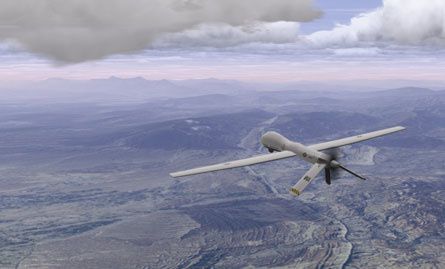
Predator B MQ-9 Reaper photo1 General Atomics Aeronautical


Sept. 18, 2012 defense-unmanned.com

(Source: General Atomics Aeronautical Systems; issued September 17, 2012)


AFA AIR & SPACE, WASHINGTON --- General Atomics Aeronautical Systems, Inc. (GA‑ASI) today announced that its Predator B/MQ-9 Reaper RPA has successfully completed 106 full-stop Automatic Takeoff and Landing Capability (ATLC) landings, a first for the multi-mission aircraft.


The milestone was first achieved with four ATLC landings on June 27 at the company’s Gray Butte Flight Operations Facility in Palmdale, Calif.


“We are pleased that all landings have been textbook in execution with no issues,” said Frank Pace, president, Aircraft Systems Group, GA-ASI. “The addition of ATLC will greatly reduce the land incident rate and the training expenditures for our customers.”


During the landings, the aircraft tracked the centerline, decelerated smoothly, and applied reverse thrust and full brakes at the appropriate ground speeds to a complete stop.


Envelope expansion for takeoffs and landings at higher wind limits, maximum aircraft gross weight, differential GPS (dGPS) enhancements, and terrain avoidance with adjustable glideslope has now begun.


The design of the ATLC system was leveraged directly from the highly successful and proven Automatic Takeoff and Landing System (ATLS) developed by GA-ASI for its Gray Eagle unmanned aircraft system, which has reached a record of 10,000-plus successful automatic takeoff and landings.


A technologically advanced derivative of the combat-proven Predator, the multi-mission Predator B provides essential situational awareness for warfighters, excelling in combat missions focusing on Intelligence, Surveillance, and Reconnaissance (ISR), precision strike on time-sensitive targets, close air support, laser designation and illumination, signals intelligence, forward air control, convoy protection, Improvised Explosive Device (IED) detection, and bomb damage assessment.


General Atomics Aeronautical Systems, Inc., an affiliate of General Atomics, delivers situational awareness by providing remotely piloted aircraft, radar, and electro-optic solutions for military and commercial applications worldwide. The company’s Aircraft Systems Group is a leading designer and manufacturer of proven, reliable remotely piloted aircraft systems, including Predator A, Predator B, Gray Eagle, and the new Predator C Avenger.

Partager cet article
Repost0
18 septembre 2012 2 18 /09 /septembre /2012 16:50

cyber warfare


WASHINGTON, 18 septembre - RIA Novosti


Les autorités américaines seraient impliquées dans la conception de trois nouveaux virus informatiques destinés à l'espionnage et aux cyberguerres, indique un rapport établi par les éditeurs de logiciels de sécurité informatique Symantec et Kaspersky Lab.


Une recherche menée par ces groupes a révélé que le gouvernement américain se servait plus intensivement qu'avant des technologies informatiques, y compris pour promouvoir ses intérêts au Proche-Orient.


Selon les données fournies par les auteurs du rapport, les Etats-Unis seraient liés au développement du ver informatique Stuxnet, utilisé en 2010 pour saboter le programme nucléaire iranien, ainsi qu'à la conception du cyber-virus espion Flame, les codes des deux logiciels malveillants comportant des ressemblances.


Le rapport indique par ailleurs que les créateurs de Flame ont développé trois nouveaux virus qui doivent encore être identifiés. Pour l'instant, Symantec et Kaspersky Lab ignorent la nature de ces nouveaux logiciels ainsi que les buts dans lesquels ces derniers ont été conçus, mais affirment que l'un des d'entre eux est déjà en action au Proche-Orient.

Partager cet article
Repost0
18 septembre 2012 2 18 /09 /septembre /2012 16:45

DARPA Logo


Sept. 18, 2012 defense-unmanned.com

(Source: Rockwell Collins; issued Sept. 17, 2012)


NATIONAL HARBOR, Md. --- Rockwell Collins has been selected as the prime contractor for the unmanned air vehicle portion of the High-Assurance Cyber Military Systems (HACMS) program sponsored by the Defense Advanced Research Projects Agency (DARPA). The four-and-half-year contract calls for Rockwell Collins to develop cyber security solutions for unmanned air vehicles, with applicability to other network-enabled military vehicles.


John Borghese, vice president of the Rockwell Collins Advanced Technology Center, said the company's expertise in security certification of complex systems and the use of formal methods was a key in acquiring the contract. Formal methods are the application of rigorous mathematical reasoning and advanced analysis tools to prove relevant properties about a system.


“Making sure software is designed correctly from the beginning is paramount to guarantee the security of military computing platforms,” added Borghese.


Rockwell Collins is leading a team that includes Boeing, Galois, National ICT Australia (NICTA), and the University of Minnesota.


The goal of the HACMS program is to create technology for the construction of high-assurance cyber-physical systems. These systems must be functionally correct and satisfy appropriate safety and security properties. Achieving this goal requires a fundamentally different approach from what the software community has taken to date. Consequently, HACMS will adopt a clean-slate, formal methods-based approach to enable semi-automated code synthesis from executable, formal specifications.


Rockwell Collins is a pioneer in the development and deployment of innovative communication and aviation electronic solutions for both commercial and government applications. Our expertise in flight deck avionics, cabin electronics, mission communications, information management, and simulation and training is delivered by 20,000 employees, and a global service and support network that crosses 27 countries.

Partager cet article
Repost0
18 septembre 2012 2 18 /09 /septembre /2012 16:30

Predator over Afghanistan photo USAF


Sept. 18, 2012 defense-unmanned.com

(Source: US Department of Defense; issued Sept. 17, 2012)


Raytheon, McKinney, Texas (FA8620-06-G-4041, DO 001211), is being awarded a $44,032,247 contract modification for the Reaper/Predator Program.


This contract modification is for Multi-spectral Targeting System, Target Location Accuracy, High-Definition Video and Targeting Improvements.


The location of the performance is McKinney, Texas. Work is expected to be completed by July 17, 2015.


The contracting activity is AFLCMC/WIIK, Wright-Patterson Air Force Base, Ohio.

Partager cet article
Repost0
18 septembre 2012 2 18 /09 /septembre /2012 16:14

air f-35a aa-1 flight top lg-source DefenceWatch


Sep 18, 2012 defense-aerospace.com

(Source: Reuters; published Sep 18, 2012)


WASHINGTON --- Pentagon officials slammed Lockheed Martin Corp's performance on the $396 billion F-35 fighter jet program and said they would not bail out the program again if problems with the plane's cutting-edge pilot helmet and software were not resolved.

Deputy F-35 program manager Air Force Major General Christopher Bogdan said on Monday the government's relationship with Lockheed was the "worst I've ever seen" in many years of working on complex acquisition programs.

He said those tensions posed a bigger threat to the Pentagon's biggest weapons program than even nagging problems on the plane's software, helmet and a complex computer system that manages functions ranging from parts supply to mission planning. The F-35 was designed to work with a sophisticated helmet that displays all the information the pilot needs to fly the plane.

Air Force Secretary Michael Donley told reporters the Pentagon had no more money to pour into the program after three costly restructurings in recent years. That meant any additional cost overruns would eat into the number of planes to be ordered, schedule delays or reduced capabilities, he said.

"The department is done with major restructures that involve transferring billions of dollars into the F-35 program from somewhere else in the defense budget. There's no further flexibility or tolerance for that approach," Donley said.

The unusually public criticism of Lockheed's work on the F-35 program followed a "very painful" Sept. 7 review that focused an array of ongoing program challenges.

Lockheed responded with a brief statement, saying it would continue to work with the Pentagon's F-35 program office to deliver the new fighter. "We remain committed to continuing our work to solve program challenges and build on the momentum and success we've achieved during the past couple of years," said spokesman Michael Rein. (end of excerpt)


Click here for the full story, on the Reuters website.

Partager cet article
Repost0
18 septembre 2012 2 18 /09 /septembre /2012 13:20

Lockheed Martin F-35 Lightning II mock-up 04 photo Ahunt


17 septembre 2012 La Presse Canadienne


Ottawa - Des procédures entreprises auprès de la Cour fédérale pour empêcher le vérificateur général du Canada, Michael Ferguson, de dévoiler un échange de courriels entre son bureau et un comité de la Chambre des communes, ont été interrompues, lundi.


Les députés ont voté la levée du privilège parlementaire de protection sur les enregistrements.


Une demande en justice a été déposée par les avocats du gouvernement fédéral au début de septembre après que des tentatives pour convaincre M. Ferguson de rejeter une demande d'accès a l'information eut échouée.


Les députés néo-démocrates tentaient d'obtenir une copie de la correspondance avec le comité des comptes publics dans laquelle M. Ferguson témoigne au sujet de son rapport explosif sur l'achat de chasseurs F-35.


La président de la Chambre des communes, Andrew Sheer, a déclaré que les mesures entreprises par les avocats étaient conformes à la pratique habituelle et qu'il avaient seulement demandé au bureau du vérificateur général d'attendre le mois de septembre avant de répondre à la demande d'accès à l'information.


Les actions entreprises auprès du tribunal ont débutées lorsque le personnel de M. Ferguson a décidé de ne pas attendre avant de répondre à la demande. M. Sheer avait alors défendu la décision de se tourner vers les tribunaux comme étant un moyen de sauvegarder les privilèges de la Chambre des communes.

Partager cet article
Repost0
18 septembre 2012 2 18 /09 /septembre /2012 11:45

USS Anchorage ( LPD 23)


Sep. 17, 2012 - By CHRISTOPHER P. CAVAS   Defense News


The new amphibious transport dock ship Anchorage (LPD 23) was accepted by the Navy Sept. 17 after a brief, two-day underway period to check fixes and corrections that delayed completion by almost two months.


Although the ship ran acceptance sea trials in mid-June — characterized by several Navy officials as revealing a “normal” amount of deficiencies — an issue with improperly installed bolts came to light in mid-July. Discovered only days before the ship’s planned July 23 delivery date, the problem affected bolts that hold the frames for the ship’s main propulsion engines to the hull.


The problem was discovered by an Avondale shipyard inspector who noticed the improper bolt installations on the Somerset, a ship of the same class that is in a later stage of construction. Further inspections were ordered on the Anchorage, where similar problems were discovered.


The problems now have been corrected, according to the Naval Sea Systems Command.


In a Sept. 17 statement, the command said that Huntington Ingalls Industries (HII) — the parent company of Avondale — “completed all work related to fitted bolt inspection and replacement, as required, at the end of August.


“Of the 361 bolts inspected, 278 were accepted and 83 were replaced. A successful post-repair trial, which included full power ahead and astern runs to demonstrate propulsion plant alignment, was conducted September 12-13.


“Regarding root cause, the bolts were fitted properly but did not have the correct thread engagement and relief cuts to meet the ship’s underwater shock requirements. The root cause of the deficiency was HII’s Avondale facility not following proper work procedures when fabricating the bolts.”


The Anchorage is the seventh ship of 11 planned for the LPD 17 San Antonio-class. With a displacement of 25,883 tons at full load, the ships are among the largest LPD-type ships in the world, able to carry and operate a variety of aircraft, landing craft, tanks and vehicles, and more than 700 Marines.


The Anchorage is the penultimate ship to be built at the Avondale shipyard near New Orleans. Parent company Huntington Ingalls Industries will shutter the facility after the delivery next year of the Somerset, and all further LPDs will be built at the company’s Ingalls shipyard in Pascagoula, Miss.


The big amphib’s sailaway date — when the ship leaves the shipyard for the last time — now is scheduled to take place Oct. 24, just over a month after the originally planned date. While the Anchorage will be based at San Diego, her commissioning ceremony in the spring will take place at her namesake city in Alaska.

Partager cet article
Repost0
18 septembre 2012 2 18 /09 /septembre /2012 11:40

DARPA Logo


Sep. 17, 2012 - By SAM FELLMAN Defense News


The U.S. Navy has moved one step closer to designing the next generation of submarine chasers: roving drone ships capable of scanning the seas for the quietest diesel subs.


The vision for these trimarans, a project funded by the U.S. Defense Department’s advanced research arm, is to detect and trail foreign subs across thousands of kilometers for months at a time — all largely without human intervention.


While tracking the sub via sonar, the drone ships would be able to safely navigate, avoiding shoals and other ships.


After proving this core concept was feasible, the Defense Advanced Research Projects Agency awarded $58 million Aug. 16 to military contractor SAIC to design, build and test these autonomous subhunters. But the unmanned vessels will require years of development and testing to consistently accomplish feats challenging for the best human crews.


The biggest engineering challenge will be proving a design that can autonomously drive itself through the ocean and avoid other ships while simultaneously tracking very quiet subs for periods of up to three months, an ability one engineer called “intelligent autonomy.”


“Building a boat is rather easy,” said retired Capt. Rick Simon, director of Spatial Integrated Systems, a contractor working with DARPA to help these vessels navigate through high sea states. “But make that thing smart enough to go out there for 90 days and not have to call home to Mama and ask for help — that’s the hard part.”


If these many technological hurdles are scaled, the Navy could have a relatively cheap way to neutralize the diesel subs, which are used by regimes such as North Korea, China and Iran and represent one of its foremost threats.


“Our goal is to transition an operational game-changer to the Navy,” said Scott Littlefield, a program manager at DARPA, in an Aug. 16 news release. “This should create an asymmetry to our advantage, negating a challenging submarine threat at one-tenth their cost of building subs.”


The next three years will be busy as SAIC and subcontractors design and construct an integrated, autonomous boat capable of detecting diesel subs.


DARPA expects vessel prototypes to start at-sea tests in 2015. Building such complex autonomous vessels will likely lead to technological breakthroughs that affect other parts of the Navy.


But as this system transitions from concept to fleet reality, the Navy will have to resolve larger issues about how to make a gee-whiz design relevant in wartime, one former submarine captain said.


“Is this a peacetime or a wartime capability?” said the retired officer, who asked to remain anonymous to speak candidly about a defense contract. He highlighted the vessels’ vulnerability in wartime, such as against the Chinese navy.


“If this thing is out there, banging away on top of a submarine with active [sonar],” he said, “why wouldn’t the Chinese just kill it?”

Partager cet article
Repost0
18 septembre 2012 2 18 /09 /septembre /2012 07:50

transport nucleaire source ActuDéfense


Sep. 16, 2012 Defense News (AFP)


WASHINGTON — The U.S. government plans to undertake the costliest modernization of its nuclear arsenal in history, even though the military as a whole is facing stiff spending cuts, The Washington Post reported late on Sept. 15.


The newspaper said there is no official price estimate for the effort to upgrade and maintain the 5,113 warheads in the inventory, replace old delivery systems and renovate the aging nuclear facilities.


But a study this summer by the Stimson Center, a Washington think-tank, estimated costs would be at least $352 billion over the coming decade, the report said. Others say the figure could be far higher, particularly if the work is delayed even longer, the paper noted.


Upgrading just one of the seven types of weapons in the stockpile, the B61bomb, is likely to cost $10 billion over five years, The Post noted.


It would cost up to $110 billion to build 12 replacements for the aging Ohio-class submarines, the paper added, citing estimates by the Congressional Budget Office.


According to the report, the Minuteman III ballistic missiles are undergoing a $7 billion upgrade.


At the same time, a nuclear-capable fleet of F-35 strike aircraft is being built to replace existing aircraft at a cost of $162 million an airplane, the paper pointed out.


Modernizing the buildings and laboratories where the refurbishments will take place is expected to cost at least $88 billion over 10 years, the report said.

Partager cet article
Repost0
18 septembre 2012 2 18 /09 /septembre /2012 07:45

F-35 Joint Strike Fighter source defpro.com


Sep. 17, 2012 By MARCUS WEISGERBER Defense News


The U.S. Air Force general nominated to head the F-35 program said Sept. 17 that "it should not take 10, 11 or 12 months to negotiate a contract with someone we've been doing business with for 11 years."


The general tapped to head the F-35 Joint Strike Fighter effort called the relationship between contractor Lockheed Martin and the program office “the worst I have ever seen,” expressing frustration with the company’s continued performance and production woes.


Maj. Gen. Christopher Bogdan, the F-35 deputy program manager, said the Pentagon would no longer funnel cash into the program should development issues continue. Bogdan also expressed frustration that the Pentagon and the company have not been able to ink a deal for the fifth production lot of aircraft after nearly a year.


“It should not take 10, 11 or 12 months to negotiate a contract with someone we’ve been doing business with for 11 years,” he said at a Sept. 17 speech at an Air Force Association-sponsored conference. “There’s something fundamentally wrong with that. We’ve got to fix it.”


These were Bogdan’s first public comments since becoming the program’s deputy five weeks ago. Defense Secretary Leon Panetta has nominated Bogdan to head the program and replace Vice Adm. David Venlet, who is retiring.


The comments caught Lockheed, the F-35 prime contractor, off guard as program brass sat in the front row during his speech stone-faced. Bogdan called the fractured relationship between the Pentagon and Lockheed “the biggest threat to this program today.”


Bogdan, who previously served as the head of the Air Force’s KC-46 tanker program, is credited with righting that long-troubled program. The service locked in a fixed-price deal with Boeing in 2011.


“We’re going to be on a journey in our program office,” Bogdan said. “And that journey starts off with the recognition … that if we do not improve the way we deal on a day-to-day basis with Lockheed Martin, then we’re not going to get there.”


Bogdan said the Pentagon expects Lockheed to be further along the learning curve, considering it is building its fifth batch of F-35 jets. While the cost of building jets is declining, those numbers are not declining at a fast enough pace, he said.


The Pentagon gave the program “a great gift” earlier this year when it restructured the F-35 program, injected billions of dollars and adding 30 more months of development, Bogdan said. As part of that restructure, the Pentagon removed 179 jets from its procurement schedule over the next five years.


“We will not go back and ask for any more, simple as that,” he said. “This is fundamentally a fixed-price development program.”


“Certainly, we’ve communicated to [Lockheed] that the department is done with major restructures that involve transferring billions of dollars into the F-35 program from someplace else in the defense budget,” Air Force Secretary Michael Donley said during a briefing after Bogdan’s speech. “We’ve done that a couple of times but there’s no further flexibility or tolerance for that approach.”


If more significant problems pop up during development, the Pentagon might reduce its buy of aircraft, the secretary said.


Donley, who has been dual-hatted as the service’s acquisition chief, said the Pentagon and Lockheed will “eventually bridge our differences” during the negotiations for the fifth batch of F-35 aircraft.


Lockheed Martin spokesman Michael Rein said the company agrees with Bogdan “that it takes everyone to be fully engaged to be successful.”


“Lockheed Martin will continue to work with the F-35 Joint Program Office team to successfully deliver the F-35’s 5th Generation fighter capabilities to the war fighter,” Rein said. “We remain committed to continuing our work to solve program challenges and build on the momentum and success we’ve achieved during the past couple of years.”


Bogdan said he sees “a glimmer of hope” that production is improving, however that has not translated into dollar savings.


“If you’re getting better in production, then you ought to be passing that getting-better-off to the taxpayer,” he said. “I’m going to want to see that here really soon from our partners, both on the engine side and the airplane side.


“I believe they’re right on the edge of getting really, really good at this, now I want to see them take that and translate it into lower costs for production on this airplane,” he continued.


The general said the strategy for sustaining the Pentagon’s 2,443 F-35s “is wrong and it needs to be changed.” Estimates peg the lifetime sustainment cost of the F-35 as high as $1.1 trillion.


Bogdan suggested that competition and performing sustainment work within the military might help lower those cost estimates.


“The basic strategy on the way we’re going to sustain this airplane has got to make some fundamental changes,” he said.


Bogdan also said the Pentagon’s restructured F-35 plan “is potentially achievable” and that officials “can see the light at the end of the tunnel.” Still, many problems exist.


Issues with the “Autonomic Logistics Information System” (ALIS) software and helmet still continue to plague the program’s progress.


Over the past two years, software development has fallen 90 to 120 days behind schedule. The company is delivering jets with Block 2A software. They are readying to field Block 2B software. Operational jets will have a “very, very complex” version of software, called Block 3.


The next version of ALIS software, called 103, is expected to be up and running by the end of November, around the same time the Marine Corps plans to start basing aircraft at Yuma.


The Pentagon has not accepted “a bunch of airplanes” at Lockheed’s production facility in Fort Worth, Texas, because the updated logistics system is not in place.


Problems with the helmet, built by VSI, are still causing problems.


“You cannot go to war and you cannot fight with this airplane unless you have a helmet that works,” Bogdan said. “Today, we have a helmet that works in a very rudimentary way.”


The program has a plan in place to correct the issues, however, all of the fixes might not be completed by 2015, when the Marine Corps wants to declare its jets battle ready.


To address these issues, one test aircraft is being dedicated solely to helmet testing. Over the next 60 to 90 days, the program intends to gather a copious amount of helmet information.


The program is still evaluating a second “back-up” helmet built by BAE Systems.

Partager cet article
Repost0

Présentation

  • : RP Defense
  • : Web review defence industry - Revue du web industrie de défense - company information - news in France, Europe and elsewhere ...
  • Contact

Recherche

Articles Récents

Categories