Overblog Tous les blogs Top blogs Entreprises & Marques Tous les blogs Entreprises & Marques
Suivre ce blog Administration + Créer mon blog
MENU
3 avril 2012 2 03 /04 /avril /2012 16:49

JSF-photo-LM-source-AiretCosmos.jpg


02/04/2012 Par François Julian – Air & Cosmos


1,51 billion de dollars ou 1.510 milliards de dollars. C’est ce que devrait coûter le Joint Strike Fighter au contribuable américain selon les dernières estimations du Pentagone.


Ce chiffre, forcément vertigineux, englobe tous les aspects du programme sur toute sa durée de vie qui est estimée à 55 ans : le développement des trois versions du F-35, la production de 2.443 avions pour les besoins de l’US Air Force, de l’US Navy et de l’US Marine Corps, leur mise en ligne (carburant, maintenance, formation des pilotes) ainsi que leur probable modernisation. Cette estimation inclut également le coût de l’inflation à venir.


Selon Lockheed Martin, c’est la première fois que le Pentagone évalue un programme aéronautique militaire de cette manière. Le constructeur américain assure également que, en dépit du caractère impressionnant de ce chiffre, le coût de possession du F-35 sera égal voir inférieur à celui des avions de combat actuel.


Coût unitaire de 161 millions de dollars


Plus prosaïquement, le Pentagone a estimé que le coût du programme JSF (qui n’inclut cette fois que le développement et la production des 2.443 machines de série), estimé à 379,3 milliards de dollars en 2010, a augmenté de 4,3 % pour atteindre aujourd’hui les 395,6 milliards. Soit un coût unitaire (toutes versions confondues) d’environ 161 millions de dollars : environ 135 millions pour l’avion auxquels il faut ajouter 26 millions pour le moteur F135.


Cette augmentation du coût du programme serait due en partie à l’inflation, mais également à certains changements techniques sur l’avion. Le coût d’acquisition du moteur F135 de Pratt & Whitney a également augmenté avec la hausse du prix des pièces de rechange.


A ce jour, le Pentagone ne fournit plus d’estimation quant à la mise en service opérationnelle de l’avion. Celle-ci était initialement prévue pour 2012 chez les Marines et 2016 dans l’US Air Force et dans la Marine américaine. En attendant, le Pentagone va allouer plus d’argent que prévu au développement (6,2 milliards de dollars) en retardant au delà de 2017 la production de 179 F-35.


La production en série du F-35B et C destinés à l’US Marine Corps et à l’US Navy ne prendra vraiment de l’ampleur qu’à partir de 2018 avec 50 avions fabriqués cette année. Le rythme annuel du F-35A destiné à l’US Air Force devrait atteindre les 60 avions en 2018 puis 80 en 2021. La production en série de l’appareil devrait durer jusque dans le courant de la décennie 2030.

Partager cet article
Repost0
3 avril 2012 2 03 /04 /avril /2012 12:56

missile-predator-drone.n.jpg


02 April, 2012, RT.com


The United States is planning on building nuclear-powered drones. The innovation will allow an increase in flying time "from days to months," leaving more power available for operating equipment.


­Research for the project was conducted by Sandia National Laboratories, the US government's principal nuclear research and development agency, and defense contractor Northrop Grumman, the Guardian reports.


The technology is to deal with three problems facing the US’ current drone arsenal: insufficient flying time over a potential target, lack of power for running surveillance and weapons systems, and lack of communications capacity.


The team looked at numerous different power systems for large- and medium-sized drones before settling on the nuclear solution.


The research summary deems the technology as highly efficient, saying the results of the research are “to be used in the next generation of unmanned air vehicles used for military and intelligence applications."


However, there is a big concern over safety as drones have a tendency to crash – and should a nuclear-powered drone fall into the hands of terrorists or unfriendly powers, the consequences could be devastating.

Partager cet article
Repost0
3 avril 2012 2 03 /04 /avril /2012 12:32

rq-11b-raven-us-army-soldier-launch-lg.jpg


Apr 03, 2012 Spacewar.com


Nashville TN -  AeroVironment, Inc. has unveiled a new miniature gimbaled sensor payload on the battle-proven RQ-11B Raven small unmanned aircraft system at the Army Aviation Association of America Annual Professional Forum and Exposition.


The modular payload includes a high-resolution color and an infrared thermal video sensor, as well as a laser illuminator integrated into a multi-axis sphere capable of continuous pan.


The new payload will become a standard component of future Raven systems and will be sold as an upgrade for previously fielded units. Upgrading existing digital Raven systems to accommodate the new payload requires only a software update to each air vehicle and ground control station.


The new payload is one of four products offered in AeroVironment's "Mantis" suite of gimbaled sensor payloads now available for commercial applications including unmanned aircraft systems, manned aircraft, ground vehicles and watercraft.


A gimbaled sensor payload enhances the Raven system's capabilities by allowing a higher level of visual fidelity and continuous observation of an item of interest regardless of the air vehicle's flight direction.


The new payload also replaces two separate Raven system payloads previously required for day and night operation, one containing a stationary electro-optical sensor, the other a stationary infrared sensor. Flight algorithms allow the air vehicle to manage its own flight path based on what the user wants to see, rather than requiring the user to control both the air vehicle and the sensor separately.


Tom Herring, AeroVironment senior vice president and general manager of its Unmanned Aircraft Systems business segment said, "Operators rely on the portable Raven system to provide critical, live aerial video that gives troops situational awareness, whenever and wherever they need it.


"Our new mini-gimbal payload significantly increases the Raven system's capability and can be quickly and easily integrated into the thousands of digitally enabled air vehicles already deployed. The net result is a more capable solution for protecting and serving the warfighter for a fraction of the cost of a new system."


Integrating the new gimbaled sensor payload marks the fourth upgrade to the Raven system since its introduction in 2003 and follows the successful introduction of AeroVironment's digital data link (DDL) to replace the Raven system's original analog communication modules.


"By continuously working with customers to understand their needs and desires and improving the Raven system to address them, AeroVironment continues to deliver cost-effective solutions that help them succeed," said Herring.

Partager cet article
Repost0
3 avril 2012 2 03 /04 /avril /2012 12:30

f-35-center-fuselage-assembly-line-lg.jpg


Apr 03, 2012 Spacewar.com


Palmdale, CA - Northrop Grumman employees prepare the first F-35 center fuselage produced by the Integrated Assembly Line for delivery to Lockheed Martin.


Northrop Grumman's first F-35 center fuselage produced by its Integrated Assembly Line (IAL) was delivered to Lockheed Martin on March 16, 2012. While the company has delivered 69 center fuselages since 2005, this is the first produced using the IAL.


The IAL maximizes robotics and automation, providing additional capacity and assembly capability while meeting engineering tolerances that are not easily achieved using manual methods.


The IAL will be central in producing the F-35's center fuselage as well as increasing the program's affordability, quality and efficiency. The technologies deployed on the IAL have created more efficient and ergonomic process for assembly.


The IAL was developed and designed with the help of the Detroit-based KUKA Robotics Aerospace Division, a commercial automation integrator, and was inspired by automation systems used by American automakers.


The IAL design uses a system-engineering approach to integrate tooling and structure transport, system automation, automated drilling cells and tooling mechanization coordinated across multiple build centers.


"The Integrated Assembly Line's approach to tool design and fabrication marks a transition into a new way of business for Northrop Grumman," said Michelle Scarpella, vice president of the F-35 program for Northrop Grumman.


"Through the implementation of a much more efficient design-to-assembly process, the Integrated Assembly Line enables the team to simultaneously achieve higher quality, reduce costs and increase efficiency."


As a principal member of the Lockheed Martin-led F-35 industry team, Northrop Grumman performs a significant share of the work required to develop and produce the aircraft.


In addition to producing the F-35 center fuselage, Northrop Grumman also designed and produces the aircraft's radar and other key avionics including electro-optical and communications subsystems; develops mission systems and mission-planning software; leads the team's development of pilot and maintenance training system courseware; and manages the team's use, support and maintenance of low-observable technologies.


To date, the company has delivered every center fuselage on time and continues to meet its cost and schedule commitments. In 2011, the company delivered 22 center fuselages and it will make its 100th delivery in December 2012.


Northrop Grumman's Palmdale, Calif., site is a world-class facility that provides assembly, integration, testing and long-term maintenance capabilities for the F-35, and some of the world's most advanced aircraft, including B-2 Spirit and RQ-4 Global Hawk.

Partager cet article
Repost0
3 avril 2012 2 03 /04 /avril /2012 12:02

rms_rtn_stm_pic01.jpg

photo Raytheon


13.5-pound Small Tactical Munition Phase II designed for unmanned aircraft systems


TUCSON, Ariz., April 2, 2012 /PRNewswire


Raytheon Company's Small Tactical Munition Phase II scored a direct hit on a target during the weapon's first guided flight test.


"STM Phase II is ideally suited to weaponize Shadow-class unmanned aircraft systems and counterinsurgency aircraft because STM is a mature, precise and affordable weapon," said Dr. Thomas R. Bussing, vice president of Advanced Missiles and Unmanned Systems for Raytheon Missile Systems. "STM gives warfighters flexibility because it enables them to engage moving and static targets with minimal collateral damage."


During the February test at Yuma Proving Ground, Ariz., a Raytheon Cobra unmanned aircraft system released the STM Phase II in flight. After safely separating from the UAS, the weapon used both GPS/INS and semi-active laser to guide to the target.


About Small Tactical Munition

STM Phase II is a new 13.5-pound, 22-inch long, precision-guided, gravity-dropped bomb specifically designed for employment from manned and unmanned aircraft systems.


STM Phase II is more than 2 inches shorter than the Phase I design and has foldable fins and wings, enabling two weapons to be placed inside the U.S. military's common launch tube. STM Phase II's modular assembly will make the system simpler to manufacture on a large scale.


Key Points


    At 13.5 pounds and 22 inches, STM is the smallest air-launched weapon in the Raytheon portfolio.

    Has both GPS/INS and digital semi-active laser guidance.

    Small enough to be employed from the U.S. military's common launch tube.

Partager cet article
Repost0
3 avril 2012 2 03 /04 /avril /2012 11:45

geosynchronous-satellite--GEO-2-.jpg


Apr 3, 2012 ASDNews Source : Lockheed Martin Corporation


Lockheed Martin has successfully completed a major milestone for the U.S. Air Force’s second Space Based Infrared System (SBIRS) geosynchronous satellite (GEO-2). The milestone, known as the Final Integrated System Test (FIST), verifies the spacecraft's performance and functionality in preparation for delivery to the launch site.


SBIRS is delivering improved missile warning capabilities for the nation while simultaneously providing significant contributions to the military's missile defense, technical intelligence and battlespace awareness mission areas.


Having conducted all system environmental testing and now with the completion of FIST, SBIRS GEO-2 is on schedule to be available for launch as early as July, 2012. An official launch date will be determined by the Air Force based on launch range and booster availability. Once a launch date is identified, Lockheed Martin will perform final spacecraft component installations and conduct a final factory confidence test prior to delivering the satellite to Cape Canaveral Air Force Station, Fla., for launch.


“The lessons learned from SBIRS GEO-1 have allowed the joint government and industry team to perform the assembly, integration and test of GEO-2 in a more efficient manner,” said Lt Col. Jonathon Whitney, GEO-2 Space Vehicle Integration and Launch Branch Chief. “We are looking forward to delivering the satellite for launch."


“Leveraging the experience gained from GEO-1, we were able to streamline the GEO-2 test schedule and efficiently prepare this critical spacecraft for delivery," said Julie Pecson,

Lockheed Martin’s director of SBIRS Space Vehicle Products. "We are focused on preparing this satellite for launch and driving even greater efficiency and affordability into building the next set of SBIRS satellites and hosted payloads.”


Lockheed Martin’s SBIRS contracts include four highly elliptical orbiting (HEO) payloads, four GEO satellites, and ground assets to receive, process, and disseminate the infrared mission data. HEO payloads and the first geosynchronous (GEO-1) satellite have already been launched, with GEO-2 scheduled for launch availability in July.


The SBIRS team is led by the Infrared Space Systems Directorate at the U.S. Air Force Space and Missile Systems Center. Lockheed Martin is the SBIRS prime contractor, Northrop Grumman is the payload integrator. Air Force Space Command operates the SBIRS system.

Partager cet article
Repost0
2 avril 2012 1 02 /04 /avril /2012 17:48

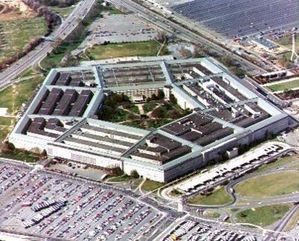
pentagon source defenseWeb


02.04.2012 par Frédéric Lert (FOB)


L’omniprésence de composants électroniques dans les systèmes d’armes soulève de sérieuses questions d’obsolescence et de sécurité. Sur ce deuxième point, la difficulté est de s’assurer que des codes cachés ne sont pas injectés dans les puces achetées aux fournisseurs internationaux et qui viendraient mettre en danger le bon fonctionnement des matériels. Les questions d’obsolescence débouchent quant à elles immanquablement sur les problématiques liées à la contrefaçon. A l’origine de ce problème, la nécessité de trouver des rechanges pour des pièces électroniques venues du monde civil et qui, par nature, ne disposent que d’une durée de vie commerciale limitée à quelques années. A l’inverse,  les systèmes d’armes sont eux destinés à vivre des décennies. Trouver les bonnes rechanges conduit à s’adresser à des revendeurs et c’est là que l’aventure commence. Une expérience récemment menée par la cour des comptes américaine (GAO) a mis les pieds dans le plat : le GAO a créé une société écran lui permettant de s’inscrire sur deux plateformes de  vente donnant accès à des fournisseurs de composants électroniques pour les applications militaires. Les appels d’offre lancés pour des composants rares ont débouché sur des commandes de pièces qui se sont toutes révélées, sans exception, contrefaites : que leur origine ait été maquillées pour faire croire qu’elles étaient neuves ou bien qu’il se fut tout bonnement agi de faux. Autre point commun, toutes ces pièces avaient pour origine première la Chine, qu’elles aient ou non transité par des sociétés occidentales, avec parmi ces dernières des grands noms du complexe militaro-industriel américain. La liste des équipements infectés par ces pièces est longue comme un jour sans pain. On citera par exemple les calculateurs du missile THAAD, les afficheurs du C-17 ou encore le Flir de l’hélicoptère Apache…    

Partager cet article
Repost0
2 avril 2012 1 02 /04 /avril /2012 16:55

US DOD United States Department of Defense Seal.svg


April 2, 2012 defpro.com


The Department of Defense (DoD) has released details on major defense acquisition program cost, schedule, and performance changes since the December 2010 reporting period. This information is based on the Selected Acquisition Reports (SARs) (http://www.defense.gov/news/PAC.PDF) submitted to the Congress for the December 2011 reporting period.


SARs summarize the latest estimates of cost, schedule, and performance status. These reports are prepared annually in conjunction with submission of the President's Budget. Subsequent quarterly exception reports are required only for those programs experiencing unit cost increases of at least 15 percent or schedule delays of at least six months. Quarterly SARs are also submitted for initial reports, final reports, and for programs that are rebaselined at major milestone decisions.


The total program cost estimates provided in the SARs include research and development, procurement, military construction, and acquisition-related operation and maintenance (except for pre-Milestone B programs, which may be limited to development costs pursuant to section 2432 of title 10, United States Code). Total program costs reflect actual costs to date as well as future anticipated costs. All estimates are shown in fully inflated then-year dollars.


The current estimate of program acquisition costs for programs covered by SARs for the prior reporting period (December 2010) was $1,720,107.5 million. After the following adjustments:


1) subtracting the costs for 14 final reports on Airborne Signals Intelligence Payload (ASIP), Advanced Threat Infrared Countermeasures/Common Missile Warning System (ATIRCM/CMWS), B-2 Radar Modernization Program(RMP), C-5 Avionics Modernization Program (AMP), C-27J, Expeditionary Fighting Vehicle (EFV), F-22, Force XXI Battle Command Brigade and Below (FBCB2), Increment 1 Early-Infantry Brigade Combat Team (E-IBCT), Joint Mine Resistant Ambush Protected (MRAP) vehicle, Large Aircraft Infrared Countermeasures (LAIRCM), Longbow Apache helicopter, Space Based Space Surveillance (SBSS) Block 10 satellite, and the T-AKE dry cargo/ammunition ship; 2)adding the costs for two new reports on the KC-46A and KC-130J aircraft; and 3) reporting the net cost changes for the June 2011 and September 2011 quarterly SARs, results in a current estimate of program acquisition costs as of the September 2011 reporting period of $1,618,836.4 million.


For more details, please go to: http://www.defense.gov//releases/release.aspx?releaseid=15146

Partager cet article
Repost0
2 avril 2012 1 02 /04 /avril /2012 16:40

P-8A-Poseidon-maritime-multi-mission-aircraft---source-as.jpg


Apr 2, 2012By Clark Pierce, Editor, Jax Air News Source : US Navy - ASDNews


More than 1,200 distinguished visitors filled the Patrol Squadron 30 hangar at Naval Air Station Jacksonville March 28 to celebrate the first fleet delivery of the P-8A Poseidon multi-mission aircraft.


"In the same year that our maritime patrol and reconnaissance force (MPRF) is celebrating 50 years of service for the P-3 Orion, we're also celebrating the fleet introduction of P-8 Poseidon," said Capt. Mark Stevens, VP-30 commanding officer and master of ceremonies.


In his remarks, Vice Chief of Naval Operations Adm. Mark Ferguson said, "The P-8 is the future of Navy maritime patrol. It will be a critical component of our maritime security and the fleet's eyes and ears for generations to come. While this aircraft is impressive, the strength of our Navy does not rest with technology alone. The real capability will reside in the men and women who fly and maintain this aircraft. In the hands of our great Sailors, it stands ready to meet the needs of the nation and challenges ahead as we continue to operate forward to reassure allies, deter aggression and when needed, prevail in conflict."


Under Secretary of the Navy Robert Work provided keynote remarks. "As the Navy's replacement platform for the P-3C, the P-8A Poseidon is transforming how the Navy's maritime patrol and reconnaissance force will man, train, operate and deploy. The P-8A is a network enabled aircraft for the network age, and gives Sailors the added benefits of working with manned and unmanned systems," said Work. "The training and readiness concept for the Poseidon was designed around a high fidelity simulator solution to provide cost-wise warfighting readiness. The P-8A Integrated Training Facility includes leading-edge operational flight trainers, which will provide innovative and cutting-edge training for today's warfighter."


During his remarks he highlighted the partnership of the Navy and industrial base, which made this day possible.


"On behalf of the Secretary of the Navy, I would like to thank the maritime patrol and reconnaissance community, veterans, industry, and the city of Jacksonville." He added, "thanks and gratitude goes to the City of Jacksonville, which has been such a great host to this base for more than 75 years, and whose citizens embody the values our Sailors fight to protect."


The next phase for Poseidon will be its integration with the unmanned BAMS platform to create a cohesive team that covers an even greater territory.


The next phase for Poseidon will be its integration with the unmanned BAMS platform to create a cohesive team that covers an even greater territory.


"Maritime patrol is the forward indicator of the U.S. presence around the globe," said Work. "MPRF is often the first to respond to natural disasters and provide humanitarian relief. These Sailors embody the CNO's guidance for executing the maritime strategy by demonstrating daily that our Navy is flexible, adaptable and ready to respond globally to preserve the peace. Thank you for allowing me to be part of today's ceremony."


At the conclusion of Work's remarks, Boeing President and CEO of Defense, Space and Security Dennis Muilenburg handed over the "key" for P-8A Poseidon LL 428 to Commander, Patrol and Reconnaissance Group Rear Adm. Michael Hewitt. He, in turn, gave the key to Stevens who ordered, "Poseidon aircrew and maintenance department, prepare LL 428 for flight operations."


Following the roll out, Work, Brown and Hewitt answered questions from the media.


Work was asked if every P-3 in the Navy would be replaced by the P-8A.


"The P-3 continues to fly after 50 years of service. Only two military aircraft have served longer, the U-2 spy plane and the B-52 bomber. As the P-3C fleet begins to retire aircraft, they will be replaced by a combination of the P-8A and its new partner, the unmanned BAMS (Broad Area Maritime Surveillance)," said Work.


Brown was queried about the importance of Jacksonville's mayor being part of the ceremony.


"This is a historic occasion for our great city and northeast Florida. We've been a military friendly city for a long time and I believe military affairs are an important part of our community. The P-8 shows the benefits of private/public partnerships for the Navy in their development and acquisition process. We're proud to be part of the P-3/P-8 transition and will support it in any way we can," replied Brown


Hewitt fielded the question, "How does this P-8 event help the Navy overall?"


"This is a great day for our maritime patrol and reconnaissance force. We wouldn't be here today without bold leadership from the City of Jacksonville and the creativity of our industry partners. It's also a humbling day in that many MPRF squadrons are actively patrolling oceans and land areas around the world. So while many P-3s are on station protecting American interests, we're proudly rolling out the formidable, new P-8 Poseidon," said Hewitt. "It brings new technology and innovation to bear wherever our country needs us. We're also very proud of our young naval aircrew and maintainers who are bringing this aircraft to life. We know that the platform is new and important -but it's the men and women who fly it that makes it a naval asset to be reckoned with."


After the roll-out event, attendees were invited across the street from VP-30 to the ribbon-cutting ceremony for the P-8A Integrated Training Center (ITC). Flight crew and mission specialists are assigned to the ITC where they undertake classroom instruction as well as full-motion, simulated exercises that present the highest degree of realism.


NAS Jacksonville Commanding Officer Capt. Bob Sanders welcomed a large crowd that seemed eager to tour the $38 million training facility.


"Thank you for being part of this history making day at NAS Jacksonville," said Sanders. "We're proud you could join us and learn about the exciting future taking shape for the P-8A Poseidon within the maritime patrol and reconnaissance community."

Partager cet article
Repost0
2 avril 2012 1 02 /04 /avril /2012 12:35

Canadian Forces Flag.svg


April 2, 2012. By David Pugliese-Defence Watch


The Canadian government’s $2 billion program to acquire a fleet of Close Combat Vehicles has run into more problems, with a meeting to be held with the bidding companies cancelled at the last minute.


Representatives from the three firms bidding on the program – Nexter of France, General Dynamics Land Systems Canada, and BAE/Hagglunds, a European consortium, had been summoned to meet DND procurement officials in Ottawa last Friday, the day after Finance Minister Jim Flaherty revealed his budget.


But that meeting was cancelled with no explanation why or details on whether it would be rescheduled.


Defence sources say company representatives were to be told that DND had issues with the vehicles being offered for the army program and that the department planned to request the firms invest more money to produce new technology to rectify those problems.


But other government officials objected to the DND meeting, noting that the acquisition process was already well underway and that DND could not now alter the procurement rules in mid-stream. As part of the procurement DND had originally requested the companies provide an off-the-shelf vehicle, which they did do. In addition, testing of those vehicles was completed in December, with a winner to be announced this summer.


There have been complaints from the defence industry before that DND has asked for off-the-shelf equipment for other programs, only to then change the procurement process once underway to request changes.


The Defence Department declined to comment on why its officials called the meeting last week or why it was cancelled. DND officials referred questions to Public Works and Government Services Canada.


In an emailed statement to Defence Watch, Public Works noted that the March 30 meeting in Ottawa was to provide bidders with an update of the Close Combat Vehicle (CCV) request for proposal technical evaluation.


“The bidders conference was cancelled in order to allow more time to assess the Fairness Monitor’s advice in the procurement process,” Public Works spokesman Sébastien Bois added in the email. “PWGSC and DND are committed to move this project forward in an open and transparent manner. The CCV Project Office is currently determining next steps.”


This isn’t the first time that the CCV program has run into trouble.


In late December 2010, Public Works put out a new solicitation to industry for the CCV, noting that it was worried some companies may have “been disadvantaged” by the evaluation information they were originally provided with by government.


No further explanation was given.


In an earlier development in the program, in August, 2010 every vehicle offered by various companies was rejected by Public Works and the Defence Department.


The vehicles rejected included some of those being used in combat by Canada’s allies in Afghanistan.


Defence sources say the rejection of the vehicles happened because inexperienced government procurement staff made errors when writing up the requirements, making it impossible for any vehicle to win the competition.


The Defence Department wants to buy 108 of the Close Combat Vehicles. There would be an option for the purchase of up to 30 additional vehicles.


The army has argued that the Close Combat Vehicles, which would accompany its Leopard tanks into battle, are a priority for the future.


Testing of candidate vehicles finished at the end of December at a U.S. test facility.


The program has already fallen two years behind schedule, according to industry officials.

Partager cet article
Repost0
2 avril 2012 1 02 /04 /avril /2012 12:10

CH-47F-Chinook-photo-Boeing-source-FG.jpg


Apr. 2, 2012 by Greg Waldron – FG


Singapore - Boeing is confident that the CH-47F Chinook will win India's competition for 15 heavy lift helicopters.


Flight trials for the CH-47F and the Russian Mil Mi-26 have been completed and offset proposals have been submitted to India's ministry of defence, says Boeing. The comments were made by Boeing executives at India's Defexpo 2012 show in New Delhi.


They say the CH-47F has met all technical requirements and that the next step is likely to be the opening of commercial bids, which could occur in May.


The request for proposal (RFP) suggests that the first aircraft will need to be delivered to the Indian army within three years of the contract signing. Following this, all 15 helicopters will need to be delivered within one year. The RFP placed great emphasis on the lifecycle costs involved in operating the two helicopters.


Boeing says it is currently producing five Chinooks per month at its Philadelphia factory.


The CH-47F and Mi-26 are radically different helicopters. The Chinook uses a tandem rotor layout compared with the Mi-26's conventional helicopter layout with a main and tail rotor.


The Mi-26 is much larger, with a maximum take off weight of 56,000kg (123,000lb) compared with the Chinook's maximum gross weight of 22,668kg.


The Chinook, however, can be transported in the hold of the C-17 Globemaster III, of which India has ordered 10 examples. Boeing says this greatly enhances the CH-47F's ability to be deployed to distant locations.


They note that the CH-47F used in the India flight trials flew into India aboard a C-17 and was able to conduct a flight just hours after arriving.

Partager cet article
Repost0
2 avril 2012 1 02 /04 /avril /2012 12:05

Tajikistan-map.png


March 31, 2012 Spacewar.com (AFP)


Dushanbe - General James Mattis, the head of US Central Command, on Saturday held talks with Takjik President Emomali Rakhmon as Washington seeks continued support for its military operation in next-door Afghanistan.


"Tajikistan would like to see further strengthening of the development of ties with the United States in the sphere of security and the establishment of peace and stability in the region," Rakhmon told the visiting US general in comments released by his office.


Mattis for his part thanked Tajikistan for its support of the NATO-led operation in Afghanistan, saying Washington would continue providing assistance to the impoverished Central Asian nation's army and border guards, the Tajik statement said.


"The need to ramp up such cooperation is increasing, especially from 2014, that is upon the withdrawal of international coalition forces from Afghanistan," said the statement.


Tajikistan, which shares a porous 1,340-kilometre (830-mile) border with war-torn Afghanistan, agreed in 2009 to permit the overland transit of non-military supplies intended for NATO operations in Afghanistan.


Under NATO's strategy, Afghan army and police are due to assume security for the whole of the country by the end of 2014, while the United States hopes to keep a small force in place post-2014 pending negotiations with the Kabul government.


On Friday, Mattis held talks with Gurbanguly Berdymukhamedov, the leader of isolated but energy-rich Turkmenistan. On Thursday, he met with Uzbek President Islam Karimov.


The office of Karimov whose country also provides Washington with logistical support for the war in neighboring Afghanistan said the two countries had recently improved cooperation in political, economic, and regional security matters.

Partager cet article
Repost0
2 avril 2012 1 02 /04 /avril /2012 11:55

f-35-joint-strike-missile-source-Defence-Talk.jpg


April 2nd, 2012 By Government Accountability Office – Defence Talk


The total estimated cost of the Department of Defense’s (DOD) 2011 portfolio of 96 major defense acquisition programs stands at $1.58 trillion. In the past year, the total acquisition cost of these programs has grown by over $74.4 billion or 5 percent, of which about $31.1 billion can be attributed to factors such as inefficiencies in production, $29.6 billion to quantity changes, and $13.7 billion to research and development cost growth.


DOD’s portfolio is dominated by a small number of programs, with the Joint Strike Fighter accounting for the most cost growth in the last year, and the largest projected future funding needs. The majority of the programs in the portfolio have lost buying power in the last year as their program acquisition unit costs have increased. The number of programs in the portfolio has decreased from 98 to 96 in the past year and, looking forward, is projected to decrease again next fiscal year to its lowest level since 2004.


In the past 3 years, GAO has reported that newer programs are demonstrating higher levels of knowledge at key decision points. However, most of the 37 programs GAO assessed this year are still not fully adhering to a knowledge-based acquisition approach.


Of the eight programs from this group that passed through one of three key decision points in the acquisition process in the past year, only one—Excalibur Increment Ib—implemented all of the applicable knowledge-based practices. As a result, most of these programs will carry technology, design, and production risks into subsequent phases of the acquisition process that could result in cost growth or schedule delays.


GAO also assessed the implementation of selected acquisition reforms and found that most of the 16 future programs we assessed have implemented key provisions of the Weapon Systems Acquisition Reform Act of 2009. Programs have also started to implement new DOD initiatives, such as developing affordability targets and conducting “should cost” analysis.


Finally, as could be expected from the increased activity early in the acquisition cycle, the 16 future programs we assessed are planning to spend more funds in technology development than current major defense acquisition programs.


Download Link: Defense Acquisitions: Assessment of Selected Weapon Programs

Partager cet article
Repost0
2 avril 2012 1 02 /04 /avril /2012 11:50

F-22-Raptors-PMP-source-Defence-Talk.jpg


April 2nd, 2012 By Air Force News Agency – Defence Talk


Air Force leaders provided an update on the Air Force Scientific Advisory Board study into the F-22 Raptor life support systems and flight operations during a briefing in the Pentagon March 29.


Retired Gen. Gregory Martin, an aviator and a former commander of two major commands, chaired the nine member SAB team which studied the aircrafts' on-board oxygen generation systems and briefed its findings and recommendations in trying to determine a root cause for pilots experiencing unexplained physiological events with the F-22 Raptor.


"From April 2008 until May 2011, the Air Force experienced 14 physiological incidents with the fleet of F-22s," Martin said. "Each incident was investigated, and of those incidents, 10 did not reveal a root cause."


It was the unexplained nature of those incidents that gave the Air Force concern and led the Secretary of the Air Force to ask for a broad area review which the SAB conducted, he added.


"We were unable to determine a root cause, but we were able to put in place the proper safety measures and risk mitigation techniques that would allow the F-22 fleet to return to fly...to ensure the integrity of the life support system," Martin said. "We went from ground test to flight test to a return to fly phase, and moving into a transition phase."


The advisory board made nine findings and 14 recommendations based on a seven-month study of the F-22's evolution - from conception and acquisition through current flight operations - which the Air Force can use to move forward.


Martin said the findings and recommendations fall into three main areas; the acquisition processes and policies, the organizational structure recommendations and equipment recommendations to not only protect the pilots and crew members today but also for the future.


"Some of the things we recommended give us a much better understating of the pilots' performance in those environments that we have not operated in before," Martin said. "It will further our understanding of the aviation physiology of operating in that environment."


Air Force leaders remain steadfast that the F-22 is a fully combat capable aircraft and they have every confidence in its current and future performance.


"Since September of last year we've flown over 10,000 sorties," said Maj. Gen. Charles Lyon, Air Combat Command Director of Operations. "We've had a 99.9 percent effective flying rate relative to physiological incidents, but that is not good enough. We will not rest; we will not stop; we will not end this journey we are on until we carry that 99 percent decimal point to the farthest right that we can."


The Air Force is well into the implementation phase of the recommendations from the SAB team and continues to aggressively pursue the root cause of these unexplained incidents, he said.


"Let there be no doubt that safety is paramount to the men and women who operate (the F-22) and the commander's who command them," Lyon said. "When we wear this uniform there is risk, there is risk inherent in aviation and risk inherently in conducting military operations.


Pilot safety has and always will remain a priority for ACC, Lyon added.


"We have taken a 9-1-1 call approach" Lyon said. "We have instructed and talked to our members in the field; whenever you get any indication that something may not be right, knock it off, the flying equivalent of calling 9-1-1 and terminate the flight. All eyes are focused on you and the safe recovery of your aircraft."


When a physiological event occurs, the pilot is met by a medical team to care for the pilot and take additional tests and send the tests to the lab, and so far nothing remarkable has come back from the lab tests we've analyzed, he said.


"When it comes to safety, no one second guesses the pilot," Lyon said.


The F-22 is a fifth generation fighter and one that is needed for the United States to establish air superiority in today's and tomorrow's conflict's, said Maj. Gen. Noel "Tom" Jones, Air Force Deputy Chief of Staff for Operations, Plans and Requirements.


"This aircraft is the world's most advanced aircraft and does air superiority mission unlike any other aircraft in the world," Jones said. "This is the leading edge of technology, and if our nation needs a capability to enter contested airspace to deal with air forces that are trying to deny our forces the ability to maneuver without prejudice on the ground; it will be the F-22 that takes on that mission."

Partager cet article
Repost0
2 avril 2012 1 02 /04 /avril /2012 11:45

afghanistan-C-27-aircraft-source-Defence-Talk.jpg


April 2nd, 2012 By Air Force News Agency – Defence Talk


The Air Force deputy chief of staff for strategic plans and programs discussed the reasoning behind the C-27J Spartan program cut from the fiscal 2013 budget request during the Air Force Association's monthly breakfast seminar here March 27.


"It's not because it isn't a good aircraft, and it's not because it wasn't a good idea $487 billion ago," said Lt. Gen. Christopher Miller. "We are going to make more disciplined use of defense dollars."


From a financial and programmatic perspective, anytime an entire weapons system, its logistic support and training infrastructure can be eliminated without harming the capabilities of the force, the benefits are greater, Miller said.


"The savings that you reap from that kind of action is far greater than if you just retired a fractional number of the fleet," he said.


Coupling the facts that the Air Force was under financial pressure and the life-cycle costs of the C-27 exceeded that of the C-130 Hercules because of how it was to be based, there wasn't any other realistic option, especially given that the Air Force can accomplish its goals with the C-130, according to Miller. "We remain committed to supporting our Army teammates."


"(Cutting the C-27 program) was a decision we did not like to make, but that we had to make," he said. "Its capacity, over and above the rest of the fleet, simply was not needed under the demands of the new strategy. What that allowed us to do was keep some very important things on track."


He said the savings allowed the Air Force to maintain focus on systems like the KC-46A Tanker and the F-35 Lightning II joint strike fighter as well as other, not-so-visible systems like global positioning satellites, space programs, and intelligence, surveillance and reconnaissance systems.


"We want to make decisions in the near term that support the strategic vision in the long term," Miller said. "As we start to come out of Afghanistan, and have come out of Iraq, we are facing a new resource era."


He said the Air Force is looking at a type of full-spectrum rebalancing within the force.


"We're trying to bring all these things we've done for a long time into a sustainable balance for the future," the general said. "Space and cyber are clearly more predominant in all aspects of military operations than they used to be."


The Air Force is going to put even more emphasis on making sure the active, Guard and Reserve components are balanced appropriately and making sure Airmen and assets are fully ready all the time, he said.


"Maintaining a smaller force that is anything less than ready is a bad idea," said Miller.

Partager cet article
Repost0
2 avril 2012 1 02 /04 /avril /2012 07:30

US_Navy_020522-N-3235P-501_USS_Iwo_Jima_-LHD_7-.jpg

Le porte-hélicoptères d'assaut USS Iwo Jima

crédits : US NAVY


02/04/2012 MER et MARINE


4000 marins américains, embarqués sur le porte-hélicoptères d'assaut USS Iwo Jima, ainsi que les transports de chalands de débarquement USS New York et USS Gunston Hall, ont appareillé le 27 mars de Norfolk et Camp Lejeune. Les trois bâtiments vont rejoindre la Méditerranée, la mer Rouge, puis l'océan Indien et le golfe Persique, pour un déploiement de plusieurs mois au sein des zones de responsabilité des 5ème et 6ème flottes américaines. L'Iwo Jima Amphibious Ready Group embarque la 24ème unité expéditionnaires des Marines, dotée d'un important matériel, dont des blindés et véhicules amphibies pouvant être mis en oeuvre depuis les bâtiments et des engins de débarquement de type LCAC. Les moyens aéronautiques, notamment ceux de l'USS Iwo Jima, sont imposants, avec des hélicoptères de manoeuvre et de combat, des convertibles Osprey et des avions AV-8B Harrier.
Ce groupe amphibie devrait relever le Makin Island ARG, actuellement déployé dans la région du Golfe et comprenant le porte-hélicoptères d'assaut USS Makin Island, ainsi que les transports de chalands de débarquement USS Pearl Harbor et USS New Orleans.
Le groupe aéronaval emmené par le porte-avions USS Enterprise, qui vient de réaliser une escale en Grèce, est également attendu prochainement sur zone, où évoluent en ce moment les porte-avions USS Carl Vinson et USS Abraham Lincoln.


L'USS Iwo Jima (© : US NAVY)


L'USS New York (© : US NAVY)


L'USS Gunston Hall (© : US NAVY)

Partager cet article
Repost0
1 avril 2012 7 01 /04 /avril /2012 17:32

  Squad-Mission-Support-System-11-2011.jpg


April 1, 2012: STRATEGY PAGE


The U.S. Army's latest design of, well, a mechanical mule for the infantry spent the last three months being tested in Afghanistan. Four of these vehicles were sent there to operate with the troops. The SMSS (Squad Mission Support System) is a six wheeled, 1.7 ton vehicle that can carry 544 kg (1,200 pounds) of cargo and will follow whoever is carrying its controller, and can operate by itself for short distances.


The SMSS had passed most of its tests in the United States, and was then used by some troops with combat experience. There it was discovered that the vehicle was too noisy for patrol work (which is what infantry spent most of their time doing out in the bush). The noise issue was noted earlier, and the manufacturer reduced it somewhat, and added the capability to run very quietly for a short while. But this was not enough, because troops in the field noted that even with no engine noise, the sound of the vehicle moving and breaking branches as it moved was enough to alert any nearby enemy. The manufacturer insists they can solve this problem, the grunts are not so sure. Silence is very important in a place like Afghanistan. The SMSS vehicles sent to Afghanistan were quieter, but troops found them still too noisy for many patrol situations. But the idea of having a vehicle to haul a lot of the stuff usually carried on the backs of soldiers had a huge appeal in Afghanistan. So the troops improvised and the SMSS was found to be useful under some conditions. It's still unclear if SMSS will be bought and used in large quantities.


SMSS was built as an independent research project by Lockheed Martin. The official effort in this area was cancelled two years ago. That was the U.S. Army MULE (Multifunction Utility/Logistics and Equipment). This was a UGV (unmanned ground vehicle) that was part of the (now cancelled) FCS (Future Combat Systems) program. While maligned by the media, many politicians, and even people in the army, as an expensive boondoggle, FCS provided the money to create some revolutionary, and effective, combat technology. MULE was one of these futuristic vehicles, a robotic vehicle for carrying stuff on the battlefield. In practice, it did not work out. Close, but not close enough.


MULE was a one ton, six wheeled vehicle that was 4.8 meters (15 feet) long, two meters (six feet) wide, and carried half a ton of equipment or weapons. Yes, it is very similar to SMSS, which built on what MULE had accomplished. Note that a pack animal, like a mule, can carry 200 kg (440 pounds) is silent and runs on biofuel (grass). The U.S. Army Special Forces will still use mules and horses, but that's because the Special Forces have traditionally been left alone to get the job done any way they can.


The MULE operator (any infantryman with an hour or so of training) used a handheld controller to tell the MULE to go from Point A to Point B. The MULE had enough computing power to get over obstacles it could handle, and go around those it couldn't. The MULE was to be used to do a lot of dangerous jobs normally handled by the troops. Like bringing supplies (ammo, water, weapons or medical supplies) that last few hundred meters, to where the fighting was going on. Currently, that means troops hauling this stuff themselves, and exposing themselves to enemy fire. Troops in Afghanistan mentioned this as a useful task for SMSS, as well as hauling supplies from drop zones, landing zones or from trucks to harder to reach (intentionally) FOBs (Forward Operating Bases.)


The MULE or SMSS can also take casualties far enough away so a medevac helicopter can take over. MULE could also be equipped with mine clearing equipment, to perform another dangerous job. MULE was also to be equipped with heavy weapons (12.7mm/.50 caliber machine-gun, small caliber cannon or missiles), that was to be fired under human control. The troops were really eager to have something like the MULE around, if only because it made their life in the combat zone so much easier and safer. The MULE was designed to take a lot of damage and keep going. However, only after actually using it in combat would unforeseen problems be revealed. This would indicate what modifications had to be made. But before that happened, field tests in the United States were held, and the results were disappointing. So MULE was cancelled. The idea is still alive, and Son of MULE, in the form of SMSS, showed up for testing a year after MULE was put down. Another contender, which did less well in stateside testing, was Camel (from Northrop Grumman). This one was smaller than MULE and proved less stable on rough terrain.


Six years ago, the army put UGV development into high gear, in an attempt to get more UGVs (unmanned ground vehicles) into the hands of the troops. Over the last few years, thousands of small UGVs have been used by American troops for checking out caves and buildings. Some of these lightweight (under a hundred pounds) robots were even equipped with weapons, but not used much when armed.


Based on the positive experience with the little robots, the army hoped that the next class of UGVs would be heavier, weighing 1-3 tons. That's where the much anticipated MULE came in. There was a need for something like the MULE to deal with a growing problem. As more gadgets are invented for the troops, the weight they have to carry keeps increasing. One solution was believed to be a UGV that can accompany troops, carrying a lot of this load (otherwise, each soldier is going to be carrying about 55 kg/hundred pounds of gear, which is hardly “fighting weight.”) There was one known problem, a major one, and that was building of a sensor/software system that would allow the mule UGV to move along the ground without a human driver. So far, this has proved to be a major obstacle. But even as engineers develop technology that solves this problem, the recent tests of SMSS revealed a more intractable one; noise. The only way around this is a six legged vehicle. These have been in development for years and the technology is there. But these vehicles require a lot more power, and there's always an acute shortage of that in the combat zone. So it looks like MULE, and its descendants, will be relegated to logistics work, as they are simply too noisy to sneak around with the infantry.

Partager cet article
Repost0
1 avril 2012 7 01 /04 /avril /2012 11:34

US-DHS-source-LdDef.jpg


01.04.2012 par P. CHAPLEAU Lignes de Défense


Le DHS, le Department of US Immigration et les Douanes (Customs Enforcement) viennent de passer une commande de 450 millions de cartouches HST au fabricant ATK. Un contrat sur 5 ans pour des munitions de calibre .40 pour des armes de poing.


Le DHS vient, par ailleurs de passer un appel d'offres pour 175 millions de cartouches de calibre .223 (équivalent au 5.56). Date limite: 12 avril. Cette fois, il s'agit de munitions pour les fusils d'assaut.


S'agit-il de relancer l'économie en dopant la production de munitions? Ou de constituer des stocks en vue de troubles intérieurs éventuels?

Partager cet article
Repost0
1 avril 2012 7 01 /04 /avril /2012 11:01

ssc_pacific.jpg


Apr 1, 2012 ASDNews Source : Kratos


Kratos Defense & Security Solutions, Inc. (Nasdaq:KTOS), a leading National Security Solutions provider, announced today that it was on the SAIC winning team to provide Command, Control, Communications, Computers, and Intelligence (C4I) support for systems integration engineering, planning and implementation of components and networks for Navy, joint, national and foreign military C4I systems.


Kratos will provide support services to the Command and Intelligence Systems Division of the Space and Naval Warfare Systems Center Pacific (SSC Pacific) in the areas of: C4I systems engineering, C4I system integration and operational support, C4I software applications and databases, and C4I test and evaluation, independent verification/validation, and software support activity engineering. This three-year contract includes a two-year option which, if exercised, would bring the potential value of this contract to $22.5 million.


Vic Wilson, Senior Vice President of Kratos' Engineering & Analysis, said, "Kratos continues to provide exceptional engineering support to SSC Pacific. We are pleased to be on the SAIC team to have the opportunity to expand our support to assist SSC Pacific in providing quality C4I systems to the Fleet."

Partager cet article
Repost0
1 avril 2012 7 01 /04 /avril /2012 10:59

SPAWAR_logo.gif


Apr 1, 2012 ASDNews Source : CGI Group Inc.


The Space and Naval Warfare Systems Command (SPAWAR) Systems Center Pacific (SSC Pacific) has awarded CGI Federal Inc. (CGI), a wholly-owned U.S. operating subsidiary of CGI Group Inc. (NYSE:GIB)(TSX:GIB.A), a prime position on the indefinite-delivery, indefinite-quantity (ID/IQ), multiple-award contract for Intelligence Surveillance Reconnaissance (ISR) and Information Operations (IO) in support of ocean surveillance systems. The ID/IQ has a three-year base value of US$46.68 million as well as one, two-year option which brings the potential contract value to US$77.78 million. CGI is one of five awardees that will compete for task orders on the vehicle.


Under the vehicle, CGI will provide a range of services, including systems engineering, software development, research, and test & evaluation in support of software and hardware for emerging technologies, system security architecture, and Command, Control, Communications, Computers, Intelligence, Surveillance and Reconnaissance (C4ISR) systems.


"CGI is proud to support critical multi-service military intelligence missions through this new contract vehicle," said Amy Bleken, Senior Vice-President, CGI. "We have a long history of support to SPAWAR, so we look forward to building on our partnership to continuously improve service to the warfighter."

Partager cet article
Repost0
1 avril 2012 7 01 /04 /avril /2012 07:15

Two-F-35A-and-an-F-16-taxi-on-the-runway-at-Eglin-AF-Base--.jpg


Two F-35A Joint Strike Fighters and an F-16 Fighting Falcon

taxi on the runway at Eglin Air Force Base, Fla., in August 2011.

Photo USAF


Mar. 31, 2012 By MARCUS WEISGERBER DefenseNews


The U.S. Defense Department believes the military services will be able to purchase large quantities of the F-35 Joint Strike Fighter late in the decade, despite competing modernization priorities and a relatively flat Pentagon budget.


A report sent to Congress on March 29 details the Pentagon’s plan for near peak production rates for the Lockheed Martin-built stealth jet beginning in 2018. In that year, program officials said they will be able to purchase 110 jets. By 2021, the production rate will hit 130 jets, which includes versions for the U.S. Air Force, Navy and Marine Corps.


But there are serious concerns within the Air Force and Navy about whether they will be able to afford the number of aircraft projected to be bought later this decade.


“We worked very closely with all the services, and particularly the programming and budgeting staffs of the services, to ensure that our program fits within their overall total obligation authority for the service in those years,” Air Force Maj. Gen. John Thompson, the F-35 deputy program executive officer, said in a March 30 briefing with a group of reporters in Arlington, Va.


Late in the decade, around 2018, the Air Force and Navy are expected to have a number of expensive programs enter production.


For example, the Air Force’s KC-46A tanker plane, now in development, is expected to enter full-rate production in that time frame, in addition to a new rescue helicopter, and a new bomber program is expected to be well underway. The Navy’s Ohio-class submarine replacement, the SSBX(X), is projected to consume a large portion of the service’s shipbuilding budget.


In February 2011, then-Defense Secretary Robert Gates told Congress he wasn’t sure the services would be able to afford all of the modernization programs envisioned in the 2020s.


“We continue to be concerned about affordability in the long term of the Joint Strike Fighter,” Deputy Defense Secretary Ashton Carter said at a March 8 conference sponsored by McAleese & Associates and Credit Suisse.


DoD now plans to fully ramp up production of Marine Corps and Navy F-35s at a pace of 50 jets per year in 2018, according to DoD’s recently updated selected acquisition report for the program. Last year’s report projected 50-aircraft-per-year buys beginning in 2017.


Program officials are expecting the Navy and Marine Corps jets to be evenly split at 25.


Air Force production is expected to hit 60 jets in 2018 and peak at 80 jets in 2021. Last year’s report projected 80-aircraft-per-year buys beginning in 2017.


“As we got closer out to the end of the [five-year future years defense plan], based on our analysis of Lockheed Martin’s capabilities and based on the production desires of the services and partners, we elected to go into a gradual production ramp,” Thompson said.


The deputy program manager expressed optimism that the Air Force could reach that 80-aircraft-per year goal. Those numbers might have to be tweaked to accommodate international purchases, Thompson noted.


“We’ve been given a production profile to plan to [and] we’re doing that,” Steve O’Bryan, Lockheed’s vice president for F-35 program integration and business development, said March 30.


The estimated cost per jet varies depending on a multitude of factors, including whether already spent development costs are included.


Using 2012 dollar values, the program office projects the Air Force version of the jet, the aircraft being purchased by most international customers, to cost $78.7 million.


The carrier version’s recurring flyaway cost is projected at $87 million, and the Marine Corps’ short-takeoff, vertical-landing version at $106 million, also using 2012 dollar values.


The average procurement unit cost of all versions, including contractor services, publications, training and support equipment and other items, comes in at about $109 million per jet.


Despite the cost increases, Lockheed said the F-35’s cost will be on par with the F-16, one of the combat jets it is designed to replace. The company believes the Air Force version of the F-35 will cost closer to $70 million per aircraft.


Company officials said this is on par with the F-16, since the F-35 comes with additional equipment not included in F-16 cost estimates, such as a targeting pod.


Using then-year dollar estimates, DoD now says the entire F-35 program will cost $396 billion, $17 billion more than it estimated last year, according to the selected acquisition report. The overall sustainment cost for the program is estimated at about $1.1 trillion, according to the document.


DoD officials project the F-35 program will cost $1.51 trillion over 55 years. That cost includes production, development, operations, sustainment and other items, according to program officials. The program cost estimate last year was $1.38 trillion. That’s a $124.2 billion, or 9 percent, increase.


The new estimate also adds two and a half years to the program.


Slowing procurement of the F-35 in the near term, as laid out in DoD’s 2013 budget request, will add nearly $6.2 billion in procurement and development costs. DoD removed 179 F-35s from planned buys between 2013 and 2017.


“As we have restructured and rebaselined our development program, as we’ve flattened our production ramp and as we’ve addressed the life-cycle costs going forward ... we are confident that the program that we have now established is executable,” Thompson said.


The program has experienced issues with the jet’s helmet-mounted display and the carrier-version tail hook.


“We have the appropriate resources, we have the time to do the work the correct way and we absolutely, positively have the support of all the services, our eight international partners and our growing posse ... of [foreign military sales] customers,” Thompson said.


Frank Kendall, the acting Pentagon acquisition executive, approved the new F-35 baseline March 26, Thompson said. The program has not been rebaselined since 2002.


“That acquisition-program baseline essentially reflects our revised program, sets our cost, schedule and technical performance going forward. It updates us from base year ’02 to base year ’12 dollars, [and] breaks the program down into two major subprograms — aircraft and engine,” Thompson said.


Kendall gave the OK on March 28 to continue development and low-rate production. DoD sent the revised F-35 numbers to Congress in its selected acquisition reports March 29.


“A large portion of the [authorization memo Kendall signed] was devoted to affordability targets for the program, both in the unit recurring flyaway cost and then cost per flying hour,” Thompson said.


“We have got to drive cost out of the program. Affordability is a major focus on the program going forward, but we know we can’t just concentrate on affordability,” Thompson said. “We have issues, such as software development, that we have to dependably deliver.”


Lockheed is three months behind on software development, O’Bryan said. The company has built a $150 million “mission systems lab” to test new software and has hired 200 new software engineers to work on these issues.

Partager cet article
Repost0
31 mars 2012 6 31 /03 /mars /2012 16:40

laser-through-a-beam-director-Photo-US-NAVY.jpg


This US Navy photo shows how members of the Directed Energy and Electric Weapon Systems Program Office, of Naval Sea Systems Command, fire a laser through a beam director (AFP Photo / US NAVY / Handout)


31 March, 2012, RT.com


The US Navy hopes to have operational laser cannons on their ships within the next four years. They will be used against fast-moving targets like cruise missiles, speedboats and drones.


­The Navy hopes to have a working prototype for the futuristic laser weapon within two years, Wired reports.


“The contract will probably have options go through four years, but depending on which laser source the vendors pick, we may be able to demo something after two years,” says Roger McGiness, who works on laser tech at the Office of Naval Research (ONR).


Mike Deitchman, who oversees future weapons development for ONR, says in a month or two his directorate will hold an informal idea session with industry representatives. A contract for building a prototype may be sealed by the end of the year.


The development comes after the Navy decided laser weapons technology is mature enough for deployment. The tipping point was last April’s test of a 15-kilowatt beam solid state laser, which managed to set afire the target ship’s engine. The target was moving at a distance of almost 2 km from the laser-equipped destroyer.


It’s not clear how ONR’s proceeding with a relatively low-power laser will affect research of a more powerful megawatt-scale weapon under the Free Electro Laser project. The Navy hopes to develop a more powerful scalable weapon using magnets rather than a crystal as the gain medium. It could be used against heavily-armored vessels as opposed to unarmored aircraft and boats.


However, such a laser remains elusive after a decade of research. Engineers still have no idea how to scale down such a device to fit onto a vessel or how to produce enough power onboard to feed it.


“It’s easier to shrink down a solid-state laser, and there’s a maturity here, vice the Free Electron Laser,” Deitchman explained. “The solid-state laser will still deal with many asymmetric threats, but not the most hardened, most challenging threats. It’s near-to-mid term. The Free Electron Laser is still long-term.”


Futuristic laser weapons are not the only ones the US Navy hopes to deploy. In February, ONR announced it had started testing for the first industry prototype of an electromagnetic railgun launcher. The weapon uses powerful magnetic fields to accelerate a conductive projectile to speeds of thousands of meters per second – enough to throw it hundreds of kilometers.

Partager cet article
Repost0
31 mars 2012 6 31 /03 /mars /2012 12:25

AIM-120-AMRAAM--right--fitted-in-a-weapons-bay-of-a-F-22-Ra.jpg


March 31, 2012: STRATEGY PAGE


The U.S. Air Force is withholding $621 million in payments for AMRAAM air-to-air missiles. That's because the manufacturer has been late in delivering 193 of the 552 missiles ordered. The delays have been due to faulty components, especially the rocket motor. The air force had been having a hard time persuading the manufacturer to get it right, so withholding over half a billion dollars is being tried, in an attempt to provide the needed motivation.


AMRAAM has been around for a while, and undergone several upgrades, without these kinds of problems. The air force does not want to return to the bad-old-days. AMRAAM entered service in 1992, more than 30 years after the first radar guided air-to-air missile (the AIM-7 Sparrow). AMRAAM was meant to succeed where the AIM-7 didn’t. Vietnam, in the 1960s, provided ample evidence that AIM-7 wasn't really ready for prime time. Too many things could go wrong. Several versions later, the AIM-7 got another combat test during the 1991 Gulf War. In combat, 88 AIM 7s were launched, with 28 percent scoring a hit. The AIM 9 Sidewinder did worse, with 97 fired and only 12.6 percent making contact. That said, most of these hits could not have been obtained with cannon, especially when the AIM 7 was used against a target that was trying to get away.


AMRAAM was designed to fix all the reliability and ease-of-use problems that cursed the AIM-7. But AMRAAM has only had a few opportunities to be used in combat, and over half of those launched have hit something. The 120D version entered service five years ago and has longer range and greater accuracy and resistance to countermeasures. So far, AMRAAMs have spent over 1.7 million hours hanging from the wings of jet fighters in flight. Some 2,400 AMRAAMs have been fired, mostly in training or testing operations. That’s about a quarter of those produced.


AMRAAM weighs 172 kg (335 pounds), is 3.7 meters (12 feet) long and 178mm (7 inches) in diameter. AMRAAM has a max range of 70 kilometers. These missiles cost about a million dollars each. The missiles are complex mechanical, electronic and chemical systems, and each of them, on average, suffers a component failure every 1,500 hours.


The air force and the navy have had an increasing number of incidents where their suppliers of high-tech weapons and equipment screwed up. Cancelling orders and taking manufacturers to court have not eliminated the problems. The military accuses the manufacturers of having a bad attitude, feeling that if there are problems, it's easier to cozy up to members of Congress than it is to fix the technical problems. So far, that seems to be works, while the weapons and equipment don't.

Partager cet article
Repost0
31 mars 2012 6 31 /03 /mars /2012 12:10

mv-22b_osprey_multi_mission_aircraft_with_both_a_vertical_t.jpg


March 31, 2012 worldwide-defence


NASHVILLE, Tenn., March 30, 2012 -- The Boeing Company will focus on the innovative and enduring capabilities of a wide array of aviation, training, support and technology solutions at the 2012 Army Aviation Association of America (AAAA) Annual Professional Forum and Exposition. This year's event takes place April 1-4 in Nashville. Boeing Defense, Space & Security will highlight aviation platforms including the AH-64D Apache, CH-47F Chinook, A160T Hummingbird, AH-6i Light Attack/Reconnaissance helicopter and Enhanced Medium Altitude Reconnaissance and Surveillance System aircraft at the show.


Boeing to showcase rotorcraft, training and surveillance solutions at army aviation exposition


The Boeing exhibit at Booth #826 also will feature V-22 Osprey, S-100 Camcopter and ScanEagle models; interactive demonstrations including a Virtual Maintenance Trainer and an Advanced Crew Station; tactical intelligence, surveillance and reconnaissance solutions; and integrated training and logistics solutions. "Boeing continues to drive innovation and affordability in the development of products and services that meet our customers' expectations," said James Moran, Boeing vice president of Army Systems. "We are committed to strong support of Army Aviation and soldiers with the solutions required to fulfill mission requirements today and tomorrow.

Note: All times listed below are local to Nashville (Central time).


MONDAY, April 2


1200-1230: Unmanned Airborne Systems (UAS)

A160 Hummingbird Static Display, Boeing Exhibit, Booth 826 Rick Lemaster, Boeing UAS director, and Jeff Shelton, Boeing manager of UAS Business Development, provide an update on the company's UAS products as testing, modification and production continue at the Boeing facility in Mesa, Ariz.


1300-1400: AH-64D Apache

AH-64D Static Display, U.S. Army Apache Project Manager Exhibit, Booth 580 David Koopersmith, Boeing vice president of Attack Helicopter Programs; Mike Burke, Boeing director of Attack Helicopters Business Development; and Tim Sassenrath, Boeing director of Apache Worldwide Support, are joined by U.S. Army Apache Project Manager Col. Shane Openshaw to discuss the AH-64D Apache Block III helicopter as it continues through Low Rate Initial Production and meets milestone objectives.


1400-1440: AH-6 Light Attack/Reconnaissance Helicopter

AH-64D Static Display, U.S. Army Apache Project Manager Exhibit, Booth 580 David Koopersmith, Boeing vice president of Attack Helicopter Programs; Mike Burke, Boeing director of Attack Helicopters Business Development; and Tim Sassenrath, Boeing director of Apache Worldwide Support, brief the media on the AH-6 rotorcraft program, including the vehicle's demonstration successes and the status of platform testing.


1500-1530: Virtual Maintenance Trainer (VMT) Demonstration

VMT Display, Boeing Exhibit, Booth 826 Reporters have the opportunity to participate in a demonstration of the Virtual Maintenance Trainer from the viewpoint of a maintenance crew member. Larry Nakamura, Boeing Maintenance Training Devices specialist, and Dennis Hoffmann, Boeing Training Systems Business Development, discuss the benefits and applications of VMT training simulation technologies.


1530-1600: CH-47F Chinook

CH-47F Static Display, U.S. Army Cargo Project Manager Exhibit, Booth 780 Mark Ballew, Boeing director of Mobility Rotorcraft Business Development, supports a briefing by Col. Robert Marion, U.S. Army Cargo Helicopter project manager, discussing the CH-47F Chinook program's current status and recent accomplishments.

Partager cet article
Repost0
31 mars 2012 6 31 /03 /mars /2012 11:50

f-35-good-picid38300_600-copy.jpg


March 30, 2012 David Pugliese Defence Watch


New cost information has just been made available regarding the F-35. The Pentagon has just released its Selected Acquisition Report (SAR) dated Dec. 31, 2011. The Canadian government continues to quote a figure of $75 million per F-35A. This figure is the “unit recurring flyaway cost” (URFC) of the aircraft.  However, the URFC only represents a component of the full cost Canada will pay to acquire this aircraft. The price Canada will pay to acquire the F-35A also includes additional items such as ancillary equipment (e.g. fuel tanks, weapon pylons, targeting pods), training and support equipment, tech data, publications, contractor services, initial spares, and facility construction. Nevertheless, it is useful to ascertain how reasonable is the government’s $75 million dollar figure. The just released SAR provides a perspective. It shows that the US Airforce’s planned expenditures for the unit recurring flyaway costs for the F-35A version are as follows (these figures include the costs for the aircraft and the engines):


2016 – $93.38

2017 – $91.43

2018 – $83.13

2019 – $83.95

2020 – $87.36

2021 – $95.16

2022 – $87.14

2023 – $88.08


Clearly, the government continues to understate the URFC.


Finally, as a point of interest, the Average Procurement Unit Cost (APUC) is a reflection of the cost Canada would pay. In this SAR it is $137.41 for 2012. Last year it was $132.81. While this figure is an average of the 3 variants, it provides a useful benchmark.


And then there is this from the U.S. Defense Department looking at the cost overruns:


WASHINGTON — Estimated costs for the F-35 joint strike fighter have increased over the life of the program, but the Defense Department is working to contain cost growth and remains committed to the fifth-generation fighter, defense officials said today.

Frank Kendall III said during confirmation testimony before the Senate Armed Services Committee that cost overruns for the stealth fighter are about $150 billion. Kendall is acting undersecretary of defense for acquisition, technology and logistics, and if confirmed will assume that position officially.


“We are doing everything we can to drive down the cost of the joint strike fighter,” Kendall told committee members.


He noted the program is still in testing, with about 20 percent of that process complete.


“We are finding design issues as we go through the test program that we have to correct,” he acknowledged. “So there are some cost adjustments associated with that.”


Kendall outlined the department’s actions to rein in the program’s price tag.


“We are attacking the production costs by putting strong incentives on the contractor to control costs, to get the changes that have to be made cut in quickly,” he said. Concurrent engineering design is one issue that has raised costs, he told the panel. In that approach, which is intended to develop a finished product faster, a new system may simultaneously be in engineering, production and testing processes, he explained.


“Most programs start production before they have completely finished their developmental tests,” he said. “The question is how much.”


The joint strike fighter was an “extreme example” of concurrency, he said, pointing out that production was started more than a year before the first flight tests.


Lessons learned during the F-35’s development are now being applied to other systems, Kendall said. “What we are doing now is setting up exit criteria so that we don’t make that production commitment until we are confident that the design is reasonably stable,” he added.


Kendall cautioned, however, that the joint tactical vehicle and ground combat vehicle could experience cost overruns.


Given the design complexity and the urgency common to new defense equipment requirements, “I am not confident that any defense program will not experience overruns,” he said.


The department now sets targets early for programs, Kendall said, which should help to force the supplier and the customer to meet target cost caps by making any necessary tradeoffs between cost and capability.


Kendall said he and his team also are working to contain sustainment costs, “which are larger actually than the production costs.” Those costs represent the greatest potential cost cuts, he said, and the department will continue to pursue those savings.


“I do think that the strike fighter is getting under control,” he added.


Kendall signed an acquisition decision memorandum yesterday on the F-35, Pentagon Press Secretary George Little told reporters today.


Little said in keeping with the Defense Department’s better buying power initiative, which requires tracking affordability targets and costs associated with acquisition programs, the memorandum sets the current outlook for F-35 final per-unit costs in 2019, when the fifth-generation fighter is scheduled to reach full production.


In today’s dollars, that cost is estimated at $81.4 million per aircraft, which when adjusted for inflation is estimated at $94.9 million in 2019 dollars, Little said.


Overall operating and support costs of the program are estimated at $1.1 trillion, up from last year’s estimate of $1 trillion, the press secretary added.


Little noted some of that long-term increase comes from the department’s decision, reflected in the 2013 defense budget request, to help in meeting requirements for short-term spending cuts by postponing purchase of some of the fighter aircraft.


“We remain fully committed to the F-35 program,” Little said, echoing Defense Secretary Leon E. Panetta’s remarks March 27 during a visit to Canada’s capital of Ottawa. “It’s very important to our capabilities [and] to our alliances.”


The United Kingdom, Italy, the Netherlands, Australia, Canada, Denmark, Norway, Turkey, Israel and Singapore are partners or participants in the aircraft’s development program, and the Japanese government announced in December it will buy 42 of the fighters.


“We are taking steps to ensure that we maintain fiscal discipline inside the program,” Little said. Panetta has said Kendall and the department’s acquisition, technology and logistics team have done an outstanding job working to contain costs for the stealth fighter, he added.


“This is a fifth-generation fighter,” Little noted. “It’s important for a variety of reasons: to maintain the U.S. military’s technological edge, to increase interoperability with our allies, and … for a range of other purposes.”

Partager cet article
Repost0

Présentation

  • : RP Defense
  • : Web review defence industry - Revue du web industrie de défense - company information - news in France, Europe and elsewhere ...
  • Contact

Recherche

Articles Récents

Categories