Overblog Tous les blogs Top blogs Entreprises & Marques Tous les blogs Entreprises & Marques
Suivre ce blog Administration + Créer mon blog
MENU
5 mars 2012 1 05 /03 /mars /2012 13:40

RTES--Remote-Targeting-Engagement-System--source-FOB.jpg


01.03.2012 par  Frédéric Lert (FOB)


L’US Air Force vient d’inaugurer  un ensemble de six systèmes RTES (Remote Targeting Engagement System) pour protéger un de ses sites sensibles : il s’agit de tourelles téléopérées commandant des mitrailleuses M240 en 7,62mm. Les armes sont approvisionnées en munitions perforantes et couplées à un système de visée jour/nuit .. L’USAF se félicite que ses hommes sont placés hors de portée du danger, dans un bunker de commandement hautement sécurisé, tandis que l’ennemi s’expose à une puissance de feu conséquente, servie des optiques de visée de très grande précision. Des capteurs donnent l’alerte en cas d’intrusion sur le site protégé, l’activation des mitrailleuses nécessitant ensuite une double autorisation. Le contrôle se fait via un écran tactile. Après il suffit de mettre la croix de visée sur la cible, comme dans un bon jeu vidéo. Une dernière précision : le site protégé ne se trouve ni en Irak ni en Afghanistan, mais bien au cœur des Etats-Unis, sur une base de missiles stratégiques dans le Wyoming. L’amour de la puissance de feu n’est pas une vue de l’esprit Outre-Atlantique…

Partager cet article
Repost0
5 mars 2012 1 05 /03 /mars /2012 12:50

Sea-Fighter--FSF-1--1-03-2012.jpg


3/1/2012 STRATEGY PAGE


PANAMA CITY, Fla. (Feb. 28, 2012) The research and development vessel R/V Sea Fighter (FSF-1) returns to its Panama City, Fla., homeport after almost four months in the Mobile, Ala., shipyard. Sea Fighter, an experimental craft, is used to evaluate the hydrodynamic performance, structural behavior, mission flexibility, and propulsion system efficiency of high-speed vessels at the Naval Surface Warfare Center Panama City Division. (U.S. Navy Photo by Lt. Jacqui Barker)

Partager cet article
Repost0
5 mars 2012 1 05 /03 /mars /2012 08:45

MQ-9 Reaper drone source Timesmilitary


February 29, 2012 defense-unmanned.com

(Source: Center For Defense Information; issued February 28, 2012)


The second of my series on the MQ-9 Reaper drone at Time's Battleland blog is on the subject of cost and some measures of performance.

The conventional wisdom, widely reported in the press, is that drones, such as Reaper, are cheaper to buy and operate than manned aircraft. That "wisdom" is badly misinformed. The cost comparisons are not even close.

Find the first part of this series--on Reaper basics and pundits' rhetoric on drones--from Monday at http://battleland.blogs.time.com/2012/02/27/1-the-reaper-revolution-revisited/.

Tomorrow's part of the series addresses the performance dimension of Reaper (and drones in general) that many regard as their most important and their biggest advantage over manned aircraft: the ability to find and identify targets. Fasten your seat belt.


The MQ-9's Cost and Performance

Because of Reaper's nature, unit-cost estimates can be tricky. Various media reports cite a per-unit cost from $4 million to $5 million. They are quite incorrect.

Because they are integral to Reaper's ability to operate, the ground components for it must be included, and a Combat Air Patrol, or "CAP" (i.e. the specified Reaper operating unit), consists of four air vehicles, not one. Accordingly, the Air Force factsheet for Reaper cites a unit cost not for one air vehicle but for a Reaper CAP ("four aircraft with sensors") at $53.5 million in FY 2006 dollars (which would be $60.3 million in 2012 dollars).[1] But even that Air Force fact sheet calculation is incomplete.

It does not include development and other costs that are included in DOD's summary Selected Acquisition Reports (SARs). The latest SAR available (from December 2010) shows a cost of $11.3 billion (in 2008 dollars) for the then-planned total purchase of 399[2] individual Reaper air vehicles and associated ground equipment.[3] In contemporary 2012 dollars that comes to $12.1 billion, which calculates to $30.2 million for each individual Reaper and its share of ground equipment, or $120.8 million for a complete, operable CAP of four.[4] (Given the infrequency at which Reaper flies in comparison to typical combat aircraft, the four Reaper calculation is apt for comparing to manned aircraft. This issue is discussed more in later parts of this series.)

The actual cost for a Reaper unit is $120.8 million in 2012 dollars. Given the newly announced reduction in Reaper production rates, the elements that Reaper uses but charged to other programs (summarized in Part 1) and the statement that some additional ground control stations may be bought, the $120.8 million unit cost is an underestimate; however, the data are unavailable to know by how much.

Reaper unit cost is well above that of the aircraft frequently compared to it: the F-16 and the A-10. The Air Force's "factsheet" on the F-16C cites an $18.8 million unit cost in 1998 dollars (or $27.2 million in 2012 dollars);[5] GAO cites F-16C unit procurement cost, not including R&D which is not readily available for inclusion, at $55 million per copy.[6] For the A-10, the Air Force factsheet cites no estimate for the unit cost,[7] but GAO cited a total program unit cost (including R&D) at $11.8 million in 1994 dollars (or $18.8 million in 2012 dollars). There have been modifications to the A-10 since that GAO estimate, even if they were to double the cost of the aircraft, it would remain a fraction of the cost to buy a Reaper unit.

Reaper is not cheaper to buy than aircraft it is compared to; it is multiples more expensive: from two to six times more costly.[8]

Nor is Reaper cheaper to operate, despite initial appearances. Air Force flying hour cost data shows Reaper to cost only $3,624 per hour to fly in 2011 for what the Air Force terms "operational" flying hour costs.[9] That compares to the much higher hourly cost to fly A-10s or F-16s: $17,780 per hour for the newly modified A-10C and $20,809 for an F-16C.

However, because each Reaper flies a large number of hours in the air, the math suppresses the per-hour Reaper number. If the calculation is for total maintenance costs over the course of a year for a Reaper unit, the relationship changes: at a per year cost of $5.1 million, per individual Reaper, and at $20.4 million per CAP, the Reaper shows itself to be well above the cost to maintain and operate over a year for an individual A-10C (at $5.5 million) or an F-16C (at $4.8 million).[10] Annual operating unit cost for a Reaper unit is about four times the annual cost to operate an F-16 or an A-10. (end of excerpt)


Click here for the rest of the story, on the CDI website.

Partager cet article
Repost0
5 mars 2012 1 05 /03 /mars /2012 08:40

MRAP_MaxxPro-Suspension-System.jpg


03.03.2012 AxleTech - army-guide.com


WOODRIDGE, Ill., and TROY, Mich. –- Hendrickson, a Boler Company, and AxleTech International, a General Dynamics company, were recently awarded a contract from Navistar Defense, LLC, to equip 2,717 International® MaxxPro® Long Wheel Base (LWB) Mine Resistant Ambush Protected (MRAP) vehicles with independent suspension systems.


This order continues the team’s work to enhance the capability of the entire MaxxPro fleet, which recently included procurement of new MaxxPro Dash vehicles and the MaxxPro Dash ambulance variant.


Hendrickson’s integrated independent suspension system for the MaxxPro LWB MRAP program incorporates Hendrickson’s advanced engineered sub-frames, sway -bars, coil springs and shocks with AxleTech’s 5000 Series Independent Suspension Axle System (ISAS®). This state-of-the-art system delivers improved mobility in rough terrain, better control and greater wheel travel to improve driver efficiency at higher off-road speeds. As the Tier 1 supplier, Hendrickson will supply the completed suspension systems to Navistar for installation on the MRAP vehicles, which will ultimately be delivered to the U.S. Army.


Production work for the MaxxPro upgrades is conducted at Hendrickson’s Kendallville, Ind., facility, which has a workforce of approximately 215 employees, and AxleTech’s Oshkosh, Wis., facility, which has a workforce of approximately 200 employees. Deliveries began in January 2012 and will be completed in October 2013.


Doug Sanford, the vice president and general manager of Hendrickson’s Truck Suspension Systems stated, “Hendrickson and Navistar Defense’s long-standing and strong cooperative relationship has once again produced a highly-engineered, advanced vehicle capable of protecting our military and allowing them to perform and excel in harsh environments. We have teamed with AxleTech to supply highly


engineered and technologically advanced components for the MaxxPro program. Our leading-edge independent suspension design and vehicle integration expertise, coupled with Navistar Defense’s strength in developing durable, rugged military vehicles, has produced a revolutionary MRAP vehicle platform.”


“The AxleTech / Hendrickson system will modernize and standardize the suspension system of the Army’s MaxxPro fleet,” said Gerry Giudici, vice president and general manager of AxleTech International. “In partnership with Hendrickson, we are delivering a world-class product that enhances the vehicle’s mobility, ride control, handling and safety.”

Partager cet article
Repost0
5 mars 2012 1 05 /03 /mars /2012 08:40

B-2-Stealth-Bomber-photo-U.S.-Air-Force---source-Defence-ta.jpg


March 5th, 2012 By Air Force News Agency – Defence Talk


The commander of Air Force Global Strike Command visited here recently to discuss the command's mission and its significance to Air Force operations.


Lt. Gen. Jim Kowalski spoke to students from the Air War College, School of Advanced Air and Space Studies, and Air Command and Staff College.


AFGSC's role in maintaining strategic stability, deterring political adversaries, and reassuring allies and partners of the superiority of the U.S.'s nuclear force is a vital part of the Air Force's nuclear deterrence mission, Kowalski said.


"This command is intent on restoring the focus on the nuclear deterrence mission by returning the professionalism and discipline within the command," the general said.


"Fundamentally, deterrence is about affecting the mind of your adversary," Kowalski said. "Nuclear deterrence is about creating fear ... it is constant pressure on rational states to avoid escalation."


Since the command activated in August 2009, the command's 23,000 Airmen have operated six wings that organize, train, equip and maintain America's nuclear forces, including Minuteman III intercontinental ballistic missiles and B-2 Spirit and B-52 Stratofortress bomber aircraft. They also provide combat-ready forces for nuclear deterrence and global strike operations in support of the president.


In May 2009, the president said as long as these weapons exist, the U.S. will have a safe, secure and effective nuclear arsenal, Kowalski said.


"Those are the guiding words for our command," he said.


To achieve that objective, AFGSC aims to restore and sustain a culture of trust, maintain the current levels of excellence and modernize for the future.


"As a security forces officer charged with securing the weapons and personnel vital to critical military missions, I recognize that protecting the U.S. nuclear force must be our number one priority," said Lt. Col. Patrick Donley, an Air War College student in the audience.


The general recognized the challenge of maintaining weapons in a fiscally conservative climate, and he said the command is focused on low-cost, high-leverage solutions.


"Every other nuclear power is modernizing for the future," Kowalski said. "We've got to keep the balance, showing our national commitment to sustaining long term."


Students at the Air War College said they appreciated Kowalski's dedication to keeping the nuclear program financially viable.


"Upgrades and modernizations to the existing nuclear-capable bombers and missile force will continue, but tough decisions in a fiscally constrained environment remain," said Lt. Col. Michael Adderley, an Air War College student here.


Kowalski's visit here reinforced AFGSC's commitment to the future of the nuclear program, ensuring Air Force leaders are aware of the command's message and purpose, according to attendees.

Partager cet article
Repost0
5 mars 2012 1 05 /03 /mars /2012 08:30

Computer_crime_400.jpg


02 March 2012 defenceWeb (Reuters)


Eight top U.S. Republicans introduced a cybersecurity bill aimed at stopping an overarching, bipartisan measure proposed earlier this month in order to better protect critical infrastructure.


The measure, introduced by the top Republicans on eight committees, would require federal contractors to inform the government about cyber threats and make it easier for government regulators and corporations to communicate about threats.


"We believe that ensuring our nation's cybersecurity is critical. We have a bill that would do plenty to meet current challenges," said Senator John McCain in introducing the bill, Reuters reports.


McCain, a critic of a measure supported by Senate Majority Leader Harry Reid, argued that the Republican-backed legislation was better because it included very little new regulation.


The Arizona Republican has also been critical of proposals to have the Department of Homeland Security take a leading role in pushing better cyber security practices on sometimes reluctant industries.


Senator Saxby Chambliss, a co-sponsor of the McCain measure, agreed, saying: "More government is seldom a solution to any problem."


The Senate is also considering a rival bill Reid has said will be brought quickly to the Senate floor.


That bill is aimed at requiring upgrades in security for critical national infrastructure, which some cyber experts argue is needed to prevent a catastrophic attack on the nation's water supply, electric grid, financial networks and transportation infrastructure.


The McCain bill does not include this requirement.


The Reid-backed bill's sponsors include Senators John Rockefeller and Dianne Feinstein, both Democrats; Susan Collins, a Republican, and Joseph Lieberman, an independent.


There has been widespread and growing concern about incursions into U.S. networks by hackers looking to steal everything from state secrets to credit card numbers.


Victims have included defense contractors like Lockheed Martin Corp, web search leader Google Inc, Citigroup bank and exchange operator Nasdaq OMX.


Politicians have not been immune. In 2008, hackers targeted both President Barack Obama and McCain's presidential campaigns.


Reid and the four lawmakers who proposed the broader bill said they viewed the McCain legislation positively.


Reid said in a statement that the McCain measure highlighted areas of agreement. Both measures discuss the need for better information sharing mechanisms. "I look forward to a debate on the Senate floor that will ensure this bill and other proposals get a fair hearing, and which will allow thorough consideration of amendments to improve the legislation," Reid said.


The White House is eager to see cybersecurity legislation, but Howard Schmidt, the White House cybersecurity policy coordinator, said that the federal government could do more even without legislation. As one example, the Department of Energy could push harder to prompt electric utilities to ward off hacking intrusions.


The U.S. House of Representatives is considering legislation that overlaps with the Senate measures on some points.


For example, the House's Permanent Select Committee on Intelligence approved a bill in December that would expand a pilot Pentagon program for sharing classified and sensitive threat information with defense contractors and their Internet service providers.


USTelecom, a broadband association, said it supported the McCain measure because it would effectively protect against cybersecurity threats, especially by improving information-sharing.


"We can support the bill introduced today because it pursues those objectives without creating new bureaucracies or regulatory mandates that would erode, rather than enhance, the ability of network providers to provide nimble and effective responses to cyber threats," said USTelecom President Walter McCormick. 

Partager cet article
Repost0
4 mars 2012 7 04 /03 /mars /2012 12:44

F-35 Lightning II canada photo Ahunt


03 mars 2012 Joël-Denis Bellavance La Presse


(Ottawa) Le gouvernement Harper doit lancer un nouvel appel d'offres pour remplacer la flotte des CF-18 à la lumière des dépassements de coûts liés à la conception et la construction des avions furtifs F-35, estiment les partis de l'opposition.


La Presse a révélé hier que le ministre associé de la Défense, Julian Fantino, s'est rendu en novembre à l'usine de Lockheed Martin, à Fort Worth, au Texas, afin de rencontrer les dirigeants de la société américaine qui doit construire l'appareil.


M. Fantino a profité de cette rencontre pour exprimer les inquiétudes du Canada au sujet des dépassements de coûts alors qu'il soutient depuis des mois à la Chambre des communes que le projet suit normalement son cours. Le Canada compte acheter 65 avions F-35 pour la somme de 9 milliards de dollars afin de remplacer les CF-18 à partir de 2020, mais la facture risque d'être plus salée.


Hier, le NPD et le Parti libéral ont pressé le ministre Fantino de faire preuve de plus de transparence dans ce dossier, d'autant qu'il s'agit d'un important contrat qui coûtera cher aux contribuables.


«Quand le ministre associé est allé voir Lockheed Martin au Texas l'an passé, ce n'était pas parce que tout allait bien. Il est allé leur dire qu'il était inquiet des coûts des F-35. Pendant que les conservateurs juraient aux Canadiens que tout allait bien, ils disaient le contraire à Lockheed Martin», a affirmé hier la députée néo-démocrate Christine Moore, invitant le gouvernement Harper à lancer un nouvel appel d'offres.


Le chef libéral par intérim, Bob Rae, a soutenu que le Canada est le seul parmi les neuf pays souhaitant acquérir cet appareil à ne pas expliquer clairement ses intentions devant la hausse des coûts de construction.


Le ministre de la Défense Peter MacKay a rétorqué que «notre gouvernement est fermement déterminé à obtenir le meilleur équipement qui soit pour les Forces canadiennes, au meilleur prix qui soit pour les citoyens canadiens, et ce, afin d'en tirer les meilleurs avantages qui soient pour les entreprises et les travailleurs au Canada».

Partager cet article
Repost0
4 mars 2012 7 04 /03 /mars /2012 12:41

F-35 Lightning II canada photo Ahunt


02/03/2012 Huguette Young Agence QMI


OTTAWA – Les conservateurs du gouvernement de Stephen Harper ont fini par voir la lumière dans le dossier des chasseurs F-35, avance le NPD.


Selon la critique néo-démocrate en matière d'achats militaires, Christine Moore, les conservateurs se montrent maintenant craintifs face au dépassement des coûts de cet avion du géant américain Lockheed Martin.


«Ç'a été extrêmement long, mais je crois qu'on n'a pas le choix d'avoir des craintes et d'aller vers un plan B de plus en plus», a dit Mme Moore.


Selon elle, le gouvernement Harper doit lancer un appel d'offres ouvert et transparent pour choisir un appareil plus abordable qui conviendra aux forces canadiennes.


Selon une note de service obtenue par le quotidien La Presse, le ministre associé à la Défense nationale, Julian Fantino, s'est rendu à l'usine de Lockheed Martin à Fort Worth, au Texas, pour exprimer les craintes du Canada au sujet «des coûts, des calendriers de production et la nécessité de faire preuve de transparence avec les nations qui participent au programme JSF [le Programme multinational de l'avion d'attaque interarmées].»


Le gouvernement Harper compte acheter 65 avions de combat F-35 au coût de 9 milliards $. Le coût unitaire serait d'environ 75 millions $ par avion, mais plusieurs croient qu'il pourrait grimper à entre 100 millions et 135 millions $ par avion. Plusieurs partenaires de ce projet sont frileux face à la hausse envisagée des coûts et aux problèmes logistiques de cet appareil qui n'a pas encore vu le jour.


Publiquement, le ministre Fantino continue de dire que le Canada ne peut se passer des F-35. Or, le dépassement possible des coûts commence à soulever des craintes.


Le Canada a organisé une réunion de deux jours à Washington pour recueillir les derniers renseignements concernant l'avenir des F-35. Y étaient présents les alliés du Canada et les représentants de Lockheed Martin.


«Même si le programme avance bien, nous continuerons de gérer avec vigilance et de façon responsable l'argent durement gagné des contribuables, a indiqué M. Fantino par voie de communiqué. Le Canada a prévu un budget pour le remplacement d'aéronefs et nous nous en tiendrons à ce budget.»


Selon le chef libéral adjoint Bob Rae, il est clair que les conservateurs tiennent deux discours: l'un en public, et l'autre en privé. Rien de surprenant, a-t-il dit, car les informations qui ont filtré laissent entendre que le prix montera en flèche.

Partager cet article
Repost0
4 mars 2012 7 04 /03 /mars /2012 12:30

cyber warfare


03.03.2012 peopledaily.com.cn


Le secrétaire américain à la Défense Leon Panetta s'est déclaré jeudi profondément préoccupé par le risque d'une éventuelle cyber-attaque d'envergure contre les Etats-Unis, qui pourrait paralyser le pays.


Répondant aux questions après un discours prononcé face à plus de 1 200 personnes à l'Université de Louisville, au Kentucky, M. Panetta a déclaré que ce qui l'empêchait de dormir la nuit, c'était la possibilité d'une telle attaque.


"Nous subissons chaque jour des centaines, voire des milliers d'attaques, qui tentent de pirater des informations confidentielles auprès de divers agences ou départements américains", a déclaré M. Panetta, cité par l'American Forces Press Service.


Des cyber-attaques d'envergure seraient en mesure d'affecter les réseaux électriques et les systèmes gouvernementaux et financiers américains, ce qui reviendrait à paralyser le pays, a-t-il fait savoir.


M. Panetta a déclaré que dans la mesure où les Etats-Unis demeuraient "indispensables à la sécurité et la stabilité du monde", ils devaient faire du maintien de leur puissance militaire une priorité, et mieux se préparer à d'éventuelles cyber-attaques massives.


Il a également appelé le gouvernement américain à prendre ses responsabilité financières face à la question de la dette, dans la mesure où un budget non contrôlé pourrait priver le ministère de la Défense des ressources dont il a besoin pour repousser des attaques potentielles.

Partager cet article
Repost0
2 mars 2012 5 02 /03 /mars /2012 17:50

FA-18E-F-Tactical-Operational-Flight-Trainer.jpg


Mar 2, 2012 ASDNews Source : Naval Air Systems Command


NAVAIR recently strengthened its warfighter-qualification facilities with the installation of a Tactical Operational Flight Trainer (TOFT) at China Lake. The TOFT F/A-18E/F simulator, which fulfills NATOPS requirements and allows pilots to practice emergency procedures, is also used to qualify pilots nationwide. Rear Adm. Mat Winter, NAWCWD commander, officiated at the simulator’s grand opening event, March 1.


China Lake’s TOFT offers local VX-9 and VX-31 pilots an alternative warfighter-qualification training venue as well as the capability to rehearse critical military missions prior to participating in live-fire and captive-carry test and evaluation (T&E) events. This is the only TOFT in the U.S. Navy that is government-operated and maintained and the only TOFT located at an RDAT&E facility. According to Loibl, having this TOFT at China Lake allows NAWCWD squadrons to complete required training locally, saving them time, funding, and airframe hours. It also allows PMA-205 to conduct software upgrade tests locally which can result in faster turnaround time for end users.


"This TOFT is a rich addition to the arsenal of capabilities for our warfighters and the direct result of Command, competency, and program collaboration and leadership," Winter said.


The TOFT, located in Laboratory 1 of the Michelson Laboratory annex (Building 6), installation required 1,800 square feet of space, two additional 225A circuits and 30 tons of extra air-conditioning capacity to power and cool the device. By having the simulator located at China Lake, the Navy will save millions of dollars that would have been spent in fuel and transportation costs by shuttling pilots back-and-forth between China Lake and NAS Lemoore, which was once the closest available TOFT location.


China Lake’s TOFT is identical to those located at NAS Lemoore and Oceana except for its lack of an aft SimuSphere. Each TOFT features individual front and aft cockpits, both equipped with its own SimuSphere — a nine-panel visual-display dome to complement an out-the-windows (OTW) environment.


To decrease the simulator’s size and cost, the IBAR replaced the aft OTW display dome with a five-foot flat-panel screen. Each SimuSphere also includes 11 projectors: nine projectors display OTW images, one projector provides the pilot’s heads-up display, and the final projector displays images for the Improved Fresnel Lens Optical Landing System.


Each TOFT also features a simulated Joint Helmet Mounted Cueing System and night-vision goggles. The system is compatible with either APG-73 or -79 radar. Future upgrades may include the capability to run the system on emerging F/A-18G aircraft.


The TOFT at China Lake is the only device of its kind owned and operated solely by the U.S. government. Other models — including those located at NAS Lemoore and NAS Oceana — are government-owned and contractor-operated. The TOFT is software-based and costs less than its hardware counterparts. The ultimate goal is to shorten the timeline between software development and F/A-18E/F fleet installation.


China Lake’s TOFT will also help PMA-205 improve its Live-Virtual-Constructive (LVC) capabilities by utilizing a facility known for its realistic, multifaceted test and evaluation environment. The IBAR’s expertise in weapon-system simulation, networking, and C2 integration will assist PMA-205 and NAVAIR’s Training System Division work the TOFT into LVC events without altering its programming code or functionality. Installed in November 2011, TOFT software loading and testing procedures were completed early in 2012 with takeoff scheduled for March 1 this year.

Partager cet article
Repost0
2 mars 2012 5 02 /03 /mars /2012 17:45

3869531407.jpg


01.03.2012 par P. CHAPLEAU Lignes de Défense


La SPER US EOD Technology ne va pas bien. Ce n'est pas le petit contrat de déminage (25 millions de dollars, pour un déploiement dans la province de Kandahar) décroché en décembre dernier qui aura été suffisant pour éviter les licenciements annoncés il y a deux jours.


La firme a annoncé qu'elle se séparait de 48 employés de son siège social de Lenoir City (cliquer ici pour lire le communiqué). La direction a expliqué qu'elle devait faire face aux coupes budgétaires fédérales.


Fondée en 1987, EODT a d'abord été spécialisée dans le déminage et la dépollution. En 2005, elle a élargi l'éventail de ses prestations et s'est lancée dans l'escorte des convois puis dans la protection des VIP et des sites sensibles. EODT a perdu en 2011 le contrat de protection de l'ambassade US de Kaboul (repris par ArmorGroup) et ses activités en Irak ont fait l'objet d'une enquête du FBI. Actuellement, la firme emploie 250 Américains et 3 000 citoyens étrangers.

Partager cet article
Repost0
2 mars 2012 5 02 /03 /mars /2012 17:40

http://lignesdedefense.blogs.ouest-france.fr/media/01/01/1866658452.jpg


01.03.2012 par P. CHAPLEAU Lignes de Défense


Joli contrat qu'ont décroché AAI Corporation, CSC (Computer Sciences Corp.) et Insitu Inc.! Ces trois sociétés spécialisées dans le développement (Insitu par exemple développe les ScanEagle) et la maintenance d'UAV vont se partager 874 millions de dollars pour assurer la maintenance des drones américains.


Le type de drones n'est pas spécifié, pas plus que la localisation des sites ou pays où auront leu les travaux. On sait seulement (voir la notification ci-dessous) que le contrat comporte deux parties distinctes: l'une pour des drones embarqués (sea based) et l'autre pour des drones basés à terre (land based). Drones du DoD mais aussi appartenant à d'autres agences US encore une fois non précisées.


AAI, Corp., Hunt Valley, Md. (N00019-12-D-0009); CSC, Falls Church, Va. (N00019-12-D-0010); and Insitu, Inc., Bingen, Wash. (N00019-12-D-0011), are each being awarded an indefinite-delivery/indefinite-quantity multiple award contract for Unmanned Aircraft System (UAS) intelligence, surveillance, and reconnaissance (ISR) services in support of the Department of Defense and other government agencies, as well as potential coalition military Foreign Military Sales customers. There are two separate performance-based work statements; one for sea-based requirements, and one for land-based requirements. The scope includes provision of necessary trained personnel, UAS ISR non-developmental equipment, certifications, installation, operation, maintenance, sustainment, spares/product support, and other related support services necessary to support various worldwide sea- and land-based locations. The aggregate not-to-exceed amount for these multiple award contracts is $874,000,000. Funds will be obligated on individual delivery orders as they are issued. The companies will have the opportunity to compete for associated task orders. AAI and Insitu are eligible to compete for both sea-based and land-based task orders. CSC is only eligible to compete for land-based task orders. Work will be performed at various sea-based and land-based inside and outside continental United States locations by one or more awardees, and is expected to be completed in February 2017. Contract funds will not expire at the end of the current fiscal year. These contracts were competitively procured via a multiple award electronic request for proposals; and three offers were received. The Naval Air Systems Command, Patuxent River, Md., is the contracting activity.

Partager cet article
Repost0
2 mars 2012 5 02 /03 /mars /2012 12:59

HMCS_Halifax_-FFH_330-_en_route_to_Haiti_2010-01-18.jpg


2 March 2012 naval-technology.com


L-3 MAPPS has awarded a contract to Kongsberg Maritime for the supply of a range of rugged compact power over Ethernet (POE) cameras in support of Canadian Navy's Halifax-class frigate upgrade programme.


As part of the Canadian government initiative to modernise the fleet of 12 Halifax-class frigates in June 2007, the frigates will receive a new command and control system, new radar capability, a new electronic warfare system and upgraded communications and missiles.


L-3 Communications was awarded a contract for the integrated platform management system (IPMS) in January 2009, which also includes integrated monitoring and control of ship propulsion, electrical functions, damage control machinery and systems.


Equipped with a 1 MegaPixel sensor, the compact IP POE camera features latest H.264 video compression technology and reduces file sizes and conserves network bandwidth.


The camera features multiple streams that can be transmitted simultaneously in H.264, MPEG-4, and MJPEG formats at different resolutions, frame rates, and image qualities to versatile platforms.


A micro SD/SDHC card slot is also incorporated into the camera for local on-board storage, and requires only one CAT 5E quality cable with no need for an expensive camera junction box.


Installed in a machined, anodised and painted marinegrade Aluminium housing, the POE camera provides an increased degree of protection from the ship environment.


The camera has been fully qualified for naval use, while meeting US Navy Grade A requirements of MIL-STD-901D 'Hammer' shock test as well as MIL-STD-461E for EMI.


The Halifax-class frigate, with a hull designation of FFH, is a multi-role patrol frigate that has served the Royal Canadian Navy since 1992.


The 4,770t patrol frigates can cruise at a speed of 29k while support range of missions including boarding ships suspected of smuggling drugs, weapons and people, and search and rescue operations.

Partager cet article
Repost0
2 mars 2012 5 02 /03 /mars /2012 12:35

AN-TPQ-53-Firefinder-Radar.jpg


Mar 2, 2012ASDNews By Brandon Pollachek, PEO IEW&S PAO - Source : US Army


The U.S. Army Product Manager for Radars (PdM Radars) awarded a contract yesterday to Lockheed Martin for the AN/TPQ-53 Firefinder Radar.


The award is a Firm Fixed Price contract for $881 million with the base year and two option years, which could yield up to 51 systems. The base year is $166 million that will produce 12 systems. All training and testing support to include a Limited User Test as well as Initial Operational Test and Evaluation is covered by the contract.


The AN/TPQ-53 (formerly referred to as the EQ 36) provides improved operational and physical functionality over existing AN/TPQ 36 radars systems. The radar detects in-flight projectiles at greater rangers and determines and communicates the firing point locations with a high degree of accuracy. It does this with a low false alarm rate, and with an improved coverage pattern. This capability allows for more effective detection and counter-battery actions.


"The AN/TPQ-53 will bolster the level of protection for Soldiers in the field, by expanding basic counterfire radar capabilities in both 90 and 360 degree modes," said Lt. Col. Robert Thomas, PdM Radars. "This is a great example of the Army and Industry coming together to ultimately deliver a system that will greatly enhance situational awareness by providing the precise location of hostile indirect fire weapons."


Additional information regarding the AN/TPQ-53 program will be made available following a debriefing period.

Partager cet article
Repost0
2 mars 2012 5 02 /03 /mars /2012 12:08

F-35 Lightning II canada photo Ahunt


02 mars 2012 - Joël-Denis Bellavance-  La Presse


(Ottawa) À l'instar d'autres pays, le Canada s'inquiète des dépassements de coûts liés à la conception et à la construction des avions furtifs F-35. Mais contrairement à ses partenaires, le gouvernement Harper se garde d'exprimer ouvertement ses inquiétudes.


Tandis qu'il soutient depuis des mois que le projet suit normalement son cours, le ministre associé à la Défense, Julian Fantino, s'est rendu en novembre dernier à l'usine de Lockheed Martin, à Fort Worth, au Texas, afin de rencontrer les dirigeants de la société américaine responsable de mener à bien ce projet.


L'objectif de cette visite: exprimer de vive voix les craintes du Canada au sujet des coûts de construction de ces appareils qui doivent remplacer la flotte de CF-18 d'ici 2020. Le Canada compte acheter 65 de ces avions pour la somme de 9 milliards de dollars.


Faire preuve de transparence


Le but de cette visite est de démontrer l'engagement de notre gouvernement envers le programme de JSF (Joint Strike Fighter) tout en communiquant à nos interlocuteurs les inquiétudes du Canada au sujet des coûts, des calendriers de production et la nécessité de faire preuve de transparence avec les nations qui participent au programme JSF», peut-on lire dans une note d'information rédigée par le ministère de la Défense et datée du 30 septembre 2011. La Presse a obtenu cette note destinée au ministre de la Défense, Peter MacKay, et son collègue Julian Fantino en vertu de la Loi sur l'accès à l'information.


Malgré les critiques du Nouveau Parti démocratique et du Parti libéral au sujet du coût de ces appareils, surtout au moment où l'on doit sabrer les dépenses de l'État, le gouvernement Harper a toujours défendu la viabilité de ce projet, et ce, même si certains pays remettent en question leur carnet de commandes depuis quelques mois.


Mais les documents que La Presse a obtenus démontrent qu'en privé, le ministère de la Défense entretient des craintes quant au dépassement de coûts.


Augmentation des coûts


Jusqu'ici, le coût des F-35 a augmenté de 26%, tandis que l'échéancier de production a été retardé de cinq ans à cause de changements dans le design, de problèmes dans la mise au point des logiciels et de problèmes techniques. Au Canada, le gouvernement Harper soutient qu'il paiera en moyenne 75 millions de dollars par avion. On prévoit ensuite dépenser 7 milliards de dollars pour l'entretien des appareils pendant deux décennies. Mais plusieurs estiment que le coût unitaire sera nettement plus élevé - de 110 à 135 millions.


En tout, neuf pays (les États-Unis, le Canada, la Grande-Bretagne, le Danemark, la Norvège, l'Italie, l'Australie, la Turquie et les Pays-Bas) participent à la mise au point de cette nouvelle génération d'appareils. Le Canada a investi jusqu'ici 200 millions dans ce programme.


Devant la hausse des coûts, le Canada a convoqué une réunion de deux jours avec ses partenaires à son ambassade à Washington. La réunion prend fin aujourd'hui.


Le ministre Fantino s'est rendu à l'usine de Lockeed Martin le 7 novembre en compagnie du chef d'état-major Daniel Mader et il a prononcé un discours devant la chambre de commerce de Fort Worth.


Les CF-18 arrivent à la fin de leur vie utile. Un contrat n'a pas encore été signé pour remplacer des avions. Nous avons un budget pour leur remplacement et nous avons assuré que nous allons respecter ce budget. Nous allons nous assurer que les forces aériennes ont les appareils nécessaires pour faire le travail que nous exigeons d'elles», a indiqué M. McCluskey dans un courriel.


Sous le couvert de l'anonymat, une source au ministère de la Défense a tenu à souligner que les responsables canadiens du projet «surveillent de près les décisions [des] alliés qui sont prises dans un contexte économique mondial difficile».


Les partis de l'opposition ont vertement critiqué le manque de transparence du gouvernement Harper dans ce dossier, d'autant plus qu'ils ne cessent d'interroger le ministre Fantino aux Communes sur les dépassements de coût de ce projet sans obtenir de réponses claires.


- Avec William Leclerc

Partager cet article
Repost0
1 mars 2012 4 01 /03 /mars /2012 18:10

DARPA Logo


01 March 2012 - by the Shephard News Team


Raytheon has been awarded a contract from the Defense Advanced Research Projects Agency (DARPA) that will allow armed forces to conduct jamming operations with minimal communication and control interference to friendly forces. The 3.8 million contract was announced 1 March 2012.


According to Raytheon, the High-Power Efficient Rf Digital-to-Analog Converter (HiPERDAC) programme seeks to enable tactical platforms, such as maritime craft, ground vehicles, tactical aircraft and unmanned aerial vehicles (UAVs), as well as individual soldiers, to conduct battlefield jamming operations while minimising frequency interference with friendly forces.


By generating signals that are both linear (that is, the ability of a signal to remain within a certain frequency) and efficient, HiPERDAC allows jamming across the frequency spectrum while providing precise gaps for communication frequencies used by friendly forces. Achieving signal linearity and efficiency has traditionally been very difficult, particularly at high power levels.


Under the two-year contract, Raytheon aims to produce a technology demonstration showcasing the ability to efficiently generate high-power, rapidly tunable, linear microwave signals across a broad range of frequencies.

Partager cet article
Repost0
1 mars 2012 4 01 /03 /mars /2012 18:05

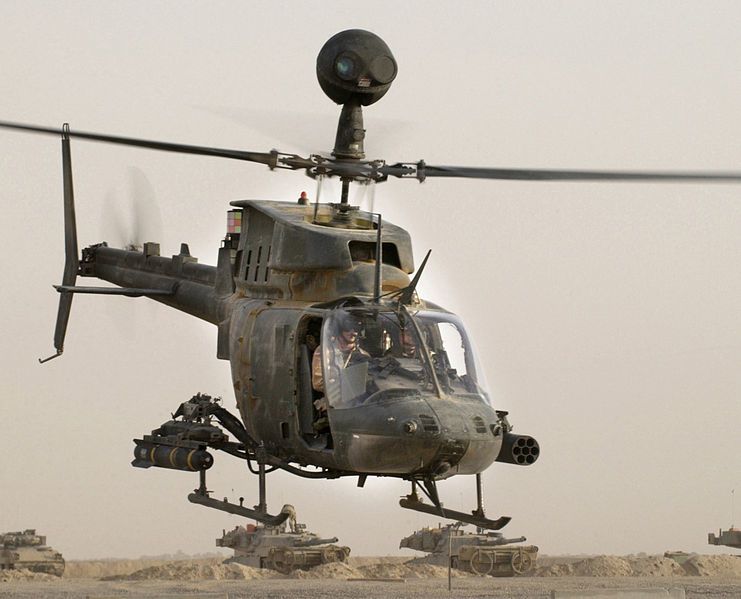
OH-58D-Kiowa-Warrior-helicopter.jpg


The US Army's OH-58D Kiowa upgrade programme will improve the aircraft's mission capabilities. Photo: SSgt Shane A. Cuomo, US Army.


1 March 2012 army-technology.com


Engineers at the US Army Aviation and Missile Research, Development, and Engineering Center (AMRDEC) Prototype Integration Facility (PIF) are developing the first major technology upgrade for the Army's OH-58D Kiowa Warrior helicopters under a four-year, $1.98bn project.


The conversion of OH-58D Kiowa helicopters to the next generation OH-58F standard will be the first substantial upgrade since its introduction into operational service in 1990.


Army PEO-Aviation Kiowa project manager lieutenant colonel Matthew Hannah told The Huntsville Times that the upgrade was vital to meet the Army's goal of keeping the OH-58 operational until at least 2025.


A total of more than 350 OH-58D Kiowa will be upgraded to the OH-58F configuration with support from the Office for Armed Scout Helicopters.


Kiowa assistant product manager major Jeff McCoy said as part of the Cockpit and Sensor Upgrade Program (CASUP), the helicopter will receive electronic, avionic, and mechanical changes to make it more effective in its mission.


The new Kiowa OH-58F will feature an upgraded cockpit and a new nose-mounted Common Sensor Payload (CSP), Increased Height Landing Gear (IHLG) along with housing cameras and other sensors to provide pilots with enhanced situational awareness.


The helicopter will also be fitted with an upgraded Control and Display Subsystem comprising of three all-colour displays, and a new Digital Intercommunication System.


PIF engineers are also developing a light weight wiring harness, which together with other technology upgrades will reduce the weight on the helicopters, thus making room for additional ammunition or fuel.


The first two helicopters will be upgraded in Huntsville and will be followed by the modification of an additional three at the Army's Corpus Christi Army Depot (CCAD) as the programme's production process moves into low rate initial production phase in 2015.


The Bell OH-58D Kiowa is a single-engine military helicopter used by the US Army for conducting observation, utility, direct fire support and armed reconnaissance missions in support of ground troops.

Partager cet article
Repost0
1 mars 2012 4 01 /03 /mars /2012 17:55

F22 ouverture-9fa11 photo USAF


Feb 29, 2012 by Stephen Trimble– Flight Global


Washington DC -  US Air Force leaders are considering a redesign of the Lockheed Martin F-22 but still have no answers for the oxygen system breakdowns responsible for another operational disruption.


F-22s based in Alaska were grounded for one day in mid-February after three separate pilots reported hypoxia symptoms, the Air Combat Command confirmed to Flightglobal.


It was at least the third temporary stand-down for the F-22 since the USAF deactivated the entire fleet for four months until last September.


But air force officials are no closer to identifying the cause of the string of incidents, including one fatal crash in November 2010 that was preceded by a failure of the pilot's oxygen supply.


USAF officials hoped an expert panel led by retired Gen Gregory Martin might yield the answer. The team has now reported its findings, but found no "smoking gun", said Lt Gen Herbert Carlisle, deputy chief of staff for operations, plans and requirements.


The USAF is considering a broad range of options, including redesigning the F-22 to include a back-up oxygen supply, Carlisle said. This would automatically detect an oxygen system malfunction and activate, he added.


The F-22 already is equipped with an emergency oxygen system, but it must be manually activated by the pilot after the onboard oxygen generation system (OBOGS) stops working.


Capt Jeff Haney was killed on 16 November 2010 when his F-22 crashed in Alaska. Haney inadvertently steered the aircraft into the ground while trying to reach a handle to activate his emergency oxygen system.


The OBOGS had already stopped functioning during the incident. An unexplained oxygen leak in the engine compartment prompted an automatic fire protection system to shut down the supply of bleed air to the OBOGS.


While Haney's supply of breathing air was cut off, other F-22 pilots have reported symptoms suggesting their air supply was not filtered properly.

Partager cet article
Repost0
1 mars 2012 4 01 /03 /mars /2012 17:40

USAF logo


Feb 29, 2012 by Samer al-Atrush (AFP) - ASDNews


The US Air Force chief said Wednesday the cancellation of a contract for new light attack aircraft for Afghanistan was an "embarrassment" and vowed to quickly renew the contest.


"There's no way to put a happy face on this," General Norton Schwartz told reporters.


He said the Air Force would move "quickly" to relaunch the contest for 20 light support planes for the Afghan military as funds for the program will expire at the end of fiscal year 2013.


"We will work with all dispatch," he said.


The Air Force on Tuesday abruptly cancelled the $355 million contract after awarding the project to the US firm Sierra Nevada Corp. and Brazil's aerospace manufacturer Embraer, saying it would open an investigation after a legal challenge from rival American aerospace firm Hawker Beechcraft Corp.


The move comes as a damaging setback for the Air Force, which has tried to reform its weapons-buying practices after a drawn-out competition for a new aerial refueling tanker that was plagued by scandal and controversy.


Schwartz said it would be "a profound disappointment" if facts showed that the Air Force had botched the contract, and expressed regret that the cancelation would delay the delivery of an aircraft vital to Afghanistan's military.


"That is one of the things I'm truly sad about -- not withstanding the embarrassment of this to us as an Air Force, it's the fact that we're letting our teammates down here," he said o.


The four-star general warned of drastic disciplinary action if the investigation reveals the contract was derailed by wrongdoing.


"I can assure that if it wasn't an innocent mistake, there will be hell to pay," he said.


He said the "stakes are high" and that the Air Force would work hard to remedy the problem. "We will work our asses off," he said.


The contract for 20 Embraer AT-29 Super Tucano aircraft was awarded in December as part of plans to arm the Afghan military amid a NATO troop drawdown.


But the US Air Force said it was not "satisfied" with the paperwork supporting the decision.


The AT-29 Super Tucano is a turboprop aircraft designed for low threat environments.


Hawker Beechcraft Corp, based in Wichita, Kansas, protested the award in federal court, arguing that its AT-6 plane was unfairly shut out of the competition.


Both sides in the contest have claimed that their companies would produce a better aircraft and generate more jobs in the United States.

Partager cet article
Repost0
1 mars 2012 4 01 /03 /mars /2012 12:55

First-two-production-F-35-fighters-in-final-assembly.--Phot.jpg

First two production F-35 fighters in final assembly.

(Photo: Lockheed Martin)


February 29, 2012 Daniel Goure, Ph.D. / Early Warning Blog, Lexington Institute – defpro.com


Maintaining the world’s best all-volunteer military is a very expensive proposition. People costs continue to rise as do the costs for military hardware. Each generation of equipment costs significantly more than the one that preceded it. This is not because of a broken acquisition system, although problems with the way the Pentagon defines what it wants and contracts to acquire it do contribute to rising prices. Costs for military equipment go up because we want our military to have the best airplanes, tanks, ships and guns.


When defense budgets were flush, the United States generally pursued foreign military sales for geo-strategic reasons. Sales of U.S. fighter jets such as the F-15, 16 and 18 both ensured that U.S. friends and allies could defend their own airspace and created a web of common interests, practices and capabilities that supported coalition defense and partnership activities. In the case of the F-35 Joint Strike Fighter, the Pentagon created an international co-development partnership with eight other countries to help defray the costs of development and gain access to more technologies as well as to secure a broader base of sales. But the F-35 program has been one of a kind, so far.


One exception to this rule has been the M-1 Abrams program. Several times in the past, the danger that production of the world’s best main battle tank would be brought to an end was averted by sales to Egypt and Saudi Arabia.


Now, in order to live within its means and at the same time acquire critical military equipment and maintain an adequate defense industrial base, the F-35 and M-1 examples may have to be more the rule and less the exception. The Department of Defense and the next administration -- regardless of political affiliation -- are going to have to aggressively sell U.S. military hardware overseas.


We are already seeing signs that the Pentagon is becoming more pro-active in helping the U.S. defense industry in foreign markets. The Army is reported to be pushing to sell foreign customers on the idea of upgrading existing armored vehicles, such as M-1s, or acquiring new systems like the Stryker. The Air Force is searching for new customers for the F-35. The Navy is hoping to make the Littoral Combat Ship available to allies in the Middle East and East Asia and to convince some of our NATO partners to acquire the missile defense variant of the Standard Missile 3.


At this moment, the Pentagon sees expanded foreign military sales as a way of covering temporary production stoppages in some programs. The idea is that the U.S. will come back into the game in a few years. However, if future defense budgets get cut again, foreign sales may be the only way to sustain critical portions of the defense industrial base.

Partager cet article
Repost0
1 mars 2012 4 01 /03 /mars /2012 12:35

AC-130H_Spectre_jettisons_flares.jpg


FORT WALTON BEACH, Fla., Feb. 29, 2012 – Boeing


Boeing has received an $11.4 million indefinite delivery, indefinite quantity (IDIQ) contract from the U.S. Air Force. The first delivery order under this contract is worth $4.6 million and will provide parts to be used to complete installation of 25mm Ammunition Storage and Handling Systems (ASHS) on four AC-130U gunships. The contract also includes spares to support sustainment of the ASHS. The Boeing Fort Walton Beach facility will build the components for delivery to Robins Air Force Base, Ga.


"The AC-130U is one of Air Force Special Operations Command's most requested aircraft in the current conflict, and supporting this hardworking aircraft is in the DNA of the Fort Walton Beach sustainment team," said Chet Gray, Platform Readiness and Sustainment manager for Boeing. "This new contract, which expands our work scope on the AC-130U, is a result of the service and commitment that Boeing has provided to Air Force Special Operations Command and Robins Air Force Base since the AC-130U's mission began."


Boeing has been the prime maintainer of the ASHS since 1994. The ASHS feeds ammunition to the 25mm cannon that is located inside the aircraft's cargo hold; it is capable of carrying 3,000 rounds.


The IDIQ contract provides customers with flexibility in both quantities and delivery scheduling while allowing Boeing to expedite the ordering of supplies after a requirement is identified. Production of the parts will begin immediately, with delivery scheduled for December.


Boeing Fort Walton Beach is the headquarters for Boeing's maintenance, modification and upgrade capabilities for the U.S. Air Force Special Operations Forces. The team provides field service and support in the United States and around the world for the AC-130U and CV-22. Its products and services include:


    specialty, software, and modification engineering

    logistics/product support

    technical order development

    mechanical and avionics repair.

Partager cet article
Repost0
1 mars 2012 4 01 /03 /mars /2012 08:15

30mm-PGU-15-Projectiles-photo-ATK.jpg


Feb 29, 2012 ASDNews Source : Alliant Tech Systems, Inc


ATK was recently awarded a  fourth contract option to produce 30mm PGU-15A/B cartridges for the U.S. Army Contracting Command, Rock Island Contracting Center (RICC), Rock Island, Ill.   The order is a part of a multi-year contract originally signed in July 2007. ATK's worldwide sales of 30mm ammunition in the current fiscal year now exceed $29 million.  


ATK's 30mm PGU-series target practice ammunition is specially designed for training applications.  These cartridges, currently in use with the 30mm GAU-8/A Gatling gun on the U.S. Air Force A-10 Warthog close-support aircraft provide cost-effective, ballistic-matched training rounds for improved warfighter performance.


"We are proud to continue our role as the primary provider of PGU-15 ammunition in support of the U. S. Air Force's A-10 aircraft," said Dan Olson, Vice President and General Manager, ATK Integrated Weapon Systems. "This round plays an integral role in training A-10 aircrews to develop and maintain essential air-to-ground combat skills.  ATK supports this program through the delivery of high quality products, outstanding value and great customer service."


ATK's Mesa, Ariz.-based Integrated Weapon Systems division will produce the rounds at its facilities in Radford, Va. and Rocket Center, W. Va.  Delivery of the optioned rounds is set to begin this year.

Partager cet article
Repost0
1 mars 2012 4 01 /03 /mars /2012 08:00

us_army-logo.jpg


February 29, 2012 Greg Mueller, TRADOC – defpro.com


FORT LAUDERDALE, Fla. | The U.S. Army is working diligently toward fundamentally changing the acquisition system, making it faster and better aligned to warfighter needs. Using what officials call the "Agile Process," the Army believes it will better be able to keep pace with industry and technological advances. This would accelerate the pace of network modernization to a rate unachievable by traditional acquisition strategies.


The intent of the Agile Process is to procure and integrate systems that meet an operational need or gap and demonstrate success, primarily through Soldier-led evaluations during biannual Network Integration Evaluations, or NIEs.


U.S. Army Training and Doctrine Command's Brigade Modernization Command, in concert with Army Test and Evaluation Command, the Assistant Secretary of the Army for Acquisition, Logistics, and Technology's, known as ASA(ALT), System of Systems Integration Directorate, and the 2nd Brigade Combat Team, 1st Armored Division, are integrating and assessing developmental and emerging networked and non-networked capabilities to determine their implications across doctrine, organization, training, materiel, leadership, education, personnel and facilities.


During the past decade, the Army has leveraged commercial industry to achieve significant modernization of network capabilities through the wars in Iraq and Afghanistan using the flexibility of contingency funding and operational necessity. However, the challenge now is to define a process that enables success within the current materiel enterprise framework.


With the NIE effort, the Army has established a similar operational environment at Fort Bliss, Texas, and White Sands Missile Range, N.M., supported by laboratory analysis at Aberdeen Proving Ground, Md., to institute the Agile Process that will introduce and evaluate commercial technologies in a controlled setting.


This phased Agile Process is an effort to procure critical capabilities in a more rapid manner, while ensuring technical maturity and integration synchronization. The ultimate end state of the Agile Process is the NIE, which is designed to procure and align systems that meet a pre-defined operational need or gap and demonstrate success through Soldier-led evaluations.


Lt. Gen. Keith Walker, director of TRADOC's Army Capabilities Integration Center, told an audience at the recent AUSA Winter Symposium and Exposition that, "A couple years ago, General Pete Chiarelli (former Army vice chief of staff) said we really need to evaluate things differently. All the things that we need to evaluate fall into three different buckets programs of record, capabilities under development and what I'd call emerging capabilities under development. We can evaluate any of these three (during the NIE). It opens lots of doors for the Army."


Brig. Gen. Randal Dragon, commander of TRADOC's Brigade Modernization Command, agreed.


"The NIE was designed to create efficiencies and minimize unnecessary steps, but also to meet the requirements in theater as well as the rapid change in technology," Dragon said. "It could be a system we've been developing for a while, or it could be an emerging capability that's required to meet a Soldier's need in Afghanistan. This has a wide variety of applications. Most importantly, it helps us keep up with the speed of changes occurring out in the technological arena."


NIE events assess potential network capabilities in a robust operational environment to determine whether they perform as needed, conform to the network architecture and are interoperable with existing systems. The NIE ensures that the network satisfies the functional requirements of the force, and relieves the end user, the Soldier in the field, of the technology integration burden.


The most important difference of the NIE approach is that the Army will place new and emerging technologies into the hands of Soldiers "early and often" to guide materiel development. This critical feedback is provided by Soldiers of the 2nd Brigade Combat Team, 1st Armored Division, assigned to the Brigade Modernization Command.


"The new defense strategy causes us to operate over much greater areas than we are used to now," said Maj. Gen. Genero Dellarocco, commander of U.S. Army Test and Evaluation Command. "What the NIE provides us is an expandable structure -- an affordable structure stateside -- to test our network, test our goods. Even in this period of austerity, we have to do that because that's the relevance that we owe to the fight."


The NIE structure also allows for program adjustments or elimination mid-stream, which not only produces more relevant end products for the Soldier, but saves experiment funds.


"We went and adjusted (a particular) program after an NIE, because this just didn't make sense," said Col. Daniel Hughes, director of Systems of Systems Integration. "We did this on two other programs at a savings in (the billions of dollars). So with our return on investment for the NIEs, we can probably run years of NIEs based on what we've already adjusted in the programs.


"One of the big keys of the NIE is not just the new technology. It's how we adjust the programs of record we have now, and the requirement set we have, to meet the needs of the warfighter today. We have to be adaptable enough with those programs to (adjust) them to really meet the requirements we have. The return on investment, every dollar I spend on the NIE, should give me $5 to $10 back at the other end," Hughes said.


The next Network Integration Evaluation, NIE 12.2, takes place from late April through early June, and will validate the final Capability Set 13 architecture. Fifty-four government systems and 52 industry systems are also under consideration for further evaluation to participate in the event. Of those, HMS Manpack and Warfighter Information Network-Tactical, critical pieces of the architecture, will conduct their initial operational test and evaluation. Additionally, NIE 12.2 will also center on a number of non-networked systems with a focus on operational energy.


As the Army's involvement in Afghanistan continues to subside, the Agile Process and NIEs will continue to address capability gaps and procure and integrate systems that meet those needs and gaps.


"The NIE is more than just a specific geographic focus," Dragon said. "Though the NIE does (currently) address contemporary operations, you have to look at the broad range of capabilities that are out there. There's non-network capabilities that we have simply just started to brush into.


"We've got other domains to include, the domains that our sister services (operate) in and the interoperability for the coalition force we have to sustain over time. So there are a number of reasons why we would want to be able to look at ourselves about every six months to see how well we can operate," Dragon said.

Partager cet article
Repost0
29 février 2012 3 29 /02 /février /2012 18:50

EM-Railgun-Prototype-Launcher--Photo-U.S.-Navy-.jpg


A high-speed camera captures the first full-energy shots

from the electromagnetic railgun prototype launcher.

(Photo: U.S. Navy)


February 29, 2012 Grace Jean / Office of Naval Research – defpro.com


ARLINGTON, Va. | Engineers have fired the Navy's first industry-built electromagnetic railgun (EM Railgun) prototype launcher at a test facility, commencing an evaluation that is an important intermediate step toward a future tactical weapon for ships, officials announced Feb. 28.


The firing at Naval Surface Warfare Center Dahlgren Division (NSWCDD) kicks off a two- month-long test series by the Office of Naval Research (ONR) to evaluate the first of two industry-built launchers. The tests will bring the Navy closer to a new naval gun system capable of extended ranges against surface, air and ground targets.


"We are starting our full-energy tests to evaluate the barrel life and structural integrity of the prototype system," said Roger Ellis, program manager of the EM Railgun, part of ONR's Naval Air Warfare and Weapons Department. "It's the next step toward a future tactical system."


The EM Railgun launcher is a long-range weapon that fires projectiles using electricity instead of chemical propellants. Magnetic fields created by high electrical currents accelerate a sliding metal conductor, or armature, between two rails to launch projectiles at 4,500 mph to 5,600 mph.


The 32-megajoule prototype demonstrator, built by BAE Systems, arrived at NSWCDD on Jan. 30. One megajoule of energy is equivalent to a 1-ton car being thrust at 100 mph. The prototype-which now looks more like a naval weapon compared to previous lab-style launchers-is the first of two industry-built launchers to be delivered to the Navy. General Atomics is building the second launcher, scheduled for delivery in April. ONR previously relied upon laboratory-built systems to advance the technology.


After installing the BAE Systems launcher and outfitting it with a comprehensive suite of sensors, high-speed cameras and measuring devices, engineers fired successful low-energy test shots to prepare it for the evaluation. The team will conduct tests at 20 megajoules and 32 megajoules, shooting test projectiles similar to what was previously fired through NSWCDD's laboratory launcher.


"The test series will characterize the gun's performance by shooting several rounds through the barrel at various energy levels to fully exercise the capabilities of the prototype," said Ellis.


When fully developed, the EM Railgun will give Sailors a dramatically increased multimission capability. Its increased velocity and extended range over traditional shipboard weapons will allow them to conduct precise, long-range naval surface fire support for land strikes; ship self-defense against cruise and ballistic missiles; and surface warfare to deter enemy vessels. The Navy's near-term goal is a 20- to 32-megajoule weapon that shoots a distance of 50 to 100 nautical miles.


To achieve this, the Navy is moving ahead with the EM Railgun program's next phase: to develop thermal management systems for both the launcher and pulsed power to facilitate increased firing rates of up to 10 rounds per minute. Toward this end, BAE and General Atomics have been contracted to begin concept design of a next-generation thermally managed launcher.


"The next phase of the development effort is to demonstrate the ability to operate at a firing rate of significant military utility," Ellis said.


Additionally, ONR awarded contracts through Naval Sea Systems Command to General Atomics, BAE Systems and Raytheon Co. to develop a pulsed power system capable of meeting the firing rate goal.


Various new and existing ship platforms are currently being analyzed for future integration.

Partager cet article
Repost0
29 février 2012 3 29 /02 /février /2012 18:50

Bluefin-12S-recovery-2.jpg

Bluefin-12S


February 29, 2012 defense-unmanned.com

(Source: Bluefin Robotics; issued Feb. 28, 2012)


Bluefin Receives Subcontract Award for Phase II of DARPA’s Deep Sea Operations Program


Bluefin-Robotics.jpg


QUINCY, MA --- Bluefin Robotics, a leader in the design and manufacturing of Unmanned Underwater Vehicles (UUVs) has been awarded a Phase II subcontract from Applied Physical Sciences Corp. (APS) for the Deep Sea Operations (DSOP) Technology and System Development Program sponsored by the Defense Advanced Research Projects Agency (DARPA).


Bluefin Robotics will assist in developing systems of configurable technology to address Anti-Submarine Warfare (ASW) surveillance needs over large, operationally relevant areas. The system(s) will operate with sensors or sources near the ocean bottom; exploit the advantages of distributed nodes; configure to a range of operations, environments and time scales; and adapt to the mobility of surface assets or evolving threats.


Additionally, the program will provide the ability to achieve long-range detection and classification, the means to communicate underwater over long distances, and the ability to manage energy to endure in the extreme operating conditions of the deep ocean.


The APS DSOP Team consists of Applied Physical Sciences Corp., Bluefin Robotics, Massachusetts Institute of Technology, H. Schmidt Consulting, Scientific Systems Company, Inc., and General Dynamics Advanced Information Systems.


The prime contract awarded to APS was competitively procured through the DARPA Announcement, number 11-24, published via the Federal Business Opportunities website, with 16 offers received. The Space and Naval Warfare Systems Center Pacific, San Diego, Calif., is the contracting activity.


Bluefin Robotics manufactures and develops Unmanned Underwater Vehicle (UUV) systems and related technology. Founded in 1997, the company has grown to become a world leader in UUV products designed for defense, commercial, and scientific applications. Bluefin Robotics is a wholly-owned subsidiary of Battelle.

Partager cet article
Repost0

Présentation

  • : RP Defense
  • : Web review defence industry - Revue du web industrie de défense - company information - news in France, Europe and elsewhere ...
  • Contact

Recherche

Articles Récents

Categories