Overblog Tous les blogs Top blogs Entreprises & Marques Tous les blogs Entreprises & Marques
Suivre ce blog Administration + Créer mon blog
MENU
8 décembre 2014 1 08 /12 /décembre /2014 12:55
Automobile et aéronautique, même combat !

Jean-Marc Champeyroux, Responsable de programme Sagem-Valéo « All weather condition sensor » ; (à droite) Philippe Goujeon, Collaborative Project Manager « Valeo Comfort & Driving Assistance ». photo A. Paringaux / Safran


30 novembre 2014 par Pascal Coutance - electroniques.biz/


Depuis peu, certains acteurs de l'aéronautique et de l'automobile ont réalisé qu'ils avaient tout intérêt à travailler ensemble. Preuve de la convergence entre ces deux secteurs phares de l'économie française, l'accord signé entre Valeo et Safran en septembre 2013 a donné lieu à une première réalisation concrète présentée lors du dernier Mondial de l'automobile, en l'occurrence une clé de voiture intelligente sur smartphone. Baptisée InBlue et présentée en première mondiale à Paris, cette clé transforme un smartphone en clé connectée pour non seulement déverrouiller, verrouiller et démarrer sa voiture, mais aussi pour accéder à distance aux données du véhicule comme sa géolocalisation ou son niveau de carburant. Ce dispositif permet également l’auto-partage grâce à l’envoi d’une clé numérique à la personne de son choix.


Il ne s'agit là que d'une première étape puisque l'accord entre Valeo et Safran prévoit des développements dans le domaine de l'assistance au pilotage et du véhicule autonome avec des thématiques telles que le suivi de la vigilance des conducteurs, la vision à 360 degrés, la conduite sécurisée dans des conditions météorologiques extrêmes, notamment dans le brouillard, et la "robotisation/dronisation" des véhicules.


Authentification d'accès, cryptographie, réalité augmentée, vision infrarouge, dronisation des véhicules, autant de technologies issues de l'aéronautique qui sont à même de trouver leur place dans l'automobile de demain, en particulier pour rendre les véhicules plus autonomes. Et si l'on ajoute à cela la possibilité, en mettant en oeuvre des plates-formes communes à l'automobile et à l'aéronautique, d'obtenir des économies d'échelle, nul doute que ce type d'accord va se multiplier dans les années à venir.

Partager cet article
Repost0
5 décembre 2014 5 05 /12 /décembre /2014 07:50
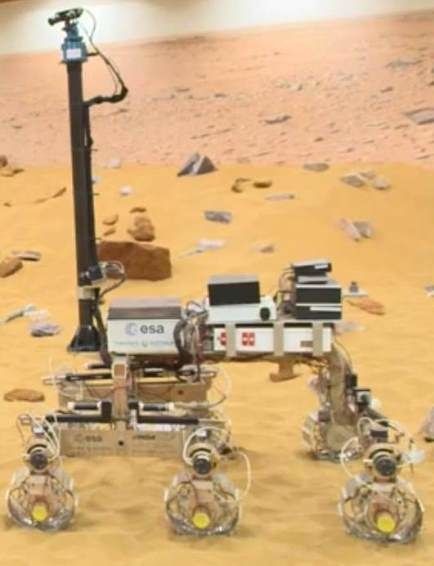
Europe's first Mars Rover and their sandy "playground"


3 déc. 2014 Airbus DS


Europe’s first Mars rover will have an unmatched capability to autonomously navigate up to 70 metres a day with no outside guidance from ground control. The extended Mars Yard provides a realistic and representative Mars environment to allow the Guidance, Navigation and Control team of the ExoMars rover project to finalise the sophisticated autonomous navigation system. The Mars Yard will be used up until launch and will also be kept available after the rover has landed on the surface of Mars in 2019 – if necessary to address any problem by simulating the situation on Earth. Manufacture of the flight rover will begin early in 2015 after construction of an advanced clean room for interplanetary missions at Airbus Defence and Space’s Stevenage site. Mission launch is planned for 2018.
More information: http://bit.ly/1ziYWY0

Partager cet article
Repost0
17 novembre 2014 1 17 /11 /novembre /2014 11:55
Adapter la filière Défense aux enjeux du numérique


17/11/2014 Jean-Michel Palagos - Président Directeur Général de Défense Conseil International (DCI)


Depuis plus d'une dizaine d'années, la plupart des observateurs s'accordent pour voir dans le numérique une transformation importante dans le secteur de la défense : cyberdéfense, drones, robotique, numérisation de l'espace de bataille... La filière de la défense et de la sécurité doit, à l'instar d'autres filières, en tirer trois conséquences organisationnelles : favoriser l'innovation, développer la dimension de service et donner une ampleur nouvelle au rôle de l'Etat.


40% des aéronefs de l'armée américaine seraient aujourd'hui des drones, selon un rapport du Congrès. Dans les dernières années, les virus Stuxnet et Al-Shamoun, pour ne parler que d'eux, ont endommagé des infrastructures industrielles majeures. L'emploi très efficace des hélicoptères de l'ALAT (Aviation légère de l'armée de terre) en Côte d'Ivoire, en Libye ou au Mali a montré une fois encore l'importance du professionnalisme des personnels et le caractère essentiel des dispositifs de commandement et de maîtrise de l'information. Il n'y a qu'à voir la liste des exposants du salon Eurosatory qui s'est tenu à Paris en juin dernier et encore récemment en octobre au salon Euronaval, pour constater combien la sécurité terrestre et maritime n'intègre plus seulement des véhicules, des navires et des armes mais aussi les systèmes d'information, la simulation ou encore les drones. Certains des paramètres essentiels de la défense ont évolué sous l'impact du numérique. Les armées et l'industrie sont confrontées à des changements similaires, sous de nombreux aspects, à ce que vit l'industrie de la presse ou de l'énergie aujourd'hui, qui conduisent à poser une question majeure : comment prendre en compte les changements technologiques de façon efficace afin d'en faire bénéficier nos organisations ? En général, cette question se pose ainsi aux dirigeants d'organisations : ce que certains théoriciens du « management » ont appelé le dilemme de l'innovation : faut-il risquer d'affaiblir son métier traditionnel en développant des innovations dans le numérique, sachant que les effets positifs risquent de tarder avant que les effets destructeurs, mais aussi ceux encore plus prometteurs, de ce changement n'apparaissent ?


En fait, Shumpeter a théorisé dès le siècle dernier ces cycles d'innovation et leurs effets, mais ses théories reprennent une actualité évidente aujourd'hui. Trois grands leviers doivent permettre aux organisations de se développer dans ce nouveau contexte.


Le premier levier est la capacité à innover, ce qui suppose de mettre en place des organisations flexibles, capables de nouer des partenariats et de développer des démonstrateurs d'innovation. Suivant le secteur, ces nouvelles structures peuvent être plus ou moins organisées en réseau et plus ou moins séparées des structures traditionnelles. Les start-ups et PME de l'écosystème peuvent être intégrées dans le travail d'innovation, sur le mode de l'open innovation, mais aussi dans des clusters ou des pôles de compétitivité. Chez Google ou Microsoft, pour un collaborateur direct on peut trouver une dizaine de personnes dans des start-ups partenaires. Dans le secteur de la défense, plusieurs milliers d'entreprises rassemblent quelques 165 000 salariés et près d'un tiers de leur chiffre d'affaires se réalise à l'exportation. Les partenariats sont plus que jamais essentiels, car les compétences et expertises doivent être imbriquées pour favoriser l'innovation.


Le deuxième levier est la dimension de service. La numérisation questionne la notion de produit au profit du système et de l'organisation. Il ne suffit pas de disposer d'une flotte d'hélicoptères de pointe. Il faut une organisation capable de disposer des pilotes et navigateurs les plus expérimentés, d'entretenir et faire évoluer le matériel et d'intégrer les véhicules dans l'espace de bataille afin d'en obtenir l'impact maximal. De même, en cyberdéfense, la question du facteur humain est cruciale, Tant les méthodes d'ingénierie sociale sont essentielles dans le cas de menaces persistantes avancées, les formes les plus pointues des attaques cybernétiques : dans le cas de Stuxnet, il a bien fallu des failles organisationnelles pour qu'un ou plusieurs opérateurs insèrent à leur insu le virus dans les équipements informatiques des cibles, probablement au moyen de clés USB. Le monde numérique, qui donne souvent le sentiment d'être dominé par la technique, est donc avant tout un monde de la formation, de l'assistance et de l'organisation humaine.


Enfin, le troisième enjeu de la révolution numérique est de repenser le rôle de l'Etat. Celui-ci est appelé à jouer un rôle fondamental. Dans « The Entreprenarial State », l'économiste Mariana Mazzucato souligne ainsi que les composants essentiels des produits Apple comme l'Iphone ou l'Ipod sont issus de travaux de recherche publique. Le protocole http et la fameuse roue permettant de sélectionner les musiques de l'Ipod ? Des recherches du CERN. Le microprocesseur et le micro disque dur ? Des travaux financés par l'agence de défense DARPA. L'écran tactile ? Des recherches des ministères américains de l'énergie et de la défense. Chacun connait aussi l'origine de l'internet et du GPS. Apple a su avec brio et un réel sens marketing, intégrer différentes briques créées et développées dans des instances publiques. Ceci ne remet pas en cause l'efficacité des industriels ou l'impact de la recherche privée, notamment dans le secteur de la défense, mais permet de rappeler le rôle que peut avoir l'Etat dans la construction de systèmes et de savoir-faire décisifs. Le rôle des agences publiques militaires et les liens qu'elles peuvent tisser avec les industriels sont donc décisifs pour les années à venir. Ces fertilisations croisées entre public et privé doivent, plus que jamais, être encouragées.


Le numérique est donc en train de transformer le secteur de la défense. Cette transformation sera réussie, à condition que les organisations s'ouvrent à l'innovation et aux services, mais aussi que les organisations publiques jouent pleinement leur rôle.

Partager cet article
Repost0
16 novembre 2014 7 16 /11 /novembre /2014 08:20
US Army Works Toward Single Ground Robot

Unmanned and Ready: The US Army is refurbishing a portion of its robot fleet, including the Talon IV, by QinetiQ. (Maj. Penny Zamora/ / US Army)


Nov. 15, 2014 -By JOE GOULD – Defense News


WASHINGTON — The US Army is pruning 40 percent of its ground robotics fleet, removing obsolete or excess robots before it goes to a single ground machine, according to Program Executive Office Combat Support and Combat Service Support (PEO CS&CSS).


The Army plans to refurbish 1,477 of its ground robots, which is about 60 percent of the total fleet, said Michael Clow, PEO CS&CSS strategic communication lead.


“After reset, current robots will be fielded to units to use as bridge capabilities until final programs of record are fielded, at which time the reset robots will be replaced by the program of record equipment,” Clow said.


The robots due for reset:

■ 353 QinetiQ Talon IVs, of which 296 will go to Army engineers and 57 to the National Guard.

■ 224 iRobot 510 FasTac Packbots.

■ 219 Dragon Runner 10s by QinetiQ.

■ 436 iRobot FirstLooks.

■ 245 iRobot 310s.


The Army’s Robot Logistics Support Center at Selfridge Air National Guard Base in Michigan is conducting the reset. The center has performed field and sustainment-level maintenance on the Army’s robots for the past eight years. The robots will be reset to a baseline configuration unless obsolescence requires a revised configuration, Clow said.


Formal Program


Speaking at an Association for Unmanned Vehicle Systems International conference here, the Army’s force development chief, Maj. Gen. Robert Dyess, generally echoed Army leaders’ dire predictions for the service’s budget, but he said “there is light” for unmanned ground systems.


The president’s 2016 budget, he said, is expected to shift ground robots fielded on an ad hoc basis during the wars into formal programs, albeit at a slower pace and with less funding than manufacturers may prefer.


“Development for the Army is relatively limited right now,” Dyess told reporters after his remarks. “It’s more like, ‘fix what we have and make it better, and have fewer things in development because there’s this desert you have to cross before you’re fully funded.’ ”


The Army invested more than $730 million in unmanned ground vehicles, which were rapidly fielded to Afghanistan and Iraq. Few are interoperable, are optimized to share information or have payloads, sensors or software that aren’t outmoded. The result is a mixed fleet of systems with high sustainment costs


Through its Man Transportable Robotic System (MTRS) program, the Army is switching out proprietary for government-owned hardware and software in its 900 Talon robots and the 300 PackBots, using an engineering change proposal, Dyess said.


Under the current phase of MTRS, Increment 2, the Army will move to a single unmanned ground vehicle with one configu­ration, Clow said. The program anticipates a production decision next summer before a request for proposals in 2016.


Meanwhile, Congress’ inability to pass a budget could derail a separate Army robotics procurement program — the Common Robotic System Individual (CRS-I). It’s intended to yield a new backpack-carried ground robot for surveillance missions, or bombs and hazardous materials, for soldiers on foot.


According to Dyess, the CRS-I would likely be delayed if Congress passes a continuing resolution, which would fund the government at last year’s level. Congress has not passed a defense budget on time since 2005.


CRS-I is intended to replace the terminated small unmanned ground vehicle program — at half the weight and cost, Dyess said.


The CRS-I, announced in an Army market survey in June, would weigh 20 pounds or less and allow a soldier to set it up in five minutes and operate it from up to 300 meters away. It would feature a joint plug-and-play architecture for sensors, claw arms and other peripherals, which allows the government to procure and service these separately.


Army officials have briefed a plan to begin fielding the CRS-I in 2020 as a joint program with the Marine Corps, for a total of 5,266 systems. The CRS-I program is working toward a materiel development decision this summer, according to PEO CS&CSS.


“Rules regarding continuing resolutions and new program start activities certainly could impact many programs if passed — including CRS-I,” Clow said. “As with all programs, we will adjust to budgetary changes as needed while continuing to pursue the timely delivery of improved, affordable capabilities for America’s soldiers.”


QinetiQ is among the companies that responded to the CRS-I market survey and is awaiting the Army’s final requirements for MTRS, said Jason Montano, the company’s product manager for Talon robots. For the latter, QinetiQ is offering its Talon V, which is compliant with the Army’s plug-and-play interoperability architecture, he said.


The Talon V, Montano said, sports a host of electronics upgrades, including a more powerful processor, more communications throughput and, physically, it is better able to climb stairs and lift heavier objects.


“It’s a product we have been working hard on for the last three or four years,” Montano said. “It’s the next-generation robot to benefit soldiers and keep soldiers out of harm’s way.”

Partager cet article
Repost0
11 septembre 2014 4 11 /09 /septembre /2014 16:45
The Paramount Roadrunner UAV

The Paramount Roadrunner UAV


08 September 2014 by Guy Martin - defenceWeb


Paramount Group is investing R100 million in unmanned vehicles with the launch of a new Robotics division, which encompasses unmanned ground, air and sea vehicles.


Discussing the launch of the new entity last week, Ivor Ichikowitz, Executive Chairman of Paramount Group, said that, “The next generation of innovation in the global defence and security sector will be in the Robotics sector. As warfare becomes more complex and the political risk associated with loss of life becomes more sensitive, both sophisticated and developing defence forces alike are investing in reducing the number of soldiers exposed to dangerous environments. In light of this we are pleased to announce the establishment of Paramount Robotic Systems – a consolidation of Paramount’s mission systems, unmanned and robotics capabilities across land, sea and air. This division will consolidate Paramount’s robotics research and development activities as well as the organisations’ current unmanned programmes.”


The Group will invest over R100 million in research and development funding in robotics, “bringing to market some of the most exciting innovations in the autonomous defence space.”


“There is no defence company locally that has a robotics division like ours. We are now focussed on developing unmanned robot systems that take the human element out of the equation. This is a first for Africa and the Southern hemisphere, and we are very excited to be forging the way to making South Africa world leaders in the robotics industry,” said Ichikowitz.


Paramount Group already has a number of unmanned products in its stable. It acquired unmanned aerial vehicle (UAV) capabilities through the acquisition of Advanced Technologies and Engineering (ATE), now Paramount Advanced Technologies. Its UAV range includes the Civet, Roadrunner rhomboid wing UAV and new Mwari UAV. Paramount has also proposed an AHRLAC 25 unmanned version of its Advanced High-performance Reconnaissance Light Aircraft. On the naval side, the company is offering a remotely operated Guardian vessel.


“We are seeing a huge growth in unmanned systems,” Ichikowitz said, adding that, “we have the capability and competence to lead the way.” He said the new Robotics division is a catalyst for a whole range of innovation and that Paramount is working with universities and other institutions in this regard.


Although the research and development investment in robotics comes from Paramount’s own funds, in future the Group will explore co-development with global partners. He said that having no government funding means the company in innovative and able to move fast with projects.


At the same time as the Robotics division was announced, Paramount also revealed it had bought Aerosud Aerospace Systems and Veecraft Marine, further adding to its already diverse capabilities. Ichikowitz said these investments and innovations “are a true testament to the skillset and entrepreneurial spirit of the continent. As we celebrate our 20th anniversary at the same time as South Africa celebrates its 20 years of democracy, we are proud to be recognised as global innovators with world-leading technologies and solutions. The development of the defence industry will go a long way towards creating an indigenous African capability that will deal with threats to the security of the continent.”

Partager cet article
Repost0
11 septembre 2014 4 11 /09 /septembre /2014 16:20
Canadian DND orders iRobot 510 PackBot CBRN robots

iRobot 510 PackBot CBRN recce system is a modular expansion to 510 PackBot multi-mission robot. Photo Outisnn.


11 September 2014 army-technology.com


iRobot has secured multi-year contracts for the delivery of iRobot 510 PackBot reconnaissance, chemical, biological, radiological and nuclear (CBRN) recce systems to the Canadian Department of National Defence (DND).


Valued at a combined $9.6m, the competitively awarded contracts cover the delivery of a total of 20 iRobot 510 PackBot systems, along with training and future product lifecycle support.


iRobot defence and security business unit senior vice-president and general manager Frank Wilson said: "CBRN events occur globally and each present their own unique challenges.


"iRobot offers all of our customers rugged, reliable and expandable systems that are capable of addressing a wide range of specific mission needs."


A modular expansion to iRobot's 510 PackBot multi-mission robot, the 510 PackBot CBRN recce system is designed to address specific requirements set forth by the Canadian DND.


The easy-to-use, mobile robot includes a CBRN suite, comprising five primary sensors to reliably detect, alert and report on chemical warfare agents, toxic industrial chemicals, volatile gases, explosives and radiation.


The robot can access confined spaces and broad sensing capabilities, and features enhanced mobility through the addition of rear flippers.


Deliveries under the contract are expected to be completed by April 2015.


Weighing around 24lb, the 510 PackBot is a modular robot designed to assist soldiers and first responders in conducting bomb disposal and improvised explosives device neutralisation, as well as surveillance / reconnaissance missions from stand-off distances.


Equipped with a range of interchangeable payloads, the combat-proven robot can be configured to screen vehicles and is able to integrate additional sensors to aid in the identification and interrogation of CBRN threats.


To date, iRobot has delivered more than 5,000 robots to military and civil defence forces worldwide.

Partager cet article
Repost0
12 août 2014 2 12 /08 /août /2014 07:40
Plastun Robotic Complex

Plastun Robotic Complex


MOSCOU, 11 août - RIA Novosti


La première faculté de robotique militaire sera mise en place en Russie par l'Académie militaire des Troupes balistiques stratégiques russes (RVSN), a annoncé lundi à Moscou le porte-parole des troupes, Dmitri Andreïev.


"Les Troupes balistiques stratégiques accordent une grande attention à l'études du potentiel des robots militaires. Une filiale de l'Académie militaire des RVSN située à Serpoukhov, dans la région de Moscou, commencera à former des spécialistes dans ce domaine à partir de 2015. Une faculté de robotique militaire et d'armes intellectuelles sera prochainement mise en place. Nous sommes en train d'élaborer un programme d'études pour ces spécialistes", a indiqué M.Andreïev.


Selon lui, la faculté de robotique militaire sera dotée d'un laboratoire scientifique puissant.


L'Académie militaire Pierre le Grand est un centre scientifique et établissement d'enseignement supérieur relevant des Troupes balistiques stratégiques russes.

Partager cet article
Repost0
12 août 2014 2 12 /08 /août /2014 07:30
Micro Tactical Ground Robot photo Roboteam

Micro Tactical Ground Robot photo Roboteam


August 7, 2014: Strategy Page


About a week after the current war with Hamas began Israeli staff officers realized that the large number of Hamas tunnels discovered were more complex and dangerous than any previously encountered and a new robot was needed to deal with the situation. Within days a specification was provided to Israeli robot manufacturers and by the end of July a new robot design had been accepted, in production, delivered and in action. The new MTGR (Micro Tactical Ground Robot) was not a major breakthrough, it was simply a better application of design elements that had been developed since the 1990s and suited current Israeli needs. The Israelis have ordered over a hundred MTGRs for delivery ASAP. Based on its success in Gaza MTGR is being offered to other armed forces and police departments around the world.


MTGR is a 7.3 kg (16 pound) tracked (or wheeled version weighing 9 kg) robot. Tracks are preferred for getting up stairs and over obstacles. MTGR can carry up to 9 kg of accessories. The basic MTGR comes with five cameras, a microphone, and can carry additional sensors. The cameras have day/night capability, 360 degree views and x10 zoom. One of the more useful accessories is a robotic arm for clearing debris or searching. Another useful item are bright LED lights when you need illumination. MTGR uses GPS and can carry a laser rangefinder to measure dimensions of where it is. The battery lasts 2-4 hours depending how onboard equipment is used. Top speed is 50 meters a minute and max range for the operator is 500 meters.


MTGR is designed to be carried in a backpack and an operator can use the handheld control unit to operate several MTGRs at once. The MTGR has been a lifesaver for exploring Hamas tunnels, which are often filled with booby traps and other nasty surprises for advancing Israeli troops. Often MTGR will simply go down, take a lot of measurements and pictures and then withdraw after which explosives will be lowered down and the tunnel collapsed. If MTGR detects documents or electronic devices like laptops, tablets or cell phones, MTGR will carefully survey the area and troops will go down to recover the valuable intel often found on such devices. If MTGR can reach cell phones or small tablets it can pick them up and carry them away.


The U.S. Army has been using robots like the MTGR since the 1990s. American designs went through rapid refinement after September 11, 2001 because thousands of these robots were bought and used by American troops in combat. The culmination of all that was expressed in the XM1216 SUGV (Small Unmanned Ground Vehicle). SUGV was designed to be the definitive next generation infantry droid, replacing existing droids like the similar but larger PackBot. Not surprisingly MTGR is based on the same experience but more refined and using some newer technology.  This design was not ready for action until most of the fighting in Iraq and Afghanistan was over. Thus by 2012 only about 200 of these combat robots were in service or on order. It was only in 2011, after more than six years of development, that the army bought its first production model SUGV.


Before September 11, 2001, the army didn't expect to have robots like PackBot or SUGV until 2013. But the technology was already there, and the war created a major demand. The robots expected in 2013 were to be part of a new generation of gear called FCS (Future Combat Systems). SUGV is still waiting for some of the high tech FCS communications and sensor equipment (which MTGR used), and appeared in 2011 using off-the-shelf stuff in the meantime. The troops don't care, as long as it worked. These small robots have been quite rugged, having a 90 percent availability rate.


The overly ambitious, expensive and much delayed FCS program was cancelled in 2009 but successful bits, like SUGV, were allowed to keep moving. This was a big deal for SUGV, because demand for these small droids collapsed when the Islamic terror offensive in Iraq did in 2008. There were plenty of droids left over for service in Afghanistan, where the Taliban provided a much lower workload for the little bots than did Iraq.


SUGV is a 13 kg (29 pound) robot, similar to the slightly older and larger Packbot. SUGV can carry 3 kg (6.6 pounds) of gear, and seven different "mission packages" are available. These include various types of sensors and double jointed arms (for grabbing things.) SUGV is waterproof and shock resistant. It fits into the standard army backpack, and is meant to operate in a harsh environment. The battery powered SUGV is operated wirelessly, or via a fiber optic cable, using a controller that looks like a video game controller with a video screen built in. SUGV can also use an XBox 360 controller, with the right drivers. Like the earlier PackBot and later MTGR, SUGV can climb stairs, maneuver over rubble and other nasty terrain.


The SUGV design is based largely on feedback from combat troops. For example, it is rugged enough to be quickly thrown into a room, tunnel or cave, activated and begin sending video, as well as audio, of what is in there. This feature makes it very popular with the troops, who want droids with the ability to see, hear and smell were more acutely. No one likes being the first one going into dark, potentially dangerous, places. Throwing a grenade in first doesn't always work, because sometimes frightened civilians are in there. Despite all these fine qualities, the current generation of robots is not fast enough, agile enough or sensitive enough to compete with human troops doing this kind of work. Sometimes, however, the robots are an adequate, and life-saving, substitute. SUGV is supposed to be better at this sort of thing.


SUGV can also perform outpost and listening post work. These are two dangerous jobs the infantry are glad to hand off to a robot. Outposts are, as the name implies, one or two troops dug in a hundred meters or so in front of the main position, to give early warning of an enemy attack. A listening post is similar, but the friendly troops are often much deeper into enemy territory. The SUGV battery enables it to just sit in one place, listening and watching, for eight hours or more. After that, you send out another SUGV with a fresh battery, and have the other one come back for a recharge. No risk of troops getting shot at while doing the same things, and the troops really appreciate that. Again, the problem with this is that the robot sensors are just not there yet. The sensors are getting close, but not close enough for troops to trust their lives to this thing.


Other dangerous jobs for the SUGV are placing explosives by a door (to blow it open for the troops), or placing a smoke grenade where it will prevent the enemy from seeing the troops move. Since 2006 users of the older PackBot UGVs filled military message boards with interesting uses they have found for these robots, and new features they could make use of. SUGV and MTGR are the products of all that chatter.

Partager cet article
Repost0
11 août 2014 1 11 /08 /août /2014 16:45
Nigerian Air Force to accelerate IED-detonating robot


5 August 2014 airforce-technology.com


The Nigerian Air Force is planning to complete the development of an unmanned ground vehicle (UGV) that can detonate high-calibre improvised explosive devices (IEDs).


The speedy completion of the robot has been hampered by a lack of adequate funds.


Developed by the Nigerian Airforce Institute of Technology (Nafit), the UGV is claimed to be the first of its type on the African continent.


Nafit commandant Toni Adokwe was quoted by the Nigerian Tribune as saying that the robot is expected to enhance the success of security agents in the fight against rebellion.


Adokwe said: "When the project is completed, the robot would go a long way in countering activities of terrorist groups, as detonation of bombs will not require the physical presence of a human being at the scene."


Nafit developed the Gulma unmanned aerial vehicle (UAV) last year, which is being used by the defence headquarters for surveillance and intelligence gathering in crisis-prone regions.


Developed in collaboration with Cranfield University's aerospace engineers, the indigenous drone can be modified for aerial imaging/mapping, telecommunications and weather monitoring missions, among others.


The Nigerian Air Force has also manufactured Amebo I, II and III UAVs in the last two years for intelligence, surveillance and reconnaissance (ISR) operations.


Adokwe said that the allocation of proper funding would enable Nigeria to attain higher base in military aviation and defence-related technology.


Established in 1979, Nafit conducts research and offers postgraduate engineering programmes in aerospace, aeronautical and allied sectors.

Partager cet article
Repost0
10 août 2014 7 10 /08 /août /2014 17:20
Innovative robotic systems supporting Marines during warfighting experiment in Hawaii

The Legged Squad Support System (LS3) robotic ‘mule’ is experimental technology being tested by the Marine Corps Warfighting Lab during the Advanced Warfighting Experiment portion of RIMPAC. It is programmed to follow an operator through terrain, carrying heavy loads like water and food to Marines training. Photo: USMC by Sgt. Sarah Dietz.


Aug 1, 2014 defense-update.com


Earlier in July 2014 the Marine Corps Warfighting Lab (MCWL) has tested two new robotic systems during the Advanced Warfighting Experiment which took place as part of the Rim of the Pacific (RIMPAC) 2014 exercise in Hawaii. The systems included the the LS3 Legged Squad Support System and GUSS - Ground Unmanned Support System.


One of the robots included the Legged Squad Support System (LS3) which joined a Marine company on rugged terrain, offloading part of their supplies. The other was the Ground Unmanned Support System (GUSS), an autonomous Jeep size vehicle, that could deliver relatively heavy loads to the forward units, without putting drivers and security teams at risk. Both vehicles are part of MCWL’s thrust to lighten the load carried by the Marine squad; the two vehicles are designed to carry out such mission in different terrain. In addition, the GUSS can also be operated for casualty evacuation missions.


Read full article

Partager cet article
Repost0
9 août 2014 6 09 /08 /août /2014 16:40
Robot scout from Shvabe seeks out and absorbs radiation


August 06, 2014 by Rostec
 

The  Shvabe holding, which is a subsidiary of the Rostec State Corporation, has developed and released a mobile robotic radiation survey unit. The robot is designed to seek out local sources of gamma radiation and absorb them.

The mobile robotic radiation survey unit works both in indoor environments as well as in open areas.  Due to its rotation and movement sensor, the robot is able to move freely even in the most impassable places.

In addition, the robot is equipped with heat flow sensors, a set of sample collecting devices, special gripping mechanisms, as well as convenient innovative containers for the absorption and disposal of gamma radiation. The unit moves at a speed of 1 meter per second. It can be controlled either via radio waves or cable line.

The robot is able to lift up to 50 kilograms, and it can operate continuously without needing to be charged for several hours. 

The Shvabe Holding consists of major enterprises in the electrooptical industry.  The holding develops and manufactures high-tech optoelectronic systems as well as special-purpose and civilian systems, optical materials, medical equipment, energy-saving lighting equipment and other products. It is a subsidiary of the Rostec State Corporation.

Partager cet article
Repost0
11 juillet 2014 5 11 /07 /juillet /2014 07:40
Mobile Robots to Guard Against Terrorist Attacks

Ultra-light class robotic systems are being produced at the KEMZ Kovrov plant


July 08, 2014 by Rostec


For more than 20 years, special services and police have relied on mobile robots to prevent terrorist attacks that use explosives. Such robotic systems of ultra-light and lightweight classes are produced at the Kovrov Electromechanical Plant (KEMZ), which is part of the state corporation Rostec. These serially produced systems are used for visual reconnaissance, search, and preliminary diagnostics of suspected explosive devices using television cameras and special attached devices. They are also used for the remote removal of explosive devices, or to place them in the special containers for evacuation.


Such robotic systems utilize automatic devices to perform all necessary functions, except for control and monitoring, which is done by people. Mobile robots are used in disaster management in conditions that are hazardous to human life. Typically, robotic systems consist of a chassis, a manipulator, a mobile remote control, a remote observation system, and a lighting system. Additionally, some robots may be equipped with chemical and radiation detection systems, as well as replacement technological equipment.


Robotics and the Portable Control Panel

Robotic systems are designed to replace people in cases in which the task is beyond human capabilities, or when there is an excessive threat to human health and life. One of these systems is a light-class mobile robot called Varan, produced at the Kovrov Electromechanical Plant. The robot was designed by the Scientific Research Institute of SM MSTU named for N. E. Bauman, along with employees at the Special Design Bureau of Instrument of Automation in the city of Kovrov.

The modular complex Varan was developed with the use of modern software products, such as Autodesk Inventor 10, aimed at creation of the 3D models.

The mobile robot Varan was created to detect, disrupt, or destroy explosive devices on-site, or transfer them to a safe place in a special container. In addition, the robot is able to conduct reconnaissance in urban or battlefield environments, as well as in conditions hazardous to human health and life. Varan can work even in the midst of radiation, chemical, or biological contamination.

The robotics system is managed by an operator or can work in autopilot mode according to a pre-assigned program. Varan crawler-transporter can also be outfitted with different working equipment, depending on the task, such as a two-finger manipulable claw, a CCTV, or a water jet that can destroy explosive devices.


Mobile Robot Varan

Additionally, the Kovrov plant produces the ATV-TM3 and ATV-TM5 multi-purpose robotic systems in the ultra-light class.

The mobile ATV-TM3 system is intended to address problems in remote and dangerous places. It is capable of conducting video surveillance of intelligence facilities and areas; inspecting hazardous and other suspicious objects and devices in buildings, on terrain and vehicles; and delivering, installing, and remotely activating explosive devices such as Vyrub-V and Vyrub-KM. This robot can be used in areas with a temperate climate.

Two people operate the ATV-TM3, which can be brought to military readiness in 15 minutes. The robot can be controlled by radio at a distance of up to 600 meters or by cable up to 75 meters.

The robotics system consists of a base module, arm, remote control panel system, cable management system, a remote control, and charger.


Ultra-light ATV-TM5 Robotics System

The system is characterized by a high degree of reliability and an operational life of up to 7 years. The manufacturer guarantees 12 months and 200 hours of uninterrupted work during that period.

The ATV-TM5 is just like its predecessor, a multifunctional mobile robot of the ultra-light class. It differs by having the capabilities to complete even more tasks dangerous to humans. It can conduct video surveillance, find and identify suspicious items in buildings, and inspect automobiles.

The robot can neutralize explosive devices using its destructive capabilities, carry loads weighing up to 30 kg using a system of pulleys, open doors with keys, and break through door locks with the use of destroyer.

KEMZ also produces Metallist robotic systems of the ultra-light class for use in reconnaissance and fire support. It is designed to protect personnel of the Russian Ministry of Internal Affairs during their efforts to combat public disorder and terrorist acts. It can provide fire support, conduct reconnaissance and surveillance missions, and also provide distractions.

Partager cet article
Repost0
1 juillet 2014 2 01 /07 /juillet /2014 11:50
Le Centauro Explorer (crédits G Belan)

Le Centauro Explorer (crédits G Belan)


27 juin, 2014 Guillaume Belan (FOB)


FOB continue son tour d’horizon des nouveautés du salon Eurosatory, qui regorgeaient de découvertes pour son édition 2014 et qui a fermé ses portes la semaine dernière. Intéressants développements sur le stand des italiens Oto Melara et Iveco que ce véhicule blindé Centauro Explorer. Le Centauro est bien connu et en service depuis de nombreuses années dans l’armée italienne. Les industriels dévoilaient durant le salon un condensé exploratoire de ce que pourrait bien devenir les blindés dans le futur : bardés de drones et robots pour mener des missions de reconnaissance.


Iveco développe sa gamme de robots


Le TRP2 destiné à être mis en œuvre depuis le Centauro (crédits: G belan)

Le TRP2 destiné à être mis en œuvre depuis le Centauro (crédits: G belan)


A l’instar du français Nexter, Iveco a investi le secteur des drones depuis quelques années déjà. Le robot TRP2 FOB de 100 kg a été développé à la demande de l’armée italienne engagée en Afghanistan pour la surveillance et la protection de ses FOB. Bardés de capteurs, senseurs, caméras et d’armements (Beretta ARX160 ou lance grenade de 40 mm GLX), l’industriel achève les livraison cette année de ce robot qui entre officiellement en service ce mois dans l’Esercito, bien qu’une dizaine officient déjà en Afghanistan. Sorte de petit Nerva, le TRP3 de 3kg a été livré à l’armée de terre italienne pour des évaluations. Jetable, dotés de caméras video et IR, ce petit robot doit faire de la reconnaissance dans un rayon de 400 mètres. Pour être complet, le TRP2HD (heavy duty), est le dernier né de la gamme. Engin destiné au génie pour la lutte contre les mines et IED, d’un poids de 300 kg, le TRP2HD est doté d’un bras d’une centaine de kg pour la manipulation d’explosifs.


La tourelle de l'Explorer avec son drone Horus (crédits: G Belan)

La tourelle de l'Explorer avec son drone Horus (crédits: G Belan)


Le Centauro Explorer


Une version étonnante du Freccia Centauro était présentée sur le stand extérieur. Véhicule de combat d’infanterie, l’intérieur a été spécialement aménagé pour recevoir le robot TRP2, destiné à des missions de reconnaissance avec une charge éléctro-optique, contrôlable depuis l’intérieur du blindé. La tourelle met en œuvre un canon de 25 mm, avec un système de vision panoramique Janus, un radar Lyra et… un lanceur de drone Horus. Lancé depuis la tourelle, ce petit drone se déploie lors de son lancement. Pesant 2kg, le Horus peut atteindre une vitesse de 70 km/h pour une heure d’autonomie et 10 km de portée maximale. Destiné à s’insérer dans une manœuvre de cavalerie blindée, le système sera testé en octobre par les italiens Une vraie originalité qui explore ce que pourraient bien faire les blindés de demain…

Partager cet article
Repost0
23 juin 2014 1 23 /06 /juin /2014 18:55
Hercule V3 photo RB3D

Hercule V3 photo RB3D


20/06/2014 Par Julien Bergounhoux


Le premier exosquelette français, Hercule, est exposé en ce moment au salon Eurosatory 2014 par son fabricant RB3D. Il est décliné en deux versions : l'une civile, à destination de l'industrie, et l'autre militaire, développée en partenariat avec la DGA et conçue pour déployer plus de puissance et procurer une meilleure protection aux forces armées.


RB3D, une PME bourguignonne spécialisée dans l’assistance à l'effort, a présenté le prototype de la version militaire de son exosquelette Hercule au salon Eurosatory 2014. Aurélie Riglet, chef de projet exosquelettes chez RB3D, était présente sur place et nous en a appris un peu plus sur ce projet innovant 100 % français.


Suite de l’article

Partager cet article
Repost0
23 juin 2014 1 23 /06 /juin /2014 17:54
e-vigilante photo EOS Innovation

e-vigilante photo EOS Innovation


18.06.2014 electronique-eci.com


EOS Innovation, entreprise française spécialisée dans la robotique mobile de surveillance, présente au salon de la sécurité IFSEC International à Londres son robot de surveillance e-vigilante.


Intelligent et autonome, le robot de surveillance e-vigilant est idéal pour la surveillance des entrepôts et des sites industriels couverts. Il représente une solution de sécurité rentable qui permet d'optimiser les affectations de vigiles et d’améliorer la réactivité sur le terrain. Ce robot vient en complément de la surveillance humaine. Il agit en tandem avec un opérateur de télésurveillance qui garde la main sur les prises de décision lorsque le robot détecte une situation inhabituelle. Il peut aussi bien effectuer des patrouilles au hasard ou effectuer une ronde préprogrammée par l’exploitant du site concerné.
Equipé d’une caméra de vidéosurveillance haute résolution et rotative à 360°, l’e-vigilante transmet et enregistre les données audio et vidéo en temps réel, dès qu’un incident survient. Si tel est le cas, l’opérateur de télésurveillance prend le contrôle du robot à distance via une interface très simple d’utilisation. Le robot dispose de nombreux moyens de dissuasion tels qu’une alarme stridente et des haut-parleurs, qui peuvent être utilisés à distance par l’opérateur pour prévenir ou empêcher un vol.


Caractéristiques techniques de l’e-vigilante:
- Circule jusqu’à 10km/h
- Autonomie de batterie de 10 heures
- rechargement automatique sans action humaine
- Hauteur : 50 cm, largeur: 75 cm
- Poids : 50 kg
- Laser longue portée pour détecter les intrusions
- Caméra haute résolution pour transmettre des informations en temps réel vers l’opérateur de télésurveillance
- Coque robuste et résistante aux chocs
- Détection à 360°


Entièrement développé par EOS Innovation, ce robot a déjà convaincu par ses tests pilotes réussis dans de grandes entreprises industrielles françaises. L’e-vigilante entre aujourd’hui en phase de commercialisation et laisse présager un bel avenir dans un marché de la sécurité industrielle en plein essor. Pour David Lemaitre, fondateur et PDG d’EOS Innovation, " ce robot dispose d’un potentiel énorme dans le marché de la sécurité. e-vigilante est une solution de surveillance unique qui permet de réduire de manière significative les coûts et les aléas liés à la sécurité traditionnelle. "


Partager cet article
Repost0
17 juin 2014 2 17 /06 /juin /2014 11:40
Robotic complex "Plastun"

Robotic complex "Plastun"


June 17, 2014 Rostec


Control Systems, which is a part of the United Instrument Manufacturing Corporation, has initiated development on a project codenamed "Unicum" under an order from the Ministry of Industry and Trade. It plans to develop a software system for managing groups of robotic systems.


To date, robots are already quite widely used in both civilian and military applications. However, as Sergey Zhuravlev, Chief Specialist of the Division at the Company, explained, today at least one person is needed to manage each robot. The technology under development will allow for transitioning to a more rational concept: "one operator for one group of robots".

Thanks to the new software, one operator will be able to effectively manage a small group that includes multipurpose robot systems. Though the operator will control the group as a whole, the robots themselves will be responsible for distributing resources among themselves. The person can also allow the group to manage itself. The group of robots can solve problems without needing to ask permission from the operator. According to specialists at the company, this approach increases the efficiency of the robotic systems and reduces the time needed for decision-making in combat conditions.

The new technology can be applied to various robots, including both existing ones and those that will appear in the future. It is expected that the system will be able to handle multitasking, the ability to download a variety of scenarios and effectively allocate resources. The software will allow for a multiuser operating mode and distribute access rights.

Control Systems has already achieved a similar development. The company's specialists together with the researchers at the Robotics Center of Bauman Moscow State Technical University created software for two Plastun robotic systems. These machines have the ability to identify objects and determine priority objectives. They can independently hold the best firing positions, ask the operator for permission to damage targets and even destroy them on their own automatically without operator intervention.

This development was demonstrated to Russian Prime Minister Dmitry Medvedev last fall at the Russia Arms Expo-2013 exhibition. It was also shown in January of this year to Russian President Vladimir Putin at the working meeting of the Foundation for Advanced Research in Tula.

In the spring of 2014 Control Systems won a competition to create the Unicum system. The project will be completed in 2015.

Specialists from Control Systems together with developers from the Robotics Center of Bauman Moscow State Technical University will present the concept of the new development at the Innoprom International Industrial Exhibition, which will open on July 9 in Yekaterinburg as part of the exhibition of the Russian Robotics Initiative.

Control Systems is an integrated company that is a subsidiary of the United Instrument Manufacturing Corporation. Its mission is to develop the automatization and computerization of certain processes within public administration, particularly in military applications.

Partager cet article
Repost0
10 juin 2014 2 10 /06 /juin /2014 07:55
photo Aldebaran robotics

photo Aldebaran robotics


June 06, 2014 CESA


Issu de l’Ecole Polytechnique et de Telecom Paris, Bruno Maisonnier commence sa carrière dans les années 80 au sein d’une société de services informatiques. Il rejoint en 1986 le groupe Crédit agricole au département des systèmes d’information. Grâce à son expérience et à ses compétences, il obtient au fil des ans d’importantes responsabilités dans les filiales brésiliennes puis portugaises de la banque avant de diriger celle de Pologne en 2004. L’année suivante, il change radicalement d’univers pour se consacrer à sa passion en créant la société Aldebaran robotics, aujourd’hui n°1 mondial de la robotique humanoïde. L’entreprise noue avec le succès avec un premier prototype, dénommé Nao, commercialisé dans le monde entier et étudié par de prestigieuses universités comme Harvard, Stanford ou Tokyo, et a récemment dévoilé son nouveau robot : Romeo. Bruno Maisonnier est également vice-président de Syrobo, le syndicat des professionnels de la robotique, et président du cluster Cap Robotique. Il a accepté de répondre aux questions de la rédaction d’Epidosis.


Téléchargez Epidosis en version PDF

Partager cet article
Repost0
5 juin 2014 4 05 /06 /juin /2014 17:50
L'Europe annonce « le plus grand programme au monde » en robotique civile


05 juin 2014 par  Jacques Marouani


La Commission européenne investira 700 millions d'euros, et euRobotics 2,1 milliards d'euros, ce qui portera le budget total de ce programme à 2,8 milliards d'euros d'ici 2020. Cette initiative devrait déboucher sur la création de plus de 240 000 emplois en Europe.


La Commission européenne et 180 entreprises et organismes de recherche viennent de lancer (sous l'égide de euRobotics) « le plus ambitieux programme civil de recherche et d'innovation en robotique au niveau mondial ». L'initiative, dénommée Sparc, couvre l'industrie manufacturière, l'agriculture, la santé, les transports, la sécurité civile et les applications domestiques. Elle traduit l'effort de l'Union européenne en matière de politique industrielle pour renforcer sa position sur le marché mondial de la robotique (évalué à 60 milliards d'euros par an d'ici à 2020). Ce programme a été lancé lors de la conférence Automatica 2014 à Munich.


Cette initiative devrait déboucher sur la création de plus de 240 000 emplois en Europe et porter la part de l'Europe dans le marché mondial à 42 % (soit une augmentation de 4 milliards d'euros par an). La Commission européenne investira 700 millions d'euros, et euRobotics 2,1 milliards d'euros.


« L'Europe ne peut se contenter d'être un consommateur de robots, il faut aussi qu'elle en produise. L'intérêt que présentent les robots va bien au-delà du remplacement de la main-d'œuvre humaine : souvent, ils accomplissent des tâches dont les êtres humains ne veulent pas ou qui sont hors de leur portée, et les améliorations qu'ils apportent touchent des aspects très divers, allant de notre qualité de vie à notre sécurité », a déclaré Neelie Kroes, vice-présidente de la Commission européenne.


Pour Bernd Liepert, président de euRobotics, « les solutions d’automatisation fondées sur la robotique sont essentielles pour relever certains des défis de société les plus pressants actuellement, qu'il s'agisse de l'évolution démographique, de la mobilité ou de la production durable.»


La robotique permet aux entreprises de maintenir leurs sites de fabrication en Europe, alors qu'elles risqueraient autrement de délocaliser leurs activités dans des pays à plus faibles coûts. Toutefois, son potentiel n'est pas limité à l'industrie, en effet, des tâches aussi diverses que l'assistance au personnel infirmier en hôpital, l'inspection de centrales électriques dangereuses ou l'exécution de tâches fastidieuses dans les exploitations agricoles peuvent désormais être robotisées. Drones et voitures autonomes sont d'autres exemples d'applications de la robotique.


Le premier appel à propositions lié à Sparc a été lancé dans le cadre d'Horizon 2020, le nouveau programme de recherche et d'innovation de l'Union européenne. L'appel suivant sera publié en octobre 2014, avec une échéance prévue pour avril 2015.

Partager cet article
Repost0
3 juin 2014 2 03 /06 /juin /2014 14:55
Le robot terrestre polyvalent (UGV) ROBBOX de Sera Ingénierie - Eurosatory 2014


soiurce Sera Ingénierie

Sera ingénierie présentera le robot terrestre polyvalent (UGV) ROBBOX sur le salon EUROSATORY du 16 au 20 juin prochain

Visible sur trois stands :


- Ministère de la défense Stand Hall 5 F277 - ROBBOX sous forme de maquette 1/5ème

- NEXTER stand EXT P3sud A530 - ROBBOX en version MULE de section (Accès au stand uniquement sur invitation - Nous consulter si vous souhaitez nous rencontrer sur ce stand autour de cette application de ROBBOX)

- MBDA stand EXT Pe6a D550 - ROBBOX équipé d'un équipement de veille aérienne

ROBBOX a vocation d'être un robot militaire mais aussi très largement déclinable dans des configurations pour des missions civiles

ROBBOX Evasan

ROBBOX Evasan

Partager cet article
Repost0
13 avril 2014 7 13 /04 /avril /2014 11:50
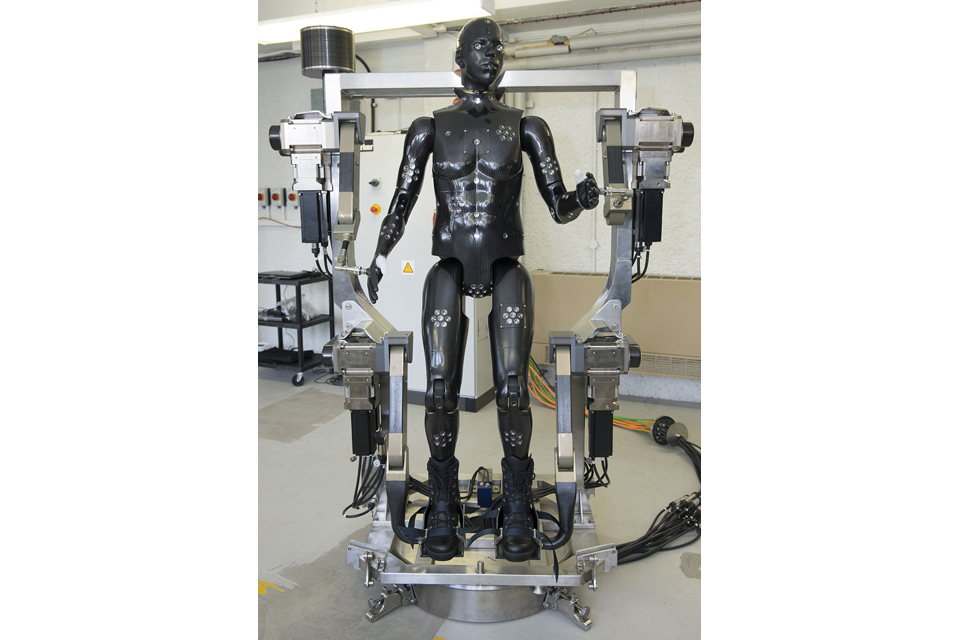
MOD's state-of-art robot man

10 avr. 2014  defenceheadquarters


The "Porton Man" uses state of the art technology and is able to walk, march, run, sit, kneel and even lift its arms as if to sight a weapon just like an infantry soldier.

It means new equipment such as chemical and biological suits can be thoroughly tested in a realistic but secure environment.

Partager cet article
Repost0
7 avril 2014 1 07 /04 /avril /2014 11:50
Perceptual Robotics Laboratory

Perceptual Robotics Laboratory


Paris, le 7 avril 2014 Sagem (Safran)


Sagem (Safran) a signé avec le laboratoire Percro (Perceptual Robotics Laboratory) de l’école supérieure Sainte-Anne de Pise (Italie) un accord de coopération portant sur le développement des technologies de l’exosquelette.

Un exosquelette est une structure électromécanique autonome externe à l’organisme permettant de démultiplier les capacités physiques de l’être humain, pour le port de charges, la mobilité, et la précision. Le concept d’exosquelette bénéficie aujourd’hui des nouvelles ruptures technologiques, dans les domaines du traitement numérique, des senseurs miniatures et du contrôle.

Au titre de cette coopération, Sagem travaillera sur l’évaluation physiologique et biomécanique et l’école supérieure Sainte-Anne de Pise sur le contrôle, la mécanique appliquée et la mécatronique. Ce partenariat débouchera sur le développement et la fabrication de prototypes pour essais d’ici à 2017.

Ces développements pourront profiter de l’expertise reconnue de Sagem dans la gestion autonome de l’énergie et les technologies de contrôle et de stabilisation de plates-formes.

Le projet s’appuiera à la fois sur des financements européens du programme de recherche et d’innovation Horizon 2020 (1)> et des investissements financés par Safran.

Les technologies d’exosquelette offrent des perspectives considérables dans les secteurs civils et les forces armées, telles que la construction ou la conduite des premiers secours lors de catastrophes naturelles. Les exo prothèses se présentent comme des solutions améliorant l’autonomie des personnes handicapées ou à mobilité réduite, notamment les seniors dans leur quotidien. Ils ouvrent aussi des perspectives pour la robotique collaborative en industrie, ainsi qu’en logistique (augmentation des capacités de manutention, sécurité, lutte contre les troubles musculo-squelettiques, etc.).

Les projets européens associés à ces technologies sont pour Safran, à travers sa filiale Sagem, une opportunité nouvelle de coopération avec l’Italie en matière de recherche et de développement. Faisant un large appel à des technologies innovantes, cette opportunité s’inscrit pleinement dans la stratégie de Safran de s’engager pleinement dans des coopérations européennes (A400M, NH90, etc,) susceptibles à leur tour d’associer des PME innovantes.

(1) Horizon 2020 est le programme de recherche et d’innovation de l’Union européenne. Il recentre ses financements sur trois priorités : l’excellence scientifique, la primauté industrielle, les défis sociétaux. Il est doté de 79 milliards d’euros (en euros courants, Euratom compris), pour la période de 2014-2020. Entrée en vigueur : 1er janvier 2014.

****

Le laboratoire PERCO Perceptual Robotics Laboratory est l’un des centres les plus avancé dans le domaine de la robotique, de l’intelligence artificielle et de la réalité virtuelle. Fondé en 1994 par Massimo Bergamasco, professeur de mécanique appliquée de l’Université de Saint Anne de Pise. Le laboratoire a deux implantations, l’une à Pise, l’autre à Polo Sant’Anna Valdera de Pontedera.

Sagem, société de haute technologie de Safran, est un leader mondial de solutions et de services en optronique, avionique, électronique et logiciels critiques, pour les marchés civils et de défense. N°1 européen et n°3 mondial des systèmes de navigation inertielle pour les applications aéronautiques, marines et terrestres, Sagem est également n°1 mondial des commandes de vol pour hélicoptères et n°1 européen des systèmes optroniques et des systèmes de drones tactiques. Présents sur tous les continents via le réseau international du groupe Safran, Sagem et ses filiales emploient 7 500 personnes en Europe, en Asie du Sud-est et Amérique du Nord. Sagem est le nom commercial de la société Sagem Défense Sécurité.
Pour plus d’informations : www.sagem-ds.com

Partager cet article
Repost0
5 avril 2014 6 05 /04 /avril /2014 14:50
Robot man to test protective equipment

'Porton Man' mannequin at the Defence Science and Technology Laboratory in Porton Down [Picture: Crown copyright]


5 April 2014 Ministry of Defence


MOD has invested £1.1 million in a robotic mannequin that will test protective suits and equipment for the UK armed forces.


MOD’s newest recruit is named ‘Porton Man’ after the home of the Defence Science and Technology Laboratory (Dstl), at Porton Down in Wiltshire. Built using advanced lightweight materials developed for Formula One racing cars, he is able to walk, march, run, sit, kneel and can even lift his arms to sight a weapon like an infantry soldier.

More than a hundred sensors all over the robot’s body record data during tests, enabling scientists to carry out real-time analysis on equipment such as chemical and biological suits in a realistic but secure environment.

Jez Gibson-Harris is the Chief Executive Officer of i-bodi Technology in Buckinghamshire, the company that designed and built the mannequin. He said:

Our brief was to produce a lightweight robotic mannequin that had a wide range of movement and was easy to handle. Of course there were a number of challenges associated with this and one way we looked to tackle these challenges was through the use of Formula One technology.

Using the same concepts as those used in racing cars, we were able to produce very light but highly durable carbon composite body parts for the mannequin.

'Porton Man' mannequin
More than a hundred sensors all over 'Porton Man' enable scientists to carry out real-time analysis [Picture: Crown copyright]

Mannequins have been used by Dstl in the past, but this animatronic version is unique to the UK. Dstl is also the only laboratory in the world that can use chemical warfare agents to assess the effectiveness of complete clothing systems such as the chemical, biological and radiological suits used by UK armed forces.

The Minister for Defence Equipment, Support and Technology, Philip Dunne, said:

This technology, designed by a British company, is enabling the UK to lead the way in this important testing. Increased investment in science and technology by MOD is not only enabling battle-winning and life-saving equipment to be developed, but also helping innovative companies like i-bodi Technology to develop cutting-edge capability.

Partager cet article
Repost0
4 avril 2014 5 04 /04 /avril /2014 11:20
SAFFiR photo U.S. Naval Research Laboratory

SAFFiR photo U.S. Naval Research Laboratory


03/04/2014 LeMarin.fr


Les feux de navires sont toujours extrêmement redoutés des marins. L'US Navy va tester l'été prochain, en situation réelle, des robots pompiers à bord d'un navire amphibie désaffecté, l'ex-Shadwell, amarré à Mobile Bay, en Alabama.


Deux designs seront mis à l'épreuve. Tous deux ont l'aspect d'humanoïdes. L'un mesure 1,50 mètre de haut, l'autre, plus évolué, est un peu plus grand. Ils ont été mis au point dans le cadre d'un programme baptisé Shipboard Autonomous Firefighting Robot (Saffir). Sous l'égide du Naval Research Laboratory, celui-ci mobilise des chercheurs de l'université de Californie à Los Angeles (UCLA), de l'université de Pennsylvanie et du Virginia Tech.


Ces robots pompiers utiliseront les mêmes équipements que leurs homologues humains et seront envoyés sur les feux les plus dangereux et les plus difficiles d'accès. Ils devront exécuter un certain nombre de tâches telles que tourner une valve, prendre des tuyaux d'incendie, les dérouler et mettre en œuvre une lance à incendie.


Les robots sont aussi conçus pour mémoriser le plan d'un navire, se déplacer de manière autonome à l'intérieur de celui-ci et agir en interaction avec les humains. Des capteurs leur permettent de voir à travers une fumée épaisse et de localiser des survivants. Ils disposent de batteries qui leur donnent une autonomie de 30 minutes en situation de lutte contre l'incendie.


Ces robots devraient être capables de supporter des chaleurs intenses plus longtemps que les humains. Ils pourront entreprendre des tâches dangereuses dans des zones où les hommes ne seraient pas capables d'aller. L'objectif est de les faire intervenir dans des environnements où la température atteint 500°C.


Mettre au point un robot de forme humaine capable de travailler sur une plate-forme soumise au roulis et au tangage constitue en soi un défi. Selon leurs concepteurs, les robots Saffir pourront rester debout même dans les mers les plus dures.


Cette technologie des robots pompiers doit permettre à l'US Navy de combattre plus efficacement les feux de navires et de réduire les risques humains.

Partager cet article
Repost0
26 mars 2014 3 26 /03 /mars /2014 12:20
Robotic Mule Gets a Throwing Arm


March 17th, 2014 by Bryant Jordan defensetech.org


Big Dog, the four-legged Boston Dynamics’ robot that until now looked more like a headless horse, finally has something resembling a head.

The company developing the robo-beast with the Army Research Laboratory funding calls in an arm, though, and in a recent video you can see it grabbing, lifting and hurling 35-lb cinder blocks to the side and rear.

“The goal is to use the strength of the legs and torso to help power motions of the arm,” a company official said. “This sort of dynamic, whole-body approach to manipulation is used routinely by human athletes and will enhance the performance of advanced robots.”

Big Dog funding originally came from DARPA, the Defense Advanced Research Projects Agency, but was subsequently picked up by the ARL’s Robotics Collaborative Technology Alliance. The objective is to field a fully autonomous robotic mule – something with “animal-like mobility,” says Boston Dynamics – that can operate in terrain too rough for vehicles.

It’s easy to see the advantage of having a robot mule able to clear its own path. In the video demonstration Big Dog’s best cinderblock throw was about 17 feet.

To date Big Dog still requires a human operator commanding it via wireless radio, according to the company. Its own onboard control system operates the legs and provides stability, so that even without command assistance it can handle rough terrain and react quickly to balance itself and stay upright if bumped, as shown in this video from 2013, when Marines put it through some paces as a pack robot.

But future versions will use computer vision, GPS, and light detection and ranging technology for accurately gauging distance to provide more autonomy. This will enable the robot to travel to pre-programmed locations without additional human input.

Ultimately, the Army wants a number of military unmanned ground vehicle systems of various sizes and abilities that can operate largely or entirely autonomously.

In a 2011 report, the alliance said the future of unmanned systems rests with the machines being able to function with intelligence-based technologies enabling them to team with combat troops.

“To act as teammates,” the report said, “robotic systems will need to reason about their missions, move through the world in a tactically correct way, observe salient events … communicate efficiently with soldiers and other autonomous systems, and effectively perform a variety of mission tasks.”

Partager cet article
Repost0
20 mars 2014 4 20 /03 /mars /2014 17:55
Robots de combat et morale : anticiper sur la responsabilité


20.03.2014 CESA


La technique est désormais omniprésente sur les théâtres d’opérations comme elle l’est dans le quotidien de chacun. Un premier constat essentiel s’impose : la course en avant de la technique, qu’elle soit considérée comme positive ou non, est irréversible. La question de savoir si les outils à notre disposition sont moraux ou immoraux est vaine ; en revanche, il est plus pertinent de s’interroger sur les conséquences à long terme de l’évolution et de l’emploi des techniques.


Retrouvez l’intégralité de cet article du Capitaine Emmanuel Goffi, extrait du dernier numéro de Penser les ailes françaises au format PDF

Partager cet article
Repost0

Présentation

  • : RP Defense
  • : Web review defence industry - Revue du web industrie de défense - company information - news in France, Europe and elsewhere ...
  • Contact

Recherche

Articles Récents

Categories