Overblog Tous les blogs Top blogs Entreprises & Marques Tous les blogs Entreprises & Marques
Suivre ce blog Administration + Créer mon blog
MENU
7 mai 2013 2 07 /05 /mai /2013 12:55
credits DGA Com

credits DGA Com

01 mai 2013 Par Elodie Vallerey - Usinenouvelle.com


Pour le PDG de Dassault Aviation, la possible organisation d’élections générales anticipées en Inde ne constitue pas une menace pour l’avancement des négociations exclusives entre l’avionneur français et le gouvernement de New Delhi.

Dans sa course de fond pour convaincre l’Inde d’acheter 126 exemplaires de son avion de combat omnirôle Rafale, Dassault Aviation entre dans une phase cruciale. Celle de l’endurance longue, comme l’appellent les marathoniens. Les négociations, même exclusives entre New Delhi et l’avionneur de Saint-Cloud, prennent depuis quelques semaines un goût plus âpre.

De l’aveu d’Eric Trappier, le PDG de Dassault Aviation, les discussions sont récemment devenues plus lourdes entre Paris et New Delhi. Le nœud du problème ? L’implementation en Inde de l’assemblage du chasseur.

Une vingtaine de salariés de Dassault mobilisés en Inde


On le sait, le groupe aéronautique public Hindustan Aeronautics Ltd (HAL) exige l’assemblage sur le sol indien de 108 appareils sur les 126 prévus par le deal. Les indispensables transferts de technologie entre Dassault et l’industriel local sont encore en cours de négociation.

Et, avec eux, la question du partage des responsabilités concernant les Rafale assemblés par HAL. Dassault Aviation n’entend pas assumer la responsabilité de ces appareils, alors que l’indien exige pour sa part des garanties. Après une entente sur le transfert de technologies, ce point constitue aujourd’hui le tropisme des discussions franco-indiennes.

Pour parvenir à signer ce contrat historique, Dassault Aviation est en ordre de bataille. Vingt à trente salariés opérationnels de l’avionneur sont mobilisés en Inde, multipliant les allers et retours entre Paris et New Delhi, jouant les émissaires auprès des commissions concernées, négociant chaque détail avec HAL.

En marge des festivités organisées par Dassault pour le cinquantenaire de sa famille de jets d'affaires Falcon, Eric Trappier l’a assuré, des élections générales anticipées ne changeraient pas la donne à ce stade des négociations. Côté indien, les médias et commentateurs ne cessent pourtant de rappeler que si elles sont avancées à novembre prochain au lieu du printemps 2014, les négociations avec Dassault pourraient être encore prolongées. Sans parler d'une remise en cause pure et simple de l'appel d'offres remporté par l'industriel français en cas de victoire d'une nouvelle majorité politique.

Arrivé deuxième lors de la compétition MRCA pour l'équipement de l'armée de l'air indienne, le chasseur multirôle Eurofighter Typhoon du consortium BAE-EADS-Alenia reste en embuscade en cas de faux-pas de son concurrent français.

La signature du contrat avec l'Inde est devenue capitale pour Dassault Aviation, qui peine à écouler son chasseur à l'export. Et même en France, les réductions successives des budgets militaires imposent une stagnation des commandes de Rafale. Dans son Livre blanc sur la défense et la sécurité nationale dévoilé le 29 avril, l'exécutif évoque "225 avions de combat (air et marine)" dans son modèle d'armée, suggérant que le ministère de la Défense ne débloquera pas de crédits pour aller au-delà des 180 Rafale déjà commandés à Dassault.

Partager cet article
Repost0
25 avril 2013 4 25 /04 /avril /2013 07:40
Russia ready to negotiate with India on MiG-35 fighters


April 23, 2013, zeenews.india.com


New Delhi: Russia is keen that India buys its MiG-35 fighter aircraft, a top Russian official said.


The Russian Aircraft Corporation MiG (RAC MiG) has proposed to India to consider the possibility of concluding a contract on the supply of the MiG-35 multipurpose fighter jet, RAC MiG Director General Sergei Korotkov told Itar-Tass in an interview.


"Despite the fact that we lost the tender for the supply of 126 multipurpose fighters to the Indian Air Force, the RAC MiG fulfilled all the requirements set the tender committee," Korotkov said. "The aircraft has demonstrated good results, sometimes even exceeding expectations."


According to him, the corporation hopes that "India will consider the possibility of concluding a contract on the supply of the MiG-35 fighters."


"And we will have the opportunity to implement it," he said. "Within this bundle of knowledge that India received during this tender, I would like the MiG-35 issue to be continued against the background of our common history and 50 years of partnership."


According to preliminary information, the winner of the tender for the supply of fighter aircraft to the Indian Air Force was the French Dassault Rafale. However, neither party has announced the official timeframe of the contract conclusion.


"This year the next batch of four aircraft will be delivered," said the head of the MiG Aircraft Corporation.


He also took part in the celebrations to mark the 50th anniversary of the start of the Soviet MiG-21 fighters' deliveries to the Indian Air Force.


The agreement on the supply of the MiG-21 planes to India was signed in 1962, and the deliveries began a year later. In 1967, the Indian company Hindustan Aeronautics Limited (HAL) handed over to the Indian Air Force the first MiG-21 fighter that was built here under the USSR license.

Partager cet article
Repost0
25 avril 2013 4 25 /04 /avril /2013 07:40
Russia to train Indian fighter pilots


April 23, 2013 Indo-Asian News Service - ndtv.com


New Delhi: Russia will train Indian fighter pilots for carrier-based operations, a top Russian official said.


The Russian Aircraft Corporation MiG (RAC MiG) has signed a contract with India's defence ministry on the training of Indian pilots on operating carrier-based aircraft, RAC MiG Director General Sergei Korotkov told Itar-Tass in an interview.


"On April 20, the contract was signed between the ministry of defence and the RAC MiG, under which we will train Indian pilots on the MiG-29K/KUB planes," said Korotkov.


"The training comprises two stages. The first will start in Russia two and a half months before the departure of the Vikramaditya aircraft carrier (former Russian cruiser Admiral Gorshkov) that our country is to hand over to the Indian Navy this year."


According to him, the continuation of the training, "which meets all the modern requirements" will be held in India.


"In addition, the RAC MiG provides assistance to the construction in India of a range for the training of pilots of carrier-based aircraft," Korotkov added.


"The training course is (for) two and a half months."


Russia supplied to India 16 MiG-29K/KUB planes under the main contract and four under a second contract.


"This year the next batch of four aircraft will be delivered," said the head of the MiG Aircraft Corporation.


He also took part in the celebrations to mark the 50th anniversary of the start of the Soviet MiG-21 fighters' deliveries to the Indian Air Force.


The agreement on the supply of the MiG-21 planes to India was signed in 1962, and the deliveries began a year later. In 1967, the Indian company Hindustan Aeronautics Limited (HAL) handed over to the Indian Air Force the first MiG-21 fighter that was built here under the USSR license.

Partager cet article
Repost0
19 avril 2013 5 19 /04 /avril /2013 10:50
Forum "L’industrie européenne d’aviation de combat menacée"

19.04.2013 Aerobuzz.fr

L’Académie de l’Air et de l’Espace, observant, au travers des nombreux exemples récents, qu’aucun conflit ne peut désormais plus se passer d’une aviation de combat performante, considère que l’Europe court le risque de perdre l’avance et l’indépendance de sa puissance aérienne alors que l’industrie d’aviation de combat est le moteur de la haute technologie et des emplois de haut niveau.

Comment faire pour éviter cette mort annoncée face à une concurrence internationale de plus en plus vive ? Comment protéger la base industrielle solide qui existe encore aujourd’hui mais qui nécessite d’être entretenue par des projets concrets de démonstrateurs et de développements européens ?

Si l’Europe souhaite conserver son indépendance stratégique dans les systèmes aériens de Défense et ainsi conserver son rang dans le monde multipolaire de demain, des décisions importantes doivent être prises et financées rapidement.

Ce forum, organisé conjointement par l’AAE et le CEAS, a pour but de faire le point de la question et, après les débats qui se seront tenus, de servir de base de référence pour ces décisions.

Inscription
  • Jeudi 16 mai 2013 de 9h à 18h
  • Ecole Militaire – Amphithéâtre Foch - 1 Place Joffre, 75007 Paris, France
  • Programme
  • Tarif normal = 650 €
  • Etudiant, retraité AAE = 100 €
  • Formulaire d’inscription
Partager cet article
Repost0
17 avril 2013 3 17 /04 /avril /2013 23:26
Partager cet article
Repost0
18 novembre 2012 7 18 /11 /novembre /2012 12:45

Sukhoi T-50 (PAK-FA) source Ria Novisti


November 15, 2012 Andrei Kislyakov, specially for RIR - indrus.in


Modern Russo-Indian military and technical cooperation is focussed on research-intensive areas like aviation and missile manufacturing.


The hallmark of cooperation between Russia and India in the aviation sector is the joint development and manufacturing programme of fifth generation fighter aircraft (FGFA) for the Indian Air Force. According to the Centre for Analysis of World Arms Trade’s latest estimates made in late October, the countries intend to start serial production of the FGFA in 2020. The plane – an Indian version of the Russian T-50 fighter – will be built at the Hindustan Aeronautics Limited (HAL) production facilities. The Russian fifth generation fighter, code-named T-50, should be deployed in the Russian Air Force after 2017.


India’s Chief of the Air Staff, Air Chief Marshal Norman Anil Kumar Browne has stated that it will be a single-seat plane equipped with practically the same components as its Russian twin. Some of the equipment, however, such as onboard computers, will be different, as is the case with the Sukhoi Su-30MKI fighter upgraded for use by India.


According to Russia’s United Aircraft Corporation, the Russian side will supply 117C engines, as well as stealth technology for the Indian planes. India plans to manufacture onboard computers, software, a targeting system, and other onboard systems for its fifth generation fighter.  This is keeping in line with Indian participation in the programme for the India-licensed manufacture of the Russian multi-purpose Sukhoi 30MKI fighters at Indian factories. As a result, Russian-made components in the serial model should make up 60 percent, compared with India’s 40 percent.


Official data estimates the total cost of joint Russo-Indian FGFA development to be $12 billion. According to Marshal Browne, “the project will be carried out on a parity basis. It includes financing for detailed design, a full battery of tests, and the production of prototypes.” He added that they are currently at the preliminary design stage, estimated to cost $295 million.


Meanwhile, the contract for developing the aircraft for India has undergone considerable modifications. The Indian Air Force originally planned to buy 214 fifth generation planes (166 one-seaters and 48 two-seaters). That number has since been reduced to 144. The original number would have been built if the plane had been ready for deployment by 2017, and if Russian factories had been able to deliver the first batch of the machines. However, because of delays with the production of the T-50, India has decided to expand its participation in FGFA development, pushing the starting date for the production of its Indian version back to 2020.


India is in the process of a large-scale upgrade of its Air Force. Around 130 Russian-made multi-purpose Sukhoi Su-30MKI fighters (which should increase to 270) and around 70 MiG-29s form the backbone of the country’s fighter fleet.


Besides modern equipment, the Indian Air Force also has 51 French Mirage 2000 fighters and around 200 MiG-21s, almost half of which will be decommissioned within the next two or three years, while the rest will be upgraded.


India recently held a tender for supplying its Air Force with at least 126 multi-purpose fighters for a total of more than $10 billion. The French Dassault Rafale fighter won the tender.


In addition to modern military aircraft, Russia and India continue close cooperation in missile building, including the BrahMos supersonic cruise missile.


Russia and India are working with BrahMos Aerospace to promote a family of all-purpose supersonic BrahMos land-launched and ship-launched versions of the missile based on the Russian medium-range P-800 Onyx anti-ship missile, which some experts believe is unrivalled in the global marketplace.


According to Russia’s deputy prime minister in charge of the defence industry, Dmitry Rogozin, BrahMos Aerospace is not only a successful Russo-Indian joint venture, but it also represents an optimal model for bilateral cooperation that has tremendous political importance for both countries.


In early October 2012, the missile was test-fired from the Teg frigate built in Russia to India’s order. A contract for the construction of three frigates of this type was signed in 2006. India said the test was successful, with the cruise missile hitting its target at a distance of 290km.


One thousand land-launched and ship-launched versions of the missile are scheduled for production by 2016, with half of this number intended for sale to third countries.


The joint venture BrahMos Aerospace is working overtime to create the hypersonic BrahMos-2 missile. With a speed of more than five times the speed of sound, it will be practically impossible to intercept.


First Deputy General Director of Russia’s NPO Mashinostroenia Aleksandr Dergachev announced in mid-October that air tests for the BrahMos-2 would begin next year.


During Dmitry Rogozin’s visit to India in mid-October, BrahMos Aerospace CEO Dr Sivathanu Pillai presented the Russian delegation with a strategic plan for the joint venture development through 2050, which includes the design and implementation of innovation technologies for the BrahMos missile family, allowing the company to remain a global market leader in this area. Dr Pillai pointed out the importance of deploying the BrahMos missiles in the Russian Navy, as well as the need to develop new systems as soon as possible to maintain a technological edge over other countries

Partager cet article
Repost0
25 juin 2012 1 25 /06 /juin /2012 16:45
South Korean Air Force could delay F-X Fighter programme


25 June 2012 airforce-technology.com


The selection of winner in the Republic of Korea Air Force's (ROKAF) multi-billion dollar F-X Fighter programme could be postponed at any time if in the national interest, the country's arms procurement agency's head has revealed.


Defense Acquisition Program Administration (DAPA) commissioner, Noh Dae-Rae, said: ''Our plan to make a decision by the end of October is not a deadline, but a target."


DAPA has already received proposals from three aircraft manufacturers, which included US companies such as Boeing, Lockheed Martin and European EADS Consortium, for the KRW8 tn ($6.9bn) fighter jet contract on 18 June.


Boeing had proposed F-15 Silent Eagle, while Lockheed and Eurofighter offered F-35 Lightning II Joint Strike Fighter (JSF) and the Typhoon, respectively, for the competition.


In accordance with the original plans, the test flights were scheduled for September, followed by announcement of the winner in October 2012; however, the bidding was cancelled by DAPA, citing errors in the relevant documents.


DAPA had set a new deadline of 5 July 2012 for the submission of bids.


The process ran into controversy after Lockheed refused real test flights by ROKAF's pilots, to assess the performance of aircraft and rather stressed for evaluation by using simulators, saying the fighter is still being developed.


The ROKAF is planning to acquire a total of 60 advanced fighter jets as part of the contract, with aim for deployment from 2016.

Partager cet article
Repost0
22 mars 2012 4 22 /03 /mars /2012 13:41

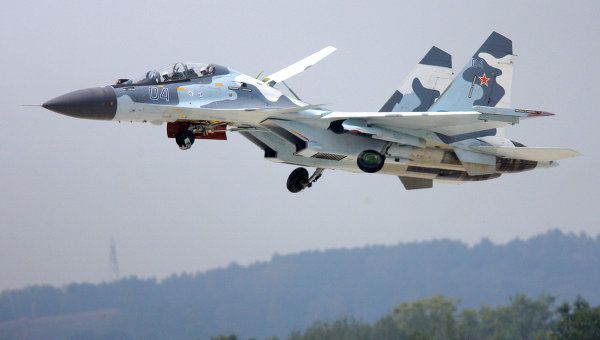
Su-30SM-Fighter-source-Ria-Novisti.jpg


MOSCOW, March 22 (RIA Novosti)


Russia's Defense Ministry has signed an order with aircraft-maker Irkut for 30 Su-30SM multirole fighter aircraft, a military spokesman said on Thursday.


"According to the contract, the company will deliver 30 of these aircraft to the Russian Defense Ministry by 2015," he said.


The value of the deal was not disclosed.


The Su-30SM is a two-seat derivative of the earlier Su-27UB and the MKI variant supplied to India, and is capable of air-to-air and air-to-ground missions with a wide variety of precision-guided munitions. The aircraft features thrust-vectoring engines to enhance manueverability.


In August 2011, Irkut said it would deliver 40 Su-30SM aircraft to the Defense Ministry including 28 for the Air Force and 12 for the Russian Navy, replacing Su-24s in the strike-attack role, according to lenta.ru

Partager cet article
Repost0
19 mars 2012 1 19 /03 /mars /2012 08:45

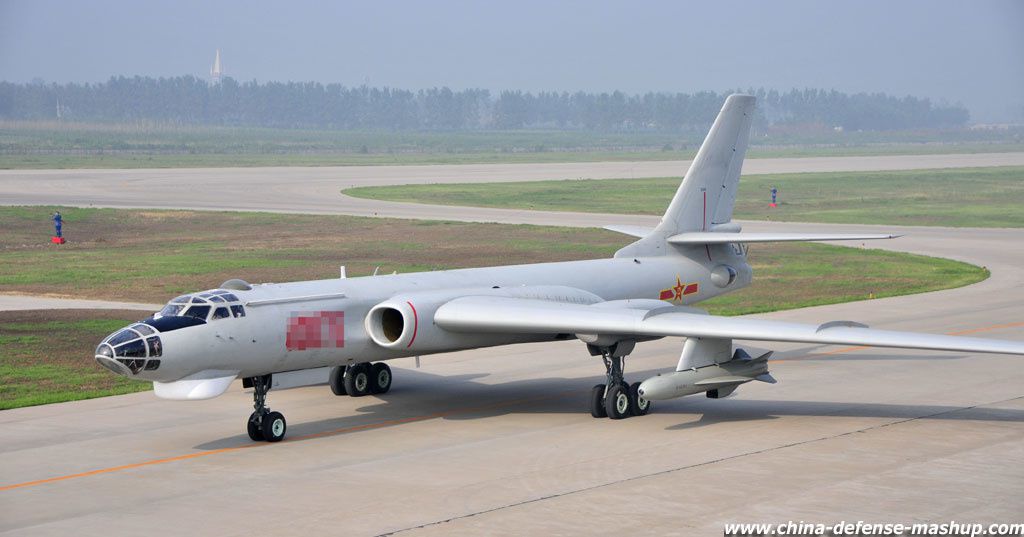
H-6M-Bomber.jpg

Chinese Air Force H-6M Bomber


2012-03-17 (China Military News cited from aviationweek.com and by Richard D. Fisher, Jr.)


As China starts to put together a modern, integrated air force, which could reach 1,000 fighters by 2020, it is developing the components of a future force of stealthier combat aircraft, new bombers and unmanned, hypersonic and possibly space-based combat platforms. These could emerge as soon as the early 2020s.


This dual track was illustrated in late 2010 by two events. One was the People’s Liberation Army Air Force’s (Plaaf) first foreign demonstration of its modern capabilities: a combined-force mission of Xian Aircraft Co. H-6 bombers supported by Chengdu Aircraft Co. J-10 multi-role fighters, KJ-2000 airborne early warning and control aircraft. and H-6U tankers for an exercise in Kazakhstan. The other was the unveiling four months later of the Chengdu stealth fighter prototype, widely known as the J-20, followed in early 2011 by its first official flight.


The modernization drive relies on a comprehensive aerospace technology development program that started in the early 1990s. The first underlying doctrine was guided by “access denial” strategies that gelled in the late 1990s and focused on conflict over Taiwan. They were followed after 2005 by “New Historic Mission” strategies, propelling the PLA to dominate at greater distances and to build new, farther-reaching expeditionary capabilities.


To speed development of new weapons, the PLA has encouraged defense- sector competition since major logistics reforms in 1998, at the price of subsidizing greater redundancy. Though less prevalent in aerospace than in other defense fields, there is significant redundancy in combat aircraft, unmanned aircraft, electronics and weapons development and production.


Chengdu and the Shenyang Aircraft Co., China’s main fighter concerns, manage both stealthy and conventional fighter programs. China purchased 176 Sukhoi Su-27SK/UBK/Su-30MKK/MK2 twin-engine fighters, and co-produced over 100 more as the J-11 under license from Russia. In 2008, Shenyang started delivering the unlicensed J-11B with indigenous engines, radar and weapons, and today it is China’s most capable domestic production fighter. More than 120 J-11B and twin-seat J-11BSs serve in the air force, and are expected to be upgraded with better engines and an active, electronically scanned array (AESA) radar as they become available. A dedicated attack version of the J-11BS dubbed the “J-16” may also include these upgrades. Though it lost to Chengdu for the heavy stealth-fighter program, there is a persistent buzz that Shenyang is self-funding a medium-weight stealth warplane, perhaps called “J-60.”


Shenyang’s J-15, a near-facsimile of the Sukhoi Su-33 carrier-based fighter, is leading a new era of growth for the PLA navy’s air force. Having undergone land-based testing over the last year with the short-takeoff but arrested-recovery (Stobar) system to be used by China’s first aircraft carrier, the refurbished Russian Varyag, the J-15 could begin carrier-based testing later this year and when fully developed could prove as potent as the Boeing F/A-18E/F. An initial carrier air wing will include Changhe Z-8 airborne early warning and control helicopters with airborne early warning radar, and perhaps Russian Kamov Ka-32 anti-submarine and Ka-31 AEW helicopters.


J-11B-Fighter.jpg

J-11B Fighter


A twin-turboprop E-2 class airborne early warning/antisubmarine warfare (AEW/ASW) aircraft is under development, perhaps for conventional-takeoff-and-landing (CTOL) on two nuclear carriers that may follow two more non-nuclear Stobar carriers. In November 2011, images emerged of a long-awaited ASW version of the Shaanxi Y-8 “New High” medium transport, which will finally give the navy an oceanic ASW and maritime surveillance platform.


Since 2003, more than 200 of Chengdu’s “low end” canard-configuration single-engine J-10A and twin-seat J-10S fighters have entered service—forming the low end of a high-low mix with the larger J-11B. Production may soon switch to the upgraded J-10B equipped with an AESA radar, infrared search and track sensor, radar cross-section reduction measures and improved electronic warfare system. One J-10B prototype has been tested with a version of the Shenyang-Liming WS-10A turbofan. This fighter may be the basis for the “FC-20” version expected to be purchased by Pakistan


Just before the service’s 60th anniversary in October 2009, a Chinese air force general stated that their next-generation fighter would enter service between 2017 and 2019, though a late- 2010 report of PLA interest in purchasing the Russian AL-41 turbofan for this fighter might accelerate that timeline. Since its emergence on the Internet in late 2010, Chengdu’s stealthy twin-engine canard J-20 has been photographed and videoed extensively undergoing testing at Chengdu. Expected to be fitted with 15-ton-class thrust-vectored turbofans in its production form, this aircraft is expected to be capable of supercruise and extreme post-stall maneuvering, and will be equipped with an AESA radar and distributed infrared warning sensors.


In 2005 a Chinese official said that an “F-35”-class program was being considered by Chengdu. China also has long been interested in short-takeoff-and-vertical-landing (Stovl) fighters, and long-standing Russian and Chinese reports point to a possible Chengdu program based on technology from the Yakovlev Yak-141, a supersonic Stovl prototype tested in the late 1980s.


A potential development of medium-weight stealth fighters by 2020 would cap an expected decade of more intensive export offerings. While the export effort is led by Chengdu’s FC-1/JF-17 cooperative program with Pakistan (which could acquire up to 300 fighters) and the fighter could yet be purchased by the air force, greater international appeal may follow its being equipped with a Chinese engine—a likely near-term prospect.


But China is already laying the foundation for sales of the FC-1, and perhaps the J-10B and J-11B, by aggressively marketing low-cost trainers like the Hongdu K-8 and the supersonic L-15, with generous financing credits and production technology transfers. This “food chain” strategy has worked in Pakistan, and could be repeated in Egypt and as far away as Latin America. Venezuela and Bolivia are customers for light attack versions of the K-8 and Venezuelan officials reportedly visited the Chengdu factory in late 2011.


The Chinese air force and navy have taken delivery of about 170 of the twin-engine Xian JH-7/JH-7A strike fighters, with indications that Xian may be developing a reduced-signature variant. Approaching the longevity and mission evolution of the Boeing B-52, Xian’s latest version H-6K bomber entered low-rate production in 2010, equipped with more powerful and efficient Progress D-30KP turbofans and a redesigned nose with modern radar and optics. The bomber is armed with more than six land-attack cruise missiles. Little is known about Xian’s follow-on bomber program, except that it could emerge this decade. In late 2009 an “official” model of a large, stealthy delta-wing bomber was revealed, though its provenance is unknown. In early 2010 Chinese academics from the prestigious Institute of Mechanics, a leading hypersonics research center, produced a paper on an apparent large aircraft with a Mach 3 cruise speed, with illustrations and wind tunnel models indicating it could be an optionally manned platform.


This year or next, Xian is expected to unveil a new 50-60-ton payload Y-20 four-engine strategic transport. While the Comac C919 twin-turbofan regional airliner is an established, well-known program, Chinese officials are far more reticent about a Boeing 767-sized widebody four-turbofan airliner program at Xian. Though its business case may be unclear, this platform could serve multiple military missions.


To power its aerospace transformation, China has purchased about 1,000 Russian Saturn AL-31 turbofans for its Su-27/J-11 and J-10A fleets, which are receiving Chinese-developed service-life extensions. But after 25 years of intensive investments, new Chinese fighter and large high-bypass turbofan engines are emerging. In 2008 the Shenyang-Liming WS-10A was good enough to enter service with the J-11B, perhaps slightly below thrust goals at 12.7 tons, but it now powers the J-11BS and prototypes of the J-15 and J-10B. Shenyang-Liming may also be working toward a 15-ton variant of this engine. The Gas Turbine Research Institute has put a new 8-9.5-ton-thrust turbofan on one FC-1 and has advanced the development of a 15-ton engine for J-20. Shenyang-Liming, Xian and the Avic Commercial Aircraft Engine Co. have 13+-ton-thrust high-bypass turbofan engine programs to power military and commercial transports, and perhaps a new bomber.


Prototypes of the J-10B use China’s first fighter-sized AESA radar by the Nanjing Research Institute of Engineering Technology (NRIET) and future versions of the J-11 and J-15 fighters are expected to have AESA. NRIET’s mechanically scanned array radar on the J-10A and FC-1 can manage two simultaneous air-to-air missile (AAM) engagements at over 100 km (62 mi.). The Luoyang PL-12 actively guided AAM may have a range of 100 km, while the helmet-sighted PL-8 and PL-9 short-range AAMs may be replaced with a helmet-display sighted PL-10. Two companies produce families of satellite and laser-guided munitions, down to 50-kg (110-lb.) weapons for unmanned combat air vehicles.


China has developed a plethora of AEW platforms. The Plaaf itself uses the “high end” KJ-2000, based on the Beriev A-50, and the smaller KJ-2000 based on the Xian Y-8 turboprop transport, with a “balance beam” AESA antenna like that of the Saab Erieye. China has also exported the Y-8-based ZDK-03 with a “saucer” radar array to Pakistan. These will be joined soon by the Chengdu/Guizhou Soar Dragon box-wing strategic UAV.


Leadership for space warfare is being sought by the air force, and its leaders clearly enunciated new strategies calling for space warfare capabilities in late 2009. But today China’s manned and unmanned space program is controlled by the General Armaments Department of the Central Military Commission. The air force’s case, however, could be advanced by Chengdu’s small Shenlong spaceplane—which may have undertaken initial sub-orbital tests by late 2010—and could be developed into an X-37B-like craft. In 2006, engineers from the China Academy of Space Launch Technology outlined plans to build a 100-ton+ space shuttle-like spaceplane, perhaps by 2020, or a more efficient sub-orbital hypersonic vehicle that would launch attached payloads. “Flying” platforms could fall under air force control, while “dual use” missions of PLA-controlled satellites and manned space platforms could remain under GAD control.


But a clash could also occur over the future ballistic missile defense mission, which Asian military sources suggest could be realized by the mid-2020s. The successful warhead interception of January 2010 was likely a GAD program, but the air force’s expected development of very-long-range anti-aircraft missiles with anti-ballistic missile capabilities might also justify its potential claim on mission leadership.

Partager cet article
Repost0
29 février 2012 3 29 /02 /février /2012 13:10
Russia Signs Contract for Navy MiG-29K Fighter


The Russian Defense Ministry has signed a contract with aircraft maker MiG for the delivery of 20 MiG-29K and four MiG-29KUB carrier-based fighter aircraft


MOSCOW, February 29 (RIA Novosti)


The Russian Defense Ministry has signed a contract with aircraft maker MiG for the delivery of 20 MiG-29K and four MiG-29KUB carrier-based fighter aircraft, MiG said on Wednesday.


"Defense Minister Anatoly Serdyukov and MiG General Director Sergei Korotkov have signed the contract for the delivery of MiG-29K and MiG-29KUB carrier-based fighters," MiG said in a statement.


MiG wil deliver the aircraft from 2013-2015. The aircraft will operate from Russia's single serving carrier, the Admiral Kuznetsov, with the Northern Fleet based in Murmansk. The value of the deal has not been disclosed.


"The signature of this contract for delivery of these fighters is a real step in fulfilling our program for rearming the forces. The Naval Air Forces will get a modern combat aircraft as good as any in the world," Serdyukov was quoted as saying by his press service.


The contract will guarantee MiG a steady level of work in the medium term, Korotkov said.


The MiG-29K is a navalized variant of the MiG-29 land-based fighter, and has folding wings, an arrester tail-hook, strengthened airframe and multirole capability. It can be armed with a wide variety of air-to-air and air-to-surface weaponry. So far, the aircraft has only been exported to India for use on a refitted Russian-built carrier which is to be delivered at the end of this year.


The Admiral Kuznetsov currently operates Sukhoi Su-33 naval fighter aircraft.


Russia Signs Contract for Navy MiG-29K Fighter
Partager cet article
Repost0
28 février 2012 2 28 /02 /février /2012 19:30

Su-30MKI--Flanker-H--multirole-fighter-infographie-Ria-Novi.jpg


MOSCOW, February 28 (RIA Novosti)


The crew of a Su-30 fighter that crashed earlier on Tuesday in Russia’s Far East reported an engine fire before the crash, a spokesman for the Main Military Investigative Directorate said.


The Su-30MK2 fighter jet crashed 130 km northeast of Komsomolsk-na-Amure during a post-construction test flight. Both pilots ejected safely, although one of them was hurt on landing.


“While executing acceleration to a maximum speed, the first pilot reported a fire in the right engine,” the spokesman said. “The flight controller immediately ordered the crew to eject.”


“The investigators are taking all necessary steps to establish the cause of the crash,” the official said.


The aircraft belonged to the Komsomolsk-na-Amure factory where Su-30s are manufactured.


The Russian military earlier said that the plane had been built for export.


Su-family fighters constitute the bulk of Russia's arms exports.


Variants of Su-30 Flanker fighters are in service with air forces in several foreign countries, including India, Indonesia, China, Algeria, Vietnam and Venezuela.

Partager cet article
Repost0
28 février 2012 2 28 /02 /février /2012 13:35
Su-30 Fighter Jet Crashes, Crew Ejects Safely

Two crew members ejected safely after their Su-30 fighter jet crashed 130 km northeast of Komsomolsk-na-Amur during a test flight


MOSCOW, February 28 (RIA Novosti)


Two crew members ejected safely after their Su-30 fighter jet crashed 130 km northeast of Komsomolsk-on-Amur during a test flight on Tuesday, according to sources in the regional administration.


"Both crew members ejected safely but one was hurt on landing," a regional administration source said.


The aircraft belonged to the Komsomolsk-on-Amur factory where Su-30s are manufactured.


The crash took place at 10:20 AM Moscow time.


The Su-30, a multirole combat aircraft, is operated by India, China and Russia.

Partager cet article
Repost0
21 juillet 2011 4 21 /07 /juillet /2011 11:40

http://www.flightglobal.com/assets/getAsset.aspx?ItemID=41027 

Photo Vladimir Karnozov


21/07/11 By Vladimir Karnozov SOURCE:Flight International


The Irkutsk Aircraft Plant (IAZ) is assembling two Sukhoi Su-30SM multirole fighters for the Russian air force, Alexey Fedorov, president of the controlling Irkut corporation, said. The pair will be completed and subjected to flight trials by the end of this year.


The new version of the twin-seat Su-30 represents the baseline Su-30MKI with thrust vectoring developed for the Indian air force, but with modifications to meet Russian air force specifications, Fedorov said.


The service is seeking to procure 30 such aircraft, with a contract still being finalised.


"Hopefully, in 2012 we will be able to finalise a contract for 18 Su-30SMs for the Russian air force, with an option for a further 18 for the Russian navy air arm," Fedorov said.


The delivery of the Su-30SM to the Russian armed forces will end a long pause in their acquisition of IAZ-built fighters, after its last Su-30K interceptors and Su-27UB twin-seat operational trainers were handed over in the early 1990s.


It is understood that the decision to procure the Su-30SM was inspired by the successful use of industry-owned Su-30MKI/MKM operational-standard prototypes during Russia's August 2008 conflict with Georgia.

Partager cet article
Repost0
16 juillet 2011 6 16 /07 /juillet /2011 16:35

http://images.defensetech.org/wp-content/uploads/2011/04/J-151.jpg

source defensetech.org


2011-07-16(China Military News cited from the-diplomat.com and written by David Axe)


The People's Liberation Army Navy has finally broken the silence about its new carrier-based jet fighter, the J-15. While outside observers have strongly suspected for several years that China intended to deploy the J-15 – an adaptation of the Russian Su-33 – aboard the PLAN's first aircraft carrier Shi Lang, Chinese officials didn’t confirm it until last week.


Confirmation of the J-15 came with some revealing details about the plane's missions and limitations. It’s clearer than ever that the J-15 will inherit most of the Su-33’s limitations, particularly with regard to payload and range. As a result, Shi Lang could be highly vulnerable to foreign naval forces in combat.


Unnamed ‘Chinese aviation officials’ said that three J-15 prototypes would begin testing this year, and that the last of them would have all the features of the planned operational version, including folding wings to allow more compact storage aboard Shi Lang, a refurbished Soviet vessel that displaces just two-thirds as much as a US flattop.


Shi Langdoesn’t have the steam catapults that US and French carriers use to launch aircraft. Instead, the Chinese ship, like its Russian sister ship Kuznetsov, uses an elevated ramp to help boost planes into the air. Ramp-launch, while less complex than a catapult, doesn’t impart the same amount of energy. That means ramp-launched fighters must be relatively light. The British Harrier, which used a ramp, weighed just 7 tonnes empty. The Su-33 weighs 20 tons empty.


In Russian service, the Su-33 has been restricted to short-range patrols carrying just a few air-to-air missiles. That's the big reason why the Kuznetsov has never had a major impact on the European naval balance.


Shi Langwill be similarly handicapped, more so because the Chinese intend the J-15 to carry the C-602 anti-ship cruise missile. Carrying a single one-tonne C-602, the J-15 will have an operational range of just 250 miles, according to the anonymous industry officials. It’s not clear if the J-15 will be able to carry air-to-air missiles for self-protection, in addition to the C-602.


If the Chinese military operated a large number of effective aerial tankers, the J-15's payload limitation would be more manageable. Even catapult-launched fighters, such as the US F/A-18E/F, can range just 400 miles from their carrier with useful combat load. But aerial refueling can extend that range to more than 1,000 miles. F/A-18s routinely fly missions over Afghanistan from carriers operating in the Indian Ocean.


If Shi Lang is meant to operate in a sea control role, clearing the ocean of enemy vessels, then it could find itself at a disadvantage compared to rival naval forces. The C-602 has a range of around 250 miles. So a Chinese carrier battle group could strike surface targets at a distance of 500 miles.


A US carrier group launching F-18s armed with Harpoon anti-ship missiles could strike from a distance of at least 600 miles. Factor in aerial refueling – and the fact that the Harpoon is light enough for a single F-18 to carry two – and the US advantage increases dramatically. The Su-33 is simply not an ideal fighter for ramp-equipped carriers.


It’s telling that within a few years, the Chinese will be the only country operating Su-33s or its derivatives from carriers. The Russians decided to replace the Su-33 with a version of the much smaller MiG-29 after realizing that the MiG had similar performance, but Kuznetsov could carry many more of them. The Indians, too, are buying a MiG-29 variant to replace their Harriers.


Future Chinese carriers could include a catapult. Indeed, the likelihood that carriers after Shi Lang will be catapult-equipped is sure to increase, once the PLAN sees firsthand how limited its J-15s really are.

Partager cet article
Repost0

Présentation

  • : RP Defense
  • : Web review defence industry - Revue du web industrie de défense - company information - news in France, Europe and elsewhere ...
  • Contact

Recherche

Articles Récents

Categories