Overblog Tous les blogs Top blogs Entreprises & Marques Tous les blogs Entreprises & Marques
Suivre ce blog Administration + Créer mon blog
MENU
5 mars 2015 4 05 /03 /mars /2015 17:30
Thales SEARCHMASTER AESA surveillance radar at IDEX 2015


5 mars 2015 Thales Group


At IDEX 2015, French company Thales is showcasing its latest maritime surveillance 5 in 1 radar called SEARCHMASTER. It is a truly multirole surveillance radar with the ability to meet all the surveillance requirements of five mission types: antisurface warfare, anti-submarine warfare, maritime surveillance, ground surveillance and tactical air support.

Partager cet article
Repost0
21 janvier 2015 3 21 /01 /janvier /2015 08:30
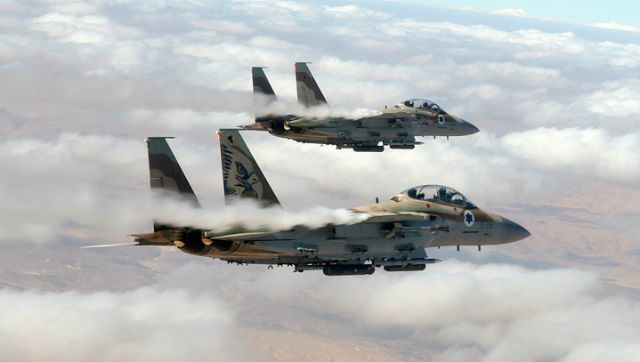
photo Israeli air force

photo Israeli air force


20.01.2015 By Arie Egozi - FG


Tel Aviv - The Israeli air force is upgrading the capabilities of its Boeing F-15I strike aircraft, including the installation of a new radar system. The sensor most likely to be fitted is the Raytheon APG-82(V)1 active electronically scanned array, which was also fitted to the US Air Force's F-15Es in place of the ageing APG-70. The selection of the US-made radar instead of an Israeli-designed option is likely the result of the fact that Israel can purchase the APG-82(V)1 using the Foreign Military Funding it receives annually from the USA.


Read more

Partager cet article
Repost0
21 janvier 2015 3 21 /01 /janvier /2015 08:20
APG-79(V)X radar - photo Raytheon

APG-79(V)X radar - photo Raytheon


19.01.2015 By Stephen Trimble - FG


Washington DC - A new competition has emerged to upgrade the radars for potentially hundreds of the original Boeing F/A-18 Hornet fighters operated by US and foreign militaries.


Northrop Grumman and Raytheon have confirmed plans to offer tailored versions of each company’s active electronically scanned array (AESA) radars for so-called “legacy” F/A-18 Hornets, including A, B, C, D models.


Raytheon recently performed a flight test of the APG-79(V)X radar, a system scaled down from the APG-79 installed on the F/A-18E/F Super Hornet.


“I was sitting in the testbed myself and watching it real time it felt like watching the APG-79 I saw in the fleet,” says Michael “Ponch” Garcia, a Raytheon business development director and former US Navy F/A-18E/F pilot and instructor.


Read more

Partager cet article
Repost0
7 janvier 2015 3 07 /01 /janvier /2015 08:50
Un radar pour éviter les collisions avec les éoliennes


3 janvier 2015 par Aerobuzz.fr


Airbus Defence and Space a développé un nouveau radar pour éviter que les avions n’entrent en collision avec les éoliennes. Le Spexer 500 AC déclenche des signaux et avertit le pilote.


Le nouveau radar Spexer 500 AC (AC = anti-collision) d’Airbus DS a été développé pour éviter que les avions n’entrent en collision avec les éoliennes. Il prévient le pilote des collisions pouvant se produire en localisant à temps les objets volant à proximité d’une éolienne pour ensuite enclencher le balisage lumineux. Ce radar est intégré en exclusivité à l’« airspex », le système de balisage de la société spécialisée dans l’énergie éolienne Enertrag.


Suite de l’article

Partager cet article
Repost0
19 décembre 2014 5 19 /12 /décembre /2014 08:40
L'Ukraine se dotera de radars anti-mortiers US


18.12.2014 par La Voix de la Russie


L'Ukraine envisage d'acheter des radars anti-mortiers à la société américaine Defense Technology Inc, a annoncé mercredi à Kiev le consortium public ukrainien Ukroboronprom.


"Des nouveaux radars anti-mortiers AN/TPQ-49 commandés par le ministère ukrainien de la Défense arriveront au début de 2015. La société publique Ukrinmash, qui fait partie d'Ukroboronprom, a signé un contrat approprié avec la société américaine Defense Technology Inc", a indiqué le consortium dans un communiqué.


Selon Ukroboronprom, les radars anti-mortiers en question sont capables de détecter immédiatement les postes de tir ennemis et ont une portée de 50 m à 10 km.


Ukrinmash a déjà signé des contrats avec le français Thales Group et les sociétés américaines ATN Corp et Barrett Firearms sur la livraison d'armes et équipements militaires modernes.

Partager cet article
Repost0
12 décembre 2014 5 12 /12 /décembre /2014 08:55
GM 200

GM 200


11 décembre 2014, Par Patrick Désavie - Usinenouvelle.com


L’usine Thales de Limours (Essonne) sera chargée du développement et de l’intégration des seize radars que la Direction générale de l’armement vient de commander à Thales Raytheon Systems.


Thales Raytheon Systems a annoncé le 11 décembre avoir reçu commande de la Direction générale de l’armement (DGA) de douze radars fixes Ground Master 400 ainsi que quatre radars mobiles et tactiques Ground Master 200 destinés aux forces armées françaises.


Suite de l’article

Partager cet article
Repost0
11 décembre 2014 4 11 /12 /décembre /2014 17:25
ThalesRaytheonSystems’ Ground Master radars will boost France’s airspace surveillance capability


Massy, France, 11 December 2014 –  ThalesRaytheonSystems


ThalesRaytheonSystems has been awarded a contract by the DGA, the French defense procurement agency, to supply the French armed forces with 12 fixed Ground Master 400 radars and 4 mobile tactical Ground Master 200 radars. In addition to delivery and through-life support of the radars, the contract awarded on 8 December includes installation and civil engineering work for the 12 Ground Master 400 radars.

This contract is part of the SCCOA* air command and control program for which ThalesRaytheonSystems is the main supplier. France has already acquired Ground Master radars for its military bases in Kourou, Nice and Lyon. The radar in Kourou, the first of its kind to enter operational service in France, was inaugurated on 27 November.

Like the other Ground Master radars already integrated within SCCOA, the new radars will be coupled with the NATO ACCS**. They will thus provide airspace monitoring, a high-priority mission under the country's Permanent Security Posture (PSP), and ground-based air defense detection.

Jérôme Bendell, Chief Executive Officer of ThalesRaytheonSystems France, said: “ThalesRaytheonSystems is proud to be contributing with its Ground Master radars to the modernization of France’s air surveillance capability, which is already underway with the delivery of these latest-generation radars for the bases in Kourou, Nice and Lyon.

The Ground Master 400 and Ground Master 200 belong to the family of 3D air defense radars built by Thales. The Ground Master range of fully digital, multi-role air defense radars is dedicated to airspace surveillance and the protection of key assets and expeditionary forces. These systems are specifically designed to deliver high detection performance, high operational availability, excellent mobility and simplified maintenance. They are able to detect a vast array of modern threats such as UAVs from very low to very high altitude. More than 80 Ground Master radars have been sold around the world.


Note to editors

* The SCCOA program is designed to provide airspace surveillance and control and air operations command capability for French forces. It is an incremental program designed to evolve and increase this capability to assure air surveillance, space situational awareness, control of military and government flights, and air operations command and control.

** The Air Command and Control System (ACCS), for which ThalesRaytheonSystems is prime contractor, is designed to adapt to evolving NATO operations, with continued advancements to AirC2 or additional ballistic missile defense capabilities. ACCS will provide the solid command and control foundation needed for future Alliance missions. ACCS is a smart defense system in that it provides all NATO nations with a common basis for training, standard procedures and centralized maintenance, significantly reducing support costs and increasing staffing flexibility.


About ThalesRaytheonSystems

ThalesRaytheonSystems is an international company specializing in air defense systems, air command and control systems, 3D air defense radars, battlefield and counterbattery radars. Since its inception in 2001, ThalesRaytheonSystems has become one of the defense industry’s most successful transatlantic joint ventures. The company employs 1,400 people and is equally owned by Thales and Raytheon.

Partager cet article
Repost0
11 décembre 2014 4 11 /12 /décembre /2014 16:55
La DGA commande des systèmes radars de Défense aérienne


11/12/2014 DGA


La Direction générale de l'armement (DGA) a notifié le 8 décembre 2014 l’acquisition et le soutien initial de douze radars fixes et de quatre radars mobiles à la société ThalesRaytheonSystems.


Ce marché fait partie du programme SCCOA (Système de Commandement et de Conduite des Opérations Aérospatiales) chargé d’assurer le maintien et le renouvellement de la surveillance militaire aérienne et spatiale, du contrôle des vols militaires, du commandement et de la conduite des opérations aériennes. SCCOA est constitué de radars, de systèmes de télécommunication sol-air, de systèmes d’information et de centres de contrôle.


Un des objectifs principaux du programme SCCOA concerne la pérennisation et l’amélioration de la couverture radar au-dessus du territoire métropolitain, tant à haute altitude qu’à basse, voire très basse altitude. A ce titre les douze radars fixes commandés vont remplacer des radars de défense aérienne en voie d’obsolescence. Ils seront tous reliés au système qui établit la situation tactique aérienne au service de la posture permanente de sûreté aérienne au-dessus du territoire métropolitain. Le contrat comprend la fourniture de radars de nouvelle génération (type GM 403) ainsi que les infrastructures associées (bâtiments d’exploitation, énergie, système de communication et sécurisation).


Par ailleurs, la composante radar mobile, dédiée au renforcement ponctuel de la couverture radar sur le territoire national ou le support de forces projetées sur des théâtres d’opérations extérieurs,  est également concernée avec quatre systèmes radar du type GM 200, permettant de débuter le renouvellement des radars actuellement en dotation.


Conçus et fabriqués en France, les radars GM 403 et GM 200 sont des radars de très haute technologie, entièrement numériques, capables de positionner en 3 dimensions les mobiles aériens, y compris ceux de petite taille.

Partager cet article
Repost0
3 décembre 2014 3 03 /12 /décembre /2014 20:55
Radar de nouvelle génération : Ground Master (GM) 400

Radar de nouvelle génération : Ground Master (GM) 400


03/12/2014 Armée de l'air


Jeudi 27 novembre 2014, la base aérienne 367 de Guyane a inauguré un radar de nouvelle génération : le Ground Master (GM) 400.


Premier de sa catégorie à être déployé en France, ce radar fournira une couverture beaucoup plus étendue que son prédécesseur, le Centaure installé sur le site du Centre de contrôle militaire de Kourou depuis 25 années. L’arrivée du GM 400 s’inscrit dans la modernisation générale des moyens concourant à la posture permanente de sureté (PPS) et à la défense aérienne du centre spatial guyanais.


De plus, la rénovation prochaine du centre de contrôle permettra d’élaborer et de transmettre une situation aérienne de très haute qualité au centre national des opérations aériennes (CNOA). Des possibilités offertes par le programme du système de commandement et de conduite des opérations aériennes (SCCOA). En effet, le SCCOA comprend, entre autres, l’ensemble des radars de surveillance et de défense aérienne du territoire, et ne cesse de renouveler et d’accroître progressivement ses capacités depuis vingt ans.

Radar de nouvelle génération : Ground Master (GM) 400

Radar de nouvelle génération : Ground Master (GM) 400

Partager cet article
Repost0
16 novembre 2014 7 16 /11 /novembre /2014 08:20
Electronic Weapons: A New Expeditionary Radar

Airmen prepare to do an inspection on a TPS-75 radar in 2012. The  program will replace the AN/TPS-75 system. (US Air Force)


November 15, 2014: Strategy Page


The U.S. Air Force has ordered four of the new 3DELRR (3 Dimensional Expeditionary Long Range Radar) systems for about $18 million each. These will begin replacing the 32 existing AN/TPS-75s, a 1960s design that, while frequently upgraded, is showing its age. Both of these radars are “expeditionary models” used when the air force must quickly send aircraft overseas to establish a new base. Naturally an airbase needs a good radar system and since the late 1960s the AN/TPS-75 has been used for these quick deployment type missions. The first 3DELRR is expected to be in service before the end of the decade and eventually the air force is seeking to buy 35 of them.


There was a competition between the 3DELRR and an AN/TPS-75 design that was massively updated with the latest technology. The 3DELRR won in part because of its ability to easily integrate with other (especially foreign) radar systems while also delivering higher and more reliable performance. The 3DELRR is easily transportable by air and weighs less than seven tons (control center, antenna, power generator). 3DELRR can be set up quickly (less than two hours) and provide long range (over 440 kilometers) detection of aircraft and incoming missiles at altitudes over 30 kilometers

Partager cet article
Repost0
14 novembre 2014 5 14 /11 /novembre /2014 12:20
Lockheed contracts Trust Automation for additional AN / TPQ-53 automation systems

The AN / TPQ-53 counterfire target acquisition radar of the US Army. Photo: US Army.


13 November 2014 army-technology.com


Trust Automation has been awarded a contract to supply additional motion control systems for the AN / TPQ-53 (Q-53) counterfire target-acquisition radar system.


Awarded by Lockheed Martin, the contract represents the fourth low-rate initial production award for the rugged and advanced vehicle automation system.


The system is designed to automatically level out the vehicle that hosts the radar, and then raise and rotate the counterfire radar.


Trust Automation chief executive officer Ty Safreno said: "Trust Automation has been providing industry-leading power density, accuracy and reliability for the electro-mechanical control systems needed for the next generation of DoD heavy military equipment, including the AN / TPQ-53, since 2008.


"Due to the continued success of the AN / TPQ-53 delivered systems by Trust Automation, a fourth contract has been awarded."


Manufactured by Lockheed, the AN / TPQ-53 is a quick-reaction capability mobile radar system, designed to detect, classify and track in-flight projectiles fired from mortar, artillery and rocket systems, using a 90° or continuous 360° sector search.


With improved operational and physical functionality compared with existing AN / TPQ 36 radars systems, it provides target location of indirect fire systems with sufficient accuracy, enabling more effective detection and counter-battery actions in the battlefield.


Mounted on a 5t truck, the solid-state phased-array radar can be rapidly deployed, automatically levelled and remotely controlled with a laptop computer or from a fully equipped climate-controlled command vehicle.


Previously designated as the EQ-36, the Q-53 radars have been deployed by the US Army during combat operations in Iraq and Afghanistan.


The contract's value and additional details, including the number of systems ordered and delivery schedule, remain undisclosed.

Partager cet article
Repost0
3 novembre 2014 1 03 /11 /novembre /2014 11:55
Sea Fire 500, a new multifunction fixed-array radar


31 oct. 2014  Thales


Sea Fire 500 is a multifunction radar relying on a solid-state four-panel phased-array antenna and smart management of radar resources.
First version of a new family of multifunction and high performance radars designed to meet evolving naval mission profiles and threats.

Partager cet article
Repost0
3 novembre 2014 1 03 /11 /novembre /2014 11:55
Land and sea threats without borders


31.10.2014 Thales
 

As the focus of naval and maritime affairs has shifted from blue-water operations to coastal and littoral zones, there is a need for improved maritime surveillance capabilities to identify and track intelligent, rapid, highly manoeuvrable and often fleeting targets in all sea states, poor visibility conditions, day and night, and all navigational areas.

Nations are responding to these evolving threats by monitoring their land and maritime borders more closely. They need to be able to detect, identify and track mobile threats on land and at sea.

Searching for boats or vehicles in large areas or along extensive borders, for example, calls for airborne surveillance systems with increasingly high levels of performance and the ability to detect the smallest objects at long range.

As force structures evolve and budgets shrink, operators need to perform multiple missions with the same aircraft, creating a new operational requirement for a solution combining maritime surveillance and ground surveillance capabilities, based on a high-performance multirole radar compatible with a broad range of aircraft types.


Thales airborne surveillance solutions

The AMASCOS® integrated mission system is built around a tactical command subsystem and a suite of latest-generation sensors to meet the requirements of maritime surveillance and maritime patrol missions.

Thales has constantly developed AMASCOS® since it was first introduced, and this solution now offers a multimission capability for maritime and land surveillance.

AMASCOS® is an effective solution for a broad range of mission types:

  • Maritime surveillance:

    • EEZ and traffic surveillance

    • Countering drug smuggling, illegal immigration, terrorism and piracy

    • Fisheries monitoring

    • Environmental monitoring

    • Search and rescue (SAR)

  • Maritime patrol:

  • Anti-surface and anti-submarine warfare

  • Electronic intelligence

  • Joint operations in the littoral environment

  • Border surveillance

  • Tracking of highly mobile ground-based threats

  • Ground surveillance:


Multirole radar for a diverse threat environment

At Euronaval 2014, Thales is launching its new Searchmaster® multirole surveillance radar with active electronic scanning antenna (AESA) technology.

Searchmaster® is a truly multirole surveillance radar with the ability to meet all the surveillance requirements of five mission types: anti-surface warfare, anti-submarine warfare, maritime surveillance, ground surveillance and tactical air support.

This high-performance radar is designed for airborne surface, ground and air surveillance missions. Its outstanding performance includes the ability to track up to 1,000 targets at the same time.

Thanks to its compact, lightweight design (approximately 75 kg), the radar is easy to install and integrate with a system. It is suitable for MALE (medium altitude, long endurance) UAVs, medium-tonnage and heavy-lift mission helicopters and mission aircraft (turboprop or jet-engined), contributing to their multimission capabilities.


Technologies derived from the Rafale radar

The Searchmaster® radar benefits from Thales's technological leadership in active electronic scanning antennas and the know-how acquired in this area on the Rafale combat aircraft programme.

Searchmaster® features an AESA 1D active electronic scanning antenna. The key benefits of this new product are extended range, 360° coverage, electronic scanning in the vertical plane for simultaneous short-range and long-range surveillance, and continuous detection in harsh environmental conditions.

Searchmaster® offers significantly increased operational performance for a wide range of platform types.

Partager cet article
Repost0
11 octobre 2014 6 11 /10 /octobre /2014 11:40
Radar de type Nebo Photo Vitaly V. Kuzmin

Radar de type Nebo Photo Vitaly V. Kuzmin


MOSCOU, 30 septembre - RIA Novosti


Dix nouveaux radars seront mis en service opérationnel dans la région militaire russe de l'Ouest d'ici la fin de 2014, a annoncé mardi à Moscou le porte-parole de la région militaire, Oleg Kotchetkov.


"Dix nouveaux radars de type Nebo-U et Sopka seront mis en service opérationnel dans les unités de la région militaire de l'Ouest déployées près de Saint-Pétersbourg, de Mourmansk et d'Arkhangelsk", a indiqué le colonel Kotchetkov.


Selon lui, ces radars sont déjà prêts à protéger l'espace aérien russe dans le nord-ouest du pays.


"Six autres radars à différentes portées, notamment Kasta-2E2, Gamma-S1M, Podlet et Resonans seront livrés aux troupes radiotechniques russes d'ici la fin de l'année", a-t-il ajouté.


La région militaire de l'Ouest se dote de nouveaux radars capables de contrôler l'espace aérien dans un rayon de plus de 400 km.

Partager cet article
Repost0
10 octobre 2014 5 10 /10 /octobre /2014 07:50
Giraffe 4A surface radar system – the ability to adapt


9 oct. 2014 Saab


Giraffe 4A combines air surveillance, air defence, artillery and naval radar functionality in a single system.

In addition to this, its ability to estimate incoming threats means it also works as a weapon locating system. Giraffe 4A not only switches instantly between these tasks but also performs them all simultaneously.

With over 1500 modules, Giraffe 4A is engineered for adaptation. It's the radar system for the future.

Find out more here: http://www.saabgroup.com/en/Campaigns...

Partager cet article
Repost0
30 septembre 2014 2 30 /09 /septembre /2014 11:55
Le premier exemplaire de la 4e tranche de production du programme Rafale

Le premier exemplaire de la 4e tranche de production du programme Rafale


29/09/2014 DGA


Le délégué général pour l’armement, Laurent Collet-Billon, a officiellement remis ce jour à Jean-Bernard Levy, président-directeur général du groupe Thales, un contrat d’études technologiques concernant la future génération de radar à antenne active.


Ce projet vise notamment à démontrer les technologies de panneaux multifonctions et de nouvelles architectures modulaires de calculateur. Ces nouvelles antennes sont destinées à équiper à terme l’avion de combat Rafale et les futurs projets de drones aériens de combat.


Représentant 89 millions d’euros sur plusieurs années, cet investissement illustre l’effort consacré par l’État au maintien de l’avance technologique de l’industrie de défense française, en particulier dans le domaine de l’aéronautique militaire. Après avoir réalisé une première européenne avec le radar à antenne active de série sur Rafale, la France entend ainsi conserver sa place de leader dans le domaine des radars aéroportés.


Ces études permettront de démontrer la maturité des composants et de réaliser des antennes multifonctions (radar, guerre électronique et communications). Ces nouvelles antennes offriront également un avantage significatif en matière de portée et de discrétion des aéronefs et permettront de maintenir au meilleur niveau technologique l’industrie française d’aviation de combat.


La DGA investit dans l’industrie en moyenne 730 M€/an en études amont pendant la Loi de programmation militaire 2014-2019.

Partager cet article
Repost0
14 août 2014 4 14 /08 /août /2014 07:20
Raytheon and UMass Lowell establish institute to inspire technology innovations and knowledge sharing


TEWKSBURY, Mass., Aug. 12, 2014 /PRNewswire


Raytheon Company (NYSE: RTN) and the University of Massachusetts Lowell have announced an agreement to establish a joint research facility focused on the advancement of innovative technologies in a collaborative, state-of-the-art institute. Raytheon is committing $3 million with options to $5 million throughout the next 10 years for establishment of this research facility. 

The Raytheon-UMass Lowell Research Institute (RURI) will feature state-of-the-art laboratories and classrooms that will serve as a launchpad for collaboration and learning among UMass Lowell faculty and students and Raytheon employees to benefit both organizations in the pursuit of federal research funding. It will also provide UMass Lowell students with opportunities for research projects and employment opportunities at Raytheon.

"The creation of the RURI presents a tangible opportunity to advance the research and the learning of technologies under development for students and employees alike and will inspire future engineers and drive innovation," said Dan Crowley, president of Raytheon's Integrated Defense Systems business.

"We look forward to bringing the expertise of our top-notch faculty together with researchers from Raytheon. This new partnership is just one example of how UMass Lowell is leading the way in collaborating with industry to power innovation and the economy in Massachusetts and beyond," said UMass Lowell Chancellor Marty Meehan. "This institute will also provide our students with the kind of real-world experience that is one of the hallmarks of a UMass Lowell education."

"As a co-directed, co-located research environment, the RURI signifies a unique opportunity for Raytheon's university partnerships," said Mark E. Russell, Raytheon vice president of Engineering, Technology and Mission Assurance. "The RURI will serve as an extension of our current research capabilities and represents a resource across the Raytheon enterprise for the study of advanced materials and flexible circuit technologies, such as printable electronics and nanotechnology."

Initial research will focus on future technologies for radar and communication systems and could expand into other areas as needed. The institute will leverage UMass Lowell's strengths in printed electronics and nanotechnology that align with Raytheon's strategic technology needs including high-frequency printed conformal antennas, carbon-based transistors and photonic devices.

The RURI will be located in the Mark and Elisia Saab Emerging Technologies and Innovation Center, an $80 million, 84,000-square-foot research facility on the UMass Lowell campus that is home to cutting-edge research in a variety of science and engineering disciplines. The center – one of nine new buildings opened by the university since 2009 – was constructed to provide not only UMass Lowell faculty and students with the most advanced research facility of its kind north of Boston, but to also support collaboration with businesses from startups to world leaders like Raytheon.

The building's fourth floor will be specially equipped to house the institute, which will be co-directed by Dr. Christopher McCarroll of Raytheon and UMass Lowell Prof. Craig Armiento, Ph.D., a faculty member in electrical and computer engineering in the university's Francis College of Engineering.


About UMass Lowell
UMass Lowell is a national research university located on a high-energy campus in the heart of a global community. The university offers its 17,000 students bachelor's, master's and doctoral degrees in business, engineering, education, fine arts, health, humanities, liberal arts, sciences and social sciences. UMass Lowell delivers high-quality educational programs, vigorous hands-on learning and personal attention from leading faculty and staff, all of which prepare graduates to be ready for work, for life and for all the world offers. www.uml.edu


About Raytheon
Raytheon Company, with 2013 sales of $24 billion and 63,000 employees worldwide, is a technology and innovation leader specializing in defense, security and civil markets throughout the world. With a history of innovation spanning 92 years, Raytheon provides state-of-the-art electronics, mission systems integration and other capabilities in the areas of sensing; effects; and command, control, communications and intelligence systems, as well as cyber security and a broad range of mission support services. Raytheon is headquartered in Waltham, Mass. For more about Raytheon, visit us at www.raytheon.com and follow us on Twitter @Raytheon.


Partager cet article
Repost0
18 juillet 2014 5 18 /07 /juillet /2014 16:50
Thales I-Master radar gets new Maritime mode


July 14, 2014 Thales Group


Thales announced today at Farnborough International Airshow 2014 that its I-Master radar is now available with a Maritime Moving Target Indication (MMTI) mode. The new maritime capability, enabled through a software package, can be used simultaneously with the existing Ground Moving Target Indication (GMTI) and Synthetic Aperture Radar (SAR) modes.

Key points
  • Maritime Moving Target Indication (MMTI) mode tracks small, fast-moving craft to larger, slower vessels, in all weather conditions, day and night.
  • MMTI mode adds to the already best-in-class Ground Movement Target Indication (GMTI) and Synthetic Aperture Radar (SAR) modes.
  • I-Master is an easy to use, 360º radar, in a 15-inch gimbal unit weighing less than 30kg.

The choice of modes in a single sensor, together with its small form factor and high-performance capability, makes I-Master ideally suited for a wide range of manned and unmanned platforms.

MMTI allows users to detect and track targets on water: from small, fast-moving craft such as jet-skis; to larger, slower vessels such as ships and tankers, in all weather conditions, day and night. Algorithms designed specifically by Thales allow users to perform a range of tasks that include detecting unusual vessel movements, perform “pattern of life” analysis, and conduct persistent tracking of targeted vessels.

With MMTI mode, I-Master can now see the widest range of man-made movement, from an individual walking on the land to a ship sailing on the sea, and everything in between, using a single sensor.

The new maritime mode is designed for customers seeking to monitor maritime borders and exclusive economic zones, protect strategic maritime assets, and track the movement of vessels not using the Marine Automatic Identification System.

I-Master is a world-leading 360º radar sensor, easily installed in an existing 15 inch EO turret mounting point weighing less than 30kg. It is ideally suited for a range of manned and unmanned aircraft, both fixed and rotary winged. It is a high performance sensor designed within the demanding size, weight and power (SWaP) constraints imposed by smaller air platforms.

“We have taken our best-in-class I-Master radar and made it even better by adding a maritime mode through the addition of a software package. This allows our customers to monitor wide areas of land and sea simultaneously through a single sensor, making I-Master an ideal solution for airborne surveillance requirements.”
Eddie Awang, Thales VP in charge of Intelligence, Surveillance and Reconnaissance business

Partager cet article
Repost0
18 juillet 2014 5 18 /07 /juillet /2014 16:12
Batterie de Bouk-M1

Batterie de Bouk-M1


18.07.2014 Ria Novisti
 

Le ministère russe de la Défense a enregistré le fonctionnement d'un radar ukrainien le jour du crash du Boeing malaisien et déterminé les localités ukrainiennes depuis lesquelles l'avion de ligne aurait pu être abattu, a annoncé vendredi le ministère dans un communiqué.

"Le 17 juillet, les systèmes de radiodétection russes ont enregistré le fonctionnement du radar Koupol d'une batterie de Bouk-M1 déployée près du village de Styla (30 km au sud de Donetsk)", lit-on dans le communiqué.

"Les caractéristiques techniques des Bouk-M1 permettent de procéder à un échange d'informations sur les cibles aériennes entre toutes les batteries d'une même division. Cela signifie que le missile aurait pu être tiré par chacune des batteries déployées à Avdeïevka (8 km au nord de Donetsk) ou à Grouzsko-Zorianskoïe (25 km à l'est de Donetsk)", précise le ministère russe de la Défense.

Un Boeing 777 de Malaysia Airlines reliant Amsterdam à Kuala Lumpur avec 283 passagers et 15 membres d'équipage s'est écrasé jeudi à Snejnoïe, dans la région de Donetsk, théâtre d'intenses combats entre troupes gouvernementales ukrainiennes et forces d'autodéfense. Il n'y a pas de survivants.

L'avion volait à 10.000 mètres d'altitude. Les autorités de Kiev ont immédiatement accusé les forces d'autodéfense d'être à l'origine du crash, mais les insurgés ont déclaré en réponse qu'ils ne disposaient pas de systèmes capables d'abattre un avion à cette altitude.

Partager cet article
Repost0
18 juillet 2014 5 18 /07 /juillet /2014 16:05
Le système de missiles ukrainiens était actif le jour du crash de l'avion malaisien


18 juillet 2014 Romandie.com (AFP)


Moscou - Le système de missiles ukrainiens était actif jeudi, le jour du crash de l'avion malaisien, qui transportait près de 300 personnes, dans l'est de l'Ukraine, a indiqué vendredi le service de presse du ministère de la Défense.

Les moyens de détection radio russes ont enregistré le 17 juillet une activité au niveau de la station radar Koupol, travaillant en liaison avec les systèmes de missiles Bouk-M1, a indiqué le ministère, cité par les agences russes.

Selon le ministère, cette station radar se trouvait à une trentaine de kilomètres de Donetsk, grande ville de l'est ukrainien, située non loin du lieu du crash, dans une zone où des combats opposent les forces loyalistes aux rebelles prorusses.

Par ailleurs, les particularités techniques du Bouk-M1 lui permettent d'échanger des informations sur les objectifs aériens avec les autres éléments d'un même système, ajoute cette même source.

Dès lors, des tirs de missiles peuvent être effectués de plusieurs endroits.

Le ministère ne précise cependant pas si des tirs ont concrètement eu lieu.

Après le drame, les autorités de Kiev et les rebelles se sont aussitôt accusés réciproquement d'être à l'origine d'un éventuel tir de missile, sans qu'aucun élément matériel ne permette d'en attribuer solidement la responsabilité à l'une parties en conflit.

Partager cet article
Repost0
18 juillet 2014 5 18 /07 /juillet /2014 12:50
Eurofighter pilot highlights the brand new radar system


18.07.2014 by Airbus DS


Eurofighter Typhoon Capability Manager and pilot Paul Smith highlights the advantages of the new radar system.

Partager cet article
Repost0
16 juillet 2014 3 16 /07 /juillet /2014 21:40
Russie: un nouveau radar d'alerte précoce mis en service d'ici la fin de 2014

Radar d'alerte précoce de type Voronej Photo Ministry of Defence of the Russian Federation


MOSCOU, 16 juillet - RIA Novosti


La Russie peut mettre en service un nouveau radar d'alerte précoce de type Voronej à Barnaoul (Altaï) d'ici la fin de l'année, a annoncé mercredi à Moscou le porte-parole des Troupes de défense aérospatiale russes Alexeï Zolotoukhine.


"Le ministre russe de la Défense veille au respect du calendrier des travaux de construction des sites prioritaires pour les Troupes de défense aérospatiale. Les rythmes actuels des travaux permettent de lancer un nouveau radar Voronej-DM dans le territoire de l'Altaï d'ici la fin de l'année et de détecter les attaques de missiles en provenance du sud-est", a indiqué M.Zolotoukhine au terme d'une visite d'inspection effectuée par le commandant des Troupes de défense aérospatiale Alexandre Golovko à Barnaoul.


Les radars de type Voronej, qui utilisent entre autres les ondes décimétriques, surpassent largement leurs prédécesseurs, les stations Dniepr et Darial créées à l'époque soviétique. Ils ont une portée de 6.000 kilomètres et peuvent détecter une attaque contre les postes de commandement et les sites civils importants. Le ministère russe de la Défense envisage de remplacer d'ici 2020 tous les radars datant de l'époque soviétique par ces nouvelles stations.


La Russie compte déjà quatre radars préfabriqués de type Voronej. Deux radars Voronej-DM (ondes décimétriques) sont situés à Pionerski, dans la région de Kaliningrad, et à Armavir, dans le territoire de Krasnodar (sud). Deux radars Voronej-M (ondes métriques) sont déployés près de Saint-Pétersbourg et à Oussolie-Sibirskoïe, dans la région d'Irkoutsk (Sibérie orientale). Outre Barnaoul, le ministère de la Défense entend construire des radars de type Voronej à Enisseïsk (région de Krasnoïarsk), à Orsk (région d'Orenbourg) et dans la région d'Omsk.

Partager cet article
Repost0
5 juillet 2014 6 05 /07 /juillet /2014 11:20
HMCS Toronto (FFH 333)

HMCS Toronto (FFH 333)


July 3, 2014 by David Pugliese


The federal government has awarded an $18.5 million contract to Saab Microwave Canada Ltd. to upgrade radars on the Halifax-class frigates.


More from the government news release:


The contract, for the overhaul of the weapon-control radars onboard the Royal Canadian Navy’s twelve Halifax-class frigates, is part of the Halifax-class Modernization/Frigate Life Extension project.


Each frigate is equipped with radars that give the crew critical visibility of their surroundings, and which are paired with a weapon-control system that allows aircraft, ship and missile threats to be engaged.


The fleet of Royal Canadian Navy frigates is undergoing the following series of modernizations: a new command and control system, a new radar capability, a new electronic warfare system, and upgraded communications technologies and missiles.

Partager cet article
Repost0
18 juin 2014 3 18 /06 /juin /2014 07:20
Northrop Grumman, US Navy Increase MQ-8B Fire Scout's Visual Reach with a Modernized Radar


SAN DIEGO – June 17, 2014 – Northrop Grumman Corporation


Integrating advanced radar onto the MQ-8B Fire Scout


Northrop Grumman Corporation (NYSE:NOC) and the U.S. Navy demonstrated a new multimode maritime surveillance radar on the MQ-8B Fire Scout unmanned helicopter that will drastically enhance long-range imaging and search capabilities for Navy commanders.


Warfighters will now have the latest in radar technology to pair with their current electro-optical infrared payload. Integrating this new radar system will provide the MQ-8B Fire Scout with essential operational capabilities in all tactical environments and will improve how it addresses threats in real-world scenarios.


"Fire Scout is pushing the limits of unmanned helicopters by continuing to add enhanced capabilities to its already advanced payload," said George Vardoulakis, vice president, medium range tactical systems, Northrop Grumman Aerospace Systems. "This modernized radar complements Fire Scout's other sensors and systems to provide the Navy with increased visibility far beyond the horizon, while collecting vital imaging for maritime operations."


Northrop Grumman modified a Telephonics Corporation AN/ZPY-4 multi-mode maritime surveillance radar system used for manned aircraft, so it could be used on the unmanned MQ-8B Fire Scout.


Northrop Grumman is a leading global security company providing innovative systems, products and solutions in unmanned systems, cyber, C4ISR, and logistics and modernization to government and commercial customers worldwide. Please visit www.northropgrumman.com for more information.

Partager cet article
Repost0
17 juin 2014 2 17 /06 /juin /2014 16:20
Fire Scout conducts flight with new radar


Jun 17, 2014 ASDNews Source : Naval Air Systems Command


The MQ-8 Fire Scout prepares to land after its  first flight with a new maritime surface search radar June 16 at Webster Field Annex, Md. This upgrade will increase the situational awareness and threat warning in a high-traffic littoral environment.  Fire Scout's deployment with the new radar is planned for 2015.

Partager cet article
Repost0

Présentation

  • : RP Defense
  • : Web review defence industry - Revue du web industrie de défense - company information - news in France, Europe and elsewhere ...
  • Contact

Recherche

Articles Récents

Categories