Overblog Tous les blogs Top blogs Entreprises & Marques Tous les blogs Entreprises & Marques
Suivre ce blog Administration + Créer mon blog
MENU
17 avril 2013 3 17 /04 /avril /2013 11:10
Partager cet article
Repost0
16 avril 2013 2 16 /04 /avril /2013 20:06
Partager cet article
Repost0
16 avril 2013 2 16 /04 /avril /2013 17:36
Partager cet article
Repost0
15 avril 2013 1 15 /04 /avril /2013 21:32
Partager cet article
Repost0
2 avril 2013 2 02 /04 /avril /2013 18:50

ATALANTE_helice_duc-380a2.jpg

L’hélice composite Duc Hélices sur le drone Atlante

d’EADS-Cassidian


2 avril Aerobuzz.fr


Duc Hélices qui a bâti sa notoriété dans le monde de l’aviation ultra-légère vient de mettre le pied sur un nouveau marché prometteur en équipant le nouveau drone Atlante de Cassidian (groupe EADS). Après trois années de développement, le drone a effectué son premier vol, avec succès, le 28 février 2013 à Castro de Rei, en Espagne.


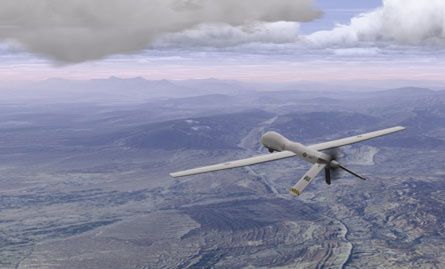
Drone-Atlante.jpg

Le drone Atlante de Cassidian, équipé d’une l’hélice Duc,

a réalisé le 28 février 2013, son premier vol sur

l’aérodrome de Rozas, (Espagne).


Doté des technologies de toute dernière génération (automatisation, capteurs, systèmes de protection, etc.) développées par l’industrie espagnole, le drone Atlante a été conçu conformément aux normes applicables aux avions pilotés (navigabilité et de certification), qui lui permettent d’opérer dans l’espace aérien civil. L’Atalante est un drone tactique capable d’effectuer des missions tant civiles que militaires, dont la surveillance urbaine et rurale, la recherche et le sauvetage, les missions de secours en zones sinistrées ou lors d’incendies de forêt, et le contrôle d’événements sportifs. Il peut en outre décoller et atterrir sur des pistes non aménagées ou être lancé par des catapultes.


Le partenariat avec EADS à travers sa filiale Cassidian, ouvre de nouvelles perspectives à Duc Hélices qui annonce sa participation au salon Aero 2013 (24-27 avril) à Friedrichshafen.

Partager cet article
Repost0
26 mars 2013 2 26 /03 /mars /2013 16:55

tir-asmpa-02


26.03.2013 Par Olivier Berger, grand reporter à La Voix du Nord. - Défense globale


Rencontré la semaine dernière, à l'occasion d'une conférence organisée par la mission LEDS (Lille eurométropole défense et sécurité), le général (2S) de corps aérien Thierry Delahaye balaie l'évolution de l'action aérienne, les risques d'une baisse du budget de la Défense, les conséquences de mutualisations, les drones et la dissuasion nucléaire. Autant de questions chaudes en attendant le Livre blanc, les ambitions et les enveloppes qui en découleront.

Le général (2S) Delahaye est un ancien adjoint du représentant militaire français auprès des comités militaires de l'OTAN et de l'Union européenne (de 2009 à 2012). Il est actuellement chargé de mission auprès du CEMAA (chef d'état-major de l'armée de l'air)...


- L'action aérienne change-t-elle lors des récents conflits ?


" La puissance aérienne ne connaît pas tellement d'évolutions mais se décline de manière un peu différente avec une meilleure interarmisation, ce qui est également le cas pour la marine et l'armée de terre. Les opérations ont bien changé, du maintien de la paix, on est passé à des combats de haute voire de très haute intensité. En Afghanistan, en Libye et au Mali, il y a un changement de portage du mode d'opérations. La vraie différence, c'est que les erreurs ont des implications politiques immédiates. Il faut donc mieux tout maîtriser comme la chaîne ISR (Intelligence, Surveillance et Reconnaissance). "


- Est-ce l'expérience libyenne de l'armée de l'air qui a amené à ce constat ?


" En Libye, l'utilisation de véhicules civils a rendu les frappes plus difficiles avec des validations jusqu'à un assez haut niveau. Aujourd'hui, vous avez vingt minutes entre le moment où on détecte une cible et le moment où on tire. C'est nouveau. En Afghanistan, nous avions quarante minutes, au Vietnam, les Américains avaient une journée et lors de la Deuxième Guerre mondiale, il fallait quatre jours... Dans la conduites des opérations, les états-majors travaillent en temps réel. Avec l'impact des dommages collatéraux, la cible doit être légitime. Les conflits ont, de ce point de vue, légèrement changé mais les moyens permettent de répondre en temps réel. "


- Cette accélération de la décision peut-elle convenir à la réduction des moyens ?


" L'enveloppe diminue mais pour l'instant, la modernisation permet de suivre. Les moyens sont de plus en plus performants. Les avions sont plus précis, vont beaucoup plus loin qu'avant. Jusqu'où la réduction du nombre n'empiètera pas sur les capacités ? Tout dépendra du modèle d'armée choisi par le Livre blanc. On verra ce que la France est capable de faire en autonome et ce qu'elle fera par le biais de partages de capacités. Avec qui ? Pourquoi faire ? "


- Le partage capacitaire est-il une réponse à la crise budgétaire ?


" Aujourd'hui, que ce soit au sein de l'OTAN ou de l'Union européenne, plus personne ne possède l'ensemble du spectre. Seulement, quand vous partagez les capacités, le problème, c'est de pouvoir mettre la main sur ce qui vous manque quand vous en avez besoin. Au niveau politique, c'est complexe. Demain, le président de la République, chef des armées, ne pourra pas décider de faire ce qu'il a envie de faire au moment où il le souhaite. Au Mali, le chef d'état-major de l'UE, le général néerlandais Ton Van Osch, reconnaît qu'on ne pouvait attendre une décision européenne, il fallait agir maintenant. La lenteur de la décision est un frein à la capacité d'agir. "


- Quelle est l'évolution logique pour un pays comme la France ?


" On est aujourd'hui à la croisée des chemins. Il faut bien spécifier le rôle que la France veut jouer dans les crises du monde, au sein des institutions internationales, devenir un acteur parmi d'autres, pas comme au Mali. La grosse évolution, ce sera ça. Il faut attendre le Livre blanc pour voir ces ambitions. A partir de là, on définira une enveloppe pour le budget et on regardera ce qu'il faudra mutualiser. Sachant que toute mutualisation est une perte de souveraineté. Tout est plus difficile. Regardez la brigade franco-allemande qu'on ne peut engager, le porte-avions britannique qu'on imaginait pouvoir utiliser. Dans le transport, des mécanismes existent. Mais par exemple, pour la Libye, les Turcs n'avaient pas le droit de ravitailler en vol un avion avec des bombes. L'Allemagne a interdit aux Awacs de l'OTAN de participer à l'opération libyenne alors qu'elle représente la moitié des effectifs. Il a fallu procéder à un échange avec des équipages déployés en Afghanistan. "


- L'armée de l'air française peut-elle être réduite ?


" Comme la Libye et l'Afghanistan, le Mali est un théâtre atypique car ces pays ne possèdent pas de défense antiaérienne. Mais tout le monde réarme. Des pays en voie de développement, qui avaient des forces aériennes limitées, se retrouvent avec des avions aussi performants que les nôtres. Regardons la Syrie. Ce n'est pas le seul critère, mais s'il n'y a pas eu d'engagement international, c'est aussi parce que les Syriens ont une défense sol/air dense et une aviation. Les Turcs ont perdu un avion ; on ne peut pas reproduire la Libye.

C'est difficile de dire qu'elle est le minimum vital de l'armée de l'air. Aujourd'hui, quatre Rafale emportent vingt-quatre bombes et peuvent toucher vingt-quatre objectifs différents avec une précision métrique. Il coûte cher mais réalise un travail fantastique. Avant, combien fallait-il de F1 et de Mirage 3 pour arriver au même résultat ? La capacité de frappe est importante mais quand on réduit le nombre, si on perd un avion, c'est significatif. Il faut peser soigneusement quantité versus capacités avec ce qu'on peut se payer. Quand un drone est en panne actuellement, on perd 25 % de nos capacités ! Il faut donc associer le nombre avec l'ambition. Par exemple, deux cents avions britanniques plus deux cents Rafale, ça tient la route au niveau ambition... "


- Question un peu provocatrice, les drones, dont la France a manqué le virage lors des années 2000, sont-ils l'avenir de l'armée de l'air ?


" Les drones assurent une permanence. Ils font trente heures d'affilée, ce qui est très important pour la détection et l'identification. Mais pour transmettre des images, l'aspect SIC (système d'information et de communication) devient prépondérant. Il faut avoir la maîtrise aérienne et cybernétique. Ce sont des outils très importants, d'avenir. Ça fait longtemps qu'on le dit mais nous n'avions pas les crédits... "


- A ce propos, faut-il construire des drones français ou acheter du matériel étranger ?


" En tant qu'utilisateur, je dirais qu'acheter sur étagère, ça marche. Si je réfléchis avec un esprit de défense et en tant que français, je pense qu'il vaut mieux développer un projet dans le pays. Ça permet de garder un avantage économique et technologique. Mieux vaut acheter national... "


- Jusqu'où peut-on aller dans la baisse des budgets et des moyens ?


" L'outil militaire s'adapte. Le chef d'état-major des armées fera avec ce qu'on a décidé. C'est son métier. Pour l'instant, il a réussi à tirer le tapis pour couvrir à peu près l'ensemble du spectre. Il va finir par y avoir des trous dans le tapis. Si on continue à couper, on ne pourra plus avoir l'ensemble du spectre. Il faudra faire des choix. "


- La France doit-elle garder ses deux composantes de la dissuasion nucléaire ?


" Un sous-marin, vous ne l'entendez pas, vous ne le voyez pas ; on tire, c'est fini. C'est une garantie si tout se passe mal. Un avion avec ASMP (missile nucléaire Air Sol Moyenne Portée), vous voyez sa mise en œuvre ; vous pouvez le faire décoller. Ce sont des messages. La gesticulation politique existe. La trajectoire d'un missile balistique est aussi prédictible. Un avion de combat a une trajectoire imprévisible. Il est petit mais très précis. Pour moi, les deux composantes sont complémentaires. Les avions ne coûtent pas chers car ils sont polyvalents. "


- On dit souvent que la doctrine de la dissuasion ne tient plus en cas d'affaiblissement trop important des forces conventionnelles... Comment trouver le juste équilibre ?


" L'arme nucléaire est faite pour toucher un intérêt vital. La mesure intermédiaire est la force conventionnelle. S'il ne vous reste qu'une cartouche à tirer, vous forcez la décision. Demain, pour rester cohérent, une réflexion s'impose. Le poids du nucléaire dans le budget de la Défense est d'environ 20 % et le maintien de l'avance technologique coûte cher. Des questions se posent si par exemple, on ne faisait qu'entretenir le matériel existant ? Garderait-on quand même un avantage technologique ? Pendant combien de temps ? Economiserait-on ? Pourrait-on récupérer l'avantage après une mise en veille de la recherche et du développement ? "

Partager cet article
Repost0
12 mars 2013 2 12 /03 /mars /2013 12:20

http://upload.wikimedia.org/wikipedia/commons/thumb/c/c3/OCPA-2005-08-11-080331.jpg/800px-OCPA-2005-08-11-080331.jpg


March 12, 2013: Strategy page


Faced with smaller budgets over the next decade the U.S. Army has halted evaluation of new UAVs and is standardizing on four existing models (Gray Eagle, Shadow 2000, Raven and Puma). All four of these were developed and purchased in large quantities over the last dozen years and will remain the primary army UAVs for the next 5-10 years.


The army currently has nearly 7,000 UAVs. Over 6,000 are micro-UAVs like the Raven and Puma, These tiny (under six kg/13.2 pound) reconnaissance aircraft have become very popular with the troops, anyone of which can become an operator after a few hours of training. These tiny UAVs are a radical new military aircraft technology that is took air recon to a new level. That level is low, a few hundred meters off the ground. The army has nearly 1,798 Raven and 325 Puma UAVs systems in use by ground troops. A complete system (controller, spare parts, and three UAVs) costs $250,000 for the Raven and over $400,000 for Puma. These tiny aircraft have changed how the troops fight and greatly reduced army dependence on the air force for air reconnaissance. The lightweight, hand launched Raven UAV can only stay airborne about an hour per sortie, but troops have found that this is enough time to do all sorts of useful work, even when there's no fighting going on. This is most of the time. The heavier Puma can stay up for 120 minutes.


rq-11b-raven-us-army-soldier-launch-lg

Raven B (RQ-11B)


The two kilogram (4.4 pound) RQ-11 Raven UAV aircraft is popular with combat and non-combat troops alike. The army has developed better training methods, which enables operators to get more out of Raven. Combat troops use it for finding and tracking the enemy, while non-combat troops use it for security (guarding bases or convoys). In both cases, troops have come to use the Raven for more than just getting a look over the hill or around the corner. The distinctive noise of a Raven overhead is very unpopular with the enemy below and is often used to scare the enemy away or make him move to where he can be more easily spotted.


The current model, the Raven B (RQ-11B), was introduced six years ago, a year after the original Raven entered service in large numbers. This UAV is inexpensive ($35,000 each). The Raven is battery powered (and largely silent unless flown close to the ground). It carries a color day vidcam or a two color infrared night camera. It can also carry a laser designator and new gimbaled camera is being bought. The cameras broadcast real time video back to the operator, who controls the Raven via a handheld controller, which uses a hood to shield the display from direct sunlight (thus allowing the operator to clearly see what is on the ground). The Raven can go as fast as 90 kilometers an hour but usually cruises at between 40 and 50 kilometers an hour. It can go as far as 15 kilometers from its controller and usually flies a preprogrammed route, using GPS for navigation.


The Raven is made of Kevlar, the same material used in helmets and protective vests. On average, a Raven can survive about 200 landings before it breaks something. While some Ravens have been shot down, the most common cause of loss is losing the communications link (as the aircraft flies out of range or behind something that interrupts the signal) or a software/hardware failure on the aircraft. Combat losses have been high, as nearly 20,000 have been built and most of those have been lost in training or the battlefield.


From the very beginning the Raven changed the way troops fight. With the bird's eye view of the battlefield, commanders can move their troops more quickly, confident that they won't be ambushed and often with certain knowledge of where the unseen enemy is. The big advantage with Raven is that it’s simple, reliable, and it just works. The UAV can be quickly taken apart and put into a backpack. It takes off by having the operator start the motor and then throwing it. This can be done from a moving vehicle and the Raven is a popular recon tool for convoys. It lands by coming in low and then turning the motor off. Special Forces troops like to use it at night because the enemy can’t see it and often can’t hear it either.


puma ae web

Puma AE UAV


Last year the U.S. Army began using the larger (5.9 kg) Puma AE UAVs. So far 325 RQ-20A systems have been ordered and most have been delivered. Adopting Puma is part of an army effort to find micro-UAVs that are more effective than current models and just as easy to use. The Puma, a 5.9 kg (13 pound) UAV with a 2.6 meter (8.5 feet) wingspan and a range of 15 kilometers from the operator, has proved to be the next big (or micro) thing the army was looking for. Combat commanders quickly realized how useful Puma is and wanted more, as quickly as possible. This is not surprising as SOCOM (Special Operations Command) has been using Puma since 2008.


The army wants to equip each infantry company with a Puma system. That would mean 18 Puma AE UAVs per brigade and nearly 400 for the entire army. These larger UAVs have been most useful in route clearance (scouting ahead to spot ambushes, roadside bombs, landslides, washouts, or whatever). The larger Puma is particularly useful in Afghanistan, which is windier than Iraq and thus more difficult for the tiny Raven to operate.


Top speed for Puma is 87 kilometers an hour and cruising speed is 37-50 kilometers an hour. Max altitude is 3,800 meters (12,500 feet). Puma has a better vidcam (providing tilt, pan, and zoom) than the smaller Raven and that provides steadier and more detailed pictures. Because it is larger than Raven, and three times as heavy, Puma is much steadier in bad weather. Both Puma and Raven are battery powered.


Puma has been around for a decade but never got purchased in large quantities by anyone. The latest model uses a lot of proven tech from the Raven (both UAVs are made by the same company). Like the Raven, Puma is hand launched and can be quickly snapped together or apart. Another version, using a fuel cell, has been tested and was able to stay in the air for nine hours at a time. There is also a naval version that floats and is built to withstand exposure to salt water.


Each combat brigade is now supposed to have 35 mini-UAV systems (each with three UAVs, most of them Raven, but at least ten of these systems are to be Pumas). That means that each combat brigade now has its own air force of over a hundred reconnaissance aircraft.


Shadow 200 UAV

RQ-7-Shadow


Then there are the larger UAVs. The Gray Eagle is replacing several other large UAVs. Most of these are the RQ-7 Shadow (over 300) and smaller numbers of MQ-5 Hunters, Sky Warrior Alpha and RQ-18 MAV (helicopter type) systems. The MQ-1C weighs 1.5 tons, carries 135.4 kg (300 pounds) of sensors internally, and up to 227.3 kg (500 pounds) of sensors or weapons externally. It has an endurance of up to 36 hours and a top speed of 270 kilometers an hour. MQ-1C has a wingspan of 18 meters (56 feet) and is 9 meters (28 feet) long. The MQ-1C can carry four Hellfire missiles (compared to two on the Predator), or a dozen smaller 70mm guided missiles. Each MQ-1C costs about $10 million. The army uses warrant officers as operators. The MQ-1C has automated takeoff and landing software and is equipped with a full array of electronics (target designators and digital communications so troops on the ground can see what the UAV sees).


http://upload.wikimedia.org/wikipedia/commons/thumb/c/c3/OCPA-2005-08-11-080331.jpg/800px-OCPA-2005-08-11-080331.jpg


The army began sending platoons (each with four aircraft) of its new MQ-1C Gray Eagle UAV to Afghanistan in 2011. The first MQ-1C aviation company was formed in 2009 and was assigned to the U.S. Army 160th SOAR (Special Operations Aviation Regiment), which belongs to SOCOM (Special Operations Command). The army plans to eventually equip each combat brigade with an MQ-1C company and establish over three dozen of these companies.


The MQ-1C is based on the MQ-1 Predator, which is a one ton aircraft and do most everything the Gray Eagle can except carry larger sensors and more weapons. The 159 kg (350 pound) Shadow 200s carry day and night cameras and laser designators but usually no weapons. Most of the new army heavy UAVs delivered over the next five years will carry missiles, and by 2015, the army wants to have over 500 MQ-1Cs and perhaps a few Shadow 200s that have not worn out.


The army is proceeding to spend scare cash on new sensors for existing UAVs and the old Shadow 200s have gotten other new components (engines, wings, and so on). This is because that while the army plans to buy nearly 500 Gray Eagles it has less than a hundred so far and are expensive. So money problems may halt or slow down procurement. Gray Eagle and Shadow are the key long range UAVs used by brigade and division headquarters to take in the big picture.

Partager cet article
Repost0
8 mars 2013 5 08 /03 /mars /2013 08:50

http://www.usinenouvelle.com/mediatheque/9/3/6/000161639_5.jpg


04 mars 2013 Par Elodie Vallerey - Usinenouvelle.com


Le drone Atlante de Cassidian, la branche défense d'EADS, est un drone tactique mixte, destiné à effectuer des missions à la fois civiles et militaires.    


L'Espagne prend enfin de l'avance dans le secteur des drones. Le 28 février, le Centre pour le développement technologique industriel (Centro para el Desarrollo Tecnológico Industrial – CDTI), le gestionnaire des programmes de l'industrie aéronautique espagnole, a effectué avec succès le premier vol du drone Atlante, sur l'aérodrome de Rozas, dans la province de Lugo.


Un programme ambitieux pour l'Espagne, plus importante initiative industrielle et technologique espagnole dans le secteur des drones. Ce projet de drone tactique est piloté industriellement par Cassidian, la branche défense du conglomérat européen EADS, aux côtés des sociétés espagnoles Indra, GMV et Aries.


"Le vol inaugural de l'Atlante constitue un jalon majeur qui démontre nos capacités technologiques et humaines en matière de développement de programmes", a commenté Pilar Albiac Murillo, directeur des opérations de Cassidian et PDG de Cassidian Espagne dans un communiqué.


L'Atlante est le "premier drone tactique capable d'effectuer des missions tant civiles que militaires, dont la surveillance urbaine et rurale, la recherche et le sauvetage, les missions de secours en zones sinistrées ou lors d'incendies de forêt, et le contrôle d'événements sportifs", détaille le communiqué.


L'Espagne est entrée de plein fouet dans l'ère des drones.

Partager cet article
Repost0
21 février 2013 4 21 /02 /février /2013 12:45

Hungwe UAV


21 February 2013 defenceWeb (Reuters)


Global demand for drone aircraft is especially strong in Gulf Arab states worried about regional instability, industry executives said as a big U.S. manufacturer unveiled the first sale of an unarmed Predator to the Middle East.


Controversy over the legality of attacks by missile-firing drones will not dampen the volatile region's enthusiasm for the technology, in part because export curbs mean most equipment sold will be for use only in reconnaissance, experts say.


Sello Ntsihlele, executive manager for UAVs at Denel Dynamics, a division of state-owned Denel, South Africa's biggest maker of defense equipment, told Reuters this was "the best time" for unmanned aerial vehicle (UAV) sales, Reuters reports.


"Demand is growing fast in developing countries, in the Middle East, the Far East and Africa. The Gulf is critical in all this," he said on the sidelines of the biennial International Defence Exhibition and Conference (IDEX) in Abu Dhabi, capital of the United Arab Emirates (UAE).


"I can't be specific but all countries in the Arabian Gulf are talking to us," he said, adding that Denel's UAV sales had risen around 20 percent in the last four years, driven mostly by the Middle East.


UAE DEAL


The company had received up to double the number of inquiries from prospective clients than at the same conference two years ago, Ntsihlele said.


At IDEX on Monday, the United Arab Emirates announced a deal to buy an unspecified number of Predator drones from the privately-owned U.S. firm General Atomics in a deal worth 722 million dirhams ($196.57 million).


Also on Monday, Abu Dhabi Autonomous Systems Investments (ADASI), a subsidiary of state-owned investment firm Tawazun Holding, said it had signed an agreement with Boeing Co for ADASI to "provide training, support and marketing services" for Boeing unmanned aircraft systems in the UAE.


Frank Pace, president at General Atomics Aeronautical, said his firm's sales had risen by about 120 percent over the last five years, though until now it had not been able to sell to the Middle East due to tight export restrictions.


The UAE and Saudi Arabia are among several states, according to diplomatic cables released by WikiLeaks, that have asked U.S. officials to buy armed drones but which have been rebuffed.


Washington says its commitments to the Missile Technology Control Regime (MTCR), a non-binding international agreement designed to limit the spread of long-range precision weaponry, restrict drone exports.


Thomas Kelly, principal deputy assistant secretary at the U.S. State Department's Bureau of Political-Military Affairs, told reporters at IDEX that "caution" was Washington's point of departure on drone sales.


"We're not pushing armed systems right now to other countries. We understand there's a lot of interest in UAVs internationally ... (but) in terms of armed UAVs I think the administration is going to take its time to make sure that we have a policy that we're comfortable with."


General Atomics' export-variant Predator will have no "hard points" to attach missiles and would be deliberately engineered to make adding new weaponry impossible, the firm said last year.


Pace said he hoped the company would get approval to sell to more countries, especially in the Middle Eastern market, where he saw great potential. "We are talking to all of the Gulf (Arab) countries," he said.


KEEPING TABS "VERY IMPORTANT"


Sales are growing in the Middle East because having developed surveillance systems is fast becoming a requirement for all states, said Theodore Karasik, director of research at the Institute for Near East and Gulf Military Analysis.


"The region is still unstable, there are state actors and non-state actors that want to cause trouble, and being able to keep tabs on what's happening is very important."


The oil-rich, sparsely-populated Gulf Arab states are alarmed at the civil war in Syria, and want to ensure that popular uprisings in North Africa do not stir dissent at home.


The intentions of regional rival Iran, locked in a dispute with major powers over its nuclear program, are a perennial concern for the Gulf region's hereditary ruling families.


Controversy over the legality of drone strikes would have little impact on global appetite for UAVs, Karasik said.


"Don't forget the debate over UAVs is concentrated in the United States. Countries that want that capabililty over here will make their own decisions," he added.


The U.S. government has dramatically increased its use of drone aircraft abroad in recent years to target al Qaeda figures in far-flung places from Pakistan to Yemen. Britain and Israel have also carried out such attacks, and dozens more states are believed to possess the technology.


Targeted killings carried out by remotely piloted unmanned aircraft are controversial because of the risks to nearby civilians and because of their increasing frequency.


General Atomics' Pace said, however, that he didn't expect the controversy to have much impact on sales.


Missiles are "not a significant function of the aircraft and most of the people that are buying (are buying) for ISR and are going to keep buying," he said, referring to intelligence, surveillance and reconnaissance.


The surge in drone use has stirred debate in the United States about the transparency of lethal strikes and the powers of the president to order attacks on U.S. citizens overseas. A 2011 strike killed U.S.-born Anwar al-Awlaki, a recruiter and propagandist for al Qaeda's Yemen-based affiliate.


Pace said unmanned aircraft would have to be used responsibly, but that ultimately they would help to save lives compared to some of the older systems.

Partager cet article
Repost0
20 février 2013 3 20 /02 /février /2013 12:30

Shapar UAV

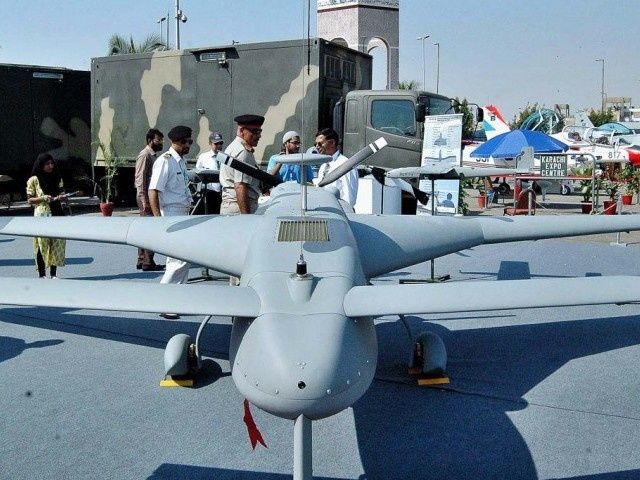
A Pakistani-built Shahpar tactical UAV


Feb. 19, 2013 - By CHRISTOPHER P. CAVAS  - Defense News


ABU DHABI — If anything has changed in the past few years at defense trade exhibitions, it’s the explosion in the number and variety of UAVs on display.


Big ones, medium ones, small, smaller and still smaller ones. Multi-winged or single-wing aircraft, pusher or tractor engines to power them, vertical systems with one, two or four rotors. Man-portable systems that fit in a rucksack. Craft with wheels or skids or hooks. A plethora of often interchangeable payloads of sensors and — increasingly — weapons the machines can put in the air. Also featured are a variety of control systems and units, ranging from trucks or trailers to laptops and wrist bands.


All the big boys in the business are here at the IDEX defense exposition and its NavDex naval component. Lockheed Martin, General Atomics and Boeing’s Insitu from the U.S.; Denel from South Africa; and a host of European entries, including vehicles from France, Austria, Switzerland, Sweden and Turkey are all vying for attention.


Among the UAV craft are an ever-growing number of offerings from countries not often associated with displaying home-grown military products. In South Asia, Pakistan has developed a range of UAVs, with several on display here.


“Most of these aircraft are in service now with the Pakistani military,” Tahir Hameed, a technical engineer with Xpert Engineering, said of four aircraft in an outdoor display area.


Xpert is one of seven companies that make up the Global Industrial and Defense Solutions (GIDS) group, that together makes nearly all the components in the aircraft and payload systems.


Standing by a large Shahpar tactical UAV, Shoaib Iqbal, an engineer with AERO, the Advanced Engineering Research Organization, proclaimed that “everything in this aircraft was made in Pakistan. Everything except the engines and tires.”


AERO builds sensors at its facility near Islamabad, in a region where most of the Pakistani UAV industry is located.


The Shahpar is the most sophisticated of the GIDS aircraft on display here. Configured with a pusher engine and canards and with a wingspan of 6.6 meters, the craft can carry a 50-kilogram payload to heights of 5,000 meters, and stay airborne more than seven hours.


Two flights of the Shahpar entered service in 2012, Iqbal said, one each with the Pakistani Army and Air Force, and GIDS is expanding its production facilities to answer the demand.


A flight, Iqbal explained, consists of five aircraft, a ground control station and a communications station.


Another tactical UAV, the Uqab, entered service in 2008 with the Pakistani Army, Hameed said, and has been in use with the Pakistani Navy since 2010. A wheeled vehicle that can reach an altitude of 3,000 meters and stay aloft for six hours, the Uqab is used for artillery fire correction and battle damage assessment in addition to surveillance duties.


The Huma, a smaller aircraft fitted with rocket boosters for takeoff and a parachute for landing, also is under development, along with the Scout mini-UAV, designed to be carried in a backpack and launched by hand.


Micro Vehicles Expanding


Another growth area is in micro-UAVs, hand-held models not unlike something available at an electronics store or hobby shop.


Datron, a San Diego-based company best known for producing a range of radio and communications gear, is here with its Datron Scout aerial reconnaissance system, a four-rotor, vertical takeoff-and-landing vehicle meant to be used for short-range, short-endurance missions.


Even fitted with its battery pack and a sensor payload, the polycarbonate-construction vehicle barely weighs as much as a laptop computer — not even 3 pounds without the sensor. The Scout is intended to fly to a range of only about three kilometers and remain airborne for about 20 minutes, depending on the payload.


But the craft comes with a sophisticated flight control program, said Christopher Barter, program manager for the UAV.


“We’ve operated this in winds up to 30 miles an hour, with gusts to 55,” he said.


So why did Datron, an electronics company, get into the UAV business?


“The value of a small unmanned aerial system you can pull out of a backpack is extremely lucrative,” he said. “And this model comes with autonomous control from a laptop, with global positioning satellite navigation.”


The Datron Scout, however, is remarkably similar to at least a half dozen other vehicles on display at this show and, at between $60,000 to $120,000 a copy, a bit pricier than most.


“Yes, but ours doesn’t break,” Barter beamed. “It’s extremely rugged.”

Partager cet article
Repost0
19 février 2013 2 19 /02 /février /2013 13:39

rq-11b-raven-us-army-soldier-launch-lg


February 19, 2013: Strategy Page


The U.S. Army has over 6,000 micro-UAVs (Ravens and Pumas) and is still finding new ways to use these tiny (under six kg/13.2 pound) reconnaissance aircraft. The army is also evaluating tiny helicopter-type UAVs and several other models similar to the Ravens and Pumas. All this comes a century after aerial reconnaissance first revolutionized warfare. The tiny UAVs are another radical new aircraft technology that is taking air recon to a new level. That level is low, a few hundred meters off the ground. It all began in the American military during the last decade. The aircraft are the nearly 1,798 Raven and 325 Puma UAVs systems in use by ground troops. A complete system (controller, spare parts, and three UAVs) costs $250,000 for the Raven and over $400,000 for Puma. These tiny aircraft have changed how the troops fight and greatly reduced army dependence on the air force for air reconnaissance.


Traditional U.S. military aviators, and the 10,000 manned airplanes they operate, are somewhat disdainful of these tiny, unmanned, aircraft. But for the troops on the ground, they are a lifesaver and the key to many victories. This sort of thing has happened before. During World War I (1914-18), when aerial reconnaissance first became a major factor in military operations, it was quickly noted that regular flights over the enemy, despite the risk of getting shot down, provided invaluable information. It wasn't just what the human observer noted, but photographs of what was down there. All this was rather sudden because reasonably cheap and reliable aircraft only began to appear a few years before World War I began. This was not surprising, as the first flight of a heavier-than-air aircraft only took place in 1903. The war spurred even more aircraft innovation. But then, and now, the principal job of aircraft was to be the eyes of the ground forces. The fighters were to protect friendly recon aircraft and attack the enemy ones. Bombers were consistently oversold, and the air force partisans could never accept the fact that bombing was an adjunct to reconnaissance, not the primary mission of the air forces.  Just as the first recon aircraft a century ago changed the way armies fought, the micro-UAVs have changed the way small units of soldiers fight. A century ago the aerial observers reported to generals and their staffs. UAV video goes to platoon or company commanders, or the leader of a small Special Forces team. The lightweight, hand launched Raven UAV can only stay airborne about an hour per sortie, but troops have found that this is enough time to do all sorts of useful work, even when there's no fighting going on. This is most of the time. The heavier Puma can stay up for 120 minutes.


In Iraq and Afghanistan, the enemy did not want to confront U.S. troops directly (this tended to get you killed). So there was an unceasing effort to set up ambushes, plant mines and roadside bombs, and fire rockets or mortars at American bases. All of these activities can be messed with by using Raven. U.S. troops know to think like the enemy, and quickly figured out the best ambush positions, or places to plant mines or fire rockets. By sending Ravens over these spots periodically the enemy is put in danger of being spotted. The enemy knows that usually leads to a prompt attack from American mortars or helicopter gunships. These mind games, of sneaking around trying to get a shot off at the Americans, is more stressful and dangerous if the U.S. troops have Ravens. And most of them do.


The U.S. Army has over 5,000 RQ-11 Raven UAVs in service. This two kilogram (4.4 pound) aircraft is popular with combat and non-combat troops alike. The army has developed better training methods, which enables operators to get more out of Raven. Combat troops use it for finding and tracking the enemy, while non-combat troops use it for security (guarding bases or convoys). In both cases, troops have come to use the Raven for more than just getting a look over the hill or around the corner. The distinctive noise of Raven overhead is very unpopular with the enemy below and is often used to scare the enemy away, or make him move to where he can be more easily spotted.


The current model, the Raven B (RQ-11B), was introduced six years ago, a year after the original Raven entered service in large numbers. This UAV is inexpensive ($35,000 each) and can stay in the air for 80 minutes at a time. The Raven is battery powered (and largely silent unless flown close to the ground). It carries a color day vidcam, or a two color infrared night camera. It can also carry a laser designator. Both cameras broadcast real time video back to the operator, who controls the Raven via a handheld controller, which uses a hood to shield the display from direct sunlight (thus allowing the operator to clearly see what is down there). The Raven can go as fast as 90 kilometers an hour but usually cruises at between 40 and 50. It can go as far as 15 kilometers from its controller, and usually flies a preprogrammed route, using GPS for navigation.


The Raven is made of Kevlar, the same material used in helmets and protective vests. On average, Raven can survive about 200 landings before it breaks something. While some Ravens have been shot down, the most common cause of loss is losing the communications link (as the aircraft flies out of range) or a software/hardware failure on the aircraft. Combat losses have been high, as nearly 20,000 have been built and most of those have been lost in training or the battlefield.


From the very beginning, the Raven changed the way troops fight. With the bird's eye view of the battlefield, commanders can move their troops more quickly, confident that they won't be ambushed, and often with certain knowledge of where the unseen enemy is. The big advantage with Raven is that it’s simple, reliable, and it just works. The UAV can be quickly taken apart and put into a backpack. It takes off by having the operator start the motor, and then throwing it. This can be done from a moving vehicle and the Raven is a popular recon tool for convoys. It lands by coming in low and then turning the motor off. Special Forces troops like to use it at night, because the enemy can’t see it, and often can’t hear it either.


The controller allows the operator to capture video, or still pictures, and transmit them to other units or a headquarters. The operator often does this while the Raven is flying a pre-programmed pattern (using GPS). The operator can have the UAV stop and circle, in effect keeping the camera on the same piece of ground below. The operator can also fly the Raven, which is often used when pursuing hostile gunmen.


Last year the U.S. Army began using the larger (5.9 kg) Puma AE UAVs. So far 325 RQ-20A systems have been ordered and most have been delivered. Adopting Puma is part of an army effort to find micro-UAVs that are more effective than current models and just as easy to use. The Puma, a 5.9 kg (13 pound) UAV with a 2.6 meter (8.5 feet) wingspan and a range of 15 kilometers from the operator, has proved to be the next big (or micro) thing the army was looking for. Combat commanders quickly realized how useful Puma is and wanted more, as quickly as possible. This is not surprising as SOCOM (Special Operations Command) has been using Puma since 2008.


The army wants to equip each infantry company with a Puma system. That would mean 18 Puma AE UAVs per brigade and nearly 400 for the entire army. These larger UAVs have been most useful in route clearance (scouting ahead to spot ambushes, roadside bombs, landslides, washouts, or whatever). The larger Puma is particularly useful in Afghanistan, which is windier than Iraq and thus more difficult for the tiny Raven to operate.


Top speed for Puma is 87 kilometers an hour and cruising speed is 37-50 kilometers an hour. Max altitude is 3,800 meters (12,500 feet), and the UAV can stay in the air for 120 minutes at a time. Puma has a better vidcam (providing tilt, pan, and zoom) than the smaller Raven and that provides steadier and more detailed pictures. Because it is larger than Raven, and three times as heavy, Puma is much steadier in bad weather. Both Puma and Raven are battery powered.


Puma has been around for a decade but never got purchased in large quantities by anyone. The latest model uses a lot of proven tech from the Raven (both UAVs are made by the same company). Like the Raven, Puma is hand launched and can be quickly snapped together or apart. Another version, using a fuel cell, has been tested and was able to stay in the air for nine hours at a time. There is also a naval version that floats and is built to withstand exposure to salt water.


The army has bought over 10,000 of the 2 kg (4.4 pounds) Raven, but it is mostly used for convoy and base security and less so by troops in the field. Each combat brigade is now supposed to have 35 mini-UAV systems (each with three UAVs, most of them Raven, but at least ten of these systems are to be Pumas). That means that each combat brigade now has its own air force of over a hundred reconnaissance aircraft.


Raven, and a thousand slightly larger UAVs, don't get much publicity, but they have a larger impact on combat than the few hundred much larger (Shadow, Predator, Reaper) UAVs. These big, and often armed, UAVs carry out vital missions, but comprise a tenth of the airtime that the micro-UAVs rack up. Moreover, these smaller UAVs have opened up lots of other possibilities. There are already small, single use UAVs that are basically guided bombs. Even smaller UAVs can be used for spying, as well as battlefield recon. These little aircraft are having an enormous impact on warfare, rivaling what happened a century ago.


Because of anti-aircraft machine-guns and portable missile systems the air force prefers to stay high (over 3,200 meters/10,000 feet) and let the army and their UAVs and helicopters take care of the lower altitudes. The army has taken on the challenge and succeeded.

Partager cet article
Repost0
13 février 2013 3 13 /02 /février /2013 17:45

http://www.defense.gouv.fr/var/dicod/storage/images/base-de-medias/images/sam_0356/2171970-1-fre-FR/sam_0356.jpg


13 February 2013 by defenceWeb


Since January, a detachment of Harfang unmanned aerial vehicles (UAVs) has been engaged in Operation Serval, France’s intervention in Mali, where they joined dozens of French air assets, from maritime patrol aircraft to tankers.


Last week the French Ministry of Defence (MoD) said that the Harfangs carried out their first operational missions over Mali on January 18. The aircraft are flown by Squadron 1/33 ‘Belfort’ from neighbouring Niger, with two being based in Niamey. It was under the eye of the Harfang that the cities of Douentza and Gao were taken over from Islamist militants. They were also overhead when French paratroops landed in Timbuktu.


Hargfang pic12 source FB Armee de l Air


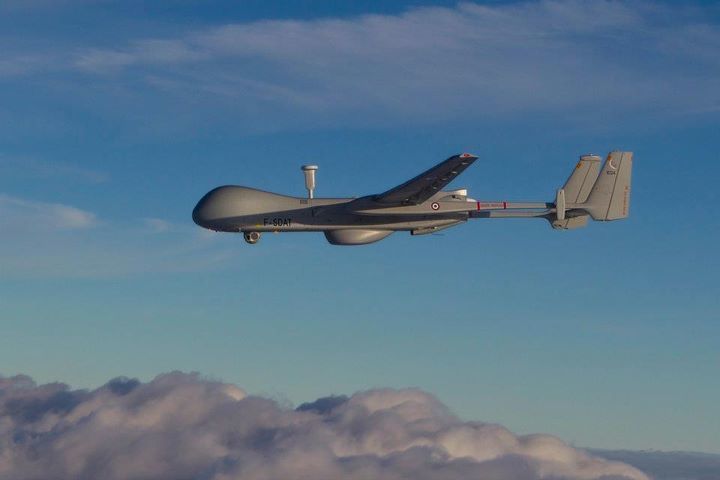
The EADS Harfang (based on the IAI Heron) medium altitude long endurance (MALE) UAV has an endurance of over 20 hours – one flew for 26 hours between January 25 and 26. After Afghanistan and Libya, the Sahel desert is the third theatre to which the unarmed Harfang has been deployed.


The French MoD said the aircraft cooperate with Air Force and Navy aircraft operating over Malian territory. France has a wide variety of air assets operating in support of Operation Serval. From its base in Ndjamena, Chad, it has six Rafale and three Mirage 2000D fighters, five C-135FRs tankers, one A310, one C-130 Hercules, three C-160 Transal and one CN235 transport aircraft.


Based in Mali’s capital Bamako are two Mirage F1CR and three Mirage 2000D fighters and eight Gazelle, four Super Puma and three Tiger helicopters. Five French Navy Atlantique II maritime patrol aircraft are based in Dakar, Senegal. France has also charted aircraft, including An-124, An-225 and Il-76 transports.


The French Ministry of Defence on February 4 said that since January 31, French aircraft had flown more than 135 missions over Mali, including 30 reconnaissance flights, and destroyed 25 targets from logistics depots to training centres. Fighter aircraft and attack helicopters were used for these strikes.


Apart from French air assets, a large number of foreign aircraft have been contributed to the intervention force. Nigeria is the only other country to have committed combat aircraft, deploying two Alpha Jets (NAF 455 and NAF 452) to neighbouring Niger on January 18, followed by two Mi-35 attack helicopters. Nigerian Air Force C-130s are being used to airlift equipment and soldiers to Mali as part of the ECOWAS (Economic Community of West African States) contingent (Nigeria has pledged 900 troops out of 3 300 mandated to be sent).


The United States has been supporting French operations with five C-17 Globemaster III strategic transports, three KC-135 tankers and unarmed RQ-1 and RQ-4 unmanned aerial vehicles. The US may also be flying armed MQ-1 Predators over Mali.


The US Air Force (USAF) said that between January 21, when the US airlift effort began, and February 3, its C-17s had flown 30 flights transporting 610 personnel and 1 675 000 lb (760 tons) of equipment and supplies. Since aerial refuelling began on January 27, the USAF flew nine missions and offloaded 360 000 lb (163 000 kg) of fuel to French aircraft.


Canada has contributed a C-17 Globemaster III transport, which arrived in Mali on January 17 carrying French military hardware. In Europe, Belgium has offered two C-130 Hercules and two A109 medevac helicopters as well as 75 soldiers.


The Netherlands pledged to provide transport aircraft and on February 7 dispatched a KDC-10 from Eindhoven air base to pick up supplies in France before delivering them to Ndjamena, which is the French logistics hub for Operation Serval.


Germany has sent two C-160 Transal aircraft to support ECOWAS. On February 8 the Bundeswehr announced that the Luftwaffe had flown 48 C-160D flights that transported 337 personnel and 92 tons of materiel in support of the International Support Mission in Mali (AFISMA).


The Italian Air force is sending two C-130J Super Hercules and a KC-767A tanker, which will refuel French combat aircraft. A Danish C-130J-30 Super Hercules departed for Mali on January 15 while a Spanish C-130 left for Bamako on February 1, transporting men and materiel to Mali.


Elsewhere, Sweden has given France use of its share of the NATO Strategic Airlift Capability, dispatching a C-17 aircraft to France, and the United Arab Emirates (UAE) has offered two of its C-17s to assist France transporting men and materiel to Mali.


The Royal Air Force has contributed three aircraft, starting with a C-17 that flew into Bamako on January 14, delivering equipment for the French Army. A second RAF C-17 left Paris for Mali on January 15. The two airlifters are providing non-combat logistics support. The UK last month extended its commitment to Mali by committing one of its C-17s to Operational Serval by three months.


On January 25 a Royal Air Force Sentinel surveillance aircraft deployed to Dakar, Senegal, from RAF Waddington. Around 20 British personnel are deployed in Mali’s capital Bamako in support of French forces.


France commenced military operations in Mali on January 11, with the goal of removing Islamist militants from the country. According to the French MoD, there are currently 4 000 French soldiers in Mali. Alongside them are nearly 3 800 African soldiers and some 2 000 AFISMA soldiers belonging to Togo (640), Burkina Faso (500), Nigeria (240), Niger (500), Benin (90) and Senegal (50). More troops are expected in the coming weeks.

Partager cet article
Repost0
2 février 2013 6 02 /02 /février /2013 23:11

Hargfang pic12 source FB Armee de l Air


02.02.2013 IsraelValley Desk - Défense


Les drones “Français” sont au Mali. Une news parue récemment mentionne que le Harfang contient du savoir faire israélien.


"Le magazine wired fait un zoom sur l’arsenal français déployé au Mali et illustre son analyse avec la photo d’un drone Harfang. Le média américain écrit en légende: le « franco-drone » pour mieux rappeler que l’avion sans pilote français est en fait une adaptation du Heron israélien. Wired mentionne les états de service du Harfang en Afghanistan et souligne qu’avec le retrait des forces françaises, il est désormais disponible pour d’autres théâtres d’opérations.


Une intuition confirmée en exclusivité par Jean Dominique Merchet dans Secret Défense qui annonce le déploiement aujourd’hui de deux drones Harfang au Mali. Il précise que la France en possède 4 et qu’ils ont non seulement servi en Afghanistan mais aussi en Libye. Les appareils confirme-t-il seront basés à Niamey soit à 700 km du théâtre des opérations et passeront la moitié de leur temps en vol de transit.


Defense Industry met pour sa part un peu les pieds dans le plat en rappelant que la France souhaite s’orienter dans un avenir proche vers des drones de combat. Il est donc question de drones Harfang améliorés et armés…à 25 millions de dollars le système. L’ alternative serait le Watchkeeper en version combat ou entre autres, le MQ9 Reaper qui pourrait larguer les fameuses bombes guidées AASM…


Pour ce qui est du Harfang, Defense industry précise que les appareils nécessitent la présence d’une équipe importante affectée à 3 stations au sol. La première planifie les missions, la seconde contrôle le drone et reçoit la vidéo par liaison satellite et la troisième traite les images recueillies. Au total 9 personnes pour chaque mission. 4 pilotes qui se relaient, 2 agents de renseignements, 2 analystes photos, et un agent qui recoupe les informations relatives au théâtre d’opération. Sans parler de 15 techniciens pour les tests, les réglages et la maintenance.


Anecdote croustillante, Defense Industry rappelle les propos d’Hervé Morin en 2010 devant la commission de défense de l’assemblée nationale, le ministre se plaignait alors du manque de coopération israélien pour les pièces de rechanges des Harfang.


Verbatim: « Nous avons encore du retard par rapport aux drones existants, que ce soit par rapport aux drones américains comme le Predator ou aux drones israéliens, qui constituent la base du SIDM (système intérimaire de drones MALE). Nous rencontrons d’ailleurs quelques problèmes de réparation sur ce matériel, les Israéliens n’étant pas toujours très coopératifs en la matière. »

Partager cet article
Repost0
20 janvier 2013 7 20 /01 /janvier /2013 08:50

yourfile

source FG


18 Jan 2013 by Arie Egozi - FG


Tel Aviv - Israel Aerospace Industries is awaiting decisions in two unmanned air system competitions in France and Germany, with the outcomes to be announced from as soon as early this year.


The turboprop-engined Heron TP is currently on offer to both nations, with sources suggesting that Berlin could make a decision by the end of the first quarter. IAI is offering the medium-altitude, long-endurance type in association with Rheinmetall Airborne Systems, against the General Atomics Aeronautical Systems Predator B.


IAI waits on European UAS decisions

Israeli sources suggest that France could make a choice in its UAS contest by mid-year, with the Heron TP and Predator B also in contention.


IAI has identified the future sale of missiles, UAS and special mission aircraft as being among its main growth engines in the coming years. Israeli defence analysts note that these areas are also receiving the largest share of the company's research and development budget.


Meanwhile, after a number of years in which there were doubts about IAI's ability to maintain its space activities due to receiving few contracts, there are signs of change.


The company has recently won deals to build the Amos-4 and Amos-6 communication satellites for Israel, and will also develop and manufacture an observation satellite for Italian company Telespazio for $182 million as part of an offest arrangement linked to the Israeli air force's selection of the Alenia Aermacchi M-346 advanced jet trainer. IAI will also supply the Italian air force with two Gulfstream G550-based conformal airborne early warning and control system aircraft under the relationship.


It is also believed that the backlog of IAI's space division includes new spy satellites in the Offeq series, as Israel will have to launch new examples.

Partager cet article
Repost0
9 janvier 2013 3 09 /01 /janvier /2013 17:20

MQ-9 Reaper


January 9, 2013 defense-aerospace.com

(Source: Project On Government Oversight; issued January 8, 2013)


U.S. Central Command has released some interesting numbers on the performance of modern air systems in Afghanistan; the data do not augur well for our defenses in the next decade, nor for the suitability of the man who appears likely to be the next secretary of defense, former Senator Chuck Hagel -- his admirable iconoclasm toward some national security dogmas notwithstanding.

With the Department of Defense budget looking at no real growth or even reductions in the next few years, there will be a clear need for defense systems that offer more performance for less cost. The data from Afghanistan on what drones are contributing to the war there show that we are getting little but paying a lot, the reverse of what we will need in the future.

These data notwithstanding, drones are the embodiment of what conventional wisdom in Washington holds to be the wave of the future for air power -- the quintessence of the high tech cutting edge that the pundits want more and more of and just the kind of myth that politicians appointed to senior executive branch positions fall for time and time again.


The Pentagon's new leadership needs the wit to recognize that the conventional wisdom on these (and other) systems can be badly wrong, and it needs the moral courage and political dexterity to act, standing up to the embedded material and intellectual special interests in the Pentagon, Congress, and think tanks that leap to the defense of these systems time after time. Without such brains, guts, skill, and, especially, persistence in the next Pentagon leader, our defenses are in for a rough ride -- downhill -- in coming years. In short, we need real deeds from a tough, no-nonsense executive, not just interesting, sometimes iconoclastic words.

The Air Force component of CENTCOM (AFCENT) releases numbers to the public each month on Air Force and allied sorties and weapon releases in Operation Enduring Freedom (which mostly means the war in Afghanistan) for drones and manned aircraft. (Data on CIA drone activities in Pakistan and elsewhere are not included.)

The released data are bad news for drone advocates. They show that in the first eleven months of 2012, the U.S. and NATO forces involved in Afghanistan conducted 1,505 air-to-ground "strike sorties" -- i.e., those that involved the release of at least one weapon. A total of 3,886 weapons were released on those strike sorties -- 3,439 from manned aircraft and 447 from remotely piloted aircraft, or drones (namely, the MQ-1B Predator and the MQ-9 Reaper). In other words, the drones were responsible for just 11.5 percent of the air-to-ground weapons used in the war. Manned aircraft, such as the A-10, F-16, F-18, AV-8B and B-1B, were responsible for the other 88.5 percent. Put simply, in the air war in Afghanistan -- called by some "the Drone War" -- drones did little better than 10 percent of the weapons delivery.

Little as they did in the first eleven months of 2012, they did even less in 2011, when manned aircraft released 5,117 weapons and drones released just 294 -- or 5.4 percent of the total.

The AFCENT data is very sparse on allowing more meaningful comparisons between drones and manned aircraft in the Afghanistan war. AFCENT declined to provide this writer more detail, but it gave some useful data to the Bureau of Investigative Journalism in the United Kingdom. That data shows that in 2011, manned aircraft flew almost 24,000 of the total close air support sorties -- whether a weapon was released or not -- and they flew well over 17,000 in the first ten months of 2012. Drones flew 10,300 sorties in the same category in 2011 and 7,600 in 2012. Thus, the manned aircraft are responsible for about 70 percent of the total sorties in both years.

More importantly, manned aircraft are flying an even larger percentage of the strike sorties: aircraft performed 1,743 strike sorties, or 88 percent, in 2011 and over 1,100, or 82 percent, in the first ten months of 2012. Finally, for delivering numbers of weapons during a strike on a target, drones averaged 1.4 weapons per strike in 2012; aircraft averaged twice that.

Nor is there any basis to think that drones have been delivering weapons more accurately. According to DOD's weapons tester, the Director of Operational Test and Evaluation, the Reaper, for example, is capable of employing only two types of munitions: the AGM-AGM-114 laser-guided "Hellfire" missile and the GBU-12 laser-guided bomb. Manned aircraft carry a far greater variety, and while CENTCOM has not released the data, anecdotally it appears that most manned aircraft munitions are GPS-guided JDAMs, which have fewer limitations from clouds and weather and other causes than do the drones' laser-guided munitions.

That the drones are responsible for such a small percentage of the air-to-ground war in Afghanistan is the natural result of their inherent limitations. Prominent among them is their tiny payload compared to manned aircraft: The "more capable" drone, the MQ-9 Reaper, carries roughly one-ninth to one-fourth the payload of an A-10 or an F-16.

Nor are the drones cheaper to buy and operate. Using the Air Force's definition for all the components in a Reaper unit, they cost about $120 million to buy, compared to about $20 million for the original A-10 and about $55 million for a modern F-16. A Reaper "CAP," or unit, costs about $20 million per year to operate, compared to $5.5 million for an A-10C for a year or $4.8 million for an F-16C.

In short, with drones like the iconic Reaper, our forces get less performance for more cost -- compared to 35-year-old aircraft designs such as the A-10 and F-16.

These data notwithstanding, drones continue to be the darling of opinion in much of DOD, journalism, and think tanks. Articles repeatedly label Afghanistan as "the drone war," and one think tank drone advocate even referred to the AFCENT information as a "powerful data point" in favor of drones being "here to stay." They may, indeed, be here to stay, but that will be based on politics and hype, not performance in Afghanistan -- and perhaps the affinity of some for what drones are doing in Pakistan and Yemen under CIA control.

Whoever is the next secretary of defense will face a choice. He or she can operate at the policy wonk level, as so many already have, ignoring these kinds of basic nuts and bolts data. When they do so, and are told by in-house advocates of drones (or F-35s, or Littoral Combat Ships, or C-130Js, or almost anything else) that the newest technology is cheap and effective, the secretaries of defense with policy wonk and/or political backgrounds have proven themselves to be undisposed to serious, informed questioning. They end up taking the advocates' assertions at face value and acting on them.

The next steps in this process are as predictable as the sunrise: when some outsider suggests a budget cut, the DOD bureaucracies easily convince the secretary that their "affordable" and "effective" weapon systems will no longer be available. Then, the secretary proclaims the idea of insufficient resources for these pet rocks to be a "doomsday." In doing so, facilitators of business as usual like Secretary of Defense Leon Panetta thoroughly isolate themselves from the fact that the additional cost and low performance of these systems is much of what is driving the budget beyond acceptable levels of spending.

It is easy for the in-house advocates to co-opt the secretary of defense when he or she comes from an institution like Congress, where rhetoric and appearances trump facts, especially if the words are articulated cleverly or forcefully.

Such superficiality is precisely the profile Senator Chuck Hagel had as a member of the Senate. He was frequently in the news saying something interesting, often against the dogma of the Republican Party or even American politics in general. But, quick, tell yourself something he actually did of consequence in the Senate -- legislation or other important actions, not just words. Draw a blank? So did I, and I was watching up close and personal as a Republican Senate staffer for many of Hagel's twelve years there. Beyond the rhetoric, his record is quite sparse.

At a time when its budget is declining and advocates, backed by generally accepted myths, press hard for their particular hobby horse to be protected while others go begging, the Pentagon needs someone with a demonstrated record as a tough, acutely well informed downsizer or as an accomplished infighter against the powerful bureaucracies that run free under politically oriented secretaries of defense. A talker, not a doer, Senator Hagel, no matter how much I may admire his politics, is not the right person.

This is not to say that the other publically mentioned candidates for the job would be better.

As a denizen of the think tank and policy world, Michelle Flournoy -- as intelligent as she seems to be -- has been operating in a world where soft-policy differences are the stock in trade, not bureaucratic fights down in the weeds over the quality of data on performance or costs. As the chief architect of DOD's 2010 Quadrennial Defense Review as the Pentagon's under secretary of policy, she showed little interest in or understanding of how the building actually operates at the basic level.

As undersecretary of defense for acquisition, technology and logistics and then as deputy secretary of defense, Ashton Carter has shown little ability to master the bureaucracy. In fact, he let slide far more problems than he has done anything meaningful about. That is all too clearly the case with, for example, the Pentagon's most expensive program ever -- the F-35 -- which remains both unaffordable and a gigantic performance disappointment after four years of Carter's ministrations.

The vast chasm between conventional wisdom and reality on drones, their costs, and what is and is not working at the tactical level is replicated in myriad ways in the secretary of defense job portfolio -- from assault rifles to missile defenses to arms control and especially to questions of war and peace.

What we need least is yet another dilettante who specializes in politics of the moment and fancy words.

Partager cet article
Repost0
9 janvier 2013 3 09 /01 /janvier /2013 12:20

RQ-4 Global Hawk Block 40 - Northrop Grumman


January 08, 2013 by General Dynamics Canada


General Dynamics Canada has been awarded a CA$32m contract by Northrop Grumman Corporation for key communications network technology for the NATO Alliance Ground Surveillance (AGS) program.


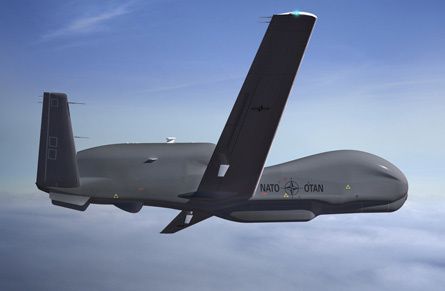
Under this contract, General Dynamics Canada will provide the software that will control the AGS Communications Ground Control System (CGCS). The CGCS will manage radio and satellite communications between Global Hawk unmanned aerial vehicles (UAVs) and the main operating base in Sigonella, Italy.


General Dynamics Canada will also deliver ruggedized computer workstations and the Voice over Internet Protocol (VoIP) intercom systems that will enable communications between operators at the operating base and with mobile command centers. In addition, the company will provide engineering support for the integration of its software and systems at Northrop Grumman's facilities in the US, and at the main operating base in Italy.


"This contract highlights the capabilities of the world-leading communication solutions we have developed through many years of innovation in airborne ISR systems," said David Ibbetson, general manager for General Dynamics Canada.


"It showcases Canadian technology that we have successfully deployed on the CP-140 Aurora as part of the Aurora Incremental Modernization Project, and on the CH148 Cyclone as part of the Maritime Helicopter Program. At the same time, it provides us with the opportunity to leverage the experience and expertise of the highly skilled employees at our facilities across Canada.


"As important, the key technologies being provided by General Dynamics Canada will be available for future UAV-based programs in Canada, such as the Joint Unmanned Surveillance Target Acquisition System and the Mercury Global Wideband Global Satellite communications system."


Dan Chang, Northrop Grumman vice president and program manager of the NATO AGS program, said: "This is another example of how Northrop Grumman is leveraging national investments already made in the NATO AGS program to benefit the entire alliance.


"We look forward to working with General Dynamics Canada on this program to deliver this critical capability to NATO."


The NATO AGS program, led by Northrop Grumman, is a major international procurement initiative to establish an airborne ground surveillance system, which can provide NATO commanders with a comprehensive picture of activity on the ground. It includes five Northrop Grumman high-altitude, long endurance Global Hawk UAVs, missionized to NATO requirements; mobile ground command and control vehicles; as well as associated command and control base stations. Once deployed, the AGS system will enable NATO and its coalition partners to gather intelligence, surveillance and reconnaissance information to support military and humanitarian operations.


With its main operating base at Sigonella, NATO AGS will be co-located with the US Air Force Global Hawks and the US Navy MQ-4C Triton (BAMS) Broad Area Maritime Surveillance unmanned aircraft systems, further advancing synergies across the three programs in operational capability, lifecycle logistics and sustainment.


Development and production of the AGS program is expected to take place over the next three years, with initial operation scheduled for November 2016. General Dynamics Canada will continue to provide in-service support for the system beyond 2016.

Partager cet article
Repost0
21 décembre 2012 5 21 /12 /décembre /2012 12:35

Yi Long UAV pic1

Chinese Yi-Long (Wing Loong) UCAV


20 December 2012 William Gallo – Pacific Sentinel


Analysts say China is using its rapidly expanding defense budget to make impressive advances in drone technology, prompting some to worry that the United States' global dominance in the market could soon be challenged.


At a recent biennial airshow in the southern coastal city of Zhuhai, China unveiled a new generation of unmanned aerial vehicles (UAVs). Long-time observers of Chinese military capability reported the drones on display were bigger and more sophisticated than in the past.


Though many of the prototypes and models on display at the Zhuhai air show did not have explicit military purposes, others appeared to be clones of U.S. drones, such as the Predator or Reaper, which have both been used in deadly missions on suspected militants.


There is no evidence suggesting China plans to use its drones in a similar manner as the United States, and observers say Beijing is still likely far behind Washington in drone technology.


US Defense Report Calls China's drone advances "alarming"


But a report published in July by the Defense Science Board, a committee that advises the U.S. Defense Department, suggested that Beijing's ramped up spending and research on drones could threaten U.S. supremacy in the sector.


The unclassified report called China's recent focus on UAVs "alarming," warning Beijing could "easily match or outpace U.S. spending on unmanned systems, rapidly close the technology gaps and become a formidable global competitor in unmanned systems."


Richard Bitzinger, an ex-CIA analyst and senior fellow at the S. Rajaratnam School of International Studies in Singapore, says he dismisses parts of that report as being "melodramatic."


"There's certainly cause for concern and for watchfulness. But how could the Chinese outspend the United States on drones? I just don't see it," he said. "The United States has literally thousands of drones."


How has China used drones?


Bitzinger says it is difficult to determine how China, or any other country, uses drones, partly because of their often-times covert nature. He says drone programs with obvious military purposes are often disguised as only having humanitarian roles, such as disaster relief, counter-piracy or crime-fighting.


"Kind of all these warm fuzzies, these kind of 'mom-and-apple-pie,' benign things that you can say 'That's what we're building the drones for, and oh, by the way, we have a military purpose for them, as well," said Bitzinger. "When I hear all the kind of uplifting and peaceful-sounding kind of things [about drones], I think 'So what. They can be converted in a matter of hours, if not sooner, into an offensive, or at least an explicitly military, capability.'"


For China, state media said those reportedly peaceful missions include patrolling maritime regions. In September, the Xinhua news agency reported that China's State Oceanic Administration would step up the use of drones to "strengthen marine surveillance" in disputed areas of the South China Sea. A government report earlier this year called for 11 drone bases to be established along China's coastline by 2015.


But other missions were seemingly more mundane. The state-run Global Times reported in June that Beijing police is using a drone to spot illegal opium poppies in rural areas of the capital. Last year, the paper said the department would also use unmanned aircraft to "monitor traffic accidents, conduct aerial surveillance, or help with rescue operations."


So far there are no known instances of China carrying out deadly attacks with weaponized UAVs. But Li Yidong, a designer for the China Aerospace Science and Technology Corporation, told the Global Times that one of the UAVs on display at the Zhuhai air show appears to have carried out 20 missions and fired 15 missiles, judging from the number of red stars and missile patterns on the drone.


At the Zhuhai air show, Huang Wei, the director of a drone program at the China Aerospace Science and Technology Corporation told the Global Times that UAVs were, "as the Americans say," fit for missions that are "dirty, dangerous and dull."


Possible deadly missions in the future?


Bitzinger warns that if Beijing did decide to use drones for explicitly offensive missions, such as targeting suspected militants, it would likely draw on the experience of the U.S. military, which has used the highly effective unmanned planes to target militants in countries like Pakistan, Afghanistan, and Yemen.


"The United States is basically field-testing the whole idea of drone warfare," said Bitzinger. "Armed hunter-killer drones have been going very well for the United States. And people walk away with this as a lesson. One of the lessons is, "Gee, it would sure be nice to have one of those things."


Wendell Minnick, Asia bureau chief at Defense News, says there is no evidence to suggest that China desires to carry out deadly drone strikes. But he says that if it did, it would likely point to U.S. drone use as justification.


"There's certainly an argument to be made that if the U.S. can make the same type of judgment call and justification for hitting militants in Pakistan, what's to stop the Chinese from hitting Tibetan or Uighur rebel groups that are technically within China's own sovereign country?" he asks.


The danger of Chinese drone exports


Another area of concern for the United States is that China will increasingly export its relatively inexpensive drone technology to nations around the world. That fear was heightened when the Global Times said in November that "some foreign sales" were reported at the Zhuhai air show.


Minnick says that Chinese drones, many of which are specifically produced for the export market, are very attractive for nations that cannot afford or are otherwise prevented from purchasing the U.S. alternatives.


"Our drone exports are very expensive platforms, very sophisticated. The Chinese produce a much cheaper variety that basically does the same job," said Minnick. "The Chinese have got cheap labor, technological know-how, and are looking at an export market that's growing."


But Bitzinger says price is only one factor that nations consider when purchasing foreign military equipment. He warns Beijing will not likely become the "Wal-Mart" of international drone sales anytime soon.


"I'm sure they'd like to be, but the question is, do you want to buy Chinese equipment?" asks Bitzinger. "The reliability, the maintenance of these things is still unproven, and there's a lot of political baggage that comes with buying Chinese [products]."


Bitzinger also says Chinese exports of drones may be limited by international arms sales regulations that govern exports of weapons and "dual-use" goods that have both civilian and military purposes.


Still, Bitzinger and other analysts warn against being dismissive of Chinese drone capability.


"I think at this point, they're still very much in that developmental, exploratory phase," he said. "That aside, I don't see them getting out of the business. I think they'll continue to work on it and get better."

Partager cet article
Repost0
11 décembre 2012 2 11 /12 /décembre /2012 09:25

MQ-9-Reaper source info-aviation


Dec. 08, 2012 by David Axe – wired.com/dangerroom


The Air Force’s multi-billion-dollar drone fleets may have helped against the insurgents of Iraq and Afghanistan. But in a fight against a real military like China’s, the relatively defenseless unmanned aerial vehicles would get shot down in a second. So once again, the air will belong to traditional, manned bombers and fighters able to survive the sophisticated air defenses.


At least that’s the Air Force’s official position. Secretly, however, the flying branch could be working on at least two new high-tech UAVs optimized for the most intensive future air wars. Ace aviation reporter Bill Sweetman has gathered evidence of new stealth drones under development by Lockheed Martin and Northrop Grumman — the latter potentially armed, and both drawing on classified funds. If these robots are real, the Air Force’s drone era is not only not ending — it’s barely begun.


To be clear, no one thinks unmanned aircraft are becoming any less vital to Washington’s shadowy counter-terrorism campaigns in Pakistan, Somalia, Yemen and, possibly soon, Mali. Missile-armed Predators, the larger Reapers carrying bombs and missiles, and stealthy, unarmed Sentinel spy drones, operated jointly by the CIA and the military, are still America’s weapon of choice for hunting terrorist leaders. Three years ago then-CIA director Leon Panetta, now the defense secretary, called UAVs the “only game in town” for disrupting the core of al-Qaida.


But when it comes to strictly military campaigns — assuming those even exist anymore — flying robots appear to be falling out of favor with the nation’s air combat branch. Earlier this year the Air Force announced controversial plans to scale back its known current and future drone fleets.


 Gone would be the Block 30 model of the brand-new, high-flying Global Hawk recon UAV, axed in favor of upgrades to the decades-old U-2 spy plane. Production of the workhorse Reapers was slashed from 48 per year to just 24. Looking ahead, the Air Force cancelled a planned, unclassified effort to develop a jet-powered attack drone, the MQ-X. Indeed, the flying branch abandoned its entire 30-year “roadmap” for future UAV development, which had anticipated a host of new robot designs to ultimately replace most manned aircraft.


Publicly, the Air Force is even considering reneging on its promise to make the next-generation heavy bomber now in development “optionally manned,” meaning it could be converted into a large, long-range drone with the flip of a switch.


The potential high cost of the dual design is “probably going to make it difficult to afford an unmanned solution,” Air Force Global Strike Command boss Gen. James Kowalski said.


Remarkably, it was just four years ago that then-Defense Secretary Bob Gates leaned on the flying branch to finally get serious about pilotless planes, which can fly far longer than their manned counterparts and are ideal for surveillance and attacks missions against lightly armed militants like those in Iraq and Afghanistan.


Even after (then) seven years of war, motivating the Air Force to purchase more drones — and consequently fewer traditional planes — was “like pulling teeth,” Gates said. To break the logjam Gates had to fire the Air Force’s two top officials and abruptly cancel further production of the air-combat service’s prized F-22 fighter.


Now the Iraq war is over and the war in Afghanistan is winding down. All the military branches are revamping their arsenals for an era in which they anticipate fewer long-term counter-insurgency campaigns and more short, high-intensity wars such as last year’s Libya campaign plus the ongoing responsibility of deterring a rising China. “The fleet I’ve built up — and I’m still being prodded to build up, too — is not relevant in that new theater,” Gen. Mike Hostage, head of the Air Force’s Air Combat Command, said last week.


In high-stress combat the human brain is still the best computer, and human eyes the best sensors, Hostage said. Drones “don’t have the awareness that a manned plane would have.”


The other branches do not share that view. The Army is proceeding with plans to purchase more than 100 copies of its own armed Predator variant. The Navy is pouring billions into a stealthy, jet-powered attack drone that can launch from aircraft carriers. Only the Air Force has looked into the future and stated that current flying robots don’t have much of a place.


Instead, the Air Force says it wants more manned planes. Despite flattening budgets the flying branch is sticking with its longtime requirement for 1,763 F-35 Joint Strike Fighters plus up to 100 new bombers. And Hostage says his researchers are trying to define a so-called “sixth-generation” fighter to succeed the F-35 around 2030. That plane will have an on-board pilot, Hostage said.


When it comes to drones, “retrenchment returns the Air Force to business as usual,” Lt. Col. Lawrence Spinetta and M.L. Cummings wrote in Armed Forces Journal. But that retrenchment could be a cover. It’s very possible that all the Air Force’s recent backtracking on unmanned warplanes applies only to unclassified efforts. It’s feasible, even likely, that Air Force UAV initiatives are thriving within the military’s $35-billion-a-year classified budget. For sure, the stealthy Sentinel drone that first appeared in Afghanistan five years ago and subsequently spied on Iran and Pakistan is one product of the classified budget.


In fact, it makes sense for UAV development for the post-Iraq and -Afghanistan era to favor “black” programs. As America’s wars become more high-tech and its foes more heavily armed, the Air Force will need truly cutting-edge drones — the robot equivalents of the Cold War F-117 and B-2 stealth warplanes, both of which were designed and initially produced in total secrecy in order to protect their pricey new technologies.


In a recent article for Aviation Week, reporter Sweetman laid out the evidence for no fewer than two new, jet-powered, radar-evading Air Force UAVs still cloaked in black funding. In 2008 Northrop Grumman, maker of the B-2 stealth bomber, scored a $2-billion Pentagon contract that the company took pains to keep off the books. At the same time, Northrop hired as a consultant John Cashen, the man most responsible for devising the B-2′s radar-defeating shape.


The funding and Cashen’s expertise were applied to a secret effort to build a larger successor to the Lockheed Martin-made Sentinel, according to Sweetman. The new drone “is, by now, probably being test-flown at Groom Lake,” a.k.a. Area 51, Sweetman wrote.


In parallel, Lockheed could be building a stealthy spy drone meant to fly ahead of the Air Force’s new bomber, helping to jam enemy radars and spot targets for the larger, manned plane. Sweetman called the secret spy drone, which has been alluded to by Pentagon officials, “a real and funded program.” Perhaps coincidentally, in December last year a commercial satellite spotted what appeared to be a previously unknown UAV type at Lockheed’s facility in Palmdale, California.


Despite the public statements eschewing old-style drones, it’s possible the Air Force is working hard to field brand-new flying robots better suited to an era of conventional warfare. But it could be years before we know for sure, as any evidence is deeply classified and could remain so. “When the new systems will be disclosed is anyone’s guess,” Sweetman lamented.


Today’s drones might have hit their peak, by the Air Force’s reckoning. But tomorrow’s drones could rise to take their place.

Partager cet article
Repost0
7 décembre 2012 5 07 /12 /décembre /2012 08:50

le-premier-vol-du-demonstrateur-neuron - Rafale photo Dassa


06.12.2012 Par Edouard Pflimlin Le Monde.fr


Le 1er décembre, à Istres, dans le sud de la France, l'Europe de la défense, si décriée, marquait une grande avancée. Tout seul (ou presque), le prototype de drone Neuron a fait son premier vol. Ce drone de combat (ou UCAV en anglais pour Unmanned Combat Aerial Vehicle), furtif et donc difficilement détectable par les radars, est en effet piloté à terre. Il préfigure ce que seront les drones de combat conçus spécifiquement pour des frappes au sol et le bombardement, voire à terme le combat aérien.


Neuron 01 dec 2012 photo2 dassault-aviation.com


Construit par Dassault aviation, le Neuron est long de 9 m, avec une envergure de 12 m, et d'un poids total de 7 tonnes, explique le blog spécialisé Défense européenne Bruxelles 2. Il peut atteindre une vitesse maximale de 980 km/h, proche de Mach 1 (1 220 km/h). Inauguré en 2003, notifié en 2006, ce programme devrait préparer le terrain à un drone de combat ou futur avion de chasse à moyen terme.


Le Neuron est un programme mené en coopération européenne, avec cinq autres pays (Italie, Suède, Espagne, Grèce, Suisse), mais sous forte impulsion française. Dassault Aviation, en tant que maître d'œuvre unique, est responsable de l'exécution du contrat principal. "L'objectif de ce projet n'est pas de créer de nouvelles capacités technologiques en Europe, mais de tirer le meilleur bénéfice des niches existantes", estime-t-on chez Dassault.


L'enjeu opérationnel est important : "Les drones militaires ont connu un développement très rapide au cours des dernières décennies, mais c'est leur utilisation intensive par Israël, [notamment au Liban en 1982], ainsi que par les États-Unis sur les théâtres irakien et afghan qui a mis en lumière leur importance dans la gestion des conflits", soulignait déjà un rapport de l'Assemblée nationale de 2009. Un rôle constaté lors des opérations récentes de l'armée israélienne à Gaza.


AVANCE AMÉRICAINE


L'enjeu stratégique et industriel du Neuron est majeur. Le projet "dessine l'avenir de l'aviation de combat européenne", soulignait dès 2009 le rapport parlementaire. Or, les Etats-Unis ont clairement une, voire plusieurs longueurs d'avance sur les Européens. L'autre projet de drone de combat européen, le Taranis, de BAE Systems, étant d'ailleurs moins avancé que le Neuron, même s'il devrait être testé au début de 2013.


Taranis source Defense News


Les Américains déploient la plus importante flotte de drones en tous genres au monde : ils ont été les premiers à tirer un missile lors d'un essai d'un drone MQ-1 Predator, il y a un peu plus de dix ans. Ils possèdent aujourd'hui une véritable armada de drones, selon le bilan de la publication de référence spécialisée de l'IISS de Londres, The Military Balance 2011 : drones lourds armés de missiles Hellfire, comme les MQ-1 Predator ou les MQ-9 Reaper, drones d'observation comme les RQ-4 Global Hawk... Au total, les Etats-Unis possèdent deux cent quarante-six drones, selon un pointage établi en 2011, quand la France ne déploie difficilement que... trois drones Harfang.


First Catapult Launch of X-47B Nov. 29, 2012


Deux jours avant le vol du Neuron, le 29 novembre, la société d'armement américaine Northrop Grumman a réalisé le premier essai de catapultage de son drone X-47B UCAS-D, un drone furtif en forme d'aile delta qui ressemble beaucoup au bombardier lourd B2, de l'US Air Force. Il peut emporter deux tonnes de bombes en soute, à plus de 2 000 km de distance et a une autonomie de vol de cinquante heures sans faire le plein. "C'est la première fois qu'un engin non piloté décolle de cette manière, au moyen d'une catapulte à vapeur", souligne la revue Air & Cosmos.


Ce test montre que le drone X-47B est "un pas plus proche de son rôle prévu, qui est de pouvoir atterrir et décoller d'un porte-avions", indique la revue de défense Jane's Defence Weekly. Des tests sur un porte-avions américain, peut-être l'USS Harry S. Truman, doivent avoir lieu d'ici à la mi-2013. Des tests de ravitaillement en vol autonome doivent également avoir lieu en 2014. En effet, le X-47B est conçu pour pouvoir assurer des vols de façon autonome, un contrôle manuel par un pilote ayant lieu quand il se rapproche du porte-avions. D'autres projets existent aussi chez les concurrents américains de Northrop Grumman, Boeing, General Atomics et Lockheed Martin.


TRANSPORT, RAVITAILLEMENT...


Les Etats-Unis veulent également diversifier l'utilisation des drones par leurs forces armées. Selon le "Plan de vol des systèmes de drones 2009-2047", un rapport de l'US Air Force (USAF), présenté le 23 juillet 2009 et qui couvre la période 2009-2047, les drones auront au sein de l'armée de l'air américaine une place croissante et pourraient donc voir leurs tâches étendues par exemple au transport de matériel ou au ravitaillement en vol. Jusqu'à remplacer les pilotes de chasse ?


Toutes les options sont du domaine du possible. En 2011, l'USAF aurait formé trois cent cinquante opérateurs de drone contre deux cent cinquante pilotes d'avion de combat. A long terme, elle vise une autonomie complète pour mener des missions de combat, même si "les humains garderont la possibilité de changer le degré d'autonomie approprié selon les types de missions ou selon les phases de celles-ci". Ce qui renforce les problèmes éthiques et juridiques déjà posés par l'utilisation des drones, d'une guerre presque "déshumanisée".


Si ce programme parvient à son terme, et si un ravitaillement en vol du drone est assuré, le X-47B pourra frapper des cibles à des milliers de kilomètres de distance en partant d'un porte-avions, alors que les pilotes pourront rester sur le navire et contrôler le vol par rotation. Et ce dernier pourra se protéger des missiles antinavires en opérant à plus grandes distances des côtes ennemies. Une capacité opérationnelle considérable, qui pourrait être disponible vers 2025.


VINGT ANS DE DÉVELOPPEMENT


Le Neuron, qui lance les contours d'un hypothétique "système de combat aérien futur" (SCAF) serait, lui, plutôt opérationnel à l'horizon 2030-2040, souligne Air & Space du 5 octobre. Le 30 juillet, deux contrats étaient notifiés, à Dassault Aviation et à BAE Systems d'une part, et à Rolls-Royce et à la Snecma d'autre part, pour un montant total de 13 millions d'euros pour évaluer la faisabilité du projet. S'il entre bien en service à cet horizon, ce drone européen aura pour mission de pénétrer et de détruire les défenses aériennes ennemies grâce à sa quasi invisibilité. Mais "pour l'heure, pas question de conduire des missions de défense aérienne", qui seraient assurées par les avions de chasse type Rafale. Pour l'heure...


Derrière l'enjeu militaire, il y a aussi un enjeu industriel de taille. Le marché des drones explose. Il devrait atteindre 6,6 milliards de dollars en 2012, selon la société d'études spécialisée Teal Group, et 11,4 milliards de dollars d'ici à dix ans, totalisant 89 milliards de dollars sur la prochaine décennie.


Yi Long UAV pic1


Même si plusieurs pays s'intéressent aux drones de combat, comme la Russie, l'Inde ou la Chine, ils n'en sont qu'à leurs balbutiements. Et l'univers des drones est nettement dominé par les industriels israéliens et américains que sont IAI, Elbit, Aeronautics, General Atomics, Boeing, Northrop Grumman et Aerovironment. Et le Pentagone est de très loin le plus important acheteur de drones de la planète. Selon la requête budgétaire du département de la défense américain pour l'année 2013, rien que pour les Predator et les Reaper, le ministère de la défense demande 1,91 milliard de dollars, contre 1,76 milliard en 2011. Selon Teal Group, les Etats-Unis devraient représenter 55 % des commandes d'équipement dans le monde.


Or, si l'Europe veut bâtir une défense européenne crédible, l'essor de son industrie de défense est essentielle. Son avenir stratégique passe par les airs et par ces engins aux formes étranges que sont les drones.

Partager cet article
Repost0
3 décembre 2012 1 03 /12 /décembre /2012 17:30

Neuron 01 dec 2012 photo2 dassault-aviation.com


03 décembre 2012 Usine nouvelle (Reuters)


Le démonstrateur de drone de combat Neuron a réussi le 1er décembre son tout premier vol à Istres, dans les Bouches-du-Rhône. Il couronne près de dix ans d'efforts de six pays européens emmenés par la France et Dassault Aviation.


Dix années d'efforts conjoints de six pays européens emmenés par la France et Dassault Aviation ont été nécessaire pour arriver à cette première étape. Une fois la centaine de vols d'essais du Neuron réalisés, d'ici deux ans, l'avionneur tricolore compte participer à la préparation de la prochaine génération d'avions de combat, avec ou sans pilote, attendue dans les années 2030.


Le Neuron a atterri samedi à 8h45 à Istres après 25 minutes de vol sans aucune difficulté, avec plusieurs mois de retard sur le calendrier prévu.


Lancé en 2003, le programme Neuron, d'un budget de plus de 400 millions d'euros, est piloté par la Délégation générale de l'armement (DGA) et Dassault Aviation, qui joue le rôle de maître d'oeuvre.


L'avionneur français, concepteur de l'avion de combat Rafale, a entraîné dans son sillage le suédois Saab, qui fabrique le Gripen et l'italien Alenia (Finmeccanica, qui fait partie du consortium Eurofighter avec EADS et le britannique BAE Systems.


L'espagnol EADS-CASA, le grec Hellenic Aerospace Industry (HAI) et le suisse Ruag sont également de la partie.


Pendant ce temps, BAE Systems, avec qui Dassault Aviation coopère dans les drones de surveillance, mène son propre projet similaire, Taranis, avec un premier vol prévu en 2013.


AUTONOMIE


Le Neuron peut effectuer un vol complet sans recevoir aucun ordre et peut rectifier de lui-même des situations critiques, un avantage crucial dans une zone de combat où il vole beaucoup plus vite que les drones de surveillance actuels.


Mais s'il n'y a pas de pilote dans l'avion, le pilote est bien là, dans un "shelter", étroite baraque installée au bout de la piste d'Istres, la plus longue d'Europe. A tout instant, installé face à des écrans similaires à un cockpit, il peut reprendre la main. A ses côtés, un deuxième opérateur vérifie le bon fonctionnement des équipements informatiques.


"Parfois, il nous arrive d'oublier qu'on n'est pas dedans", raconte Olivier Ferrer, dit "Nino", ancien pilote de chasse de l'aéronavale devenu pilote d'essai pour Dassault Aviation.


"Même s'il n'y a pas de manche de manette, tous les ordres qu'on donne sont quasiment les mêmes que pour un avion".


Le pilote reste en contact permanent avec une "salle d'écoute", l'équivalent d'une tour de contrôle.


Après avoir reçu à Istres des pièces des six pays d'Europe participant au programme, le Neuron a démarré ses essais au sol qui ont mobilisé 300 personnes depuis fin 2011.


Comme ceux qui suivront, ce premier vol d'essai a été réalisé au-dessus de zones faiblement peuplées - moins de 15 habitants au km2 - pour limiter les risques.


Le deuxième vol attendra quatre mois. Entre-temps, l'avion sera envoyé au Centre d'essai d'électronique de l'armement de la DGA à Bruz, près de Rennes, où des tests seront réalisés pour vérifier qu'il est bien le plus furtif possible.


"L'idée, c'est d'être aussi invisible qu'un moineau. Le moineau de Paris est gris, discret, ne se voit pas, se fond dans l'environnement", explique Didier Gondoin, directeur général technique de Dassault Aviation, qui a dirigé le programme Rafale de 1998 à 2005.


Le Neuron devra ainsi demeurer en dessous des seuils de détection des radars, réglés de façon à ne pas détecter les vols d'oiseaux.


De la même manière, le moteur de l'avion a été dissimulé pour éviter que la chaleur émise ne soit détectable par les radars infrarouge.


Long de 10 mètres, le Neuron a une envergure d'environ 12,5 mètres - légèrement supérieure à celle d'un Mirage 2000 - et peut peser sept tonnes une fois ses deux soutes d'armement chargées.


Sur la centaine de vols d'essais prévus, 80 seront effectués à Istres et les autres en Italie et en Suède. Le Neuron sera confronté à des avions de combat de type Rafale ou Gripen et à des radars de détection et des batteries antiaériennes.


"On va confronter la nouvelle épée qui est Neuron face aux boucliers que sont les systèmes de détection", résume Patrick Castagnos, directeur des essais en vol de Dassault Aviation.


Mais si les Etats ont beaucoup partagé dans la conception du Neuron, ces données-là, ils les garderont pour eux.


L'APRÈS-NEURON


L'étape suivante, après 2014, s'appelle "Neuron 2" : il s'agit de préparer un véritable projet de drone de combat européen en assimilant les fruits du travail effectué parallèlement par BAE Systems avec Taranis.


Dassault Aviation et BAE ont obtenu en juillet un contrat d'études préliminaire de 13 millions d'euros pour le lancement de la première phase du programme de démonstration du système de combat aérien.


Les deux groupes commencent à travailler avec le motoriste français Snecma (groupe Safran) et le britannique Rolls-Royce. Pour l'avionique (radars), Dassault Aviation discute avec Thales - dont il est le premier actionnaire industriel avec 26% du capital - et avec l'italien Selex (groupe Finmeccanica).


Le tandem semblait l'an dernier en pole position pour le projet de drone de surveillance MALE (Moyenne altitude longue endurance) dans le cadre de la coopération franco-britannique dans la défense scellée depuis fin 2010.


Mais l'alternance qui a suivi l'élection présidentielle française a entraîné une remise à plat du dossier et le ministre de la Défense Jean-Yves Le Drian s'est dit peu favorable à la voie choisie par son prédécesseur.


La France devrait annoncer prochainement sa décision en matière de drones, un domaine emblématique de la politique de défense des années à venir.


Les deux drones (de surveillance et de combat) partagent les mêmes technologies de télécommunications et les mêmes techniques d'essais en vol, fait valoir Eric Trappier, directeur général international de Dassault Aviation.


"Ce serait dommage de rater cette opportunité de faire travailler les mêmes ingénieurs, sinon on va réinventer plusieurs fois la poudre."

Partager cet article
Repost0
18 novembre 2012 7 18 /11 /novembre /2012 08:55

CH-3-drone.jpg


Nov. 17, 2012 washingtonpost.com (AP)


Pakistan’s largest drone, the Shahpur, has a wingspan of about seven meters (22 feet) and can carry 50 kilograms (110 pounds). The U.S. Predator, which can be equipped with two Hellfire missiles, has a wingspan more than twice that and a payload capacity over four times as great.


Pakistani drones also have much more limited range than those produced in the U.S. because they are operated based on “line of sight” using radio waves, rather than military satellites. The Shahpur has a maximum range of 250 kilometers (150 miles), while the Predator can fly over five times that distance.


The British newspaper The Guardian reported Tuesday that Pakistan was working on an armed drone but did not provide details.


The market for drones has exploded in Pakistan and other countries around the world in recent years, as shown by the array of aircraft on display at the defense exhibition in Karachi. Hoping to tap into a worldwide market worth billions of dollars a year, public and private companies wheeled out over a dozen drones that ranged in size from hand-held models meant to be carried in a backpack to larger aircraft like the Shahpur.


All the Pakistani drones on display were advertised as unarmed and meant for surveillance only. One private company, Integrated Dynamics, even promotes its aircraft under the slogan “Drones for Peace.” But several models developed by the Chinese government were marketed as capable of carrying precision missiles and bombs.


The Chinese government has offered to sell Pakistan an armed drone it has produced, the CH-3, which can carry two laser-guided missiles or bombs, industry insiders said.


Also being offered to Pakistan is a more advanced drone, the CH-4, which closely resembles a U.S. Reaper and can carry four laser-guided missiles or bombs, according to Li Xiaoli, a representative of the Chinese state-owned company that produces both the CH-3 and CH-4, Aerospace Long-march International Trade Co., Ltd.


Pakistan has yet to purchase any armed Chinese drones because their capabilities have yet to be proven, but is likely to do so in the future, said the civilian with knowledge of the Pakistani military’s drone program.


Only a few countries, including the U.S., Britain and Israel, are known to have actually used armed drones in military operations.


“China is a bit of a tough nut to crack as you’d expect,” said Huw Williams, a drone expert at Jane’s International Defense Review. “They frequently wheel out exciting looking aircraft but are yet to really demonstrate anything earthshattering.”

Partager cet article
Repost0
16 novembre 2012 5 16 /11 /novembre /2012 17:35

Yi Long UAV pic1


November 16, 2012 China Military News


2012-11-16 — China is flexing its muscles as an arms exporter with a growing array of indigenous weaponry, offering something for most budgets in the global arms bazaar and revealing its wider ambitions to strategic rivals and watchful neighbours.


As a new leadership was anointed in Beijing and the world looked on to see what direction it might take over the next decade, military officials from Africa to Southeast Asia were shopping for Chinese weapons in the country’s south.


Change has come fast in China, now the world’s second-largest economy, and with its rise has come a new sense of military assertiveness with a growing budget to develop modern warfare equipment including aircraft carriers and drones.


All the signs point to newly named Communist Party chief Xi Jinping, who is slated to become president next March, continuing China’s aggressive military modernisation.


Now the world’s fourth-largest arms exporter, China laid out its wares this week at an air show in Zhuhai, a palm-lined port between Macau and Hong Kong that becomes a heavily armed industry showcase every other November.


In the 10 years to 2011, China’s foreign military sales have increased 95 percent, according to the Stockholm International Peace Research Institute (SIPRI).


Among dozens of items shown publicly for the first time this week were Chinese attack helicopters, missiles, unmanned aerial vehicles and air defences. As usual, the exhibit halls contained everything from shoulder-fired weapons to cruise missiles.


“China is getting more aggressive in the export market as its own industrial base develops,” said Doug Barrie, senior fellow for Military Aerospace at the London-based International Institute for Strategic Studies.


“It looks at Russia and the U.S. as examples of how you can use the export arena to help develop your own industries.”


Between them, Washington and Moscow account for more than half of the world’s $410 billion in arms sales, but opportunities abound for China as the United States looks to cut its military spending to manage its mounting debt.


Still, U.S. spending dwarfs that of China. In its annual report on the Chinese military, the Pentagon in May estimated Beijing’s total 2012 spending would be between $120 billion and $180 billion. Washington will spend $614 billion on its military this year.


Most of Beijing’s trade is done with small states outside of the European Union, which like the United States, put China under an arms embargo after the crackdown on Tiananmen Square protests in 1989.


Pakistan, Bangladesh, Iran and Myanmar are among China’s biggest clients, with aircraft at the top of their shopping lists, SIPRI data shows.


Beijing does not release official figures for arms sales. Foreign estimates put the figure at about $2 billion in 2011.


STAR OF SHOW: STEALTH FIGHTER


Shenyang J-31 photo Greg Waldron Flightglobal


The undisputed star of the show this week was a sleek, quarter-sized model of China’s second stealth fighter, dubbed the J-31 by most Western analysts.


Although officially a concept plane, it bore what industry bible Aviation Week called a “striking resemblance” to a mystery jet that flew briefly at the end of October.


Photographs of the jet leaked, or orchestrated to look like a leak, and emerged on the Internet days before this week’s Communist Party Congress and leadership handover, and confirmed China’s place in a select club of stealth-capable nations.


“China has stood up,” said John Pike, director of Virginia-based GlobalSecurity.org, an expert on industry strategy.


Only the United States has successfully produced more than one stealth jet and the challenges facing China’s less experienced developers are undoubtedly immense.


The unveiling also served as a reminder to its neighbours of China’s growing clout as tensions rise over rival claims for territory in the East China Sea and South China Sea.


“China is doing this as part of a political equation,” said Robert Hewson, editor of IHS Jane’s Air-Launched Weapons. “It has had a rapidly staged coming out but I am surprised to see it here so soon.”


By mixing domestic and international messages, the model also filled a void left by the absence of top Chinese government officials distracted by the transition in Beijing.


BASIC BUT RELIABLE


The business end of the show is about present-day realities.


After relying heavily on Russian and to a lesser extent Israeli technology in the 1990s, China is pushing exports of home-grown equipment to expand its influence in areas like Africa where it is busy buying land and forging new allies.


“The Chinese used to simply produce cheap knockoffs of their basic Russian equipment. They have made very considerable advances, but still have problems, particularly with engines,” said Simon Wezeman, senior researcher at the Stockholm International Peace Research Institute.


“On some technology, they are now competitive on technology with European arms exports and very competitive on price.”


China has sold defence systems and co-developed a derivative of a Russian fighter with Pakistan and done smaller deals with African countries. There is also interest from Latin America.


Western analysts say China has a reputation for selling basic but reliable equipment with relatively few questions asked about its use, a key selling point.


But the range of products on display in Zhuhai is both increasing and gradually moving up in value, while remaining a decade or two behind the most advanced U.S. equipment.


COPYCAT APPROACH


For the first time at Zhuhai, China showed an export version of a long-range surface-to-air missile, the truck-mounted FD-2000, and a Predator-style UAV called the Wing Loong.


There was also a focus on systems that build relationships such as the L-15 trainer, which won its first export deal to an unidentified country at the show.


Admittedly, China’s other reputation for copying what it cannot make is unlikely to disappear any time soon.


A parlour game among delegates is to tick off the similarities between Chinese systems and foreign platforms.


“When you come and see these aircraft you relate them to what you have seen before. The K-8 is a Hawk, the J-10 a Eurofighter, the L-15 an Aermacchi M-346,” said an officer with an African air force delegation, asking not to be identified.


“That is why some people don’t want to send their planes here. You come back in five years and it’s called a J-something.”


Organisers said a record 650 companies from 38 countries showed up to present exhibits at the ninth Zhuhai show.


A few yards and a Chinese wall separate the military part of the show and Western aerospace suppliers striking deals with China’s fledgling civil aerospace industry.


This week’s flying displays included a surprise debut of the Z-10 months after U.S. company United Technologies admitted selling software that helped Beijing develop its first modern military attack helicopter.


“China’s aviation industry is turning out reasonably decent products,” said Pike in a telephone interview. “They are not there yet and they have a long way to go. But they are open for business.”

Partager cet article
Repost0
26 octobre 2012 5 26 /10 /octobre /2012 07:20

RQ-4 Global Hawk Block 40 - Northrop Grumman


October 25, 2012 LtCol Jacek Sonta / Press spokesman for MOD - defpro.com


Polish Minister of National Defence Tomasz Siemoniak declared Poland's participation in AGS - NATO Alliance Ground Surveillance system at NATO ministerial in Brussels in October.

Application dated October 19 on joining the system by Poland is a result of the decision of Minister of National Defence and an announcement of Polish President during NATO summit in Chicago this year, during which AGS program was included in Defence Package.
AGS is one of the flagship initiatives of NATO. It has a key meaning for transformation of the Alliance and for development of its defence capabilities up to 2020. Realisation of the Defence Package guarantees reaching the capabilities necessary for accomplishing tasks set in Strategic Concept from 2010 including task of collective defence (article 5 of Washington Treaty).

AGS Program is an example of multinational engagement of NATO member states in developed at present Smart Defence initiative.
From Poland's point of view joining AGS Program will be very significant for increasing its meaning and strengthening its position in NATO structures. We will be among 14 NATO states building capabilities within that system and at the same time we gain possibility to strengthen cooperation with countries leading in modern technologies.

Moreover, participation in AGS will enable Polish Armed Forces to complement military capabilities of conducting image reconnaissance and will allow to use it in the future for realisation of national needs or in allied cooperation e.g. during joint exercises.

The AGS Core will be an integrated system consisting of an air segment and a ground segment. Reaching operational readiness is initially planned for 2015. At the moment 13 countries participate in the program: Bulgaria, the Czech Republic, Estonia, Latvia, Lithuania, Luxembourg, Germany, Norway, Romania, Slovakia, Slovenia, USA and Italy. Canada and Denmark submitted their declarations too.

For more information, please go to http://www.nagsma.nato.int/Pages/AGS_General_Information.aspx

Partager cet article
Repost0
24 octobre 2012 3 24 /10 /octobre /2012 16:20

RQ-4 Global Hawk Block 40 - Northrop Grumman


2012-10-24 LtCol Jacek Sońta  / Press spokesman for MOD


Minister of National Defence Tomasz Siemoniak declared Poland's participation in AGS - NATO Alliance Ground Surveillance system at NATO ministerial in Brussels in October.


Application dated October 19 on joining the system by Poland is a result of the decision of Minister of National Defence and an announcement of Polish President during NATO summit in Chicago this year, during which AGS program was included in Defence Package.


AGS is one of the flagship initiatives of NATO. It has a key meaning for transformation of the Alliance and for development of its defence capabilities up to 2020. Realisation of the Defence Package guarantees reaching the capabilities necessary for accomplishing tasks set in Strategic Concept from 2010 including task of collective defence (article 5 of Washington Treaty).


AGS Program is an example of multinational engagement of NATO member states in developed at present Smart Defence initiative.


From Poland's point of view joining AGS Program will be very significant for increasing its meaning and strengthening its position in NATO structures. We will be among 14 NATO states building capabilities within that system and at the same time we gain possibility to strengthen cooperation with countries leading in modern technologies.


Moreover, participation in AGS will enable Polish Armed Forces to complement military capabilities of conducting image reconnaissance and will allow to use it in the future for realisation of national needs or in allied cooperation e.g. during joint exercises.


* * *


The AGS Core will be an integrated system consisting of an air segment and a ground segment. Reaching operational readiness is initially planned for 2015. At the moment 13 countries participate in the program: Bulgaria, the Czech Republic, Estonia, Latvia, Lithuania, Luxembourg, Germany, Norway, Romania, Slovakia, Slovenia, USA and Italy. Canada and Denmark submitted their declarations too.

Partager cet article
Repost0
20 octobre 2012 6 20 /10 /octobre /2012 10:09

Predator over Afghanistan photo USAF


19/10/2012 Michel Cabirol – LaTribune.fr


Le ministère de la Défense a engagé des discussions informelles avec l'industriel américain, qui fabrique le Predator. Paris veut franciser le drone MALE américain en vue de garder son indépendance opérationnelle vis-à-vis des Etats-Unis.


La France et les Etats-Unis discutent à propos d'un achat français d'un drone MALE (Moyenne Altitude, Longue Endurance) américain. Plus précisément, le ministère de la Défense a "entamé à cette fin des discussions informelles avec l'industriel américain General Atomics", fabricant du fameux Predator, a expliqué la semaine dernière le délégué général de l'armement, Laurent Collet-Billon, aux députés de la commission de la défense de l'Assemblée nationale. "Si nous voulons doter nos forces très rapidement de moyens opérationnels, la seule source, ce sont les États-Unis, avec tous les inconvénients" connus, notamment "en matière de maîtrise des logiciels et de certains capteurs". Pourtant la période ne semble pas propice à une accélération des négociations.


Pourquoi ? "La période électorale aux États-Unis ne favorise pas un aboutissement immédiat de cette démarche", a-t-il précisé. Surtout et c'est lié, comme le fait valoir, le député PS de Meurthe-et-Moselle, Jean-Yves Le Déaut, "acheter du matériel américain" ne va "pas sans poser des problèmes de codes sources, que les Américains ne livrent jamais, pas même aux Britanniques". En clair, détenir les codes sources, qui relèvent souvent de la souveraineté nationale, c'est contrôler les missions des drones des pays clients, via les systèmes de commucation des drones (liaisons de données). Les pays clients "dépendent opérationnelles des Américains", explique un bon connaisseur du sujet. Cela peut être dérangeant pour la France d'être surveillée par les Etats-Unis ou de soir interdire une opération pour des raisons de stratégie américaine. D'où la volonté de la France de négocier une francisation des capteurs du Predator, qui se heurte aujourd'hui à la campagne présidentielle américaine. L'élection aura lieu le mardi 6 novembre.


Une européanisation du drone ?


"Nous travaillons sur la possibilité de distinguer la chaîne de pilotage de la chaîne de mission, de manière à doter ces drones de capteurs ou d'armements européens", a détaillé Laurent Collet-Billon. D'où les discussions avec General Atomics, qui ne produit ni les capteurs ni les armements. Pour autant, rappelle le délégué général pour l'armement, la France a réservé des crédits budgétaires à l'achat du système de drone MALE intermédiaire. "J'ai préservé les crédits qui nous permettront en 2013 de commander des drones, notamment le drone MALE intermédiaire", avait confirmé début octobre aux députés le ministre de la Défense, Jean-Yves Le Drian.


Pour Laurent Collet-Billon, l'achat du Predator apparait logique dans la mesure où "le Royaume-Uni et l'Italie possèdent déjà des drones de General Atomics. L'Allemagne a déposé en janvier 2012 une demande de FMS - Foreign Military Sale - pour l'acquisition de Predator". En outre, a souligné le délégué général pour l'armement, "l'Allemagne et la France ont engagé une réflexion, en cohérence avec nos travaux avec le Royaume-Uni, sur la possibilité d'entreprendre en commun une démarche d'européanisation des équipements et, progressivement, du drone". À plus long terme, "c'est-à-dire au-delà de 2020, le calendrier dépendra de nos capacités budgétaires et des priorités que nous aurons définies", a-t-il conclu


30 millions d'euros dépensés sur le drone Talarion abandonné


Sur le projet de drone MALE Talarion développé par EADS, "les crédits dépensés dans le cadre du programme se sont élevés à quelque 30 millions d'euros", a affirmé Laurent Collet-Billon. Et de souligner que "l'opération a été arrêtée parce qu'elle conduisait à un objet trop volumineux qui ne correspondait pas aux besoins de l'armée française". La première partie du travail sur Talarion portait sur la création d'un porteur. "Or cette opération, qui aurait été intégralement réalisée en Allemagne, nous aurait conduits jusqu'en 2017", a-t-il précisé. "Se posait aussi la question de la participation de notre industrie à la réalisation des capteurs. Nous n'avons donc pas poursuivi cette opération. Cela n'a d'ailleurs laissé aucune séquelle dans les relations entre l'Allemagne et la France", a-t-il assuré.

Partager cet article
Repost0

Présentation

  • : RP Defense
  • : Web review defence industry - Revue du web industrie de défense - company information - news in France, Europe and elsewhere ...
  • Contact

Recherche

Articles Récents

Categories